


Chasing pavements: Can we have our streets back, please?
Stephen Price
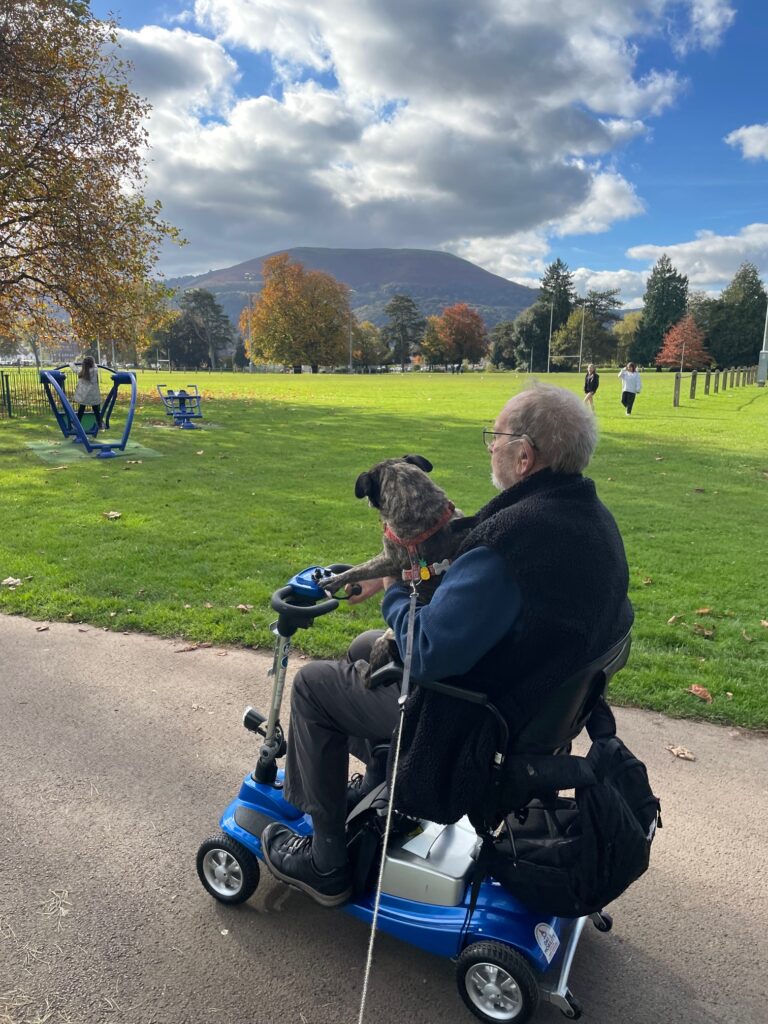
Towards the end of my dad’s life, his only option to get out and about and away from the confines of his small flat and the TV screen was through the (initially very reluctant) use of a mobility scooter.
We all watched as a rugby-playing manual labourer, mountain climbing titan of a man struggled to breathe without the aid of an oxygen machine in his final years, and little by little he found even the smallest journeys impossible.
A typical fight was put up at first, but over time the scooter offered him a chance to be outdoors again – Bailey Park Abergavenny, Bryn Bach Park, Tredegar, or more often than not just a journey to the shops or a cafe.
Along with the scooter, however, came an insight into the chaos that is Wales’ public footpaths that, once experienced, can never be unseen.
Cardiff Council made headlines last month for its decision to charge owners of SUVs more to park in its ever-shrinking road space.
Our councils, for reasons of both fairness and no doubt, in search of extra revenue, are emboldend when it comes to issues of the road, but less brave when it comes to confronting the misuse and abuse of our pavements. And why is that the case?
My dad jumped around Brynmawr a lot as child, moving from house to house, grandparent to parent, and one of the rows he lived on was one of the town’s steepest – Glamorgan Street.
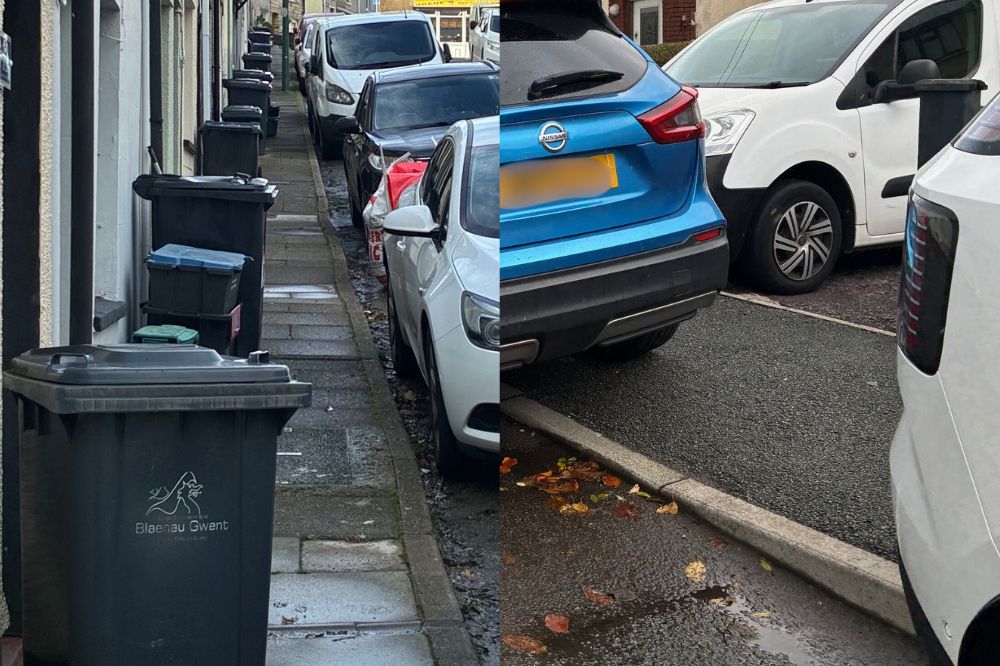
The street can barely be walked up or down these days, let alone used by wheelchair or mobility scooters, as it’s lined from top to bottom with gigantic plastic recycling units or bins or whatever they might be called nowadays.
Add to that the garden and general waste bins and it’s a depressing sight. And most walkers tend to use the middle of the road for their own sanity and, absurdly, safety.
How this street must have looked during my dad’s childhood – all uniformity, stone and delightful windows.. today however, it’s lined with cars, bins and render – a familiar sight across much of the valleys.
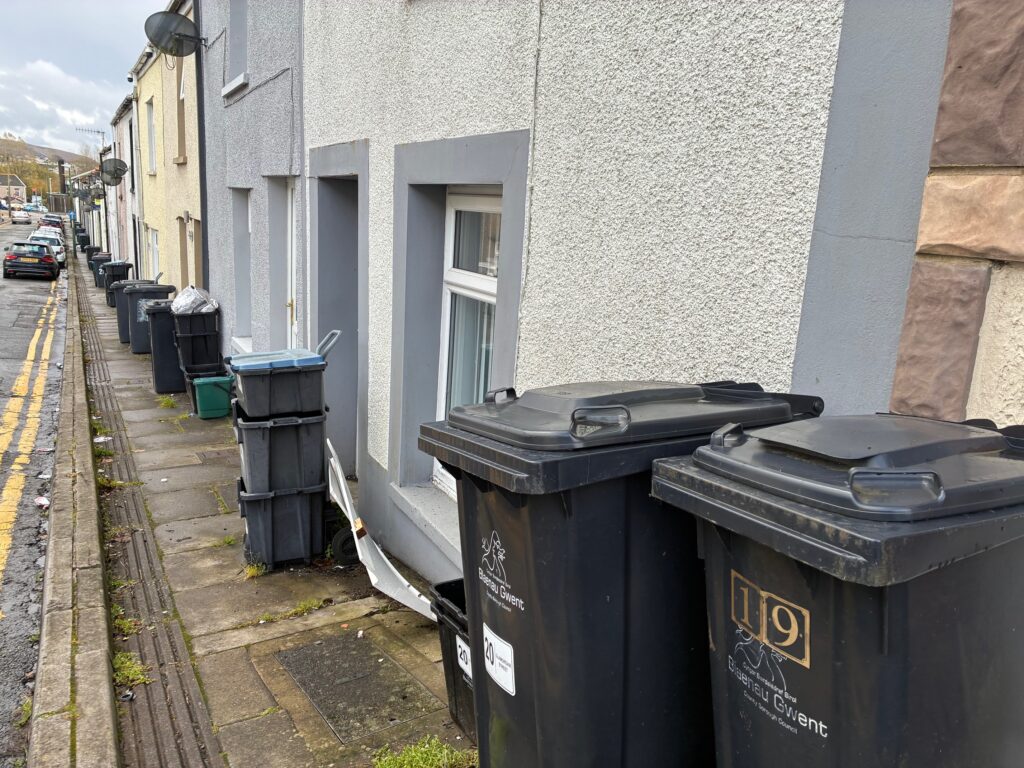
Can we blame residents though? Elderly, disabled, house-proud, you name it – our small terraced houses were not designed to hulk soiled and heavy plastic boxes through.
As someone who walks a lot, both alone or with my dogs, I can’t help notice a strange hang-on from covid times either: the crossing of those ahead who have an in-built reaction to strangers who might pass on germs or, worse, a friendly hello.
The lack of space for us all is no doubt another factor.
And even when there is space, on country lanes, canal paths and the like, us bottom-rung pedestrians can never really walk with abandon since we’re pulling in and constantly checking behind for cyclists, bell-ringing or otherwise. Joyous.
Sobering
For those of us lucky enough to be able-bodied and with a reasonable level of vision, the sight (and expense) of an out-of-keeping new railway bridge, or a forest path can lead to a scratched head, but trust me, once the shoe is on the other foot – whether for one’s self or a loved one, your opinions change fast.
Taking my dad to hospital a few years ago, the relief of using a press-button to open a door for his wheelchair paled in comparison to seeing first-hand why disabled toilets are as they are.
Effortlessly stepping in through a larger door for me, my dad and wheelchair, the locking system, the toilet itself. It all made sense. Of course, it should have before, but using them for real – NEEDING to use them, it’s altogether different.
Another issue I’d not seen before his time in a mobility scooter was the absolutely essential need for clearance around dropped kerbs on pavements.
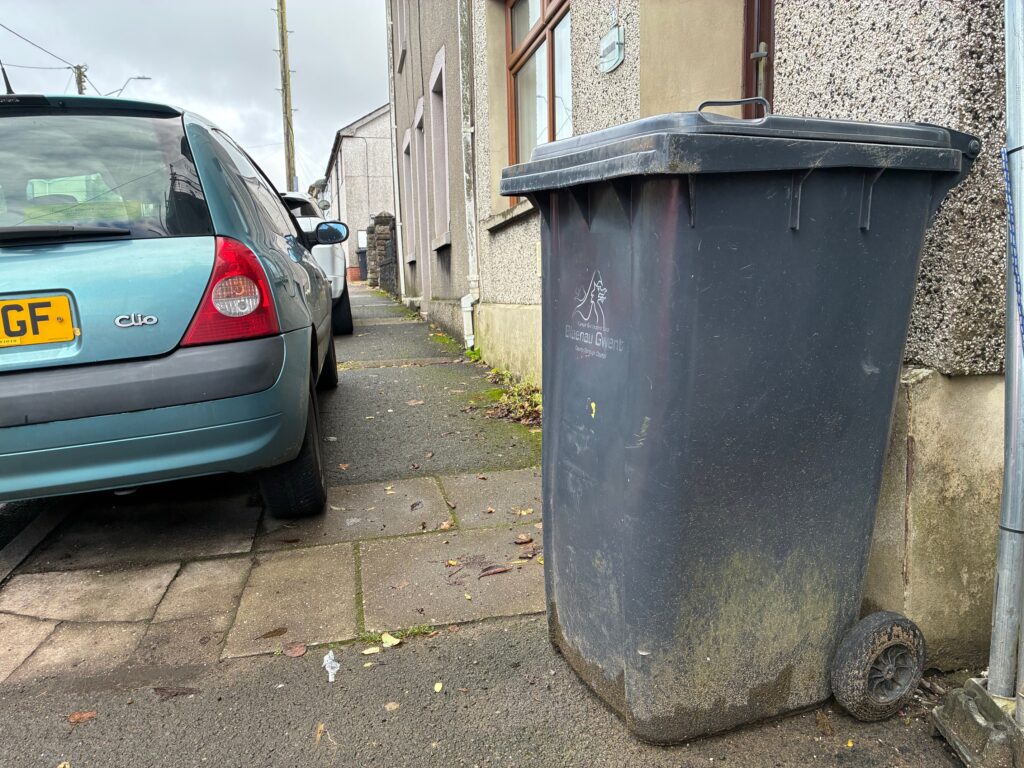
To take a walk with my dad for his first time ever using a mobility scooter was an eye-opening, sobering experience.
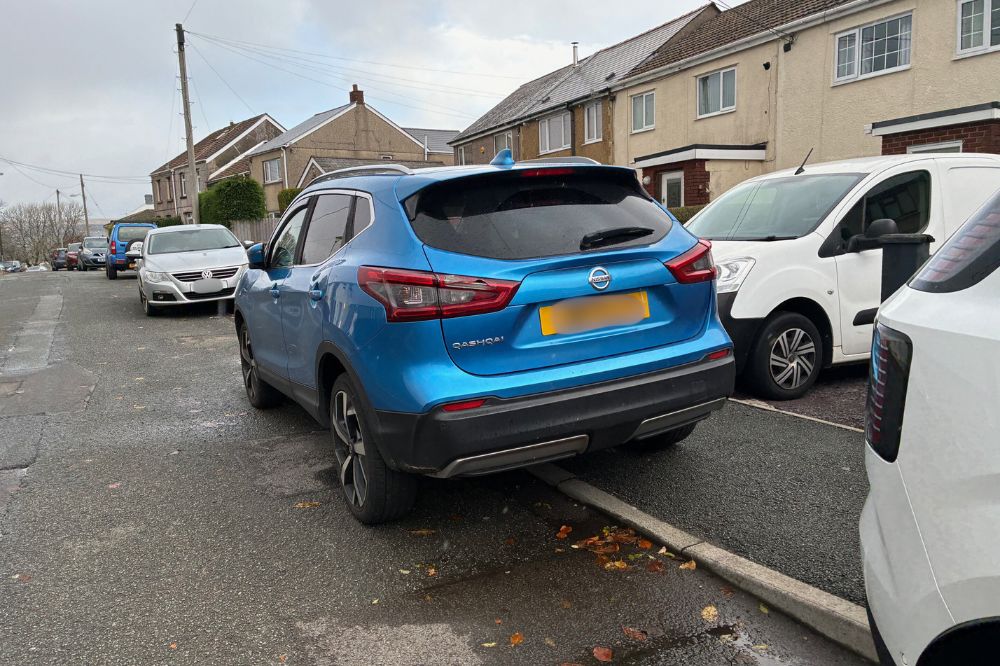
Naturally, the pavements nearby were holding places for sand bags, bins, or overspill car parks, but the most difficult hazard for us all to deal with tended to be cars parked directly along dropped kerbs, preventing my dad from leaving the pavement to cross to the other side, or to carry along the road where there might be no pavement at all for a while.
Living Streets
The Welsh Government has proposed changes that will allow local authorities to enforce against pavement parking where it is causing an unnecessary obstruction to people on the pavement.
This is a positive step, according to Living Streets, as they say it will allow local authorities to act without having to implement traffic regulation orders.
Currently this power is held by the police – who don’t enforce against parking on the pavement. Guidelines will be issued to local authorities setting out exactly what this means.
Living Streets Cymru and its allies are working with Welsh Government officials on the roll out plans, but Living Streets say these plans don’t go far enough.
And the plans have stalled since 2023, with Lee Waters writing: “I recognise that we are asking a lot of hard-pressed local authorities at what continues to be a difficult time. I have listened to the feedback from leaders and decided to delay the consultation on pavement parking until next year.
“This will enable local authorities to focus on the implementation and introduction of default 20mph speed limits in September 2023 and the work to prepare for bus franchising”
Next year? We’re on 2025 now, but who are we to complain.
The irony of asking councils, with their love of cumbersome pavement-hogging bins, to do the enforcing shouldn’t be lost on anyone either.
North Wales Police shared: “Parking on a pavement can cause many issues for people including blind and partially sighted people, parents with pushchairs and young children, wheelchair users and others who use mobility aids. For these people, a car parked on the pavement could mean having to walk into the road to get past, which could put them in danger. These issues can seem quite small to a lot, however can be big for others.
“If a vehicle is parked on the kerb, these incidents are dealt with on a case-by-case basis. On some streets, parking on the kerb is unavoidable so neither the Police nor local council would get involved.
“In some cases, parking on the kerb could restrict access for those who are vulnerable or who have disabilities, so the Police may intervene.
“Penalties will differ depending on weather it’s the Police or local council who issues the fine, however the fine is likely to be one of the following:
“A fixed penalty notice, which can be issued by the Police, local council or the Driver & Vehicle Standards Agency, charging you £50 or more.
“A local council-issued Penalty Charge Notice, usually from £50 to £130.”
“Generally, we’d like to appeal to motorists to keep footpaths and pavements clear for pedestrians, ensuring their safety and ease of movement.”
Andrea Gordon, from Guide Dogs UK, told the BBC that she was “disappointed” ministers had not taken up the issue again after her group helped to develop guidance for local authorities.
“Sadly that has not progressed, and in the meantime the situation on our pavements becomes increasingly hostile for blind and partially sighted people with the presence of e-scooters becoming a particular problem.
“Very often there is no safe place to walk.”
Bare minimum
With incentives to use public transport pretty much useless – particularly in rural Wales where reliability, cost and accessibility need serious addressing – cars are here to stay, and as a co-owner of one for my household (and not the three or so of my neighbours), I’m happy to do my thing while others do theirs.
Asking for pavements and dropped kerbs to be kept free for those who need them isn’t too big an ask. It’s the absolute bare minimum.
I’ve lived in your typical Welsh terraced street lined with cars both sides, with at least one pavement becoming a parking zone, and there are countless others across the nation that will possibly remain that way forever, but should they, really?
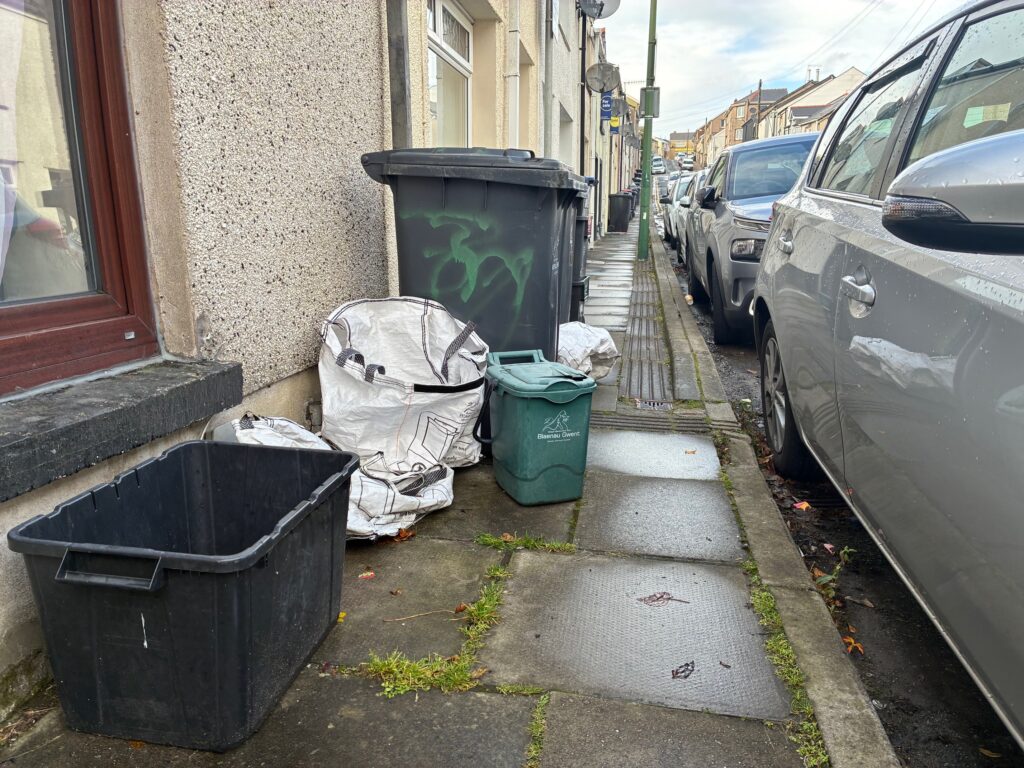
And should our streets be made to look like grotty bin-lined, pride-free zones? What message is that sending to visitors to our land, drawn-in by idyllic shots of mountains, charming houses and the like.
I’m happy to hop on to the road when safe to do so personally, but should young children, parents with prams, the visually impaired and those in wheelchairs not be prioritised over drivers?
Too often, it feels like those on foot, who should be the number one priority above all others, are completely overlooked.
Whatever the hazard though – from car to cyclist, bin to sand bag – one thing is for certain, and that’s that very few of those with power on our councils and at the Senedd have a disability, or a family member with one, and it shows.
If they had, we’d have our pavements back overnight.
Support our Nation today
For the price of a cup of coffee a month you can help us create an independent, not-for-profit, national news service for the people of Wales, by the people of Wales.



Agree completely. I think our politicians don’t have the guts to pursue a nationwide parking ban., as it might upset too many SUV owners.
I’m not sure focussing just on SUV owners will help that much. Commercial vans and just people who wish to park near their own homes puts pressure on the space available. The reality is, our small streets weren’t meant for this level of traffic. Pedestrianisation must be the answer, with licensed local council parking for residents.
Over recent years our cars have widened significantly and on small Welsh valley roads parking on the pavement, at least on one side of the road has become a necessity whether you want to or not. There have been calls for vehicle manufacturers to start designing smaller again but it’s going to be a big ask for people who now enjoy spacious interiors.
They need spacious interiors because a lot of them are quite “spacious” themselves; they could hardly fit into a car from 30 or 40 years ago. The irony is, of course, that if they walked and cycled, they could become less “spacious”, and we could have our streets back.
I urge pedestrians, those in mobility scooters, people with children in push chairs etc, to make a point of proceeding down the middle of such streets, and refuse to get out of the way of those who think the possession of a tin box on wheels gives them the right to intimidate everyone else. They have taken our space, so we will take theirs; chwarae teg.
Or alternatively, when pedestrians struggle to get passed a car parked on the pavement, they could ‘accidentally’ make an unplanned contact between, say, their housekeys and the pavement parked vehicle…
Not that I’m advocating illegal of course, but it can sometimes be a real struggle to get past an illegally parked car.
If I have to squeeze past an illegally parked car, I don’t consider myself responsible for any “accidental” damage.
I agree, but its not just parking. Although the law says pedestrians have the right of way, its a brave person who puts that to the test.
I understand, but the more pedestrians that stand their ground, the more motorists will realise that they don’t own the streets. This curse of “motonormativity” ( the widely held and unchallenged belief that the car rules) must be combatted. I have found it helpful to memorise the relevant sections of the highway code, to browbeat the motor morons in situations of conflict. I have to walk down a narrow lane to get to the bus, and my tactic is to walk down the middle. When I hear a vehicle coming, I stay in the middle until I hear them slow… Read more »
The problem is with SUV drivers – entitled little sh!tehawks that they are.
And the problem isn’t just SUVs parked on pavements either. Their driving is abysmal – bullying other motorists (in sensible sized cars) and pedestrians alike. Utterly selfish imbeciles.
It is amazing what you can do with a lentil, in the style of the Tyre Extinguishers.
If there is any issue that undermines the freedom of pedestrians to go about their daily business, this is it. Where I live, the car is supreme. The pavements are very narrow meaning everyone has to walk in the road, for users of pushchairs, mobility scooters, or just people on foot, it is a nightmare dodging the traffic. I would do more local shopping in town, instead I get it delivered.
Pavement parking should be banned. It’s dangerous to force anyone out into the road and while I suspect the bins are here to stay, stopping the other obstructions will help. Pedestrians aren’t even an afterthought at present and that needs to change. If you bought a vehicle with no idea of where to keep it, that isn’t my problem, it’s yours. A chap living locally on one of the narrower, more winding residential roads in the area, has one of those gender-affirming trucks that takes up half the street width and, of course, he parks it on a blind bend… Read more »
‘Gender-affirming trucks’ has made my day. They really are the worst, agreed.
Yes, priceless! Too much American tv?
In Bangor it’s not just the parked cars very few of the pavements even have lowered kerbs to even be able to cross a road with a wheelchair or mobility scooter. Just to get to my nearest supermarket I have to use either rough back alleys or cross the A5 4 times in order to get there. Something really needs to be done. It’s obvious the councils have no thought as to the accessibility needs of the disabled.
even now new build estates dont provide sufficient parking. Ohhhh a 3 bed house i know what they need 1 parking space…. gee thanks.
Supermarket build….”Brian what the width of the smallest car available in the Uk…. actually i dont care just make our spaces that small so doors ger bashed.