
Clueless Labour
Ben Wildsmith
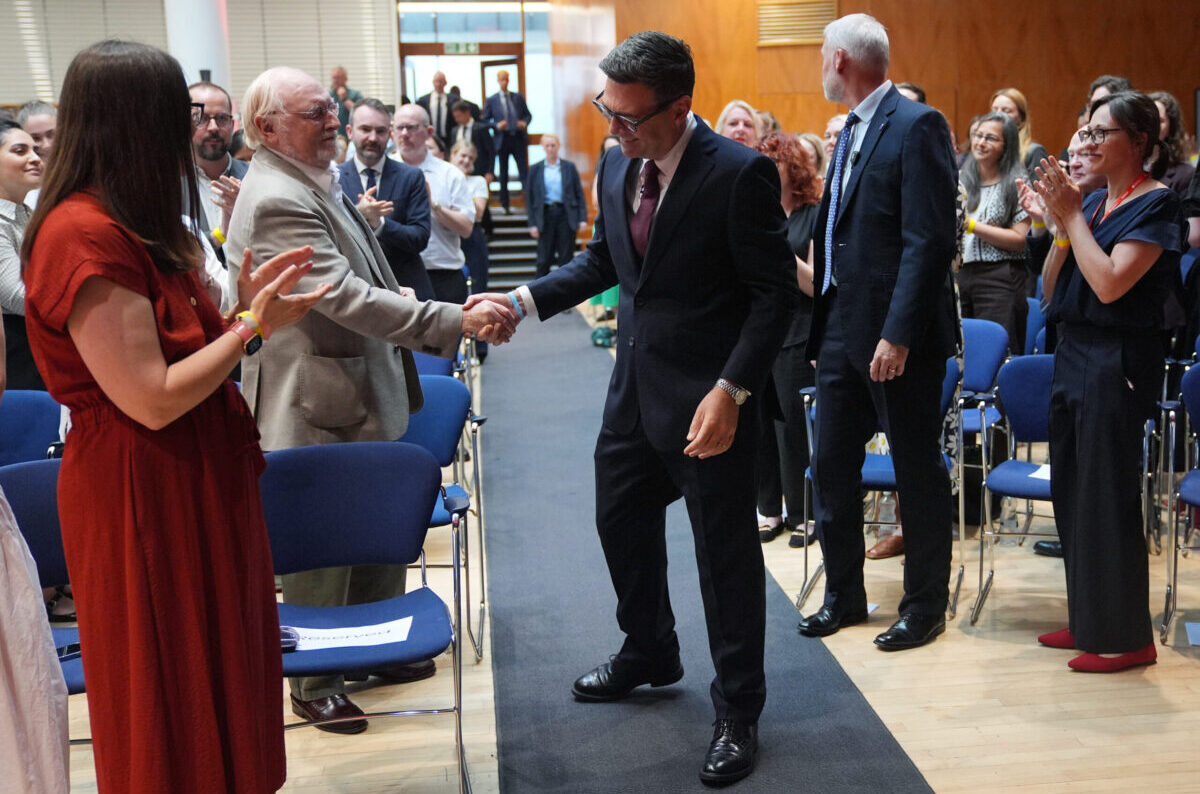
This week’s news that Andy Burnham has refused to transfer any further powers to the Welsh Government has provoked fury amongst many.
To demand constitutional parity with Scotland is hardly unreasonable, particularly set against the strong showing for Plaid Cymru in May’s election. That result indicated a clear mandate for Rhun ap Iorwerth to pursue Wales-specific change from Westminster, as the electorate sent a message of dissatisfaction with Westminster-based parties in general, and Labour in particular.
When Mr Devolution himself, Andy Burnham, executed his palace coup, it seemed to be a natural point at which our position in the UK could be rethought. If that dissatisfaction were addressed, it might allow a spirit of cooperation to develop between the two governments and start to repair Labour’s reputation in Wales.
Well, so much for all that. Jaded observers have pointed out that Labour has always been a unionist party, wondering why anybody would have expected anything else.
If we are to place this decision in the context of Labour’s historical position, however, we run into two problems. Firstly, the transfer of these powers was in Labour’s own manifesto for the Senedd election. The Ken Skates Massive is supposed to support this change, having explicitly called for it themselves when in government.
How ‘Welsh Labour’ can continue to claim legitimacy as a distinct political entity is now unclear. Once again, it finds itself on the side of Reform’s braying mob, seemingly content to see our democracy sidelined.
Secondly, Labour’s unionist history in Wales is rather more nuanced than people often assume. My grandfather was a Labour unionist, which, given his deep love of Wales, confused me. He explained it to me like this. As a socialist, he had fought and been injured in WWII for what he believed would be a transformed Britain.
The 1945 Attlee landslide is often ascribed to informal socialist education groups, often run by Welsh teachers like my grandfather, which influenced the votes of soldiers serving around the world. His take was that he’d fought for a socialist Britain and was entitled to his share of the wealth represented by the uniform he’d worn.
For many of his generation, any form of nationalism was anathema, forever associated with fascism. The victory in 1945 was to be a stepping stone to internationalism, with loyalties deriving from class rather than nationality.
It was to this section of Labour’s support that Neil Kinnock pitched his anti-devolutionary brand of Welsh politics. Kinnock Sr. is an influential voice in Burnham’s Labour Party. He is viewed as a grandee of the ‘soft left’, the faction that sits between Bennites and Blairites and from which Burnham derives his core support.
My grandfather died during the miners’ strike, late enough to see Kinnock withhold support from the strikers, but not to see the transition to neoliberalism that he chuckled along with later under Tony Blair, nor, mercifully, to witness Kinnock’s accession to the House of Lords.
Labour’s unionism today is entirely divorced from its socialist past. It’s only been a couple of years since Keir Starmer wouldn’t go out for a bottle of milk without a union jack being held aloft, lending the party a visual message more suited for the DUP than a movement committed to international socialism.
Inconveniently for Labour, Wales has proven to be remarkably stubborn in insisting on values that don’t play well in the Home Counties of England. For decades we sat here as a reminder of everything the party was jettisoning in pursuit of middle-class votes and acceptability to financial interests.
All that Britain has left from the values of its WWII socialists is the NHS, and that has been fetishised as a sacred exception to the rule of markets by a Labour Party that no longer understands the values that brought it about.
Cosplaying
Nothing turns my stomach quite like the spectacle of Labour politicians cosplaying their party’s history at miners’ galas and the like, mouthing the platitudes of comradeship whilst enforcing the will of the banks on people it betrayed decades ago.
Labour’s eventual undoing in Wales, after enjoying extraordinary loyalty for so long, was its arrogance. Its mistake is in believing that Labour shaped Wales, when the reverse is true.
The enduring Welsh ethos of community response to hardship flowed from the chapels through the Labour Party into achievements like the NHS and social housing programmes.
Nothing flows through our communities into Andy Burnham’s cabinet. It is clear that his vision of devolution has no space for the unique and genuine character of Wales. Under it, we would be ironed out into cultureless local authorities which could never make inconvenient demands on behalf of us all.
Loyalties
If that ambition is pursued, it will enrage people on the right too. Our loyalties cannot be imposed on us from above and ascribed to manufactured entities that are divorced from the history and values of the people they govern.
Even the most ardent internationalists among us have never argued that Wales isn’t a thing at all. It was a thing before Labour and, on current form, after it, too.
We will see how keen Burnham and Kinnock Jr remain on our local authorities after voters have their say in next May’s council elections.
If Labour’s Senedd cohort continue to play footsie with Reform for clicks and views, I suspect the result will force a rethink on this week’s decision.
Support our Nation today
For the price of a cup of coffee a month you can help us create an independent, not-for-profit, national news service for the people of Wales, by the people of Wales.
Get more trusted Welsh news
Choose Nation.Cymru as a preferred source in Google News to see more of our journalism.