


Council tax reform will be Plaid’s first real test in government
Mark Drakeford
In this short article, I deal with a long-neglected issue in public policy making, but one which has a long history in Wales, and which has a contemporary relevance.
The issue is that of land and property, and, in particular, its taxation.
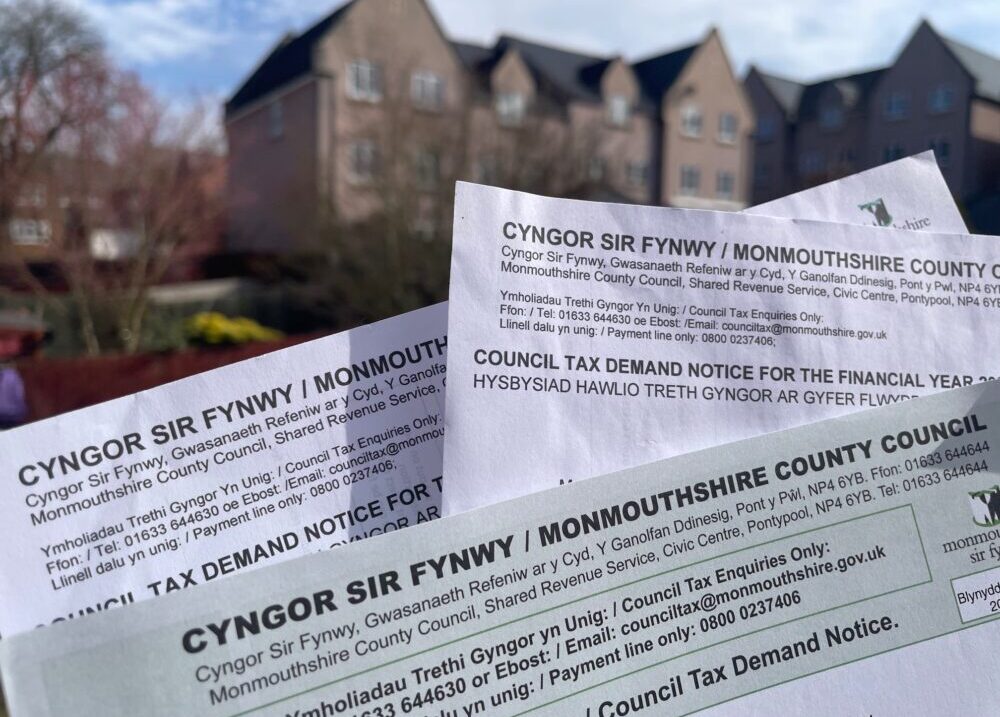
One of the earliest challenges to face the in-coming, minority Plaid Cymru administration in Wales will involve a revaluation exercise, designed to make Council Tax fairer. The timetable for implementation of that exercise is already set out in statute, culminating in April 2028.
The commitment has its origins in the Cooperation Agreement between the then Labour Government and Plaid Cymru during the last Senedd term. As the First Minister of the time, my ambition for the Cooperation Agreement was that it should bind two Parties together in tackling the most difficult policy problems.
Matters which could be taken forward by a single Party did not require an agreement. But many of the most challenging issues required, I believed, a wider political effort, if success was to be achieved. The Cooperation Agreement was signed on 1 December 2021 and was intended to last for three years.
A commitment to council tax revaluation was certainly worth its place on that ‘problem’ list. While Scotland and England have seen no revaluation of the council tax based since its inception (reinforcing, in the process, the inherently regressive nature of the tax) Wales has carried out one revaluation exercise in 2005.
As someone involved at the time, I think I can fairly say that the level of public hostility to which the exercise gave rise was considerably greater than anticipated. In vain did Ministers explain that revaluation did not raise any additional money: it simply distributed existing bills in a fairer way.
Those whose bills went down, or were held down, remained silent. Those whose bills went up took full advantage of the newly emerging e-mail to make their anger known.
A hastily assembled (and expensive) ‘transition’ scheme had to be put in place to mitigate the impact at household level. While the policy was undoubtedly the correct one, the political and administrative folk-horror which became attached to it meant that nearly 20 years went by before the policy challenge could be grasped again.
The Cooperation Agreement came to a premature end in May 2024, following the elections of new Leaders to both Plaid Cymru and Labour. In the process, the commitment to revaluation took a step back from the intentions of the Cooperative Agreement.
Now, instead of implementation before the elections of May 2026, the date was moved into the new Senedd term. The saving grace was that it did so through primary legislation, which also commits future Seneddau to regular, five yearly revaluations in future.
That date, however, means that extensive preparatory work will already have been undertaken, often led by expert advice from the Institute of Fiscal Studies. The new Government will have to make rapid decisions, in a contested area, where the political stakes are high.
A great deal will be learned from the approach taken. In opposition, Plaid Cymru generally made great play of what it portrayed as Labour’s lack of ambition, especially in tackling poverty.
Council tax revaluation is a responsibility which lies entirely in the hands of the Senedd and its Government. In this case, there is no Westminster Government to blame.
Radicalism
The radicalism – or otherwise – of the new administration’s approach will be assessed against its proximity to the advice provided by the IFS.
From its first report in 2020, the Institute concluded (unsurprisingly) that the system was ‘ripe for revaluation and reform’. It provided a menu of potential measures to take forward that reform, ranging from simple revaluation (keeping the present banded system but updating property values) through changes to the bands themselves and onwards to more radical reforms of the system.
And in that regard, the incoming Government will also have at its disposal a wealth of recent implementation detail surrounding an entirely different system of taxation, Land Value Tax, as well as over a century of history since Lloyd George’s commitment to LVT in his People’s Budget of 1908.
In opposition Plaid Cymru often criticised what it saw a lack of progress in this more fundamental possibility for reform. That too will need to find a place in the decisions to be made in the coming weeks, rather than months.
Resilience
It has rapidly become convention wisdom that the elections of May 7th marked a seismic shift in Welsh politics. It can be argued more fundamentally, I believe, that the most striking feature of the election outcome was the resilience of long-established Welsh political preferences.
For more than 150 years, Wales has preferred governments of the left of centre. Left of centre parties secured 60% of votes cast in May’s elections, leaving parties of the political Right sharing the remaining 40%.
Change took place more between parties within the two blocks, than between the blocks themselves.
That is why the revaluation issue is relevant. It provides an early test of the extent to which an incoming administration will assert its self-asserted radicalism in office. It also represents a challenge for the much-diminished Senedd Labour Group.
The arithmetic of the new term means that nothing progressive can make its way through the Senedd without the involvement of Labour.
The implementation of council tax revaluation will also provide an early test of the extent to which an appetite exists for cooperative action, in pursuit of radical change. And all that, in turn, will be help shape the policy and political landscape of the next four years in Wales.
Notes
Institute for Fiscal Studies (2020) Revaluation and reform of council tax in Wales, IFS Report R169
Institute for Fiscal Studies (2026) The Welsh Government’s record on tax and benefit policy, March
Welsh Government (2026) A Land Value Tax for Wales? Claims and contexts
Welsh Government (2026) Testing Land Valuation Methodologies – Publication of Findings, Written Statement, March 17
Support our Nation today
For the price of a cup of coffee a month you can help us create an independent, not-for-profit, national news service for the people of Wales, by the people of Wales.
Get more trusted Welsh news
Choose Nation.Cymru as a preferred source in Google News to see more of our journalism.



Highly contentious issue so understandable why the article didn’t want to mention the real facts or figures, though two word at the top suggest the usual political desire to take money from some people to give to other people. So this desire could mean an elderly couple caring for themselves after long working careers see their current £5,600+ council tax bill increase astronomically, to an extent where they are forced out of their lifetime home. Meanwhile, next door could have several individuals, some working and earning tens of thousands of pounds while others never intending to work cost the system… Read more »
It’s a property tax. Your high occupancy household also saves money by sharing energy, water, internet, food and even the VAT on their big new TV they split the cost of.
This policy will sink or swim by its implementation. Your elderly couple example could be avoided by applying any new regime to new council tax accounts, so existing arrangements continue perhaps even for decades until there’s a change in occupancy.
Spot on. Sounds like it is trying to steal people’s homes by the (ahem) back door. If so, then people should fight it every step of the way and simply refuse to pay. Disgusting to create stress amongst the elderly.
So you have a particular interest in a Band I property, of which there are 5,000 such homes out of 1,400,000 in Wales. Under the current system those in Bands A to D may well be paying more in proportion to their incomes and value of property compared to your hypothetical pensioners.
Hopefully, collaboration between progressive parties will continue to ensure that short-termism no longer prevents important changes. Social care reform is the other issue that needs to extend beyond party politics and the life of a single administration.
As Mark Drakeford points out, there will be much noisy flak to resist.
Sums up his time in government. Lots of words but no substance whatsoever. Where are the facts, the figures, the examples etc so the people of Wales can understand what this actually means?Extraordinary stuff. Explains exactly why the public’s engagement with politics is so low.
It seems to be an invitation to Plaid to finish what they started and fix a system that even the original architect Michael Portillo acknowledged was deliberately distorted in favour of the wealthiest.
https://www.bbc.co.uk/news/av/uk-politics-17312335
Dom, That would have been on the English system. The Welsh system was far recently changed and are more reflective of actual values. The English system is more closely based on the previous system where they counted rooms etc The Welsh system has a band I that is absent in England. A quick trip across the Dee where land value is far higher will show you houses valued far higher than in Wales paying much lower council tax. Indeed equivalent 3 bed Vs 3bed despite some 30;% higher value in Cheshire/ Wirral will have lower council tax. This is simply… Read more »
One more band and a revaluation doesn’t change the point. There should be no upper limit. A property worth double the neighbours should pay double the property tax. There’s no justification for discounting the most expensive properties. The excuse of asset rich cash poor retirees can be solved with a discount like the single person discount. There’s no need for everyone in similar properties to pay less.
have a look at these 2 band E properties. One in Chester the other in Mold. Both 3 bedrooms, the Chester house is larger, detached ,with 3 double bedrooms price offers over £485000. The Mold house is semi detached has 2 double bedrooms and a box room so it is the smaller house.£375000 Both are Band E council tax Chester £3077 council tax Flintshire=£2904. So the Chester house is valued at 29% higher than the Welsh house but is paying a mere 6% higher council tax Wales leads on council tax revaluation – but has followed England on a range… Read more »
I’m not sure you understand how council tax works. The valuation is used to determine their *share* of the council’s total bill each property contributes. The properties might be priced higher in Cheshire but the cost of care home, a teacher’s salary or filling a pothole is broadly the same so the amount that needs to be raised from council tax payers will be similar. If it worked like VAT, a fixed percentage of the value, then London councils would be rolling in gold while the poorest would have almost nothing to run essential services. So the point of reform… Read more »
Dom, ‘Im not sure you understand how council tax works’
Dom your first comment was about portillo amending the English system and you implied that applied to Wales. I think you will find that I am not the one that does not understand the system.
Dom, if you are suggesting that I am unfamiliar with the Council Tax system. It was I that pointed out that your citing of Portillo referred to the English system. We in Wales have a different system. Regards
It’s the same fundamental system because it was set up by Portillo before devolution, and has only been tweaked since.
The system in Wales HAS been changed. Your initial post was that it was as Portillo. That is not the system in Wales . I have already posted a link to the institute of financial studies that explained the difference.You are now posting straw men
It is already based on historic valuation. The changes proposed are to rebase the valuations. That is not changing the system.
The IFS article only discusses revaluation. Revaluation isn’t reform. It doesn’t change how the system operates. A £2m home will still pay the same tax as an £8m home. Both will pay proportionally far less than a £120k home. This band A will pay £1.12% of their property value annually while the £8m home only pays 0.058%. That’s nearly 20 times less.
An interesting point regarding the need for Labour to push progressive laws through the Senedd. I appreciate that Mark Drakeford took his time to write this, and I hope he’s doing well after retirement from politics, but I’m confident that Plaid will have that ambition that Labour lacked. It’s still an important fact that the centre-left majority needs to be in accordance to a degree.
Eidion, He does not have anything better to do. It is really a poison chalice for Plaid, and Drakeford knows it.
That’s unfair. At least he’s being productive with his time. Of course he won’t be favouring Plaid, he’s a former labour leader who stands against what Plaid believe in, but this is the current state of affairs in the Senedd, and Labour does have a vital role on what passes and what doesn’t, whether we like it or not.
Political parties need to protect ‘aspiration’. Aspiration is a key driver of growths. Middle earners are a key demographic, the silent majority who are fortunate to earn enough not to be eligible for benefits but increasingly caught in the 40% tax band (plus possibly paying 9% of their income on a student loan). These middle earners are rarely if ever mentioned. Those who are unfortunately in poverty and the mega wealth are constantly talked about. The aspirational middle earners need to be looked after too. The Welsh Government need to tread very carefully when discussing council tax.
It’s depressing how much time over the past two years has been discussing taxes rather than discussing economic growth or boosting productivity. It just seems like labour and plaid aren’t so interested or don’t have ideas about how to do the latter.plaid should be focusing on their plans to grow the economy, this should be a secondary, lower priority issue. Make pat McFadden is right?!
Pat McFadden’s recently quoted comment is about the neatest summary of current politicians’ attitudes. Too many looking to gouge even more tax revenue by any means, very few if any willing to examine expenditures and dig out the horrific wastes that are rampant in our public spending. Today’s article about that Ajax military vehicle is all about mindless spending with little or no control.
It’s hard to disagree with them. Every government budget is being cut this year because labour weren’t prepared to cut the rate in which benefits increased (not even the benefits themselves). Military, education, business support, sports and culture -all facing absolute cuts in expenditure
‘Discussing economic growth or boosting productivity’ is difficult for many, especially when the individuals accountable for it have an inadequate track record. Much easier for them to apply the Politics of Envy and divert discontent toward those who have applied themselves and succeeded.
The outcome of the above is quality workers deciding not to come her and the talent we have developed decide to leave. Both are crucial for us to even consider independence in the long term, but too many just want Cymru as their free meal ticket at others expense.
yes on all accounts.
At my company, we can’t recruit talented international candidates
How do you keep ‘growing’ with finite resources?
Good point, maybe you could ask one of the 15 countries that have overtaken the UK in GDP per capita in past 50 years – or one of the 30 countries expected to overtake in the next 25 years?
While concentrating on taxation of homes is understandable a Land Value Tax (LVT) has to include commercial property and land. For example there is a sizeable housing estate being built in Rhostyllen near Wrexham but the original planning permission was given in 2007 and it is only in the last three years that real building has taken place. That planning vastly increased the value of that land but no local taxation is received until the housing is occupied. A LVT will encourage quicker development with benefits for housing, jobs and local economies. Planning permission is only valuable because of public… Read more »
Construction companies, the large ones have very large land banks. Several years worth of construction. Barrett Redrow has 6 years of worth of construction in unused land. It allows them to ride fluctuations and to move the construction effort across to where there is most demand.
It will be interesting to see if Reform oppose reform.
When Mark Darkeford says “nothing progressive can make its way through the Senedd without the involvement of Labour” he means that the Labour Party will form an alliance with ReformUK to block it.
But will Reform block it. They claim to be a party for ordinary hard working people not their millionaire backers, so how would they explain opposing cheaper council tax bills for lower band properties funded by more bands covering mansions.
Interesting to know how other c0untrues finance local services. The only measures really needed are higher charges for mansions and a decent Land tax on unused land in order to get it developed quicker.
There is one change that Mr Drakeford has omitted in his report in that changes in the Council Tax that once needed statute would be executable by a minister. Would the author want to comment on this? Is this not a further step from democratic process?
The WG might be well advised to think carefully about this. Local authority elections are scheduled for 6th May 2027. How and what local services should be funded has always been a contentious issue (Mrs Thatcher’s Community Charge – “treth ar bob copa walltog” sealed the Iron Lady’s political fate). As it is, many are convinced that they pay more and more for less and less. Whatever revaluations or reforms are proposed or enacted, there will be those who will feel they’ve been hard done by and politicians all to ready to exploit those grievances.
But what if the only the most expensive properties pay more and the majority get cheaper bills.