


Cymru is a country, not a county – the case for a New Deal with real powers
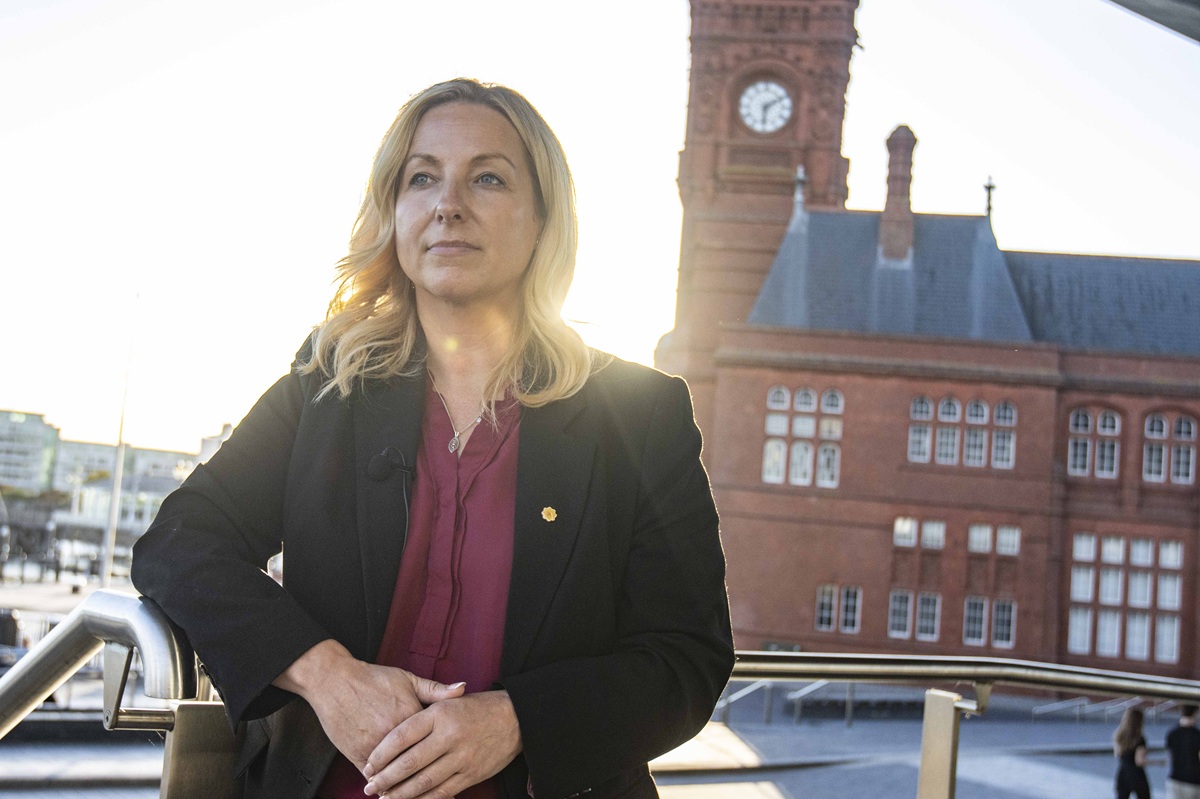
Carrie Harper, MS
As chair of the Senedd’s Constitution, Justice and External Affairs Committee, I have written to the Prime Minister inviting him to give evidence on his devolution priorities.
There is no doubt that Prime Minister Andy Burnham has helped shine a spotlight on the need to transfer power away from Westminster and closer to the communities it affects. Across these islands, there is growing recognition that decisions made in London do not always serve people elsewhere.
But Cymru enters this conversation from a very different position.
Cymru is not an English region. We have our own parliament, government and national identity. Our devolution journey is about empowering a nation to govern itself effectively and deliver for its people.
That is why the discussions our committee hopes to have with the Prime Minister matter. I would welcome the opportunity to hear his vision for devolution, but we must be clear about one fundamental point: Cymru is a country, not a county.
At Plaid Cymru’s conference at the weekend, our First Minister argued that equality with Scotland should be the minimum starting point for Wales. He has formally called for a New Deal for Cymru. More than a quarter of a century after the creation of the Senedd, too many of the powers needed to improve people’s lives remain in Westminster’s hands.
That begins with justice and policing.
Wales is unique among the devolved nations in having its own law-making parliament without a distinct legal jurisdiction. The Senedd legislates in areas that have a direct impact on crime prevention and rehabilitation, including housing, education, social services, mental health and substance misuse support. Yet policing, prisons, probation and most of the justice system remain reserved to Westminster.
The result is fragmented government and blurred accountability.
Consider a young man from north Wales struggling with severe mental ill-health. He falls through gaps in support, becomes involved in low-level offending and eventually ends up in prison. His health deteriorates, he loses his home and leaves custody with nowhere stable to return to.
The healthcare, housing and support services he depends upon are largely devolved. The prison, probation arrangements and wider justice system are not. Responsibility is divided between two governments, making it harder to join up services and deliver the outcomes we all want.
Behind every reoffending statistic is a person, a family and a community. Devolving justice is about securing powers for a purpose. It is about ensuring that the institutions responsible for healthcare, housing and social services can also shape rehabilitation, probation and policing. If Wales is responsible for helping someone rebuild their life, Wales should have responsibility for the justice system that shapes that journey too.
This is no longer a fringe argument. Former First Minister Carwyn Jones and former Lord Chief Justice Lord Thomas of Cwmgiedd are among those who have argued that the case for devolving justice deserves serious consideration.
The same principle applies to the Crown Estate.
Cymru possesses abundant renewable energy resources, and offshore wind has the potential to transform local economies and create thousands of jobs. Yet revenues generated from Welsh natural resources do not flow directly back into Welsh hands.
Scotland already controls its Crown Estate assets. There is no convincing reason why Cymru should be treated differently. If our nation generates the wealth, the people of our nation should have a greater say over how that wealth is managed and used.
Similar frustrations exist in rail infrastructure. The ongoing failure to devolve rail infrastructure on the same basis as Scotland, coupled with longstanding funding inequities, leaves Wales at a disadvantage. Better connectivity is essential for economic growth and access to public services, yet we continue to lack powers enjoyed elsewhere.
Alongside these responsibilities must come fair funding and stronger fiscal powers.
Borrowing powers
The Welsh Government Fiscal Framework does not adequately reflect our needs, nor does it provide the borrowing powers required to make the long-term investments Wales needs. Greater borrowing powers would give Wales the practical tools for delivering greater economic growth and higher-quality public services.
For Plaid Cymru, devolving power has never been an end in itself. It is about creating opportunity and ensuring that decisions affecting Cymru are made by people accountable to the people of Cymru.
As constitutional debates continue across these islands, Wales should approach them with confidence. We should not have to argue repeatedly for powers that have already been devolved elsewhere. Nor should we settle for arrangements that leave key decisions about our economy, justice system, transport infrastructure and natural resources in the hands of ministers who are not accountable to the Senedd.
The message to Westminster could not be clearer.
Simple truth
If the Prime Minister is serious about devolving power, he must recognise a simple truth: Cymru is not an English region. Cymru is not a county.
Cymru is a country.
And a country should have control over its justice system, responsibility for policing and welfare, ownership of its natural resources through the Crown Estate, fair funding, meaningful borrowing powers and the tools needed to build its own future.
Equality with Scotland is not a radical demand. A New Deal for Cymru would secure powers for a purpose.
It is the very least that Cymru should expect.
Carrie Harper is the Plaid Cymru MS for Fflint Wrecsam.
Support our Nation today
For the price of a cup of coffee a month you can help us create an independent, not-for-profit, national news service for the people of Wales, by the people of Wales.
Get more trusted Welsh news
Choose Nation.Cymru as a preferred source in Google News to see more of our journalism.


