

Duw, it’s hard
Lee Waters
It’s not yet six months since the landmark Senedd elections but the contours of the new landscape are becoming clearer. Plaid are finding governing hard; and Labour is finding opposition hard too.
Sporadic polls show voters are still sticking with the Welsh government but there’s an emerging sense that the new team of Ministers represent continuity rather than change.
The technocratic approach to the first hundred days in office reinforces the feeling that the minority government is more a set of fresher faces than a set of fresher ideas. Indeed their new Programme for Government feels like an extension of the approach taken during the Labour / Plaid Co-operation Agreement period under Mark Drakeford and Adam Price.
The big difference is that Plaid are now operating under their own momentum. Labour have quickly disengaged from being partners in wrestling with the trade-offs of government and have turned to the opportunism familiar in Oppositions.
A set of budget demands on funding for special educational needs which went way beyond what they did when in government just a few months earlier, and a reversal of its position in support of an unfunded motorway scheme, speak of short-term tactics rather than long-term strategy.
It is fair to say the mood swings have wrong-footed Plaid. They are scratching their heads looking for a rationale, but Labour’s approach is better understood through an emotional lens. From holding 50% of the seats in the previous Senedd, Labour now hold just 10% of the seats in the expanded Parliament. For a party that had dominated elections in Wales for over 100 years to be leapfrogged by Plaid, receiving less than a third of the number of votes won by Plaid Cymru, is more than disorienting – it is a deep trauma.
This is new territory for the Labour Party in Wales, and it is unfamiliar terrain for Plaid too. The new Welsh Government made two big mistakes at the outset which are causing them difficulties.
Firstly they misunderstood the weakness of their position in the Senedd. The election made them the largest party but it still left them six seats short of a majority. They misread the willingness of Labour and the Greens to let them take the post of First Minister as broader consent to govern alone.
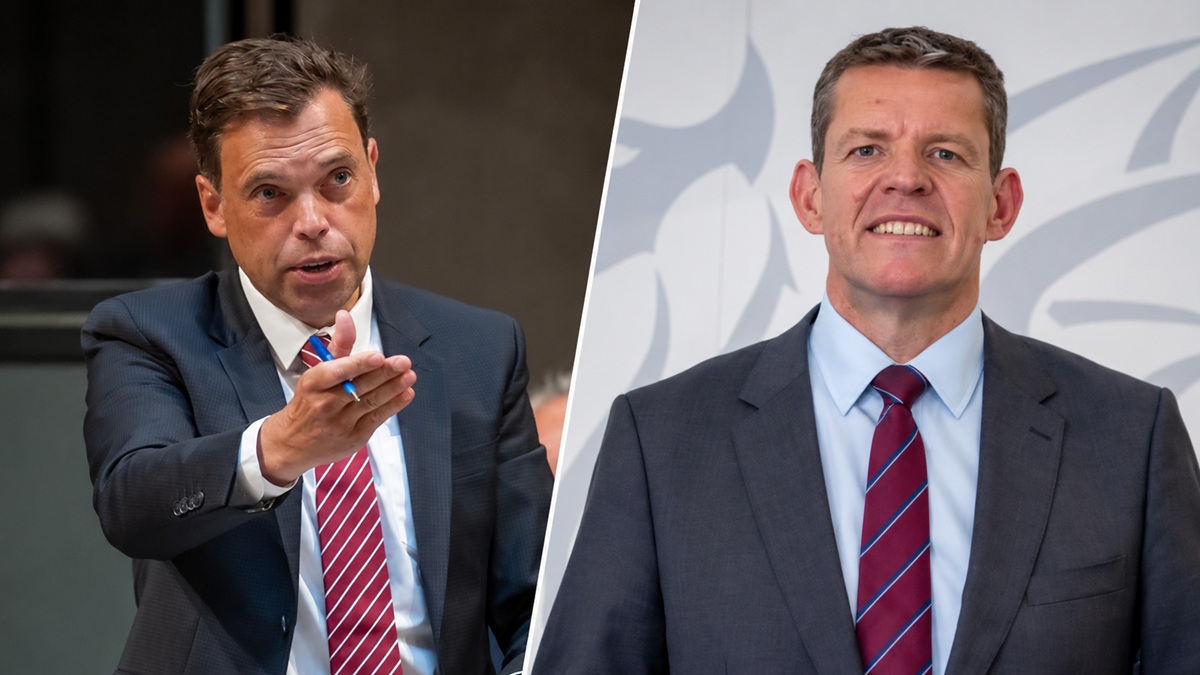
Rhun ap Iorwerth said he wanted to rule as the head of a minority administration, drawing confidence from the SNP’s successful experience between 2007 and 2011, when Alex Salmond governed Scotland without an overall majority by building support issue by issue. “We will build this nation every single day,” the Plaid leader said on the steps of the Senedd after his historic result.
Yet the circumstances he faces are markedly different from those confronted by Salmond. The key difference is arithmetic. In Scotland after 2007, the balance of power was dispersed amongst several opposition parties in Holyrood, allowing the SNP to assemble different majorities for different pieces of legislation.
Rhun ap Iorwerth faces a different dynamic. Between them Plaid Cymru, the Greens and the Lib Dems have only 47 of the 96 seats, and so short of the majority needed. Plaid’s internal politics make it hard, if not impossible, to strike deals with either Reform or the Conservatives, and so they are highly dependent on Labour co-operation.
Over-confidence
Plaid’s naivety and over-confidence were starkly exposed by its failure to get a routine mid-year budget adjustment through the Senedd. The much diminished Labour Group needed to be handled deftly, much as an experienced handler approaches a wounded animal. But instead the Plaid leadership showed poor political management skills.
Before the election Plaid had played hard-ball with Labour Ministers trying to tie down a budget deal before the start of the financial year. Mark Drakeford had eventually negotiated a package which left an incoming Welsh Government a fair degree of flexibility after the elections to set its own priorities. This inevitably meant that the new administration would need to agree a ‘Supplementary Budget’ to adjust the details of the spending plan to reflect the outcome of the election: and Plaid knew that.
Normally Supplementary Budgets are routine affairs; the details are generally technical and the politics is usually covered by the deal reached on the main budget. But this year was different. Plaid, however, tried to act as though this was business as usual.
When the Welsh Government published their adjusted spending plans at the end of June the First Minister said in a BBC Radio Wales interview that “It’s not like a budget round where you have discussions and talks with other parties in the same way”.
This was at best naive, at worst hubristic. And far from the handler soothing the wounded animal, this was the equivalent of poking it with a stick. Labour lashed out, and drew blood.
Plaid failed to pass its Supplementary Budget. The Finance Minister, Elin Jones, who had been heralded as the Minister with experience of government and after a decade as Presiding Officer, someone who knew how the Senedd worked, said she was ‘flabbergasted’ by Labour’s decision.
This brings us to the second of the two big mistakes made by the new Welsh Government. The defeat of its spending plans also reflected its failure to confront the trade-offs it was bound to face in government.
It was clear before the election that over the course of the Senedd term any Welsh government could expect a spending rise of just 0.7% every year in real terms. And grimmer still, the capital budget for building things is falling by almost 9% in real terms.
The costs of running public services are running well in excess of that because of the rising demands of an ageing population and the cost of inflation exacerbated by international conflict (which pushes up the public sector wage bill across the board). If the politically sensitive health budget is to be protected then spending on areas other than health will have to be cut by 2.7% every year of the coming Senedd term, Cardiff University’s Wales Fiscal Analysis team calculated ahead of May’s elections.
Add to this the estimated annual costs of some £400 million by the end of the Senedd term to fund Plaid’s promise of 20 hours of free childcare per week for all children under 4, and the First Minister’s initial reluctance to open up the spending discussion with Labour and expose their position becomes understandable.
Plaid were always going to face a very difficult set of spending choices. They knew that. But it was not reflected in the political programme they drew up in opposition. And now they are having to confront it in office.
Schadenfreude
And this is where Labour schadenfreude comes into play. The small Labour group is dominated by people who either as Ministers or as committee members felt that the people who are now Plaid Ministers were showboating during their time as opposition spokespeople in claiming that their Welsh Government was not doing enough, or spending enough.
And now the shoe is on the other foot. Some former Labour Ministers and advisers are quietly enjoying Plaid’s dawning realisation that being in government is hard, and the easy applause their opposite numbers scored before the election by pleasing interest groups is not possible to sustain.
And here the two big mistakes made by the new Plaid government converge – inexperience in government, and their failure to confront the trade-offs when in opposition (a mistake Labour are now repeating).
What happens next will depend on Plaid’s ability to quickly learn from its mistakes and recalibrate.
Rhun ap Iorwerth says he has ‘learned lessons’ from the damaging loss of the spending vote in July; But also he defended his decision to press ahead with the doomed vote because he thought “it was useful in the broader picture, for everything to have been laid bare”.
In other words he is still smarting at Labour’s decision to push their weight around and defeat the new government’s spending plans. “They had every right to vote it down. But they also had to consider how it looks for them” he added.
Power-broker
For its part Labour has avoided reflecting too deeply on its rout in the Senedd elections and have instead focused on exercising their power-broker status.
The character and make-up of the much smaller group is very different to the Labour Group in the previous Senedd.
On the afternoon of the election results day the Will Hayward newsletter published an interview from the Swansea count with the only Labour member returned for the new Gŵyr Abertawe seat.
Mike Hedges had not been an influential voice in the previous Labour Group when he had been one voice amongst 30, but in the new Senedd he is harder to ignore as one of just nine Labour members. As the results came in he told reporter Harvey John “when Plaid bring their budget forward the other parties will have the same chance to do to Plaid what they have done consistently over the budget.
So [if] the budget falls we might have an election. This time next year you might be talking to me again”. When asked which party he would work with in the new Senedd, Plaid or Reform, he replied “I will have great difficulty working with either”.
Engage
Rhun ap Iorwerth says the mini-budget defeat has taught him “improve the way we engage with others”. But it takes two to tango.
For nearly two decades Plaid showed themselves willing to strike multi-year deals with Welsh Labour to give the Welsh Government stability on a set of agreed policies. It does not feel like that is a spirit likely to be reciprocated in the current politics.
Rhun ap Iorwerth may still want to emulate Alex Salmond, while many in the Labour Group seem to be enjoying the freedom of taking positions they know they don’t have to find a way of reconciling with the limitations of money and politics. But there’s still a budget to be passed for next year, and that is going to be harder to do than the difficult deal on this year’s Supplementary Budget.
There are voices in Labour who have said the Plaid Government should be allowed to fail and a fresh set of elections should be held. I think they should be careful what they wish for.
Labour may do a bit better than they did in May, but elections are dynamic forces and a party in Wales that appears to be in denial about the depth of its rejection by the voters after more than a generation in charge risks deepening the sense of alienation so many of its former supporters feel towards it.
Launching Progressive Voices, a new initiative with former Plaid leader Leanne Wood to rebuild common ground on the left, Mark Drakeford reinforced the point that much of the current struggle to find the common ground comes from the unfamiliar position both Plaid and Labour find themselves in.
He reminded the public meeting in Cardiff that “so much of politics is about relationships, about finding ways of getting on with other people and being able to have the conversations that you need to have. That takes time. We must hope that the autumn has more of that about it than the summer”.
Lee Waters is a former Welsh Government Minister and regular guest lecturer at Cardiff University
Support our Nation today
For the price of a cup of coffee a month you can help us create an independent, not-for-profit, national news service for the people of Wales, by the people of Wales.
Get more trusted Welsh news
Choose Nation.Cymru as a preferred source in Google News to see more of our journalism.



Thoughtful and interesting piece, thanks Lee. What continues to surprise me is how NONE of the parties seem to have cottoned on to the reality of how a minority government is likely to be the norm under the new voting system. Instead we see comments about “Plaid failing to get a majority” as if this de-legitimises their role, rather than a focus on government by consensus. It is indeed ridiculous that some voices are touting the idea of letting the budget fail and forcing a new election. Utterly naive to think it’ll deliver a majority government and disrespectful of voters… Read more »
The cult of the status quo is strong in some quarters. Folks raised on adversarial politics struggle to let go.
The premise of this article is undoubtedly correct. It is beginning to look like continuity rather than change. Plaid seem unwilling to do much radical – leaving failing health boards and 22 unsustainable Councils untouched. Meanwhile, they row back on a Welsh COVID inquiry and abandon the revaluation of Council Tax with a laughable statement from the Finance Minister. They don’t seem to get that “continuity” will result in the same fate at the ballot box as Labour’s “continuity” regime – except it won’t take 27 years.
Here’s hoping they use the next three and a half years to prove doubters wrong and show genuine change, or we know who the electorate may turn to out of desperation…
Problem is they don’t have three and a half years. If they can’t articulate an agenda in the next 6-9 months, they won’t do it at all.
Sounds like you are hoping to railroad them into a catastrophic failure. Change can always mean worse and that’s not smart.
No. They were elected on a change ticket and I can’t see any change
coming from what they are currently doing or saying. Another Senedd term of the status quo on health, education, jobs, child poverty etc would truly be a catastrophe in my opinion.
Let’s not forget the job is being made slower by folks like Reform who voted to block more money for health, education and hungry children, and are filibustering the Senedd’s time with debates on matters reserved to Westminster.
True; but one could say that the Crown Estate, rail infrastructure, the Judicial system and policing are all reserved matters but this doesn’t stop Plaid talking about them. Nor is it particularly relevant to the absence of a coherent agenda on devolved matters.
If you’re suggesting that we should take Reform debating reserved matters as implied support for devolving the relevant responsibilities then you make a very interesting point.
I don’t think anyone would believe that. I am simply saying that if other parties choose to raise reserved matters (and they do all too often), Reform can’t be criticised for doing likewise – however obnoxious their views may be on the matter under debate.
But all the examples you listed (Crown Estate, rail infrastructure, the Judicial system and policing) were all areas where Plaid support devolution.
It is not true to say between 2007-2011 that in Scotland “the balance of power was dispersed amongst several opposition parties allowing the SNP to assemble different majorities for different pieces of legislation.” The SNP had 47 seats and Labour had 46 seats. Labour had to engage constructively with the SNP. It would have been suicide for Labour to coalesce with others, like the Tories. Now, in Wales however, the Labour Party are now vanquished. Having thrown any of professed principles out of the window. They dance with Reform as have no interest in doing what’s best for Wales. Labour… Read more »
Yes, Plaid have been a bit naive but Labour seem bitter and twisted. Has there been any reflection from the party as to why they fell so far? I doesn’t seem so. If the party contributes to the fall of the current government – it won’t look good for them. Reform is waiting in the wings to capitalise. Plaid and Labour have to up their game.
None of this reflects at all well on Labour