


Edward didn’t conquer Wales. We let him
Antony David Davies
Edward I didn’t conquer Wales because he was clever. He conquered it because we tore each other apart.
Petty rivalries. Brother against brother. Princes hoarding power. Ambition, jealousy, betrayal. While the English Crown moved with brutal clarity, Wales splintered. And in the cracks, our freedom died.
This isn’t just a history lesson. It’s a warning.
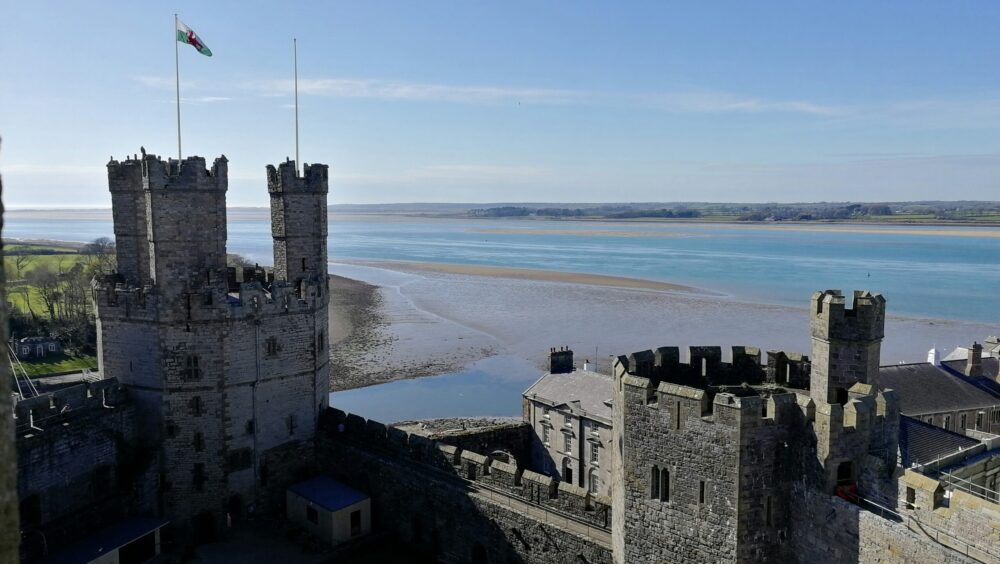
Long before Edward’s armies built their iron ring of castles, the native princes of Wales were already fighting each other more than they were fighting England. The proud courts of Gwynedd, Deheubarth, and Powys clashed in a ceaseless cycle of internal war — sometimes even allying with the English king to undermine a rival.
We handed Edward the keys to our own downfall.
Ruthless
Yes, Edward had money, power, and a military machine that dwarfed anything in Wales. He was one of the most ruthless and efficient monarchs of the European Middle Ages. Even a united Wales would have faced overwhelming odds. Edward’s England had wealth, manpower, and a war machine the Welsh principalities could never match. But disunity turned a monumental challenge into an impossible one. He didn’t need to deploy his full strength until we had already broken ourselves.
Llywelyn ap Gruffudd — the last sovereign Prince of Wales — knew the cost of disunity. He struggled to unite the country, earning recognition as Prince of Wales in the Treaty of Montgomery in 1267. But even then, his rule was plagued by conflict — not from England, but from within. His own brothers turned on him.
In 1282, Dafydd ap Gruffudd — Llywelyn’s younger brother — reignited conflict with the English Crown, giving Edward the pretext he needed to crush Welsh resistance. It proved a fatal turning point. That winter, Llywelyn was ambushed and killed near Builth. His head was sent to London, mounted on a pike above the Tower, crowned mockingly with ivy. A year later, Dafydd too was captured and executed — the first recorded case of hanging, drawing and quartering in British history.
Betrayal
Wales was annexed. Our laws abolished. Our culture suppressed. Our freedom extinguished — not just by conquest, but by betrayal.
This wasn’t new. It was a pattern. In the generations before Edward’s conquest, Welsh leaders had squandered every chance at unity. The princes of Deheubarth and Gwynedd jostled for supremacy. Powys shifted alliances like weather vanes. And the Marcher Lords — backed by the Crown — were always ready to exploit our weakness.
We had the mountains. We had the warriors. We had the cause. But we did not have unity.
And in that failure, we lost a nation.
There’s a brutal honesty in that history. History doesn’t repeat, but it rhymes — and the same self-sabotage that doomed Llywelyn echoes in our headlines today.
Divided
Scroll through modern Welsh politics and you’ll see the same patterns. Party divisions. Petty point-scoring. Personality clashes dressed up as principle. I won’t name parties or figures — because the pattern runs deeper than that. It’s not about left or right. It’s about whether we rise together or fall divided.
Too often, the biggest threat to Welsh progress is not Westminster. It’s ourselves.
Edward didn’t have to break Wales.
He just waited for us to break each other.
And we did.
As we look to the future — to questions of independence, language, and self-determination — we must remember this. Power never yields itself freely. It must be earned — and defended — by unity of purpose. Not uniformity, but solidarity. Wales will not rise through cynicism and factionalism. It will rise when we speak as one.
We — not as individuals, but as a people across generations — have too often been our own undoing.
This is not just the story of 1282. It is the story of every generation since.
And the next chapter is being written now.
So we must ask: Will we finally learn from our past — or let Wales fall, again, not by conquest but by our own hand?
Antony David Davies FRSA is a historian of Welsh upland communities, author of Old Llyfnant Farming Families, with deep family roots in Montgomeryshire.
Support our Nation today
For the price of a cup of coffee a month you can help us create an independent, not-for-profit, national news service for the people of Wales, by the people of Wales.



This issue, as the article states, is still with us today. There are even independence movements that disagree with each other. We will only get independence when fully united.
And we magically get an economy that earns us all lots of that money stuff. That’s always handy.
The old “too poor” line, eh? Well done you for finding that at the bottom of a barrel.
The Normans conquered a united England in one day at Hastings in 1066. I have seen it plausibly argued that the reason it took them a further 180 years to fully conquer Cymru was precisely because it was not united in the way England had been.
All independence parties and movements MUST respect each other for the cause of an independent Cymru.
This, plus a country full of plastic Welsh people and Dic Sion Dafydds who would gladly sell their country and language and everything their ancestors held dear for a bowl of lentil soup.
‘Long before Edward’s armies built their iron ring of castles, the native princes of Wales were already fighting each other more than they were fighting England.’ What ultimately became ‘England’ went through a very similar episode in its history – just five hundred years earlier. The Danish invasions turned out to be a benefit in terms of ultimate English unity, simply by eradicating every English kingdom except for Wessex in the far south. With the consequence that, as Danish power ultimately waned, Wessex came to dominate the whole of England. In terms of its unity, maybe Wales would have benefited… Read more »
Ironically enough nowadays, the greatest threat to our national heritage, culture and language, is from a party that claims to want to preserve its native culture and language. You couldn’t make it up.
Reform have already completed the part where they spread disinformation and propaganda to get in-fighting started.
They will destroy as much Welsh culture as possible.
It’s also possible that splintering ensured survival. Unity may have led to annihilation.
Although Edward dominated the land militarily, nearly bankrupting England to do so, he never won the battle for hearts and minds. If anything the castles are an enduring symbol of his failure to abolish Wales.
I hate castles. I do wish they weren’t romanticised. They are brutal buildings built to dominate the people. Churches are not much different, just prettied up with stained glass.
Romanticising them is not only historically inaccurate it’s also a missed opportunity. They could be turned into house of horrors theme parks with a mix of outrageously gory exhibitions, 4DX shows and live re-enactments that leave visitors traumatised and struggling to keep their lunch down until they recover enough to go again. Not only would that be an opportunity for international tourists to really understand what went on in this land, it would be a nice little earner.
And it has remained ever thus. Village against village, The People’s Front of Judea, The Judean Popular People’s Front etc etc.
Edward 1st war crimes and cruelty from Scotland, to Wales, to his vile treatment of the Jews in England, we can certainly put him the same league as Hitler and Putin.
Next time, it’ll all be different!
It’s important to bear in mind that at that time, ruling nobles didn’t think in terms of nations. It was still a feudal system. A Welsh noble would happily throw in his lot with the English monarch if it meant advancing his own cause against his perceived Welsh rivals.
We need to be careful in looking at the past through modern lenses.
Nice one. There was little sense of Wales or indeed England. There was Dyfed or Deheubarth, there was Gwynedd and Powys. There were the great barons of England who were every bit as independent and feuded with each other. The king of England was often weaker and far less important. The Englsh (German) royal family and conservative historians have worked hard to conceal how irrelavant the kings actually were with a few exceptions.
if Wales had been united it would still have been conquered. Edward was a monomaniac who was determined to get what he wanted. His conquest of Scotland was frustrated as much by his advanced age as by Scottish resistance – which was not backed by all Scots. The conquest of a united Wales would have caused a great many Welsh deaths. But it would still have happened.