


English Isn’t My Enemy
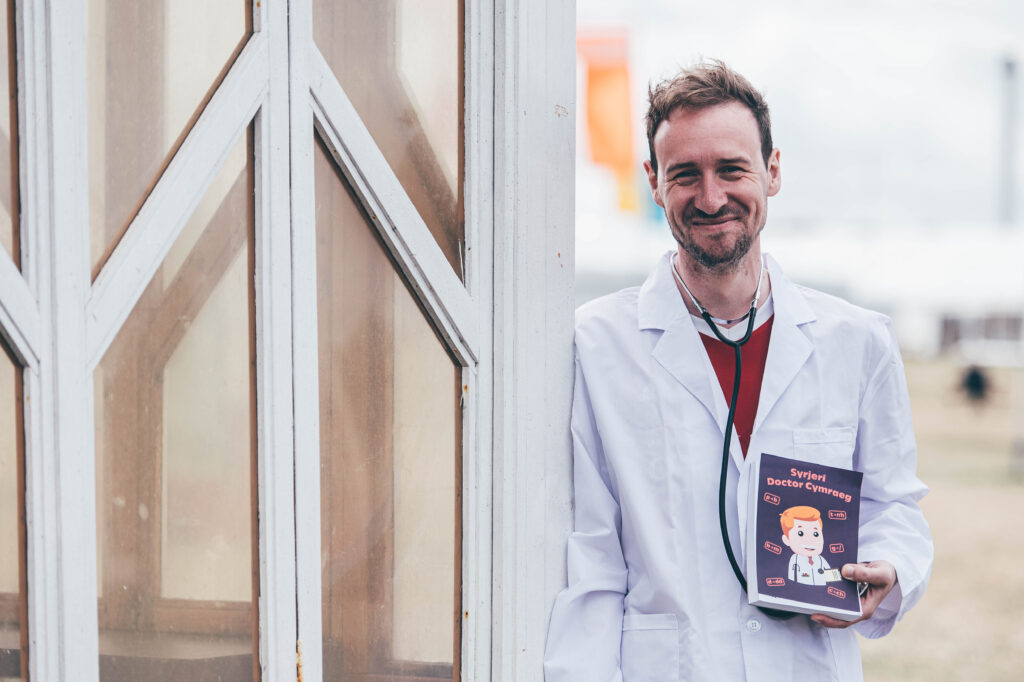
Stephen Rule, Doctor Cymraeg
Every now and then, someone sends me a video and asks, “What do you think?”
This week, it was a speech by New Zealand MP Tamatha Paul.
If you haven’t seen it, Paul was arguing passionately against making English an official language in New Zealand. During the speech, she described English as a “bastard language” and spoke passionately about protecting indigenous and community languages. She even mentioned Wales as an example of a country that values them.
And I’ve got to be honest… I’ve spent the last couple of days thinking about it.
Because I found myself agreeing with, well, most of it! And yet, I still came away feeling uncomfortable.
Not because I don’t admire what she’s trying to achieve. Quite the opposite. I suspect we both want to see indigenous and community languages flourish. And she’s just incredible!
It’s simply that, if I were making the same case, I think I’d have chosen a different route. The destination feels much the same. It’s the road that differs.
English isn’t my enemy.
People sometimes assume that, because I’m so passionate about Welsh, I must therefore dislike English.
Not at all!
English is my first language. In fact, it was my only language until I was about nineteen. I’m very proud to speak it.
And honestly… can you imagine trying to learn the bloody thing from scratch? “Go” becomes “went”. “WENT”? How the hell is the past tense of go… went?
Its spelling makes no sense. Its pronunciation makes even less. Half its vocabulary appears to have wandered in from somewhere else entirely.
It’s gloriously chaotic.
It’s also extraordinarily magnificent.
And that’s precisely the point. English is an extraordinary language. Welsh is an extraordinary language. Te reo Māori is an extraordinary language. Irish is an extraordinary language. EVERY language is extraordinary.
I’ve never understood why celebrating one should require insulting another.
Languages don’t do things. People do.
Now, from a purely linguistic perspective, I understand exactly what Paul meant by a “bastard language”.
English has borrowed words from Old English (obviously!), Old Norse, Norman French, Hindi, Latin and Greek. Even from Welsh, Irish, Scottish Gaelic, Manx, Cornish and Breton.
Like every language on Earth, it’s the product of centuries of contact, migration, trade, conquest, and borrowing. That’s not a flaw. It’s one of its greatest strengths.
But I still hesitate. Because English isn’t responsible for what happened to Welsh.
English isn’t sentient. It doesn’t wake up in the morning and decide to suppress another language. Governments do. Institutions do. Policies do. People do… sometimes even our own people!
And yes, sometimes a minority of people who just so happened to be speaking English did terrible things. That’s who history should hold accountable. Not the language they happened to speak.
Blaming English itself feels rather like blaming a violin because somebody played the wrong tune, don’t ya’ think?
There are a million and one reasons to embrace Cymraeg; family, friends, community, curiosity, history, music, culture, identity, belonging, work, simple enjoyment (if melting your brain around languages is your bag!)…
I genuinely think there’s only one wrong one. And, awkwardly, it’s the path I took!
When I first started learning Welsh, I was angry. Angry at what had been done to Welsh. At the stories I’d discovered. At the attitudes I’d encountered. The feeling that something precious had been pushed aside. That anger drove my naïvety.
In many ways, it got me exactly where I wanted to be. It helped make me fluent.
But if someone asked me whether I’d recommend that route… Absolutely not. Because somewhere along the way I realised something.
How can you hate a language? It’s just… a language. It doesn’t have intentions. It doesn’t have motives. It doesn’t choose.
The enforcement carried out by some of its speakers? That absolutely deserves scrutiny. But the language itself? That always felt like I was blaming the wrong thing.
Eventually I realised I wasn’t learning Welsh because I hated English. I was learning Welsh because I loved what Welsh had become to me.
Those are two very different motivations.
One thing I think people are perhaps overlooking is context.
Paul’s speech came in the final moments of defending a position. Her back was against the wall. That’s an intensely human place to be.
When people feel cornered, we don’t usually produce our most measured words. We defend. We push back. Sometimes we come out fighting.
And if that moment is layered on top of generations of linguistic trauma, it’s hardly surprising that the words used become even stronger.
I don’t think that’s unique to New Zealand. I think Wales knows exactly what that feels like.
For generations, Welsh speakers have defended their language. Sometimes against governments, against institutions, against neighbours. Sometimes against members of their own families.
When you’ve spent centuries defending something you love, eventually defending becomes your instinct. I understand that. Truly I do.
History matters. It should be taught. It should be remembered. It should never be hidden. But history can’t be the only thing we talk about.
At some point, Wales has to take responsibility too. Not responsibility for what happened… Responsibility for what happens next.
It’s very easy to point backwards. It’s much harder to ask: What are we doing today to make Welsh irresistible? Are we welcoming learners? Are we supporting parents who want to raise bilingual children? Are we creating communities where people actually want to use Welsh? Are we making the language feel joyful?
Or are we asking people to inherit our grievances before they’re allowed to inherit our language?
Because if we spend all our time explaining why Welsh was, until recently, in decline… we might forget to show people why Welsh is extraordinary, and how it’s definitely coming with us!
That’s the Welsh I want people to meet.
When I make videos, I don’t want people leaving thinking, “English is awful.” I’d much rather they leave thinking, “I had no idea Welsh was that interesting.”
Humour. History. Music. Stories. Curiosity. Joy. Those are the things that make people stay. Not guilt, shame, and/or hostility.
View this post on Instagram
Ironically, my favourite part of Paul’s speech wasn’t about English at all. It was hearing Wales mentioned. It was hearing Cymraeg celebrated. That wasn’t an attack. That was a celebration.
And I caught myself smiling. Because that’s the bit I want more of. Celebration is contagious. Curiosity and hope are contagious, too.
Those are the things that make someone download a language app. They’re the things that persuade parents to raise bilingual children. They’re the things that slowly change a culture.
I fully understand why people become fierce defenders of their language. History explains a great deal. But I don’t think it has to dictate how we advocate today.
I don’t want people to feel they have to reject one language before they can embrace another. I want them to discover why Welsh is extraordinary.
Because every language is somebody’s home. Every language carries stories and songs and humour. Ways of seeing the world that exist nowhere else. THAT is worth celebrating.
I’ve never wanted people to learn Welsh because they resent another language. I’ve always wanted them to learn it because they fall in love with this one.
Because, in many ways, that’s the road I accidentally started on. It got me where I wanted to go. But if I could choose again… I’d rather people arrived through love. Through hope. Through celebration.
I don’t think that’s just a kinder way to advocate for Welsh. I think, in the long run, it’s a far more effective one.
Find out more about Doctor Cymraeg’s books and lessons via his website, or follow him on X and Instagram.
Support our Nation today
For the price of a cup of coffee a month you can help us create an independent, not-for-profit, national news service for the people of Wales, by the people of Wales.
Get more trusted Welsh news
Choose Nation.Cymru as a preferred source in Google News to see more of our journalism.



Agree with a lot of this! It’s unfortunate the term she used to describe English – all languages will have various influences, from other languages and through time. That doesn’t make them inherently worse, flawed or indeed better than any other – we in Wales know something about our language being disparaged in this way! Just to say though, we do have to be resolute in using Welsh, sometimes to the upset of others. If we don’t insist on using it, everywhere and anywhere here in Wales, it will disappear by default. For every case where Welsh is the obvious… Read more »
Well said. Let’s not just use Cymraeg, let’s insist on it.
I agree focus on Welsh not English. But I think the point has to be made when someone (an Anglo no doubt) gets uppity about the eloquence and purity of a language that has more foreign influences than many others.
Well said. As a Welsh tutor I will always sing the praises of the beautiful Welsh language and do my best to help it grow and thrive, but I also love the English language. All languages are beautiful and unique, irrespective of the actions of some of those who speak them.
You’re avoiding the issue.
I don’t think Paul hates English. I think she hates the people who speak it who denigrate te reo Māori and treat it with contempt, the type of people who reject the very use of the indigenous name for their country, Aotearoa. Given the context, her use of emotive and combative language is entirely understandable and justified. Equality has never been won by asking nicely for it.
The problem is, such combative talk does disparage a language used by peoples who aren’t the group Paul is attacking. There are groups around the world who have taken English and molded it by adding or repurposing words to make it something amazing and that’s the beauty of it. Calling it a “b*****d” language not only ignores those examples of evolution, its also indirectly insulting those peoples who use it and help it evolve. It’s a lazy attack because it assumes that the language is an exclusively white one. It’s like Irish nationalists knocking rugby as an “English barrack room… Read more »
But many of the people who celebrate the English language certainly don’t see it as a true global language influenced by near neighbours, they see it as a supremacist tool from an age of empires, the only link to those days that made the UK bigger than the rest of the world. English for many people in the world is a tool to network their way out of poverty or a relic of colonialism, a capitalist language if you will.
This is not about loving or hating anything. It’s about the political domination of the English language over public discourse in Wales and its detrimental effect on the everyday use of Cymraeg. If Cymraeg is to thrive, then the centuries old process of Anglicisation needs to be reversed and overturned. It is a political matter and finding the right solution is a complicated matter. But framing it as a question of love versus hate is quite frankly infantile.
I agree there’s definitely plenty of cultural trauma to repair, Rhobat, but, at the same time, we, as Welsh people (speakers of Cymraeg or otherwise) have to begin taking responsibility of what happens next. We’ve failed in keeping hold of Cymraeg as much as there’ve been factors going against us.
you writing about your experience of discomfort and how you take a different route without owning the fact that you’re a privileged white man and not addressing that the histories of English ongoing colonization here are similar; in the physical abuse of children in the suppression of our indigenous languages, extraction, land theft and ongoing bigotry there are also extremely different histories and ongoing racism of what we as white people are responsible for against indigenous people around the world including in so called New Zealand. Regardless of your intention both choosing to not name these differences and pointing out… Read more »
I think your point about the very different histories is a fair one, and perhaps I should have made that distinction more explicit. I certainly wasn’t trying to equate the Welsh experience with Māori experiences of colonisation, land theft, racism and violence, nor to suggest that my perspective gives me any authority over Tamatha Paul’s. The article was really an examination of my own relationship with Welsh and English, prompted by one part of her speech. Where I’d push back slightly is on the idea that I was presenting my approach as morally superior. I don’t believe that. I understand… Read more »
Tamatha Paul hits the nail on the head. A language isn’t some artificial thing. It’s a tool of suppression, repression and colonialism. When you make another country a colony you want to rule the indigenous peoples for financial and military reasons, the first thing you need to do is take away their seperate identity. That begins by taking away their indigenous language. Take away their language and you start to unpick all their culture, and make it easier to rule over them. Suppression of the local language undermines their ability to act as a unified people against their new rulers.… Read more »
Your writings have made their way to Facebook groups here in New Zealand. Our Tamatha has a lot of fire! A little background that might give some context for Tamatha’s speech. Over the last three years our current governements has been dismantling advances in leveling up Te Reo (Maori Language) and belittling Te Ao Maori (The Maori world view). The government removed te Reo from ministry of education published books becuase it was “too confusing for young minds”, Te Reo first signage and letterheads etc in Government departments and services were changed to English first again or it was removed… Read more »
I don’t understand why they can’t go the Canadian route. Mandate that everything be bilingual on packaging, signage, etc. Bosh, fixed. Could definitely be done in Wales and Scotland as well – Scotland more or less does this already with road signs, etc.
French Quebecers are much more militant and determined at enforcing recognition and use of their language. Unfortunately British culture makes us sheepish and afraid of appearing chipper and drawing the ire of our neighbours.