

Equality Means Being Able to Live Your Life in Welsh
Efan Ap Ifor
For decades, Wales has debated the Welsh language through the lens of education. We count speakers, celebrate the growth of Welsh-medium schools and measure language use in public life.
But we rarely ask a much simpler question: Can a Welsh-speaking family genuinely live an ordinary modern life through the medium of Welsh?
The uncomfortable answer is: not yet.
The greatest barriers facing Welsh today are no longer found in classrooms or council offices. They are found in living rooms, cinemas, toy boxes and streaming platforms. These are the blind spots that many people, even many Welsh speakers who do not use Welsh as the language of the home, simply do not see.
Imagine raising your child entirely through English. Now imagine that every Disney film, every Pixar release and every popular children’s programme existed only in French. Your child would still want to watch Frozen. They would still want to watch Toy Story. Their friends would still sing the songs. Schools would still show the films at the end of term.
Sooner or later, French would become part of your family life because ordinary childhood required it.
That is precisely the reality experienced by thousands of Welsh-speaking families. Parents may speak Welsh at home, send their children to Welsh-medium schools and make every effort to buy Welsh books and resources. Yet some of the defining experiences of childhood remain available only in English. An entire part of modern life simply cannot be lived through Welsh.
That is not linguistic equality.
But surely children can simply watch a film in English? Of course they can, but as well as watching films, children sing the songs, quote the characters, and recreate the stories in their games. When those experiences exist only in English, English naturally enters Welsh-speaking homes.
This is what language communities describe as language creep: the gradual expansion of the dominant language into spaces families have deliberately tried to keep Welsh. No individual film changes a language. Thousands of everyday experiences do.
The same applies elsewhere. At the end of term, teachers in Welsh-medium schools often show the same popular films every child knows. They’re not making an anti-Welsh choice; there is just no equivalent library of Welsh-language versions from which to choose. Thus, English enters Welsh-speaking educational environments through necessity.
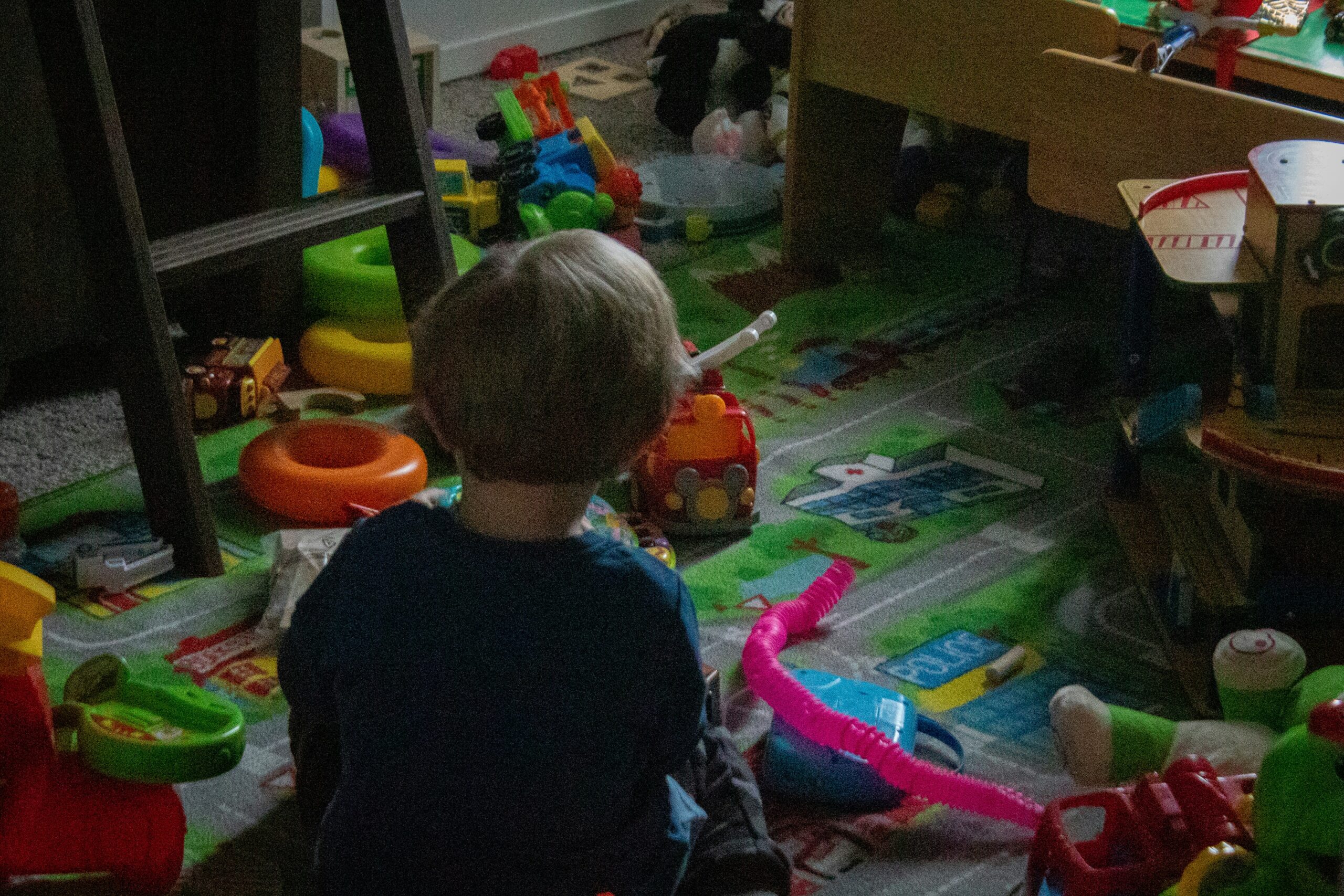
Even toys tell the same story. Welsh-speaking parents often go to extraordinary lengths to create a Welsh-speaking home, only for birthdays and Christmas to bring talking dolls, dinosaurs, tablets and educational toys that speak exclusively in English. Every electronic voice reinforces English as the language of play and entertainment. Parents find themselves constantly translating, explaining or simply accepting another part of childhood that Welsh cannot reach.
No English-speaking family has to fight this battle every day, and as a parent who is committed to raising three children through the medium of Welsh in a predominantly English speaking area where their language is consistently undermined, it is a relentless exhausting daily battle, with friends, family, school and more.
I completely understand why many don’t have the appetite to keep battling year after year, and instead acquiesce to what feels like the inevitable, unchangeable reality – that you can’t ever really live freely, automatically through the medium of Welsh in every aspect of life like an English speaker in Wales can.
None of this is an argument against English. English is one of the world’s great languages, and Welsh-speaking families use it every day when engaging with the wider world. What we seek is far more modest: the ability to experience ordinary family life through Welsh in the same way English-speaking families experience it through English.
That is equality. So why do these gaps persist?
Because Wales lacks the powers and probably the political will. Across Europe, children grow up watching Disney in Danish, Pixar in Finnish, and animated classics in dozens of national languages. Governments possess the powers to require or incentivise dubbing and localisation because they control broadcasting and cultural policy. Wales does not.
Without meaningful control over broadcasting, Wales cannot require international media companies to make Welsh-language versions available. The result is that Welsh children are denied the same opportunity that children across Europe take for granted: to experience global culture through their own language.
This exposes another reality. The Welsh Language Act 1993 was a landmark achievement, but it belongs to another age. It was written before streaming services, smartphones, YouTube, smart toys and global entertainment platforms transformed childhood. At the time, Welsh-speaking families could still rely on S4C to provide a genuine Welsh-language alternative to much of the BBC’s children’s output.
Today, multinational media companies shape children’s linguistic environment far more than traditional broadcasters ever did, yet our legislation has not evolved to reflect that reality.
The greatest challenge facing Welsh is no longer recognition by the state. It is practical equality in everyday life. A child may enjoy every legal right to receive their education in Welsh while spending every evening immersed in English because Welsh versions of the films, programmes and toys they love simply do not exist.
A modern Welsh Language Act should therefore ask a different question from its predecessor. Not just, ‘Can citizens access public services in Welsh?’ But also, ‘Can Welsh-speaking families live an ordinary twenty-first-century life through the medium of Welsh?’ If the answer is no (and it is), then language equality doesn’t exist yet.
A new Welsh Language Act should recognise broadcasting, streaming services and digital media as essential components of modern language rights. It should provide the legal framework to require Welsh-language dubbing of major children’s films and bilingual functionality in talking toys sold in Wales.
As well as cultural policy, this is economic policy. Dubbing films, localising toys, and developing Welsh-language digital content would create opportunities for translators, actors, sound engineers, software developers and the wider creative industries in Wales.
Ultimately, however, this debate is about something much bigger than films or toys. It is about whether Welsh-speaking families can live ordinary lives without constantly negotiating around the absence of their own language.
Can children laugh, sing, play, imagine and dream entirely through Welsh if that is the choice their families make? Today, the answer is still no.
Not because parents lack commitment.
Not because schools are failing.
Not because children do not want Welsh.
But because the structures of modern life remain overwhelmingly designed for English.
The first generation of language rights secured Welsh a place in public life. The next generation must secure its place in modern life. Because languages survive around the dinner table, on the sofa during family film nights, in the games children play, and in the songs they sing without thinking.
If Wales truly believes Welsh is a living national language, then it must ensure that families are free not merely to learn Welsh, but to truly live through it without compromise.
Support our Nation today
For the price of a cup of coffee a month you can help us create an independent, not-for-profit, national news service for the people of Wales, by the people of Wales.
Get more trusted Welsh news
Choose Nation.Cymru as a preferred source in Google News to see more of our journalism.



It’s shocking to realise that this is indeed the case? That the colonisation of our nation has gone to far that we can already hear the howls of racist rage from the Quislings & colonists that a Cymro should want to live his & his family’s life through the medium of their own language.
Ooh I’m not sure that we should be mandating that films / TV shows / etc which are sold in Wales have to be sold with Welsh language options. It’s going to run right up against the law of unintended consequences because when it comes to a private company (who isn’t statutorily required to provide services) then it’s a business decision. And if you turn the calculus into “cost to redub this film into Welsh” versus “profit we’d make by offering this in Wales” then the uncomfortable truth is that firms will have to either put prices up in Wales,… Read more »
Excellent article. There was a time when S4C did dub a feature films and series – from French and Spanish and English -Shane with Alan Ladd being one of the first – into Welsh and of course this still happens with cartoons for Cyw and Stwnsh eg The Smurfs and many more.
Let’s be clear on one thing. It is essential in the modern world that all Welsh children become fluent in English.
That’s not the point being made.
Just laying down a boundary. Some people would sacrifice their children’s life chances for the sake of the Welsh language.
No-one is suggesting that Welsh children should not learn English. Talking about ‘life chances’ is the kind of scaremongering that I would expect from any zealous Unionist determined to crush any Cymraeg progress; not that I mean you…I don’t know you.
Good deal of zealotry in the other direction, for example wanting to take surnames back to the 14th century. The problem with Welsh is not that anyone is trying to crush it, but that everyday Welsh speakers are walking away from it as a community language. All these new Welsh schools, and the pupils speak English once they are out of the gate.
It looks like you know very little of Cymru or the Cymry
No. No they really wouldn’t.
I agree with the sentiments expressed in this article. But even if powers over broadcasting and communications get devolved, will that lead to the option of “Popeth yn Gymraeg”? The AI revolution creates threats and opportunities. Among the opportunities, AI intercession should allow Hollywood, Bollywood, Valleywood, TV and every content creation on the internet to be received in any language dialect or accent the receiver so chooses. Furthermore, the distinction between producer and consumer blurs allowing children to change storylines and insert characters- pets, toys, themselves- into the narrative. Brain-rotting screen-time becomes cognitive development time!