


Farage v The Establishment v Binface
Ben Wildsmith
Only the politically overstimulated would welcome a by-election over the summer. If you’re reading this, then that includes you so let’s get into it.
Nigel Farage’s rash decision to resign his seat in Parliament reflects an ongoing decline in his once formidable political instincts.
Existing within a tightly controlled cabal of sycophantic fellow travellers, Nige has entered his Fat Elvis period. Credited as the architect of Brexit, which is rather like applauding Oppenheimer for the urban renewal of Hiroshima, he has nobody to tell him when he’s getting things wrong.
A common delusion affecting politicos of all stripes is that they are shaping events when, in reality, they are merely the face upon which circumstance has painted the moment. When the moment passes, their face no longer fits.
Repeated by-election losses as well as declining national polls have dented the air of inevitability that surrounded Farage’s Prime Ministerial ambitions at the lower moments of Keir Starmer’s abject premiership.
When things were going well for Farage, he deployed his double-glazing charm to edge Reform UK towards an electable ideology.
As panicked tetchiness has replaced the bonhomie, however, he’s tried to shore up his base by veering rightwards and surrendering the middle ground on immigration to the combative Home Secretary, Shabana Mahmood.
With Reform-lite running the Home Office and Rupert Lowe’s Restore outfit outflanking him with naked ethnonationalism, Farage’s turf has shrunk dramatically in recent months.
These are fertile conditions for paranoia, and Nige’s reaction to scrutiny suggests it is growing around him like knotweed.
The liberal response to Farage’s claim that he is being nobbled by the Establishment is that he is part of the Establishment himself. Wealthy, with a stockbroking background and a cast of posh mates that could enliven a PG Wodehouse story, that’s an easy case to make.
Like much in UK politics, however, it’s rooted in an outdated picture of how class and power work in today’s world.
Farage most likely is a victim of Establishment interference. These stories haven’t emerged through independent news sources, or social media accounts, they appeared in The Sunday Times – you don’t get more Establishment than that.
Opaque
Where their information came from will likely never be known but it’s so opaque that Farage has been reduced to speculating about a Russian hacking operation. The Sunday Times, though, knows people. It always has.
None of this, of course, diminishes the seriousness of questions surrounding Farage’s finances and the funding of his party. The British Establishment, though, has not traditionally been overconcerned about politicians becoming suspiciously wealthy.
The difference here is the source of money rather than the amount. Like Donald Trump, Farage is profiting directly from crypto trading. This, I suggest, rather than concerns about parliamentary procedure or potential money laundering, is what has brought the wrath of the gods down on him.
Those of us watching Andy Burnham’s tightly managed transition to becoming Prime Minister will have noticed an immediate narrowing in the scope of his ambitions.
Pretty much the first words out of his mouth were to reassure the bond markets that he would be adhering to Rachel Reeves’ fiscal rules.
The authentic establishment in 21st Century Britain is not comprised of tweedy landowners jealously guarding their estates. It is a collective of traditional financial institutions, both here and abroad, that control the money supply.
Crypto trading is a threat to that endlessly profitable enterprise. Government bonds are in direct competition with crypto assets for investors’ cash. Farage has been lobbying for more favourable tax conditions to attach to profits from crypto, thus making it a more attractive investment and driving customers away from traditional investments in bonds.
That, rather than any wider ideological concerns, is why he actually conflicts with the Establishment.
Dishonestly framed
Whilst Farage’s battle with established power is authentic, it’s dishonestly framed. His peasants’ revolt schtick masks intentions that would privatise every monetizable activity of government.
If private investment is diverted away from bonds towards crypto, services like the NHS will become yet more prone to private competition. Lavishly funded security firms can take up the slack in policing, and private schools will proliferate.
The state would become an administrative body with even less room for manoeuvre than it is allowed by its current bond-holding masters. Democracy would become ever more meaningless as boardroom decisions govern day-to-day life for us all.
Remember us, the poor sods getting up in the morning to expend energy and pay for all this? It doesn’t seem that any of the players currently contesting Westminster politics do.
Politics in the UK has become a competition between two competing systems of extortion. Both guarantee investor profits before the health, education, and safety of voters whilst entrenching widening inequality as a fact of nature.
Financial banditry
Po-faced elements on the left, stand up Owen Jones, initially condemned political parties for refusing to take on Farage in the by election. Apoliticism, they said, was a retreat from an urgent confrontation with financial banditry, as if being offered a choice of canula will prevent us from being bled dry.
Dishonesty about what money is, where it comes from, and what it is for has infected the politics of all major parties since the 1980s and the results of that deception are now evident in standards of living, even in the professional classes.
If no party is willing to challenge the outright lies that have allowed government finances to be hollowed out by private interests for decades, then absurdity is a legitimate response from an electorate that is being taken for fools.
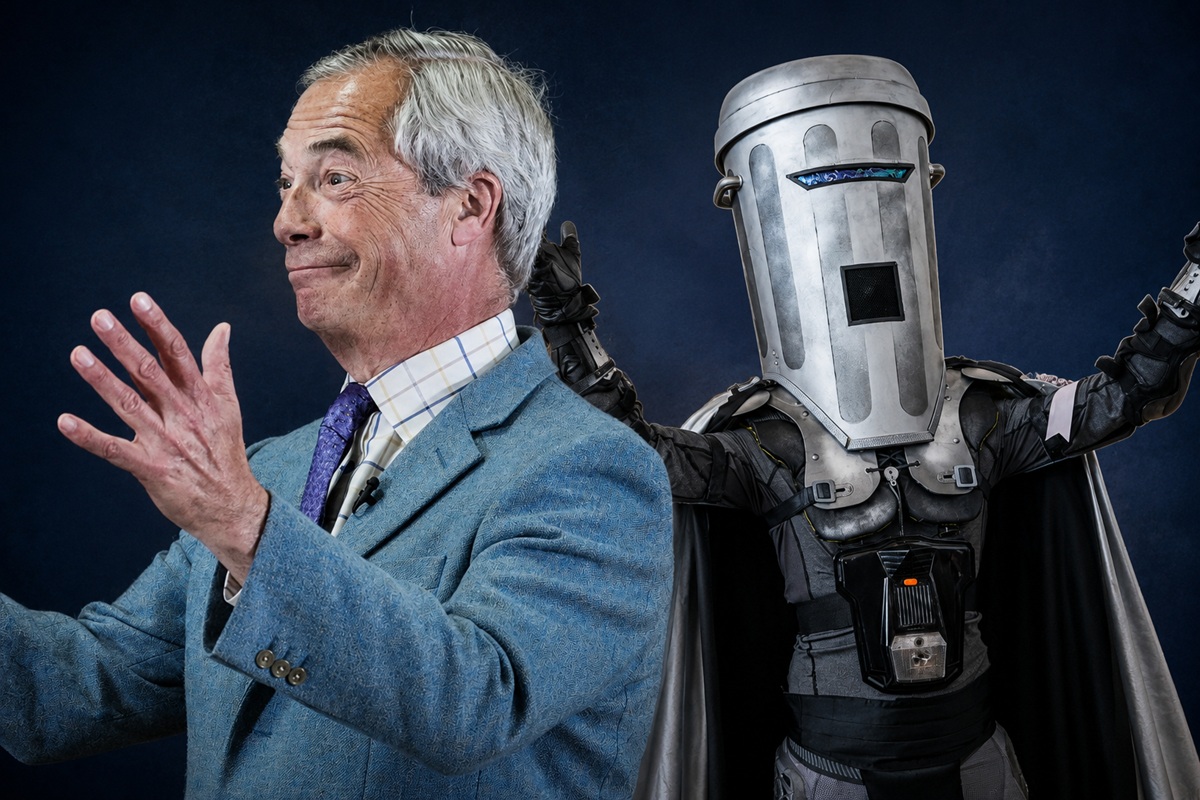
The humiliation of the crypto market’s mouthpiece by an intergalactic space warrior with a bin on his head is as legitimately political as we are permitted to be.
If you’re offered the bond markets v crypto, vote Count Binface, then warn Andy Burnham that he’s next.
Support our Nation today
For the price of a cup of coffee a month you can help us create an independent, not-for-profit, national news service for the people of Wales, by the people of Wales.
Get more trusted Welsh news
Choose Nation.Cymru as a preferred source in Google News to see more of our journalism.



Very thoughtful article, framing Farage’s as being anti-establishment establishment is interesting, it puts me in mind of two bald men fighting over a comb.
Farage is the establishment we all suffer. White old crusty racist out for himself. A career politician, a former banker and a tax cheat whenever he can get away with it, He hated his own wife and kids by banging on about foreigners (wife Deutsch). He is everything we do not need for a better life. He hates human rights, the rich paying fair tax, laws to prevent discrimination and anything built for kindness. He is everyhting Welsh people are not.
Absolutely brilliant!
What’s laughable is the idea that Nigel Farage is not part of the establishment. He is the establishment, for he associates with billionaires and has a net worth well over £6 million, with many assets, including numerous properties worth over £4 million.
What a state we seem to in. I am actually of the opinion that count Binface will raise the level of politics when he’s elected
As an aside, if you’re interested in an alternative view to the prevailing neoliberal consensus on government borrowing and deficits (and let’s face it – who doesn’t?) you could do worse than read some of Richard J Murphy’s writing on the matter.
Richard is Emeritus Professor of Accounting Practice at Sheffield University Management School. He had previously been both a full and visiting professor at Sheffield University Management School. He writes prolifically on political economy and this article is particularly pertinent: https://www.taxresearch.org.uk/Blog/glossary/M/#modern-monetary-theory