


For love and money
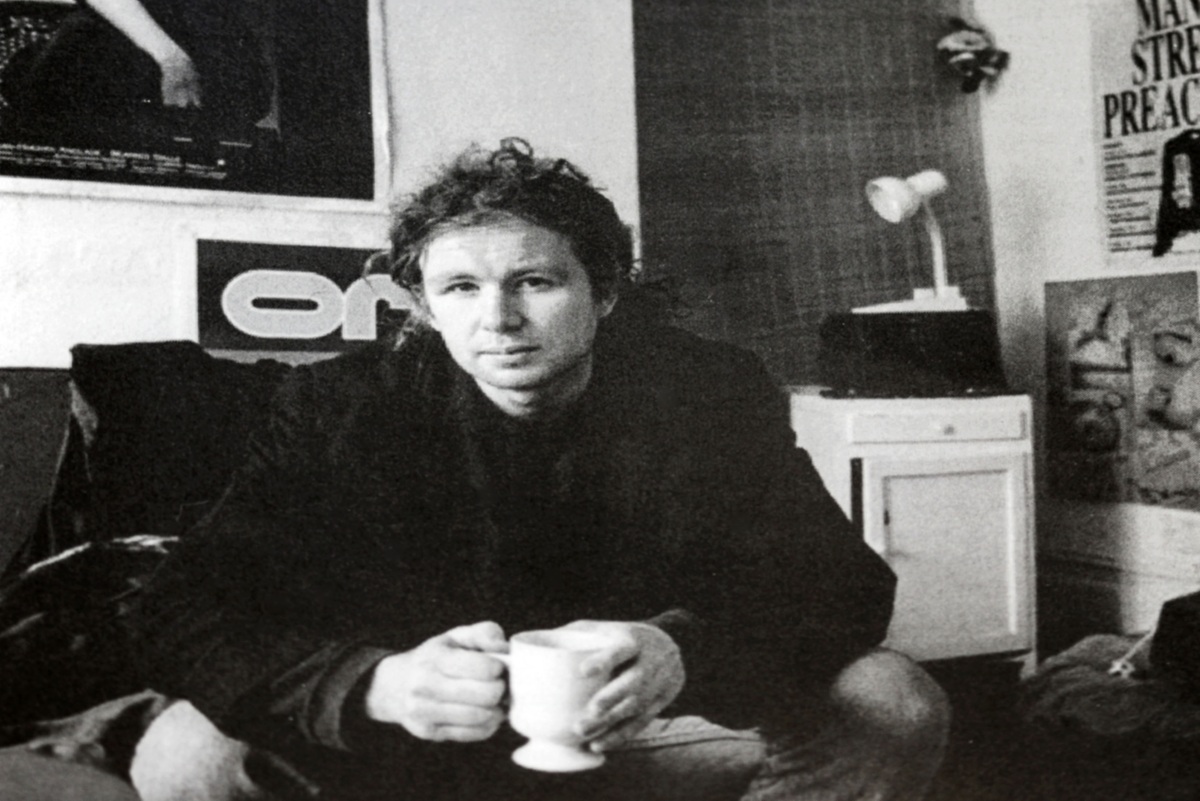
Richard Lewis Davies, writer and publisher
“And everyone is writing a book” is a quote, probably misattributed to the Roman philosopher Cicero. Roll forward two thousand years and we’re still at it.
And of course there’s nothing new under the sun, authors don’t get paid, and there’s a special hell reserved for publishers.
As my alter ego Lewis Davies, I wrote to the Rosemary Butler commission for the new assembly in 2003, commenting that to operate professionally as a writer in Wales you either had to have a supportive partner, teach in one of the universities or work in television.
I was attempting to manage all three and I was also working as a builder, reviewing books for the Western Mail and developing a start-up publishing business. The only regular income was the building work. It was, as Jonathan Raban wrote in his perceptive book, For Love and Money.
Thirty years later a new generation of writers are struggling with the same issues. As a writer, I have sympathy with the jejune provocations of Gosia Buzzanca and Julia Brominicks, although as a publisher I feel they need to understand the economics of the situation more clearly. They have both published relatively successful books which have been produced and promoted by Welsh-based publishers.
Buzzanca’s book won a prize while Brominicks earned her advance back. Their publishers have done a good job. Buzzanca’s book was produced as an attractive hardback edition by the University of Wales Press, there were launches, the shops were pleased to stock and sell it.
I saw the book around. I bought a copy. Brominicks worked hard to support her publishers, Seren Books, in organising launches and writing enthusiastically about it on various social media platforms.
The book had an attractive moody cover and excellent peer pre-publication endorsements. It then received good reviews. In the pool of Welsh writing it made a bit of a splash. Brominicks’ sales probably represent a modest return on investment for her publishers. But this is where the dive into the creative pool of writing meets the hard reality of the tiles (and sales) at the bottom.
To take Brominicks’ The Edge of Cymru as an example, as she has helpfully provided some of the figures.
It was published in November 2022 and is now priced at £12.99. The advance to the author was £1,500, so the book must have sold over 1,200 copies, which is pretty good for an esoteric travel book about walking the perimeters of Wales. The average return for an author on a first run is still 10%* of cover price, a system first popularised by George Bernard Shaw. To increase the amount of income for an author the two options are to sell more books or negotiate a higher percentage. Although the percentage is likely to go down to 7.5% on mass-market/trade editions. If there is a mass-market edition.
The discounts we carry:
The £12.99 customer purchase at the bookshop counter is divided roughly along these lines:
£6.49 or 50%* goes to the shops for stocking and selling the book. *Discounts do vary between 40% and 65%.
The publisher gets £6.49, which is the first return on investment.
£1.29: The author receives 10% of the cover price, although this can vary slightly and will usually increase to 12% after a set number of books have been sold, typically 5,000.
£1.62: The external sales team and the distribution and warehousing receive up to 25% of the £6.49 net receipts from each sale, so £1.62.
The publisher’s return at this point of the sale is £3.58 per book after these costs.
But coming up fast the other way is the need to pay to design, edit and print the book.
The cost of printing for a 300-page paperback on a modest print run of 1,000 is likely to be around £2.50 a copy, leaving around £1.08. Then there are the costs of typesetting (up to £500, or £0.50 per book on 1,000 copies) and cover design (up to £500), another £0.50 per book – it’s a narrow margin business.
Publishers can quickly find themselves in deficit on a modest print run on these figures, while to break even all 1,000 copies need to be sold, and that doesn’t account for review copies, trade copies and author copies, which all add up.
At this point I haven’t factored in the editing process, which can be the most crucial of the skills a publisher will bring to the project.
What I don’t see is the exploitation of writers claimed by Brominicks; instead we have a clean, well-lighted place for a new book published well and a reality that doesn’t meet the writer’s expectations of how many people could be/should be buying and reading their book.
But returning from opinion to the maths.
You can reduce the unit cost per book by printing a bigger first run of, say, 5,000 copies.
But most books sell nowhere near that amount, and you’ll soon be sitting on a large amount of unsold stock/recycling material mouldering happily in your less-than-waterproof garage in St Dogmaels. The bigger publishers ruthlessly pulp unsold copies as they are bulky and cost money to store.
The above figures are more or less accurate for paperback trade fiction and non-fiction.
They illustrate why publishers in Wales have developed with the support of first the Arts Council of Wales and now the Books Council of Wales, which maintains a competitive and open grant award system that all publishers within Wales are able to apply to for support.
Creativity
Over the last twenty years Welsh writing in English has experienced a remarkable burst of creativity. There are now more writers than ever, working across a range of genres, and many of these are being published in Wales as the publishing industry itself has diversified and become more professional.
Much of this has been due to the support of the Books Council of Wales, made possible in part by the Rosemary Butler Report into Welsh culture of 2003, which provided a framework for Welsh government support for publishing in Wales. The result has been democracy in action, as a country began to take charge of its own literary culture in and through English.
The Butler report was the stimulus needed by the Books Council of Wales to frame a more professional approach to publishing – the commissioning of popular titles tied to sales targets, marketing support again tied to sales targets, and a general emphasis on the improvement of standards in editing, design and sales, which has forced publishers to look carefully at their choices and their product.
However, this period has correspondingly been marked by a decline and isolation of the world of writers within Wales with the demise of both the Welsh Union of Writers, which folded, and Yr Academi Gymreig (with English section), which was swallowed into Literature Wales, which is neither a union nor an advocacy. Its aims are different.
Support
Individual writers can and do rely on The Society of Authors or The Writers’ Union/The Writers’ Guild of Great Britain for contract advice or the support of an agent. It is worth a writer’s time and investment to get involved in these organisations to understand the terms of the industry and to advocate where possible for change.
Gosia Buzzanca in her piece for Nation.Cymru claims the system is broken because she, as the writer, isn’t getting enough money.
To take the other option of increasing an author’s income. She suggests it’s the prerogative of the Books Council to change this. It isn’t; it’s the writers.
The “sell more books” option.
Average sales of first novels and travel books are anywhere between 500 and 3,000 copies. Any browse through a well-stocked bookshop in Wales – and there are many good ones – offers a cornucopia of choice. How does a new or experienced writer stand out in these times?
With difficulty. A new book needs to be edited, designed, printed, repped, marketed, reviewed and praised and someone still might pick up another equally well-designed, edited, marketed and reviewed book next to it.
I’d like to think that with some reflection both Brominicks and Buzzanca will realise that their publishers have done an excellent job on getting their work out into the wider world. They are not living with the wealth of Croesus, but that may take some time and the writing of more books.
Minimum wage
To earn the UK minimum wage for writing you’d need to sell around 20,000 copies of a novel or memoir or travelogue every year. This is unrealistic for most writers or publishers. It’s back to strategies of living and earning while you are writing.
Writing is hard and no one really needs another novel by Lewis Davies, not even Lewis Davies. They might be persuaded to buy one but that’s a different game.
A friend who set up one of the most successful book sales businesses in the UK used to have an email signature claiming anyone could write a book, but that it took a genius to sell one.
That is a whole other article.
Support our Nation today
For the price of a cup of coffee a month you can help us create an independent, not-for-profit, national news service for the people of Wales, by the people of Wales.
Get more trusted Welsh news
Choose Nation.Cymru as a preferred source in Google News to see more of our journalism.



Thank you for this article. You have confirmed for me that I have made the correct decision in not pursuing a career as a writer. My admiration for those who are doing so is immense and I do try to spend some of my limited income in supporting them.
Oh it’s a shame this piece has only just been drawn to my attention or I’d have responded to it earlier. I do already appreciate the work my publishers have done and it’s a shame you didn’t pick up on that – my piece was not to criticise them but to point out that publishers too are hamstrung. That sometimes even when shops are trying to order books from them, they either don’t have the staff or time resources to supply them, given that their focus is on getting new books out, and that they don’t even necessarily even have… Read more »
Also, with respect, and sorry to be pedantic, but for the record, my first book had no pre-publication endorsements (although those that arrived very much later were very very much appreciated as was the film and live-screening of my launch provided by Seren), the photograph for the jacket like the one for my forthcoming book were provided by my own friends and selected by myself (the typesetting and formatting by Jamie at Seren is also very much appreciated) and most importantly I, and presumably all other writers, are very aware of the publishers costs in producing a book – Seren… Read more »
Huge apologies, I forgot, there was one pre-publication endorsement – made by one writer to one publisher. I’ve only just realised that must be what Rich was referring to. I thought at first he meant cover endorsements organised by the publisher. My mistake.