


Global Cymru: Why a globally responsible Wales matters for our future
Barbara Davies-Quy, Deputy Director, Size of Wales
In today’s world, the idea that any nation can shape its future alone is no longer credible. Climate change, biodiversity loss, and ecosystem collapse are not distant environmental concerns. They are immediate threats to our food systems, economy, and cost of living.
A recent UK Government National Security Assessment makes this starkly clear: global biodiversity loss and ecosystem collapse, such as the destruction of the Amazon now pose a serious and growing risk to national security, food supply, and economic stability.
For Wales, this is a defining moment. Global responsibility is no longer optional – it is critical to protecting people’s lives, livelihoods, and economic security at home.
From Global Crisis to Local Impact
The impacts of ecosystem loss are already being felt. The destruction of tropical forests abroad is contributing to rising food prices, unstable supply chains, and increased costs for households across Wales. When crops fail or global markets fluctuate, the price of everyday essentials, from bread to coffee, rises.
At the same time, this environmental breakdown is accelerating climate change, fuelling more frequent and severe extreme weather here in Wales. Storms, flooding, and droughts are becoming more intense and more common, damaging homes, disrupting communities, and placing growing pressure on public services and infrastructure.
These are not future risks, they are current realities. And without urgent action to reduce deforestation and restore ecosystems globally, these pressures will only intensify, driving up the cost of living and increasing risks to livelihoods across Wales.
Global responsibility in practice
Wales already has a powerful example of what global responsibility can look like.
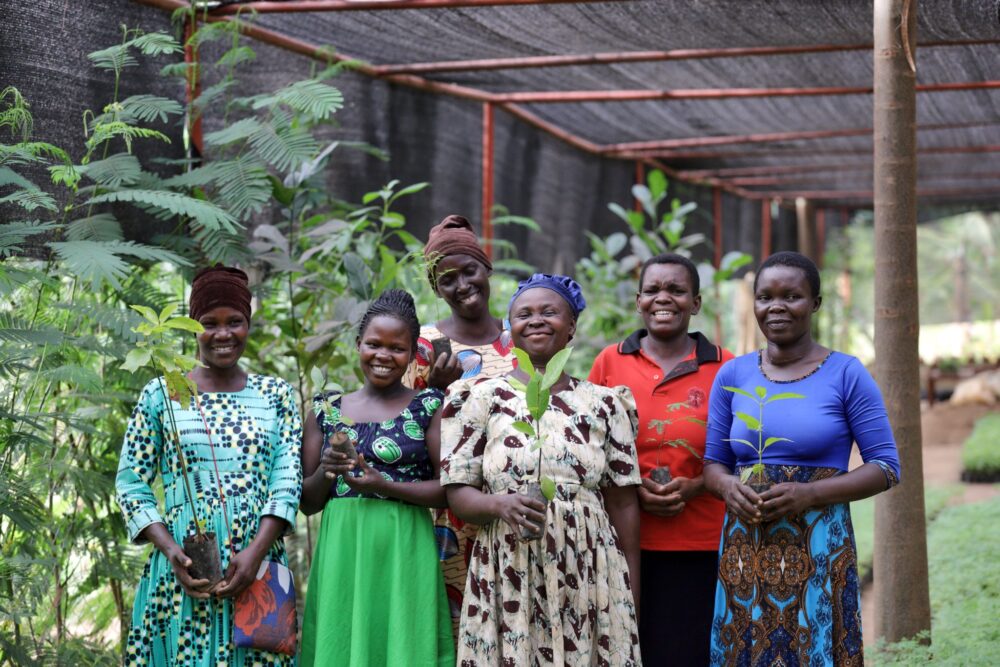
Through its long-standing partnership with Welsh Government, focused on the Mbale region of Uganda, a community-led programme has planted 26 million trees over the past 15 years. Delivered through a network of community-run nurseries, half led by women, this initiative is transforming landscapes and livelihoods.
These trees have sequestered an estimated 1.4 million tonnes of carbon dioxide -equivalent to 25% of Wales’ annual transport emissions and because climate change knows no boundaries, the trees protect us here in Wales as well as everyone else on the planet. Forest cover has increased dramatically, and communities have benefited from new sources of income through honey production, coffee, and sustainable farming practices.
Just as importantly, the programme is helping communities adapt to climate change. Trees provide shade, stabilise soils, provide food and medicines and reduce the risks of flooding and landslides – all of which are becoming more frequent as the climate changes.
This is climate action at scale. And it highlights a crucial point: where we act matters as much as how we act.
Trees in tropical regions grow up at least four times faster than in Wales. That means they absorb carbon more quickly, delivering faster and more cost-effective climate benefits. Investing in global solutions like this is one of the most efficient ways to tackle climate change while supporting communities on the frontline.
Why Acting Globally Matters for Wales
Preventing ecosystem collapse is not just about protecting nature – it is about protecting our livelihoods, wellbeing and our future generations.
If we fail to act, the costs will be significant. Wales will face higher food prices due to global shortages, increased damage from flooding and extreme weather, rising insurance costs, and growing pressure on public services. The cost of adapting to a more unstable climate will continue to rise.
By contrast, investing in global solutions, such as protecting existing forests, tropical reforestation and restoration and sustainable land management, helps stabilise the systems we all depend on. It reduces climate risks, supports global food production, and limits the economic shocks that drive up costs.
It is also about climate justice. Supporting local farmers in Mbale is not charity; it’s about the safety of our planet. Communities in Uganda and across the Global South have contributed very little to climate change, yet they face its most severe consequences.
Crucially, this kind of action delivers strong value for money. Welsh Government funding for the Mbale tree planting programme has averaged around £270,000 per year over the past 15 years – just 0.001% of the annual budget. At an estimated 16p per tree, it shows how relatively small investments can deliver substantial climate, economic, and social benefits and how Wales can lead the way.
How Wales is linked to the deforestation economy
Despite global commitments made at COP26 to halt and reverse deforestation by 2030, we continue to import deforestation-linked products in Wales, such as soy used in animal feed and beef from rainforests such as the Amazon, palm oil from rainforests in south east Asia and coffee and cacao for rainforests such as the Congo Basin in Africa. These products are found in our food, farming and financial systems, driving forest loss overseas.
Take soy for instance. Soy-driven deforestation destroys critical ecosystems, such as the Atlantic Forest in Brazil, and threatens Avá Guarani Indigenous Peoples who depend on them. In addition to deforestation, that same soy is then exported around the world as animal feed. This may end up in Wales to feed chickens housed in intensive poultry units in Powys.
Soy is high in phosphorus which is excreted in nutrient-rich livestock manure. Manure is spread on farmland and when it rains excess phosphorus–rich manure is washed into rivers and groundwater, polluting the river and causing algal blooms. This starves the fish, plants and invertebrates of oxygen, leading to a collapse of the whole ‘web of life’ in the river.
A Call for Urgent Action
The link is now undeniable: protecting our precious habitats such as tropical forests is key to protecting our way of life here in Wales. Wales has already shown leadership. Now it must go further.
We are calling on the next Welsh Government to do everything in its power to help Wales become a Deforestation Free Nation for current and future generations. With over two-thirds of the public supporting government action to tackle deforestation overseas, there is a clear mandate for leadership and decisive action.
This includes transforming public sector supply chains to eliminate deforestation-linked products, supporting sustainable land systems, ensuring pensions and investments do not drive environmental destruction, and strengthening climate and global citizenship education.
Alongside this, we must continue to support international partnerships that tackle the climate and nature crisis, like in Mbale, Uganda, and promote stronger solidarity with Indigenous and frontline communities – positioning Wales as a global leader in tackling the climate and nature crisis while delivering benefits at home
Wales may be a small nation, but our consumption choices have a global footprint. Let’s be the generation that chooses forests, fairness and the future, and make Wales a Deforestation Free Nation.
Barbara joined the Welsh Climate Change Charity, Size of Wales as Head of Programmes in January 2020 and is responsible for overseeing forest projects and policy work.
Support our Nation today
For the price of a cup of coffee a month you can help us create an independent, not-for-profit, national news service for the people of Wales, by the people of Wales.
Get more trusted Welsh news
Choose Nation.Cymru as a preferred source in Google News to see more of our journalism.



Don’t care what % of the budget it is, it is still 270 grand that could be better spent in our deprived valleys.
A penny per person per month. How would that transform lives?
Very well said,now we.need action over time from our Plaid Cymru gov Wales.
You are misinformed. There were no beef imports from Brazil (Amazon) to the UK in 2025 and so far in 2026. This is because they have not gained their Foot and Mouth Disease free status. Also, the concept they fell rainforest for beef is false. The soil of a cleared rainforest is too poor in nutrients to sustain economic pasture. Most Brazilian beef is reared on the pampas, different regions of natural grasslands, although cattle is sometimes used as a scrub clearing tool in rainforest areas prior to planting soy. Whilst it’s true that around 62% imported soy is fed… Read more »
Hi Brychan, Here’s some UK trade data and other research on beef imports into the UK / Wales, deforestation in Brazil and poultry units in Wales. UK beef imports from Brazil are rising. Q3 2025 trade data from the UK’s Agriculture and Horticulture Development Board (AHDB) shows imports reached 18,500 tonnes in the year to Q3 2025, up 16% year-on-year, with frozen beef imports also increasing. In 2024, the UK imported almost 5,000 tonnes of fresh and frozen beef, plus 17,400 tonnes of corned beef, from Brazil. https://ahdb.org.uk/news/uk-imports-grew-in-q3-as-global-prices-remain-high-beef-2025-q3-trade-update Brazil is the world’s largest beef exporter, and cattle ranching remains a… Read more »
I presume the genius who thought this one up also realises that Uganda has some of the world’s most repressive anti-gay laws?
Your question implies you think this project only benefits Uganda. You realise we share the same atmosphere?
It’s worrying that Rhun ap Iorwerth’s speech yesterday made no mention of climate or nature.