

Gwyddoniaeth: A science rooted in Wales
Dr Glyn Morris, Lecturer in Biological Sciences Queen Margaret University Edinburgh
In the wake of the triennial ritual of judging our young people in Wales through their performance in reading, mathematics and science — the dreaded PISA tests — it is tempting to reduce the educational story of Wales to a set of international rankings.
The results generate headlines, political debate and, too often, a familiar narrative about Welsh educational failure. For me, however, they prompt a different question: what kind of education do we want for our young people, and what kind of scientific nation do we want Wales to become?
I would like to be a voice of hope and pride in our small nation’s scientific pedigree and potential. And I would like to begin with a word:
Gwyddoniaeth.
The Welsh word for science carries with it a linguistic and cultural history that has fascinated me ever since I began to think more deeply about what we actually mean when we talk about science.
During my time as an academic, both as a researcher and lecturer, I enthusiastically attended events, sessions and conferences exploring the theme of decolonising the curriculum. As a scientist, I was eager to understand the power of reframing, remembering and revaluing alternative viewpoints and hypotheses.
Yet I often left these events somewhat dismayed.
How was I actually meant to decolonise the science curriculum I taught? How was I supposed to deconstruct my own learning while simultaneously rediscovering the distant history of another part of the world?
Where does one even start?
I listened to incredibly inspirational and passionate colleagues from Asia, Africa and Australasia describing how their scholars, teachings and knowledge systems had been suppressed or marginalised by colonial powers. I could empathise with much of this.
Having undertaken my schooling through the medium of Cymraeg, I knew something of the struggle to maintain the life, culture and wisdom of a native language against successive pressures.
But perhaps I had been looking at language too narrowly.
At school, the focus had been understandably on maintaining and revitalising the language. Through these conversations about decolonising education, I began to wonder what else might have been overlooked, marginalised or simply absent from our curriculum.
Could our language itself provide a starting point?
Could Cymraeg offer not merely a language in which science is taught, but a different lens through which to view science and, in so doing, connect scientific knowledge to place, nature and culture?
That was where my own journey towards Gwyddoniaeth began.
“In Cymraeg we study nature in its wildest essence and discover the magic it shares with us.”
As a child, I loved gwyddoniaeth. At university, I was introduced to the word science and its deeper history.
The English word derives from the Latin scientia, broadly meaning knowledge. The intellectual tradition surrounding the concept is enormously important. Science has given humanity extraordinary powers to understand, predict and transform the world.
But there is another tradition worth remembering.
Before the modern disciplines of biology, chemistry, physics and geology emerged in their current forms, much of what we now call science was understood as natural philosophy: an attempt to understand the natural world, its causes and our place within it.
That phrase feels strangely relevant today.
We live in an era of climate change, biodiversity loss, wildfires, flooding and rapidly changing eco and agricultural systems. Perhaps the challenge facing science education isn’t simply to produce young people who can answer more questions correctly. Perhaps it is also to help them develop a deeper relationship with the natural world they are studying.
This is where I find the idea of a Gwyddoniaeth curriculum so compelling.
Welsh words
As I began exploring the language surrounding gwydd, I encountered a fascinating landscape of Welsh words and associations: Derwydd (druid), Fawydden (beech tree), Yr Wyddfa (highest mountain), gwyddor (alphabet), gwyddbwyll (Celtic chess) and even discovering that Gwydd shares a root with the name ‘Gwydion’ a Welsh magician, wizard or deity.
Gwydd is a polysemous or nuanced word, capturing more than a single meaning and possibly even capturing a feeling. It can mean knowledge, wisdom, magic, wildness and nature. In Cymraeg we study nature in its wildest essence and discover the magic it shares with us.
But this research prompted something more important for me than linking intertwined etymologies.
It prompted a question.
What happens when the language through which we study science is also a language deeply connected to the landscape in which we live?
Language influences how we describe, categorise and relate to the world around us. For those of us who learn through Cymraeg, that linguistic perspective is part of our intellectual inheritance.
And that inheritance can enrich science education.
Gwyddoniaeth does not exist separately from nature. It is our method of observing, questioning and understanding the natural world. Yet sometimes, particularly in formal education, nature can become something we study from a distance — a diagram in a textbook, a dataset on a screen, an examination question.
Wales gives us an extraordinary opportunity to do something different.
Laboratories for learning
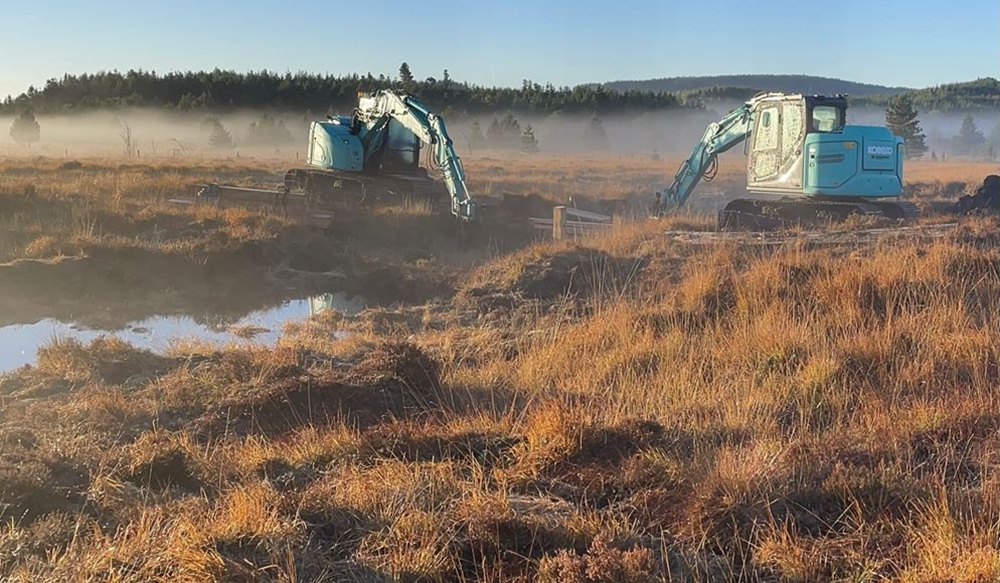
Our mountains, rivers, coastlines, woodlands, farms, peatlands and seas can become laboratories for learning. Climate change can be understood not only as a global dataset but through the landscapes young people know. Biodiversity can be explored not only through diagrams but through the species living on their doorstep.
And science can become a means of understanding our place within those systems.
Alexander Fleming famously observed, following his discovery of penicillin, that nature had made penicillin and he merely found it.
There is something profound in that idea.
“The languages that we speak and the cultures in which we learn are part of our intellectual diversity.”
Scientific discovery is not always about imposing our will upon nature. Sometimes it begins with paying attention. With noticing. With curiosity.
Wales has plenty to notice.
Our landscape is changing. Our climate is changing. Our ecosystems and agricultural systems are under pressure. The wildfires of recent years have provided a stark reminder that environmental change isn’t an abstract problem occurring somewhere else.
Gwyddoniaeth could help our young people understand these challenges — and perhaps inspire the discoveries that will help us address them.
Pay attention
This brings me back to PISA.
There may be legitimate reasons to pay attention to international assessments with common frameworks.
But the danger comes when we mistake what an assessment can measure for everything that matters.
A young person’s curiosity, creativity, relationship with their community, connection to the natural world, practical understanding and sense of responsibility cannot be reduced to a single international score.
Nor should we assume that there is only one way to produce the scientists, engineers and innovators that our future requires.
And diversity matters.
A true scientific assessment would appreciate that diversity is paramount to the universe’s success. A healthy ecosystem isn’t composed of one species repeated endlessly. Its resilience comes from interactions between different organisms, perspectives and adaptations. The air we breathe is not made up of one type of molecule and over 300 varieties of subatomic particles have been discovered that make up our universe.
Why should intellectual life be any different?
Retreat
I don’t want Wales to retreat from international science. Quite the opposite.
I want our young people to be able to stand confidently and proud alongside scientists anywhere in the world.
But I also want them to know where they are standing.
I want a young person studying science in Wales to be able to understand the perspectives of global scientific knowledge while also understanding the gwyddoniaeth accessible through their classroom window.
I want them to be able to move effortlessly between Gwyddoniaeth and the international language of science.
The languages that we speak and the cultures in which we learn are part of our intellectual diversity.
Let’s celebrate Gwyddoniaeth — our science, rooted in our language, our landscape and our culture — and give it the emphasis and recognition it deserves within a curriculum that we can be proud of.
A science that looks confidently towards the world, while remaining proudly rooted in Wales.
Support our Nation today
For the price of a cup of coffee a month you can help us create an independent, not-for-profit, national news service for the people of Wales, by the people of Wales.
Get more trusted Welsh news
Choose Nation.Cymru as a preferred source in Google News to see more of our journalism.



This is exactly the kind of conversation Wales needs. Science should not simply be something done in Cymru. It should be something we build, own and connect to the wider world. We have the talent, universities, researchers, engineers and entrepreneurs. What we too often lack is the confidence and the national ambition to connect those assets into a coherent vision for our collective future. That is one of the reasons we created New Wales. Through our policy work and podcast (Blueprint Cymru), we are widening the national conversation: bringing together ideas, expertise and experience from Cymru and from our global… Read more »
Wales spending per capita on R&D is half the UK average. Nevertheless, Wales has a growing number of innovative specialist SMEs, and high-tech clusters, for example compound semi-conductors, niche biopharmaceuticals: regenerative medicine and antivenoms, and in the green energy sector. What Wales does not have is the big multinational research hubs of the “Golden Triangle” of South-East England. Despite Welsh universities receiving less research funding than the UK average, the evaluation by the UK’s Research Excellence Framework is that Welsh universities outperform the UK average. What strategy does this suggest for Adam Price and the New Development agency?