

How one Cardiff district has become a metaphor for Welsh Labour’s decline
Neil Schofield-Hughes
There’s an abandoned car at the end of my street in Canton. Despite reports to the Council and emails to Councillors, it has been there for more than two years.
Even before Canton Councillor Susan Elsmore announced her resignation from the Labour Party, that rusting Ford Focus felt like a metaphor for what Welsh Labour has become – a symbol of its complacency and entitlement.
To understand why, it’s worth taking a look at the Canton ward – my home for more than a decade – and the Cardiff West constituency in which it is located.
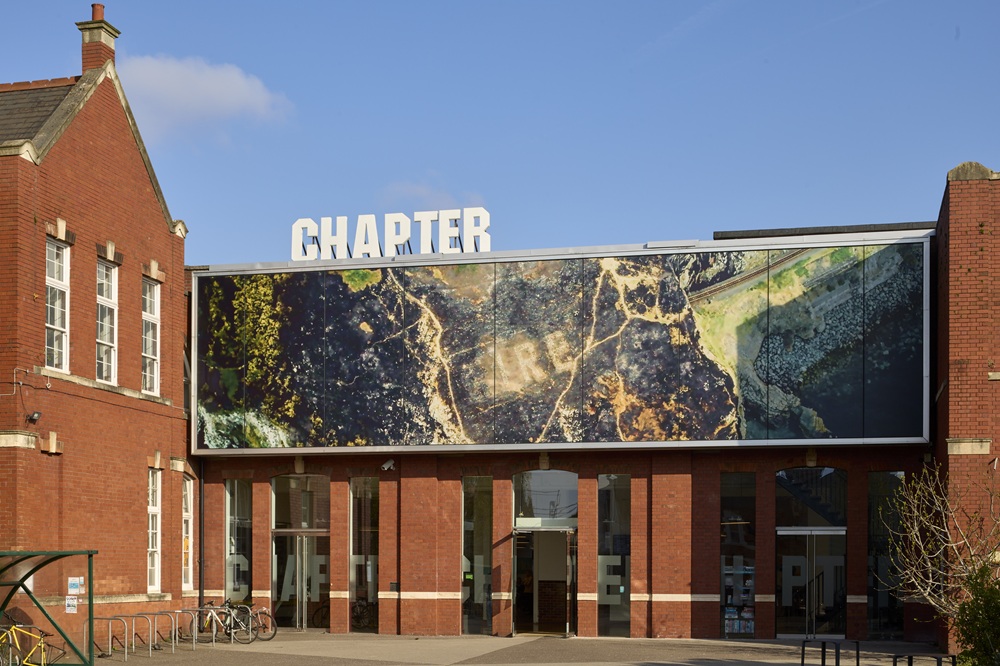
Canton is usually described as “vibrant”. As a Canton resident, I treasure its diverse vibe; its café culture; Chapter Arts Centre, the beating heart, it often seems, of our community; its two beautiful parks; its creativity; its brilliant and ambitious local choral society, the Canton Chorus.
It’s a great place to live, although more recently the steadily declining state of its public realm has told its own story.
And it has long been loyal Labour territory. Since the first elections to the Cardiff Unitary Authority in 1995, Canton has only ever elected Labour councillors – although in 2022 the Common Ground alliance between Plaid Cymru and the Green Party ran Labour close.
Moreover, the Canton ward sits at the heart of the Cardiff West constituency, which returned Rhodri Morgan and Mark Drakeford to the Senedd, and Kevin Brennan – now Lord Brennan of Canton – to the House of Commons.
It can claim to be the place where “clear red water” was invented. Its local Labour Party has been described as one of the most left-wing in Cymru. In many ways, Canton was a place that defined what Welsh Labour was.
But that appears to have changed.
Of the three Labour councillors elected in 2022, Jasmine Chowdhury and Susan Elsmore have left the Party and now sit as independents.
Both cited the endemic misogyny of the Cardiff Labour Group, and its failure to support women and minority ethnic councillors, as reasons for their decision.
The third elected member, Stephen Cunnah, is reported to have decamped to north Wales without, according to Councillor Elsmore’s resignation statement, informing group officers, ward colleagues or branch members.
Parachute
And in 2024, when Kevin Brennan announced his decision to stand down just after the election was called, the Labour Party in London decided to parachute in Alex Barros-Curtis, the Labour Party’s former Executive Director of Legal Affairs and enforcer for Morgan McSweeney’s project to cleanse the kind of people who were well-represented in Cardiff West Labour from the party – and someone with no previous links to the constituency – as the new candidate.
The local Labour party effectively went on strike, and a strong campaign from Plaid Cymru’s energetic young candidate, Keira Marshall, slashed Labour’s majority.
Most poll projections now predict Plaid Cymru will take the seat at the next General Election.
The story here, then, is one of arrogance and complacency; a sense that Labour simply takes the electors of Canton, and indeed of Cardiff West as a whole, for granted.
Whether it’s the abandoned car that Cardiff Council won’t deal with, or the parachuting of Alex Barros-Curtis into a constituency with which he has no previous links, it feels increasingly that Welsh Labour’s attitude not that it’s there to serve the electorate, but that it’s the electorate’s job to support Welsh Labour.
We saw it in Caerphilly (“only Labour can beat Reform here”) and, outside Cymru, we’re seeing it now in Labour’s by-election campaign in Gorton and Denton.
With Senedd elections taking place in a few weeks’ time, we see the same thing in Government. Welsh Labour has been in office since devolution was enacted; it’s looking stale, tired, out of ideas.
“In power at both ends of the M4” has become the “your call is important to us” of Welsh politics – a tired shorthand for Welsh Labour’s lack of ambition in the face of Westminster Labour’s muscular Unionism – whether that comes to expanding devolved powers over policing and criminal justice, or even getting a fair settlement over the Crown Estate and HS2.
Benefit cuts
The First Minister asks to speak to the Prime Minister about the impact of benefit cuts in Cymru, only to be fobbed off with (as yet unidentified) officials. Both the energy and the sense of robust independence implied by that phrase “clear red water” have dissipated.
Canton, and the Cardiff West constituency in which it sits, have as much claim to be the heart and soul of Welsh Labour as anywhere.
Labour’s woes in its Canton heartland seem to me to tell a much larger story, of a party that is no longer what it once was – indeed, which is no longer what it thinks it is.
In the coming Senedd election, local polling projections suggest it may not even win a seat in the new Penarth Caerdydd constituency – with Plaid Cymru and the Greens taking the spoils.
Increasingly it feels as if the tectonic plates are shifting under Welsh politics. Could events in Canton be the foreshock that heralds the earthquake to come?
Support our Nation today
For the price of a cup of coffee a month you can help us create an independent, not-for-profit, national news service for the people of Wales, by the people of Wales.



Labour have to go! They aren’t the progressive party they were in the 1940s, 50’s and 60’s. The Labour party are basically Tories waving a red flag. They are unionist to their core, a union which hasn’t served Cymru well for hundreds of years. Yet, they blindly believe in a British socialist utopia. With a right wing English media, Labour’s British socialist utopia AIN’T HAPPENING!
The right wing media is representing the true instincts of their readers, not the other way round. Blaming the papers for right-wing votes is like blaming wet pavements for rain.
Let’s hope for the end of Labour dominance in Cardiff and the Senedd. We need honest politicians representing us rather than pushing their own interests.
You talk of Labour complacency but then assume its to PC benefit, when all opinion polls point to Reform reshaping politics at both ends of the M4. PC have to be careful as many are already celebrating victory.
They don’t. Farage has made a huge mistake ‘recruiting’ a bunch of failed Tories and this is seeing support for Reform tank. The new even-further right party launched by Rupert Lowe will also strip support from his reconstituted Tory party. Reform support peaked last year and is heading down.
Back in 1990s at the time of the Welsh Assembly vote, Cardiff did display arrogance – HTV repeatedly called Pembrokeshire ‘Little England Beyond Wales’ and my family in that region believe all their economy gets are care homes as employers / cars are faster than trains and Cardiff has failed Wales. National Theatre closed; Welsh Universities possibly over-expanded (nowhere in England are small towns with populations of 2000 people where the main employer is a University – Lampeter and Machynlleth). Cardiffs rugby scene is a disaster. The list goes on…. BUT out of chaos may come a wake-up call. Labour… Read more »
University of Machynlleth?
Neil McEvoy: if he’d stood in Canton he’d have fixed the abandoned car. And, in a saner world, been the Plaid MP or MS for Cardiff West for some time now.