


How stable will the next Welsh Government be?
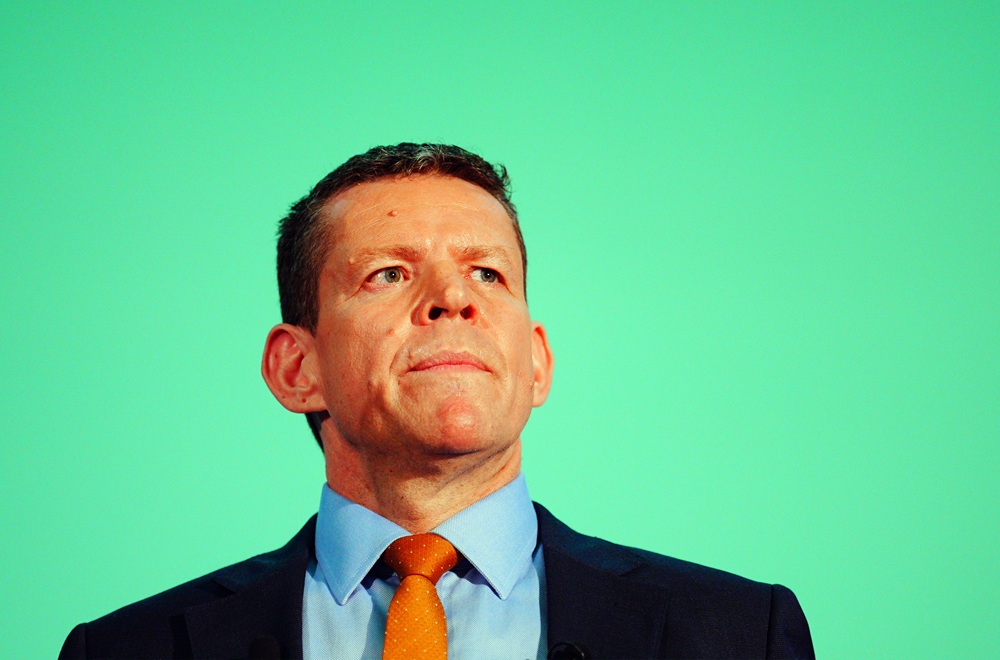
Jonathan Edwards
For most of the devolution age there has been an informal understanding between Labour, Plaid Cymru and the Liberal Democrats.
Firstly, apart from a fleeting experiment following the 2007 election, these parties have worked on the basis of shutting the Conservative Party away from power.
More importantly, Plaid Cymru and the Liberal Democrats have recognised Labour’s political hegemony over Wales and have – when required – willingly played a constructive role in ensuring that our country had a functioning government.
The one aberration of naked political opportunism was the decision of Rhun ap Iorwerth on becoming Plaid leader to end the Cooperation Agreement with Labour in the last Senedd. It has proven to be tactically clever, helping Plaid displace Labour as the leader of the ‘progressive’ bloc in Wales, which is the key to the First Minister’s office.
Whether it proves to be strategically as astute in the long term will very much depend on the approach towards the Labour Party that emerges in Wales after the crushing defeat that awaits it.
Performing a supporting role for the greater good of devolved governance was a no-brainer for Plaid Cymru as a party. Its raison d’etre as a party is to develop Wales as a political nation. If that required giving up short-term party gains, so be it.
Rhun ap Iorwerth has ripped up the party playbook and gambled all on becoming First Minister. It looks like it may pay off spectacularly in a week’s time, even if Reform win the most seats.
What is less clear is whether Mr ap Iorwerth can deliver stable governance in the aftermath of the election.
To endure in office, governments need to be able to survive confidence votes and deliver annual budgets.
My article last week examined some of the strategic considerations facing a new Plaid government based on the likely election result. It is worth revisiting those options and perhaps giving them a stability rating.
This week, I’ll start with a Plaid Cymru minority administration as this is the stated preferred aim of the party’s leadership. Next week I’ll delve deeper into the coalition options I discussed in the previous article.
Firstly, a Plaid minority administration. Operating without a majority is difficult by its very nature as all votes are potential knife edge divisions requiring significant wheeling and dealing to get business through. Carefully crafted opposition motions which can unite the non-governing parties pose a world of trouble. An inability to win votes causes instability. The governing party wouldn’t be able to function.
A minority administration also empowers government backbenchers. Considering the powerful Plaid left-wing faction that will soon be elected to the Senedd, together with their control of the voluntary party, Rhun ap Iorwerth would be a brave man to pursue a path that empowers his internal opponents.
Passive behaviour
He should not see their passive behaviour in the run-up to the election as a sign that they have been tamed. The Plaid left is completely internally focused and will be waiting for their opportunity. They have gained a taste for drawing blood in recent years, so expect fireworks if they have an opportunity to flex their muscles.
If the polls begin to slide either on a party basis or on the constitutional question, things will get tasty very quickly.
Perhaps one of the most intriguing developments of the next Senedd will be who within Plaid develops as the leader of the left-wing faction. Will it be someone from the existing shadow cabinet such as Mabon ap Gwynfor? Has Adam Price redeemed himself in the eyes of the Plaid left? Or will it be a newcomer such as Carrie Harper or party Chair Marc Jones?
It will be fascinating to see how Rhun ap Iorwerth manages the situation.
Concessions
A Plaid minority government will find its legislative programme held at mercy by opposition parties who will surely demand significant concessions for their support.
The expanded Senedd might find itself in a barren government legislative environment which perhaps explains the inertia of the first 100-day plan published by the party. Reviews upon reviews do not require Senedd approval.
Apart from the annual Budget, where a minority government will have to find a way of getting either abstentions or support from opponents, the Senedd could quickly resemble an uninspiring talking shop based on a programme of Welsh Government statements taking aim at Westminster for the ills of the nation.
Plaid has a ready-made hit list of grievances taking up a large chunk of the manifesto and will want to use their time in government to damage the UK Government. However, the “Wales good, Westminster bad” strategy only works if you are delivering tangible domestic gains.
Ben Wildsmith in these pages has forcefully made the case that Plaid should run a minority government as a first preference choice. His argument that Plaid should dare Labour and the Greens to vote down the Welsh Government and align themselves with Reform and the Tories is a valid one.
We would then be entering a blame game. Who would the people of our country condemn in such a scenario? Opposition parties for being unconstructive or the Welsh Government for being impotent?
Surely Plaid will not want to be in a position that sees perhaps their one chance of leading the nation wasted.
It will be inheriting a mess in many of its areas of responsibility, and the people of our country rightly expect delivery. Will it be viable in the long term for Plaid to run a government that is treading water?
I can see a case for Plaid Cymru to go it alone initially. With great skill it need not be inherently unstable.
Advice
I will finish by informing readers of some of the best pieces of advice I received as a new MP. When I asked a seasoned colleague what to do in the event of a difficult vote, his advice to me was: “Jonathan, if in doubt always vote No”.
In other words, only support the government if you must as it is always easier to justify voting against as opposed to voting in favour of something. This is the case even if you think the government’s proposals are well meaning.
As another veteran MP told me after I thought my cross-party caucus had gained a concession: “They can always be pushed further!”
Going alone would be a very brave move for Rhun ap Iorwerth. His gamble to end the Cooperation Agreement looks like it will pay off handsomely. Will he throw the dice once more and dare the combined opposition to bring down his government?
Jonathan Edwards was the MP for Carmarthen East & Dinefwr 2010 – 2024
Support our Nation today
For the price of a cup of coffee a month you can help us create an independent, not-for-profit, national news service for the people of Wales, by the people of Wales.
Get more trusted Welsh news
Choose Nation.Cymru as a preferred source in Google News to see more of our journalism.



A pro-Wales, all-inclusive Plaid Cymru-led Welsh Government with First Minister Rhun ap Iorwerth would be far more stable than a Reform-led one intent on destroying our hard-won Senedd Cymru democracy. A Reform Welsh Government would treat Wales like a pit pony, dragging us kicking and screaming down into the bowels of hell to be used and abused. It would also, on behalf of its puppet master in London, Nigel Farage, want to use Wales as a testing ground for his privatisation agenda. They say they would keep our Welsh NHS free at the point of use, but I do not… Read more »
Rhun didn’t end the agreement on becoming leader. He became leader in June of ’23 and it was ended in April ’24. A lot of people felt he SHOULD have done it to put space between his leadership and Labour for this coming election but despite growing discontent towards the end of the year the leadership chose to ignore until Gething made it so toxic that even the most disengaged of voters could see it was bad.
You didn’t mention why people are very unhappy with the current Welsh gov. Things keep getting worse and at a faster rate in Wales than elsewhere in the UK. I want a party to say they will try their hardest to make things better and other than Gwylad none of seem to be saying that!
Perhaps it’s time for the electorate to grow up a bit and start trying to understand why things are as they are, and how they might be improved. We can’t go on being swayed by quick and easy ideas that make things worse. It might be tempting to demolish the house to fix a leaky roof because yes it indeed fixes the leak but you end up wetter than ever.
The 100 year plan is a document to unite Plaid Cymru, Labour, Lib Dems and Greens into a political alliance. They they would maintain 50mph in M4 Newport that encourages greater utilisation of Cardiff Airport (as takes forever to get to Bristol Airport) / more traffic on Heads of Valleys road (economic benefit to one of Europes most depressed regions) / more utilisation of train network (so reduces govt subsidies). They probably will agree on more solar panels / retrofitting buildings – as reduces energy bills; so net zero agenda drives economic growth. I cannot see that alliance defunding S4C.… Read more »
S4C is funded from the TV Licence, this is controlled by Westminster
Plaid and others should have thought of all this before agreeing to the closed list which was never going to provide a majority for anyone.
Surely you don’t support FPTP which gave Starmer 63% of the seats from 34% of the vote so what is your preferred system?
STV is my preference; but I’d stick with FPTP ahead of closed lists. What we will get next week is numerous Senedd Members put at or near the top of their party list by a tiny handful of activists or party HQ. They will also be far more remote from their constituents and far less accountable. Plus we get inherently unstable, weak government. I hope all the PR purists will be happy, particularly if we end up with a Reform First Minister.
I’ll agree with STV but not that party lists is worse than FPTP. If we end up with a Reform FM next week it’ll be because that’s what the majority of voters wanted. It’s democracy even if you don’t like it. But if there was a Westminster election next week under FPTP we’d likely end up with a Reform PM the vast majority of voters – perhaps 70% – didn’t want. And there’s nothing democratic about that. In terms of choosing a party rather than candidate I can offer an alternative perspective. I’d narrowed my choice to two parties for… Read more »
Stable? Challenging! Look at Westminster, 6 prime ministers in 10 years and all of them with a majority in Parliament. Among the new intake there will be a majority new to the Senedd and some new to their present political allegiance. For many, their politics won’t be fully formed or to be quite frank, ready for the AS/MS job. If the 7th Senedd, under a new governing party, fails to deliver on things y werin bobl can see and feel improve their prospects, then the future of the institution and perhaps Welsh nationhood will be in jeopardy.
I think you are being unduly pessimistic. The opinion pieces I have written previously here, will show that I have great reservations regarding Plaid. I shall however be voting for them, it is the only realistic option. Neither do I share the view that Plaid will have difficulty governing. The great part of their ambitions are uncontroversial. To keep to the improvements, its a matter of keeping it simple first term. Small but clear improvements in education. As the IFS and Estyn recommends proper data where improvements can be measured and improved teacher training. Above all government clarity. In health,… Read more »