


I sent a photo of the Ukrainian flag outside the Senedd to a soldier who later died
Yuliia Bond
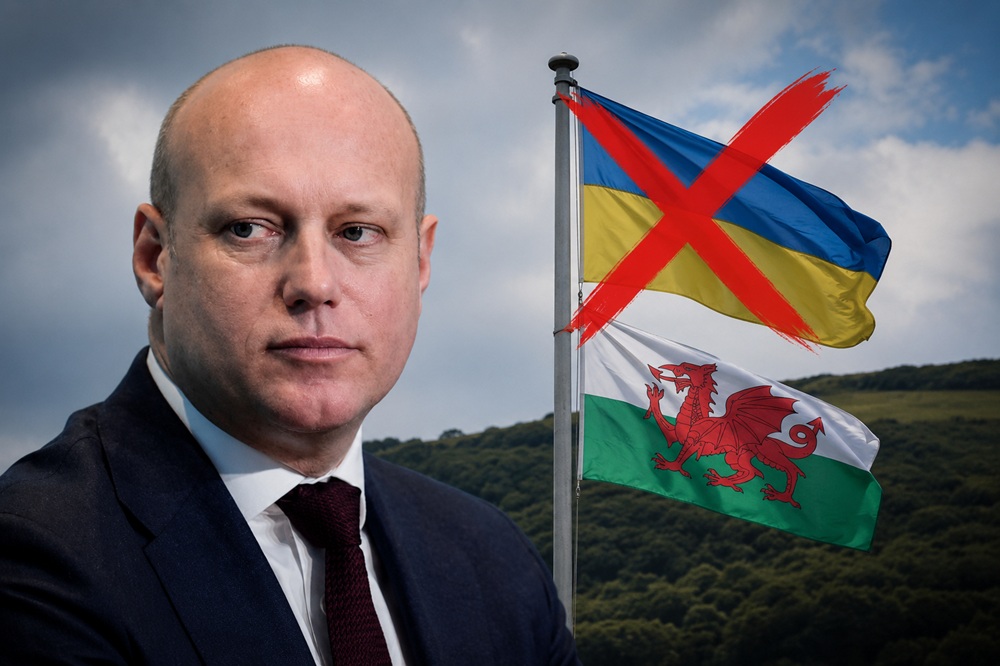
There is a question I genuinely cannot stop thinking about since reading discussions about removing the Ukrainian flag outside the Senedd.
And the question is simple:
What exactly would removing it fix?
Would it shorten NHS waiting lists?
Would it build affordable homes?
Would it strengthen struggling communities?
Would it reduce poverty or ease the cost of living crisis?
Or would it simply do one thing:
Remove one of the very few remaining public symbols quietly saying to Ukrainians:
“We still see you.”
Perhaps this is the part of the conversation many people understandably struggle to fully understand unless they have experienced war, displacement, or the strange emotional reality of being physically safe while mentally still living somewhere else entirely.
When I arrived in Wales in 2022 after Russia’s full-scale invasion of Ukraine, I was not arriving excited about a new beginning.
Like many Ukrainians, I arrived carrying grief, fear, exhaustion, survivor guilt, and the strange contradiction of being physically safe while emotionally trapped somewhere still under missile attacks.
War becomes ordinary
My mornings did not begin normally.
Before coffee.
Before breakfast.
Before anything else.
I checked my phone.
Who replied?
Who had not?
Who survived the night?
Which city had been bombed?
Had somebody I loved spent another night listening to explosions?
Had somebody I loved died?
Survival
That becomes normal during war. You stop measuring days by dates and start measuring them by survival.
War trauma is heartbreakingly ordinary. It follows you into everyday life.
It sits beside you while you answer emails, buy groceries, smile politely at strangers, and try to function normally while part of your mind remains somewhere else waiting for bad news.
And then something happened in Wales that changed how I felt. I started seeing Ukrainian flags.
Everywhere. Outside homes. In windows. On schools. On churches. On public buildings. In villages I had never heard of.
People may think this sounds dramatic, but I cried more than once. Because when your country is being destroyed, when your family is still there, and when your entire sense of safety has collapsed, small things stop being small things.
“People still support us?”
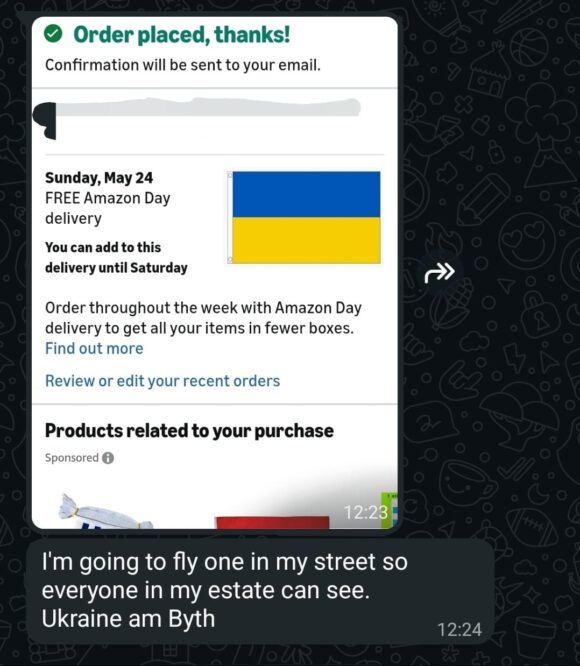
I remember standing near the Senedd and taking a photograph of the Ukrainian flag flying there and sending it to my mum, who still lives in a war zone. Her reply was simple.
So simple that it still breaks my heart.
“People still support us?”
Imagine surviving war and genuinely wondering whether the world has quietly stopped caring.
I replied: “Yes, mum. Look. Wales still remembers.”
I also remember sending photographs of the Ukrainian flag outside the Senedd to a close friend serving on the frontline in Ukraine.
He was exhausted, traumatised, frightened, and carrying the impossible burden of living every day knowing survival itself was uncertain.
His reply was devastating in its simplicity.
“That makes me happy.”
Happy.
Imagine that.
A soldier living in trenches, surrounded by unimaginable suffering, finding comfort in a Ukrainian flag standing outside a parliament building thousands of miles away.
Because to him it meant something. “People still care.” He later died in the war.
And whenever somebody says:
“It’s only a flag”
I think about him.
Symbols matter
I cannot count how many times I have seen other Ukrainians stop near the Senedd and photograph the flag. A Ukrainian mother once quietly told me she wanted to send it to her husband still in Ukraine because she wanted him to know people had not forgotten.
I have watched older Ukrainians stand silently and stare at it. I have seen parents photograph it to send to family members still living under missile attacks.
Again and again, I hear the same sentence: “Look. Wales still remembers us.”
Because after displacement, one of the deepest fears is not only fear of war. It is fear of becoming invisible.
Fear that one day the world quietly moves on while your family is still hiding underground.
Fear that solidarity quietly expires.
Nobody seriously believes a flag stops missiles.
The Ukrainian flag does not rebuild bombed schools.
It does not reunite separated families.
It does not heal trauma.
But symbols matter because symbols communicate values.
They tell people:
Who belongs
Who matters
Whose suffering still deserves recognition
And removing symbols communicates something too.
Keeping the Ukrainian flag quietly says: “We stand with you.”
Removing it says something else.
Many Ukrainians will hear:
“Solidarity has an expiry date.”
Why?
Why has this become such an urgent debate? Because removing the Ukrainian flag fixes none of the structural problems Wales faces. Not one.
Housing remains a crisis.
NHS pressures remain severe.
Families continue struggling with bills.
Schools face enormous pressures.
Communities continue experiencing hardship.
So why has symbolic solidarity with people surviving war suddenly become such a political priority?
Wars are not fought only with missiles.
They are fought psychologically.
Through exhaustion.
Through cynicism.
Through encouraging democratic societies to become tired.
Tired of suffering.
Tired of solidarity.
Tired of empathy.
Until conversations slowly move from: “How can we help?”
to: “Why are we still talking about Ukraine?”
The war did not stop. Attention faded.
People’s frustrations are real.
Life in Britain is genuinely hard.
People want politicians focused on housing, wages, healthcare and security.
That is understandable.
But removing the Ukrainian flag will not materially improve anybody’s life in Wales.
Internationally, however, it sends signals.
And perhaps that is the hardest reality:
The war is not over.
Children are still dying.
Families remain separated.
Cities are still bombed.
Lives are still shattered.
The war did not stop.
Only attention started fading.
Humanity
And perhaps that is the real question this debate forces us to ask:
What kind of Wales, and what kind of Europe, do we want to be while this war is still happening?
One that quietly says: “We cared, but only for a while.” Or one that still finds enough humanity to say: “We see you. We remember. And we have not forgotten.”
Support our Nation today
For the price of a cup of coffee a month you can help us create an independent, not-for-profit, national news service for the people of Wales, by the people of Wales.
Get more trusted Welsh news
Choose Nation.Cymru as a preferred source in Google News to see more of our journalism.



well said!
Those who want to remove the Ukrainian flag should have a word with themselves! What message does it say to those displaced around the world.?What exactly has Ukraine done to Wales or the rest of the UK to warrant removing the flag of that country?
They will have a word with farage first to check what they are allowed to think.
Farage will do as his is told and paid to do. Reform are going to get worse in Wales. Follow the money, start with 5 million that farage cannot say that there is no Russian money in and the crypto that farage cannot say if there is no Russian money in.
Kent council are now instituting national anthem and lords prayer at the start of meeting to cut opposition times for debate and other business, wonder who pays nige…
https://bylinetimes.com/2026/05/26/reform-run-council-cuts-opposition-time-to-make-way-for-lords-prayer-and-national-anthem/
His boss Farage is paid by Russia they will only nit pick like badEnoch does in london
Slava Ukraini
This should be read out in the Senedd .
I hope to get an opportunity to photograph the Ukrainian flag somewhere in Cymru (I don’t live near Cardiff and can’t travel there easily). My intention is to deliver or send a copy of the photo to the local office of Reform UK. I would like to think some other fellow-Cymry will try to do the same and inundate their offices around our caring nation.
As Yuliia so eloquently wrote the Ukrainian flag hurts no one and promotes solidarity. It reminds us of a war being fought thousands of miles away as much on our behalf as of the people of Ukraine. Trump’s war has pushed the Ukrainian war down the news order (was that one of the reasons for the war? How much money did Trump get from Putin?? Is he in his pocket?) Basically Reform are a bad party with extremism at its core, it’s financial links to the east are as dodgy as Trump’s. Am I being too cynical? I doubt it… Read more »
I know it’s nowhere in the same league, but during the miners strikes when the English government last tried to destroy Cymru, Ukrainian miners were extremely quick to show solidarity with us and we were sent tonnes of supplies from them.
Ukrainian support for Cymru will never be forgotten and we are more than happy to return the favour.
Please know that Ukrainians will always be welcome in Cymru. Unfortunately there is a certain group of the worst of humanity trying to stop us providing safety, please know this will not happen.
I was one of those striking miners and we where in the hall of the miners club in the village of Beddau in1984 greeting the miners from Ukraine who came with help for us the hall was full of husbands and their wifes that night they are good people
Is “Vlad, Vlad pleidiol wyf i’m Vlad” the cytgan (refrain) of “Mae hen wlad fy mhleidwyr yn annwyl i mi” ?