


I want peace for Ukraine, but what will stop Russia attacking again?
Yuliia Bond
How many times are we supposed to believe the same promises?
I’ve been speaking to Heart, Capital and Smooth radio about the latest peace talks. And I keep coming back to one question.
What happens if the next agreement fails too?
I think people here in Britain and people in Ukraine hear the words “peace negotiations” very differently.
Here, it’s understandably good news. Maybe the war will finally end.
For many Ukrainians, it’s hope mixed with fear. Because we’ve been here before.
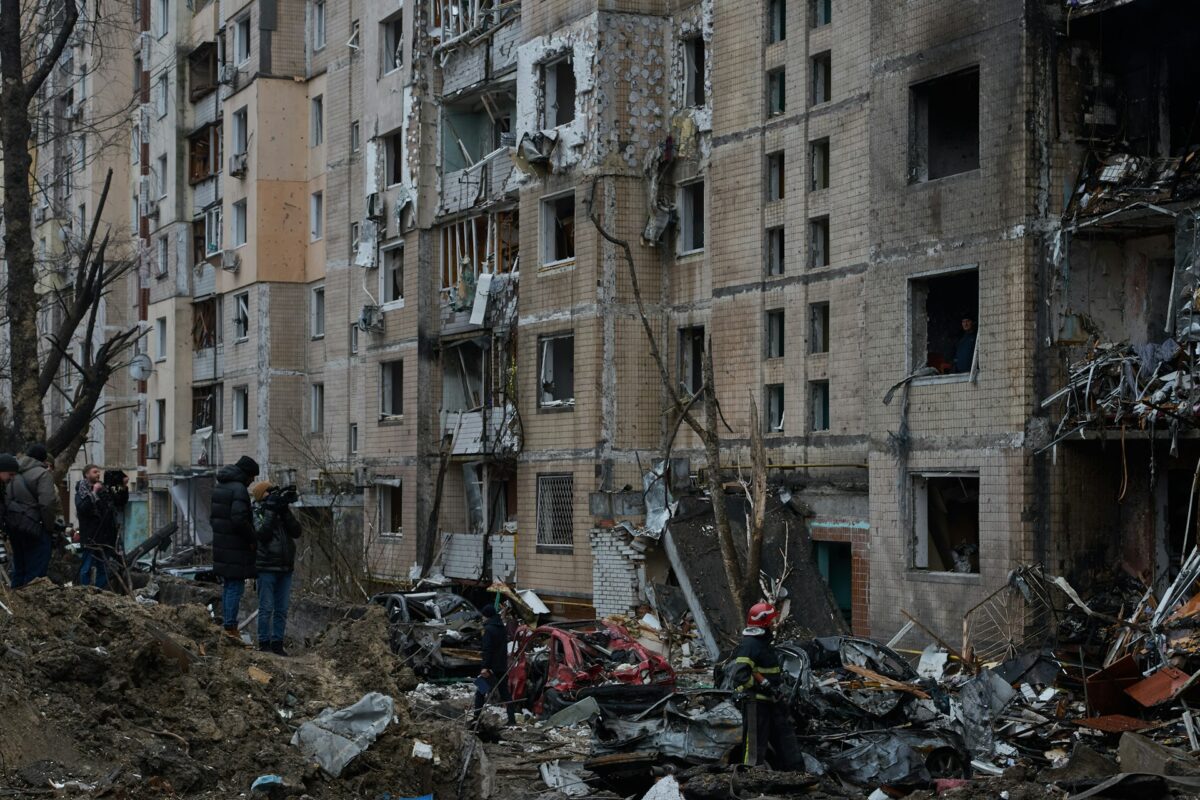
My mother is still in Ukraine. In August, a Russian drone hit my building in my hometown of Marhanets. A three-month-old baby was killed in that attack.
So yes, I want peace. Desperately. But when someone tells me another agreement with Russia could finally solve everything, I need to ask a few questions.
And I wish more people would ask them too.
Let’s look at history.
From 1919 to 1921, Soviet Russia fought wars against Ukraine and Poland, while Soviet forces brought several other countries under Moscow’s control.
Then came the Soviet invasions of eastern Poland and Finland in 1939, the occupation of the Baltic states in 1940 and the invasions of Hungary in 1956, Czechoslovakia in 1968 and Afghanistan in 1979.
After the Soviet Union collapsed, Russian forces were involved in conflicts in Moldova and Georgia. There were two devastating wars in Chechnya. Then Georgia again in 2008. Ukraine in 2014. And the full-scale invasion in 2022.
Yes, I know the Soviet Union and modern Russia are different states. And these conflicts weren’t all the same. I’m not pretending otherwise.
But I think we should be able to recognise a long history of Moscow using military force to impose its will.
Now, the agreements. Because this is the part I really want people to understand.
1994 – Budapest Memorandum. Ukraine gave up the nuclear weapons left on its territory. Russia, Britain and America gave security assurances, including commitments to respect Ukraine’s independence and borders. Those assurances fell short of a military defence guarantee. And that difference matters.
1997 – Friendship Treaty. Russia formally recognised Ukraine’s sovereignty and territorial integrity.
2003 – Border Treaty. Russia signed an agreement recognising our shared land border.
Please think about that.
Russia agreed where Ukraine’s borders were. In writing. And then crossed them by force.
2014 and 2015 – Minsk Agreements. Ceasefires, negotiations, international involvement. The agreements were never fully implemented, and the fighting continued.
2019 – Paris summit. More commitments to implementing a ceasefire.
2020 – Another ceasefire. It actually reduced the violence significantly for a while. But it didn’t last.
Even the 2022 Black Sea Grain Initiative, which wasn’t a peace agreement but helped Ukrainian food reach the world, ended when Russia withdrew in 2023.
And now we’re discussing another deal.
I’m not saying diplomacy is pointless. Some of these agreements saved lives. Russia has also faced sanctions and other consequences.
But none of that prevented the full-scale invasion.
So what exactly will make it different this time?
And why is Ukraine being asked to consider giving up territory when Russia is the country that invaded?
Concessions
I find it quite disturbing how casually people discuss territorial concessions.
It’s not just territory.
People live there. Their homes are there. Their parents are buried there. Some have spent their entire lives in those places.
And now we’re discussing whether those places should become part of Russia because Russia took them by force?
I’d like people in Wales to imagine something.
Imagine Russia occupied part of Wales. Bombed your towns. Forced families to leave. And then other countries started suggesting Britain should accept losing that territory to achieve peace.
Would you agree?
What if Russia had already broken several agreements with Britain?
Would you trust another one?
I’m genuinely asking. It’s very easy to talk about compromise when it isn’t your home being compromised.
And please don’t misunderstand me.
I’m exhausted by this war. I want to visit my mother without worrying about drones. I want to stop checking the news to see whether my hometown has been attacked again. I want Ukrainian children to have normal childhoods.
I don’t want another Ukrainian soldier to die. Or another civilian. Or another child.
Of course I want negotiations to succeed.
But if Russia stops attacking Ukraine, the war stops. If Ukraine stops defending itself, we risk losing our country.
Frightened
And I’m frightened that we’ll end up with an agreement that looks wonderful on paper. Politicians will congratulate each other, everyone will celebrate peace, and then five years later Russia will attack again.
What are we supposed to do then?
Tell all those families who returned home that we’re very sorry? That nobody expected this to happen again?
We’ve already been through that.
And here’s what I really want to know.
If another agreement fails and Russia attacks again, who takes responsibility?
The politicians who negotiated it?
The governments that encouraged Ukraine to accept the conditions?
The people who told Ukrainians to be realistic and make concessions?
Or will it be ordinary Ukrainians paying the price again?
Because that’s what I’m afraid of.
Not peace. God, I want peace.
I’m afraid of another war after everyone has convinced each other the last one is over.
And I genuinely want to hear from people who disagree with me. What would make you trust an agreement with a country that has already broken its commitments to you?
Who should guarantee Ukraine’s security? And what should actually happen if Russia breaks the agreement?
Not another statement of concern. Not another promise.
What would actually stop it?
I don’t want us to be having this conversation again in ten years. And I certainly don’t want our children to be having it.
Every time someone calls and says, “Would you be happy to do an interview? We’d like to hear your perspective on the peace talks,” I wonder how to explain what this actually feels like.
Because I know people want the war to end. We all do. But how do I explain why good news about peace negotiations can also be frightening?
It starts again
Imagine an agreement is signed tomorrow. People celebrate. Ukrainian families start going home. Children return to school. People find jobs, repair their houses and try to get their old lives back.
And then, a few months or a few years later, it starts again.
Those same families have to leave everything behind. Again.
Can you imagine what that would do to people? Especially children who have already had to start their lives over once?
I’m not saying this will happen. I desperately hope it won’t. But after everything we’ve experienced, how can we not be afraid of it?
And that’s the part I always struggle to explain in a two-minute interview.
We don’t just want to hear that the war is over. We need to know that going home won’t mean having to run away again.
Support our Nation today
For the price of a cup of coffee a month you can help us create an independent, not-for-profit, national news service for the people of Wales, by the people of Wales.
Get more trusted Welsh news
Choose Nation.Cymru as a preferred source in Google News to see more of our journalism.



I completely agree. We must keep supporting Ukraine in the face of Putin and Trump’s bullying and murderous attacks.