


Independence as a safe space
Ben Wildsmith
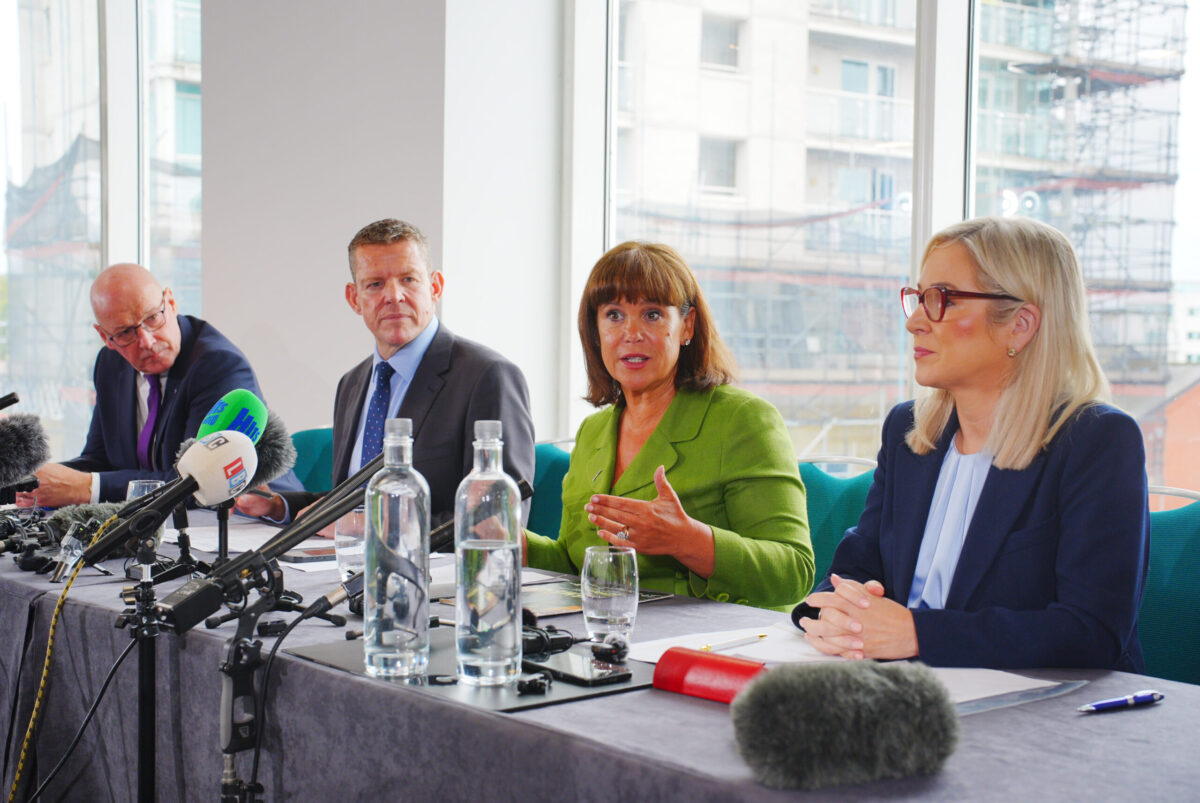
Last week’s Celtic summit in Cardiff seemed performative to many. In a week that revealed uncomfortable truths about education in Wales, you could argue that focussing on the constitution is indulgent. ‘Get on with the day job,’ is a reasonable demand, not just from those opposed to independence, but a much wider cohort who just aren’t interested in politics beyond how it washes up in their day-to-day experience.
Equally, though, a government is more than a management committee and insisting that its immediate tasks always take precedence over vision is a disingenuous way to paralyse it. You frequently see a version of this when spending for any reason is opposed because ‘our NHS’ needs the money. There is always a current crisis that can be used to invalidate long-term planning.
While little of substance emerged from the meeting between the First Ministers, the way it has been reported in England, and internationally, suggests it was a successful exercise in product placement.
An alliance of independence-seeking progressive nations may not be on every child’s Christmas list as yet, but it’s out there in the marketplace now, and something to be considered amongst other constitutional offerings.
Today’s polling from YouGov suggests that getting out of the traps early was a wise move. According to the poll, all but four British constituencies would support the reversal of Brexit. Crucially, it shows little enthusiasm for a compromise position, with only 6% backing single-market membership and 5% favouring a customs union.
The four constituencies that don’t back re-entry are all in England, further undermining the notion that Wales’ narrow Leave majority in 2016 heralded a trend away from progressive politics here.
Repeated failures by Reform UK to achieve a headline victory in Wales suggest that, for all the justified frustration in our communities, the nation remains to the left of UK politics when it matters.
As the electoral threat from Reform appears to recede in Wales, Plaid Cymru can be far more unequivocal in pushing a progressive agenda.
While Andy Burnham must juggle the contending demands of voters who are tempted by Reform to the right and the Greens to the left, Rhun ap Iorweth has maintained a healthy polling advantage since the election.
If Burnham is too constrained by English politics to act boldly, then the argument for independence becomes one of practicality. We can’t rejoin the EU because English politics, with its first-past-the-post distortion, won’t permit it, we can’t nationalise utilities, we can’t impose wealth taxes etc. etc. etc.
The patriotic appeal of independence will always be limited. The emotional connection of residents to the nation is a highly complex matter that can’t be covered by a flag or even a language.
Scepticism
Fear of upheaval, as, ironically, Brexit has illustrated, is a perfectly reasonable basis for scepticism amongst voters who seek stability for themselves and their children. The challenge for Plaid, the SNP, and Sinn Fein is to communicate that political chaos originating in England is what threatens that stability going forward.
The measured, collegiate atmosphere of the meeting drew an effective contrast with the reaction it provoked from the right in England. For many, there seemed to be no affection for Wales, Scotland, or Ireland. Instead, sentiments ranged from wanting a ban on independence referendums to seeking to forcibly eject us from the union as punishment for supposed ingratitude.
You can well imagine how such people react to the seemingly frequent breakdown of their marriages.
In these terms, the summit was a success. It is English politics that is riven by emotional division with a worrying tendency towards ethno-nationalism. For three ostensibly nationalist parties to have exposed that irrationality and emerged as the adults in the room is smart politics.
Today’s Brexit polling proves that the fundamentals of UK politics are shifting at pace. The Brexit moment is passing as demographics change, and global instability focusses attention on protecting the essentials of life.
Social cohesion
Most people accept that reliable alliances and social cohesion are our best hope to preserve what we value – a prerequisite of any efforts to progress further and improve society. Andy Burnham seems to get that; he’s a sound progressive politician in most regards. The political situation in England, however, will force compromises on him that risk strangling his ambition.
It’s all well and good dreaming up devolved powers for mayoralties and plans for re-industrialisation but of little value if all the English media will talk about is immigration and gender.
In those circumstances, the broad amity of Wales, Scotland, and Ireland starts to look like an oasis of calm and if there’s one thing we know emerging voters value, it’s a safe space.
Support our Nation today
For the price of a cup of coffee a month you can help us create an independent, not-for-profit, national news service for the people of Wales, by the people of Wales.
Get more trusted Welsh news
Choose Nation.Cymru as a preferred source in Google News to see more of our journalism.



Cooperation is the way forward. Each country wants basically the same thing and leans towards the left. England will continue to bully and dictate – it’s up to the other three progressive countries to show a more prosperous different future.
Problem is that cooperation is likely to fall over when funding is on the table. Scotland and Wales are in very different places on the Barnett formula.
It has to be said, there is a very noticeable mature and business like attitude from the anti occupation parties compared to Westminster.
We certainly need more of “right, let’s get on with the job” rather than “how can I perform for the cameras?”
Westminster is an international laughing stock.
A really important point: independence should not be presented simply as an act of leaving. It should be understood as an act of building. For me, the idea of Cymru as a country confident enough to build its own institutions, make its own choices and work constructively with its neighbours, rather than constantly reacting to political decisions made elsewhere is vital. That is also central to the work New Wales is doing. Creating the space for people to imagine what a more confident, outward-looking and internationally connected Cymru could look like. Independence is ultimately about agency. Not turning our backs… Read more »