

Is Plaid heading towards the quagmire?
Desmond Clifford
“Rhun, here – take the binoculars. Climb that hill. You see that dark patch over there? There, beyond the trees and the sunlit fields…? That’s the Quagmire – it’s where Welsh Governments go to lie down when they’re beaten by the job. Take a swerve now and avoid it.”
With that, he woke up, looked around and breathed in the pure air of Ynys Môn, and the voice was gone…
It’s too early, after six months in office, to say the Welsh Government is stuck in the quagmire. It isn’t, but it’s in danger of drifting carelessly in that direction and now is the time for grip. Government communications remain sparky but there’s a gap growing between its lively command of the tiktok-o-sphere and its increasingly sludgy decision-making.
Labour governments regularly got stuck in the quagmire and only fitfully jolted back into life; during a 25-year stint in government that was practically unavoidable. At this point, the Plaid government should be all about change, energy, urgency, can-do. By now I expected rows with the civil service, dynamic rewiring of the public sector and government driven by a “nothing-will-stand-in-our-way” single-mindedness. Is that really what we’re seeing? H’m?
The Welsh Government made an early mistake in misjudging the supplementary budget. Labour is traumatised, and it was a moment for generosity from Plaid rather than a poke in the eye. The First Minister says he learned from the experience and perhaps he did; a compromise agreement was reached more smoothly at the second time of asking. Hopefully the concept of a “Progressive Block” in the Senedd can now develop some legs.
Plaid has its own form of trauma, the trauma of victory. They’re delighted to be in office and look like they really want to be there. This is to their credit. At times, some Labour ministers regarded the business of government with weary resignation and acted like they were doing the country a favour. Change was the last thing they wanted.
Plaid Cymru are still bushy-tailed. The First Minister increasingly commands the Senedd chamber. He carries authority and is serious when serious is required. He advances government positions effectively and uses strong arguments and good humour to prick his opponents’ often pompous interventions (pomposity being a greater temptation for the weak than the powerful). His social media communications are so much better than anyone else’s; it’s what he does, and he’s a natural.
With post-election euphoria dying down, weaknesses are being exposed. Ministers seem craven before a bureaucracy which tells them it will take ten years to build a bridge across the Menai and another 18 months even to decide anything at all about the M4. The new economic development agency is inching forward, we must presume, but at an unimpressive pace. It took five months to announce a list of advisers – it could have been done before the summer holiday. At this rate of progress, it’s going to struggle to create a single job in this Senedd term.
Some decision-making has been better. Ruling out a fourth national park – a Labour manifesto commitment in 2021 which went nowhere – was clear and sensible. It’s unaffordable, there’s no compelling demand for it and, to the extent that it’s an idea with genuine merits, it can be revisited in better circumstances.
Plaid will rattle off their own assessment: progress on expanding free childcare for two-year-olds, a 30% cut in business rates for pubs and similar businesses, support for farming, additional money for NHS waiting lists. In fairness, these are not negligible matters. They boast of introducing new literacy targets for schools – fine, but let’s reserve judgement until we see an implementation plan, accountability and evidence of rising school standards. Our neighbour Ireland has the best reading standards in Europe; the levers are all in our hands, so why can’t that be Wales?
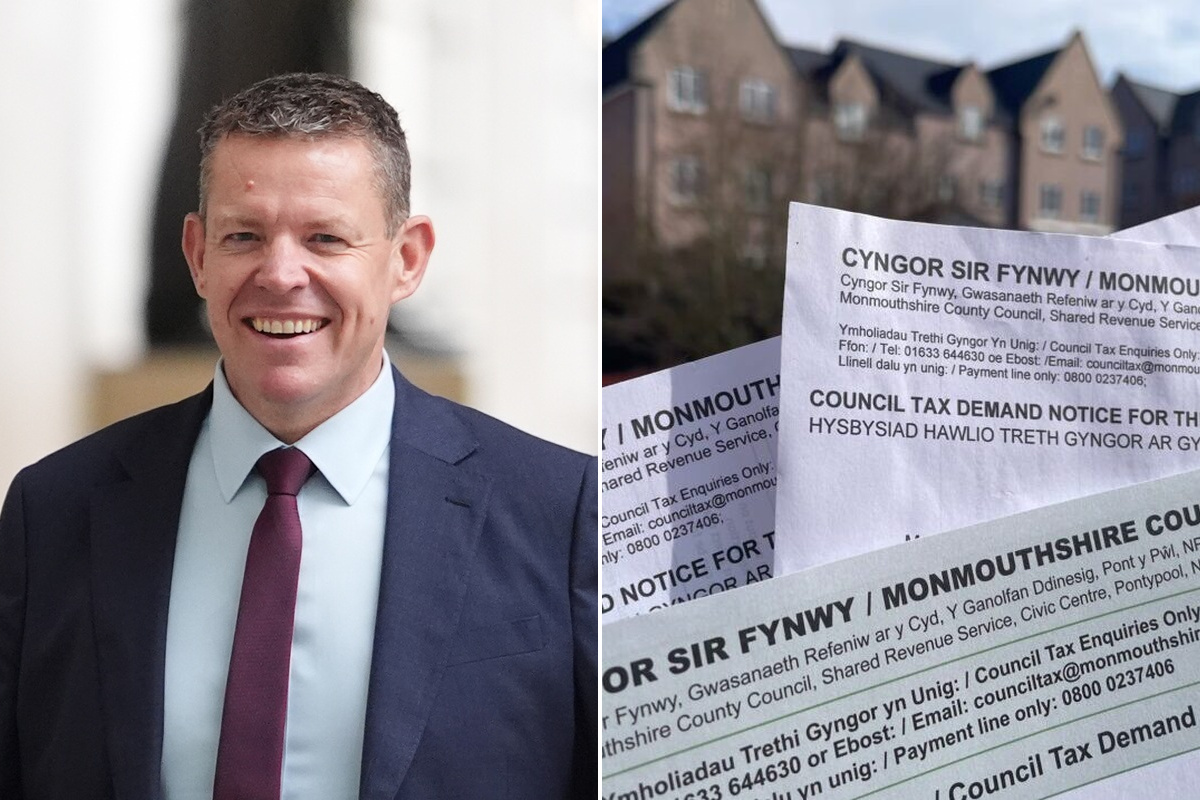
On the debit side we can now add the failure to revise the council tax. Plaid inherited a commitment to revise the tax by carrying out a revaluation of properties in Wales by 2028. In opposition they supported this policy. Indeed, Plaid negotiated it as a commitment in their 2021 Co-operation Agreement with the then Labour administration.
The Welsh Government decided last week not to go ahead with the revaluation but to kick the can down the road for a further five years. In defence, they point out that Labour postponed the revaluation due in 2025, so the problem had drifted in any case – but surely, all the more reason to crack on to help the people who suffer from that negligent decision?
‘Absurd’
The Finance Minister said she couldn’t afford the financial relief she’d want to pay in compensation to those who would have to pay more in the event of revaluation. The Institute for Fiscal Studies called this explanation “absurd” and “nonsensical” – and the IFS is right. The tax is designed to rebalance; after revaluations, those whose prosperity is rising compensate for those going in the other direction. It doesn’t work out as neatly as that for everyone – but no tax does. Where’s the fairness in VAT? Is there an income tax relief scheme for those who move to a higher threshold? No, there isn’t.
This is no mere technicality. The last council tax revaluation in Wales took effect in 2005, based on property values in 2003. The level of council tax payable is linked to the value of the house occupied. The higher the value of the house, the higher the tax. Over time, property values shift as house prices, relative to the market, go up and down. If the valuations were updated for tax purposes, it is estimated that roughly 25% of households would pay at a higher rate than now, about 25% at a lower rate and around 50% would pay about the same.
The exercise wouldn’t yield significantly more money in total, but it would change who pays what. The tax is “regressive”, meaning it disproportionately affects the poorest and tends to advantage the better-off. If the relative value of a house declines, you pay less tax. If the value rises, those households pay more (if you’re an owner-occupier, the value of your fixed asset has gone up in compensation). A similar principle is at work with income tax. When your income moves up beyond a threshold, you pay more income tax. When it falls below, you pay less.
Labour’s Welsh Government should have carried out a revaluation in 2025 when it was due. Not doing so was irresponsible and wrong. It was part of the litany of failings which resulted in their rejection by voters. Labour’s failure then, in a sense, licensed Plaid’s decision. Plaid’s dodge is comprehensible but wrong.
Too costly
Plaid says the revaluation is too costly. They should still do it. A revaluation will have winners and losers – it’s designed that way. The winners will be happy enough, but probably not grateful. The losers will be unhappy and, very likely, some would be keen to blame the government. This is the real reason no one wants to go near it. The status quo is easier for the government, and they’d rather be blamed for kicking a can down the road than be blamed for higher council tax.
All too human, I suppose, but there’s a wider issue here too. If Plaid Cymru wins the next election, they will aim to hold an independence referendum. To achieve an independent Wales, Plaid would need to persuade a majority of voters to sign up to an entirely new fiscal system and to trust them to deliver it safely. Respectfully, if they can’t manage a statutory revaluation of the council tax without a meltdown, it’s fair to suggest they’ll struggle to convince the people of Wales they can manage the introduction of an entirely new fiscal system complete with national debt, a central bank and a whole new suite of taxes. This was a governance test, and the Welsh Government flunked it.
All of this said, the council tax in its present form is poorly designed and should be replaced. When politicians are too scared to revise a tax in line with statutory requirements, there’s something wrong with the tax (UK politicians haven’t revised theirs since 1991, which tells us something!). Surely the wonks can design something better? Ask Swansea West MP Torsten Bell to look at it – he used to have the answers to all these kinds of things.
Ludicrously complex
The Welsh version of the council tax is ludicrously complex, with nine bands. No tax should have nine bands. The Finance Minister talked about even more bands at the higher level; pure performance politics and of no fiscal merit. Income tax typically has four bands, which seems sensible, simple and transparent.
Plaid will get past this, and I doubt it’ll cause much lasting political damage. They’ll probably make bigger mistakes along the way. They need to understand that government isn’t only about pleasing people. If Plaid wants to govern Wales well – as I believe they do – they need to show mettle as well as heart. And they need to steer clear of that quagmire.
Support our Nation today
For the price of a cup of coffee a month you can help us create an independent, not-for-profit, national news service for the people of Wales, by the people of Wales.
Get more trusted Welsh news
Choose Nation.Cymru as a preferred source in Google News to see more of our journalism.


