


Is Wales prepared for more frequent wildfires?
Cllr Steve Skivens
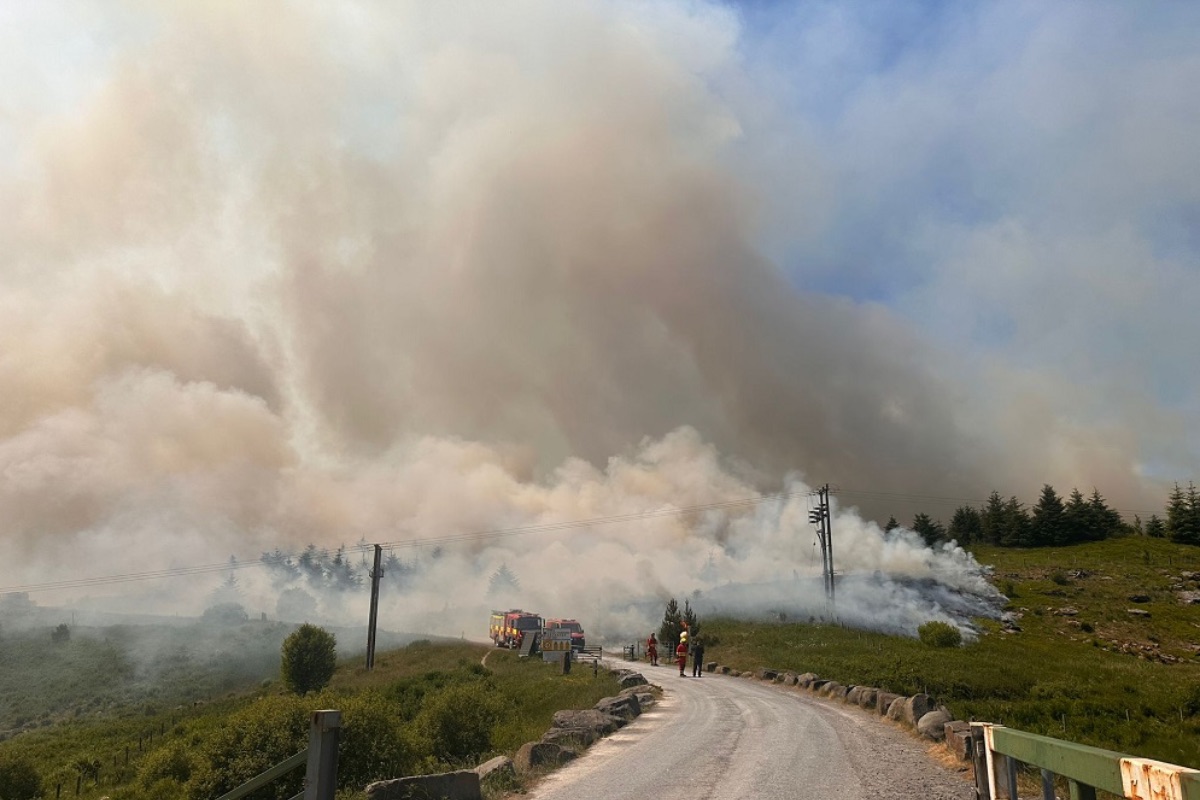
This year Wales and parts of the UK were heavily impacted by wildfires. It has been said that it was an unprecedented summer with an enormous impact on the environment, communities’ health and wellbeing as well as a significant disruption to day-to-day life in many areas.
I agree with the consensus from the scientific community that a summer like the one we have just experienced will not be seen as abnormal due to the predicted impacts of climate change looming large and ominously on the horizon. Our communities and our emergency services are being told to become resilient to these changes and adjust to the new ‘normal.’
We rightly applauded the way our firefighters bravely and determinedly tackled the huge wildfires. The way our communities rallied to support the emergency services to get through this difficult period was also magnificent.
The big question is whether we are prepared for more frequent wildfire events in coming years? There is a distinct need to prepare and for building in the future proofing the emergency services need to tackle such challenges.
Previous initiatives have borne benefit in reducing wildfire incidents. These involved multiple agencies and organisations with distinct roles and tasks.
However, such initiatives must be sustained over time to reduce the incidents or mitigate for the risks. It cannot simply be a quick fix and move on. It needs a broader approach, requiring buy-in across our public services and communities, to have ongoing success.
The Welsh Government has, to their credit, recognised the demands placed on communities and services and has recently hosted a wildfire summit.
This brought together expertise from many agencies and organisations. Further meetings and work have been scheduled.
The government is also looking beyond our borders to see how other countries where wildfires have been more prevalent and deadly, have met the challenge they face.
As someone who spent decades in the brigade, it is great to see that the government has taken the initiative to support the changes required.
Firefighters and other emergency services will respond to whatever threatens our communities. That is an integral part of the job. Yet what are we expecting of them in this dramatic change period of climate change?
During large-scale wildfires, firefighters are sent into difficult terrain and work long hours in hostile conditions. Wildfires are dangerous and unpredictable in their behaviour. These fires can change direction – even against the prevailing wind – move at speed through foliage, sometimes faster than an adult can run.
Fires have been known to jump across treetops or break out beyond ignition point, travelling through ground burrows or cavities. In this scenario, they have been known to have trapped experienced firefighters who are normally vigilant to the ever-present dangers.
Yet climate change brings more than wildfire events. More frequent flooding across wide areas or flash flooding, water rescues, droughts and loss of natural water courses, storms and inclement weather extremes are predicted.
All bring their own challenges and will require an emergency response with impacts on our communities and our responders.
Only via a coordinated plan and integrated operational response can we keep our responders and communities as safe as possible in future. This is the challenge of a broad review of climate change and its impacts.
The Welsh Government must build on the recent summit and review the broader climate change impacts. View whether equipment, training and the very capacity of our emergency services can meet the future challenges.
It must develop improved inter-agency communication, and joint working. With a high degree of awareness across many organisations and agencies of the costs, impacts and the need for planning for climate change.
Education programmes, land management, building control and planning authorities, community engagement and enforcement activities are all mentioned in previous initiatives to reduce or mitigate the risks and must be engaged again.
As an ex-fire chief I understand on a very personal level many of the issues facing our emergency service personnel and I salute their efforts.
Yet I also ask are we asking too much of the few? Have the cuts in the austerity years eroded the services capacity?
Are we putting huge burdens and strain on our service personnel? Have the current public services got the capacity to equip, develop, train and exercise for what the future expectations are placed on those services? Or are they stretched to the full when call rates increase greatly?
It is time to take a breather after the wildfire summer, step back and review. An opportunity to consider the future and what climate change is bringing to our communities.
Not only this year and next, but its impact on future generations. It is greater than finance and resource, it is preparation, planning, tactics, operational response capability, intelligence gathering and joined up working.
I say all this as the first of our winter storms have rolled in and created incidents. Yet again, our emergency service personal roll out of the doors and serve their communities again with new dangers and risks.
Steve Skivens is a Plaid Cymru councillor at Caerphilly County Borough Council. He has more than 30 years’ experience with the South Wales Fire and Rescue Service where he rose to Assistant Chief Fire Officer.
Support our Nation today
For the price of a cup of coffee a month you can help us create an independent, not-for-profit, national news service for the people of Wales, by the people of Wales.
Get more trusted Welsh news
Choose Nation.Cymru as a preferred source in Google News to see more of our journalism.


