


Is Wales ready for a surge in deer numbers?
Stephen Price
Driving along the A4042 one morning recently, passing through the village of Goytre, Monmouthshire, I spotted something a little less familiar in the usual lineup of roadkill on much of this otherwise picturesque stretch of road.
’Was that a hare?’ I asked my partner who was able to take a closer look through the passenger window.
’I thought it was a deer..’
He was, of course, spot on.
On the return drive, I kept a look out for the majestic baby beast, who was still there, appearing deep in slumber, half on the road, half off. A knock but no blood. Rich pickings for Goytre’s spring-hungry birds.
I’m no expert, but the deer appeared to be a Muntjac. A breed originally brought from China to deer parks such as Woburn Abbey in Bedfordshire.
A fair few subsequently escaped, quickly establishing successful feral populations in the wild.
According to the BBC’s Jody Bourton: “Their tenacity and ability to breed all year round means they’ve spread to many parts of England and Wales. They can be found in surprising places and even in urban environments being spotted next to motorways and in parks.
“They’re pretty small – about the same size as a dog. The males have small antlers and a distinct ‘v’ shape on their faces. But the real funny feature of the muntjac is their tiny little tusks. They’re kind of like a cross between a small deer and a warthog I suppose!”
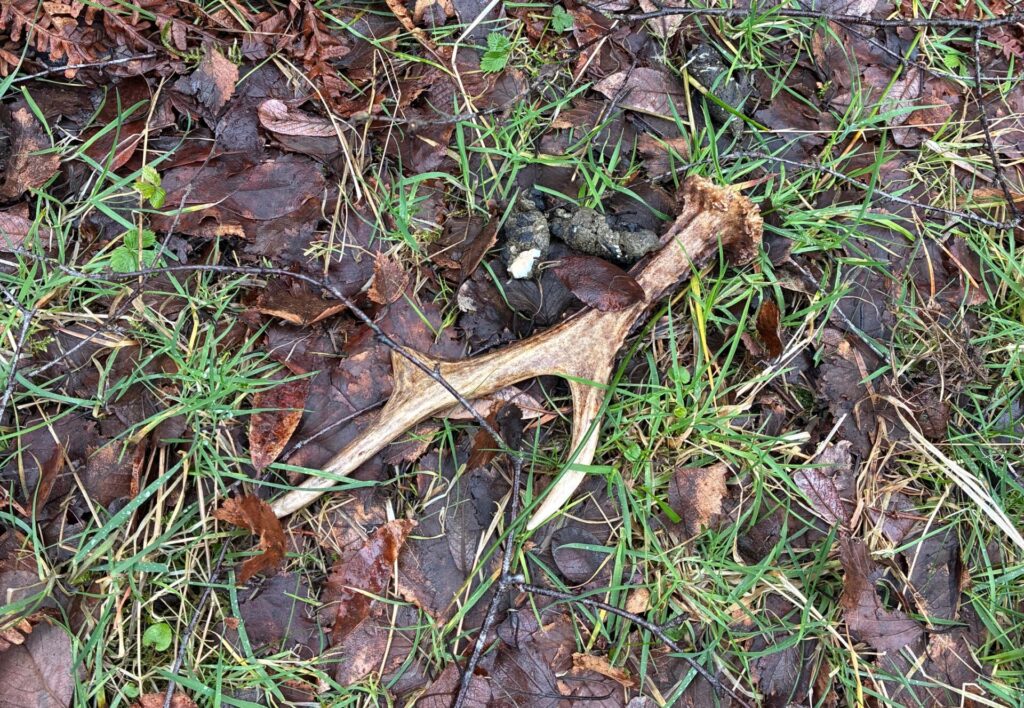
Mere weeks earlier, on home turf in Brynmawr, I was astonished to find an antler along a dried-up river bed – an overlooked casualty of the A465 widening that us locals dare not complain about.
Social media users regularly share their sightings in nearby village and town Facebook groups, with the beechwood in Clydach a favourite haunt of the recent arrivals.
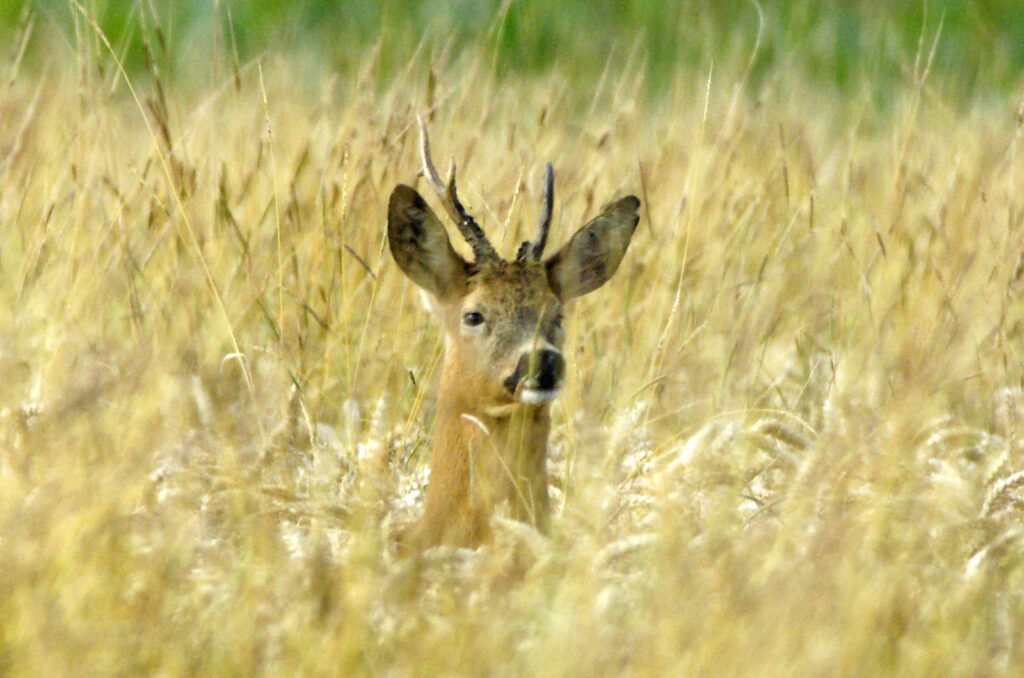
But these appear from most sightings to be roe deer – confirmed by the antler now in pride of place on a shelf at home – most of which are migrating across from Herefordshire and Gloucestershire.
The roe deer is native to the UK and widespread across woodland, farmland, grassland and heathland habitats – but has been mostly absent from Wales, save for a few areas, for generations.
Pass through the Forest of Dean, you can’t help but spot ‘deer in the road’ signs. In Wales, however? Not so much.
Symbiosis
I have many passions in life, but few as deeply held as my love for my square mile, particularly its native flora and fauna – beech trees especially holding endless fascination for me.
Over the years, I’ve saved countless saplings – replanting them from areas marked for road widening and the like into areas where there were none.
One planting session on the bare slopes of Gilwern Hill taught me early on the futility of planting in areas frequented by roaming sheep.
Anyone walking Clydach Gorge over the past few decades will have noticed a ‘scrubbiness’ of sorts developing to the once-thriving beechwood. Wet winters and long dry summers are proving too much for many of the older beech trees – snapping or falling entirely, their shallow roots, a blessing for symbiotic feeding, but a curse with the new climate attacking them.
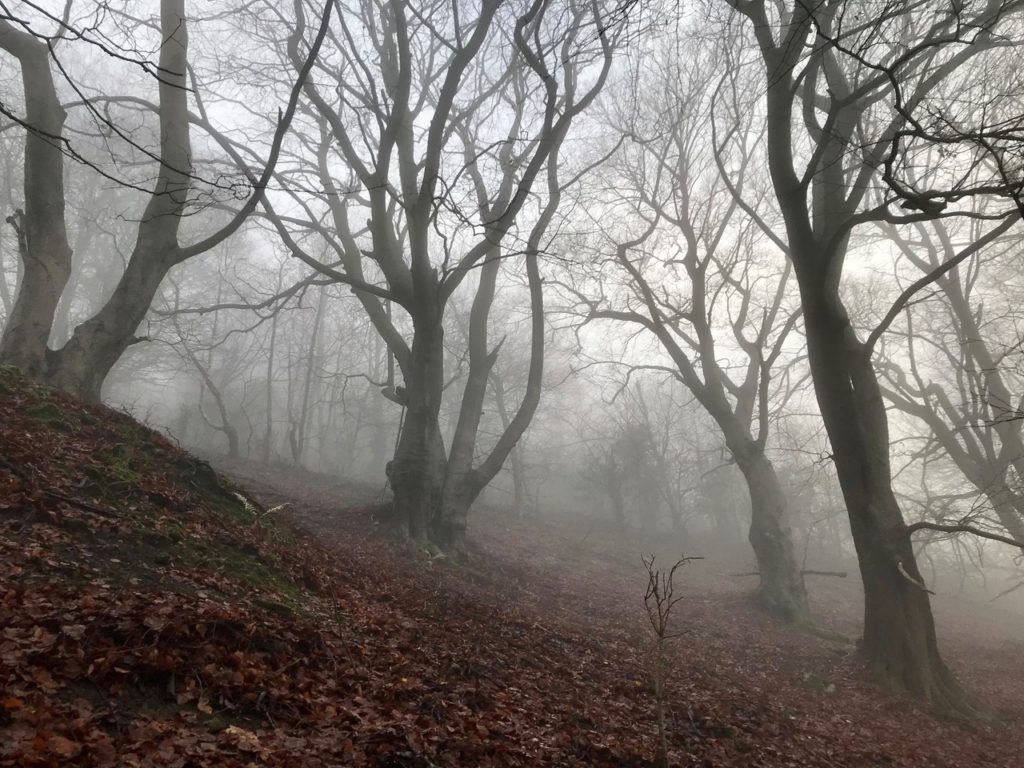
Smaller beech trees are growing in pockets, but the damage from non-native grey squirrels eating their bark over winter has meant even the hardiest have it harder than ever.
So what happens when we add deer to the mix, after their absence for so long? Can we expect our native woodlands with their young saplings to be ignored? Of course not.
According to the Forestry Commission: “Deer can have an adverse impact on woodland vegetation and simplify vertical structure by selectively browsing on herbs, shrubs and young trees. Vegetation changes brought about by deer browsing are also detrimental to some vertebrate and invertebrate woodland fauna.
“Without appropriate management, deer populations will impose long-term changes on the composition of native woodlands.”
I would put all my money on very few tasty young beeches outside of the most inhospitable locations making it to the age of the remaining Titan beeches.
And that would be very very sad. These delicate ecosystems – bluebells, fungi, falcons and the like – we all stand to lose.
Facing reality
One of my worst ever (thankfully short-lived) neighbours happened to be an English ‘ex-pat’ who had had run-ins with the RSPCA for having a Larsen trap in the back garden a few years prior.
His chief ‘hobby’ was hunting for deer in England’s ‘west country’ – and he’d been known to bring them back and skin them in the back garden.
No doubt he’ll have a whale of a time not having to travel so far to ‘thin out’ things this side of the border when the time comes.
But should we be waiting for things to get to a point where we are having to debate how to manage the impacts on our already-suffering native trees and plants?
And are our farmers ready for the inevitable impact on their crops, and the subsequent rise in costs which will be added to the consumer?
With fierce debate ongoing in Scotland over their deer populations – booming with no natural predators, and no easy fix – Wales is in the much more enviable position of being able to plan ahead.
Our councils, our Government even, will be no experts in the widescale impacts of a boom in deer numbers, which is why they need to lean on the knowledge of our environmental bodies and charities, and seek expertise from our friends in the north.
But before we sleepwalk into a very different wildlife mix in parts of Wales than those we’ve known up until relatively recently, as a bare minimum, our councils need to erect signage on roads where the potential for collisions or dangerous last-minute swerves is set to rise.
For the protection of our last-remaining slivers of native woodland, in particular, Wales needs to get this right now.
And we also owe it to these beautiful animals who deserve more than to be the victims of eager trigger-happy hunters or left to die on the side of the road.
Drive safe, folks.
Support our Nation today
For the price of a cup of coffee a month you can help us create an independent, not-for-profit, national news service for the people of Wales, by the people of Wales.


