


It’s time to end the unthinking plunge towards death and destruction
Martin Shipton
As a child of the Cold War era, I never expected to read a news story that begins: “The head of the army says the UK’s political leaders are about to start a ‘frank conversation’ with the public about the need to prepare for war.”
While instinctively opposed from the dawn of my political awakening to the spending of large amounts of money on nuclear weapons, I thought the actual prospect of all-out war between “the West” and the Soviet bloc was minimal.
Whatever we may think of their ideologies, the leaders of powerful nations were surely sufficiently wise to avoid the mutually assured destruction that a nuclear conflict would bring.
I saw institutions like the United Nations and the European Union, coupled with the subtle arts of international diplomacy, as guarantors of peace. Of course, there were proxy wars fought in various parts of the developing world, but in comfortable Britain – where even the colonial hangover known euphemistically as the Troubles rarely intruded – all appeared to be safe.
Nevertheless, General Sir Roly Walker, the current head of the British Army, has said that “every citizen will be asked to make sacrifices and to play their part in the defence of the nation”.
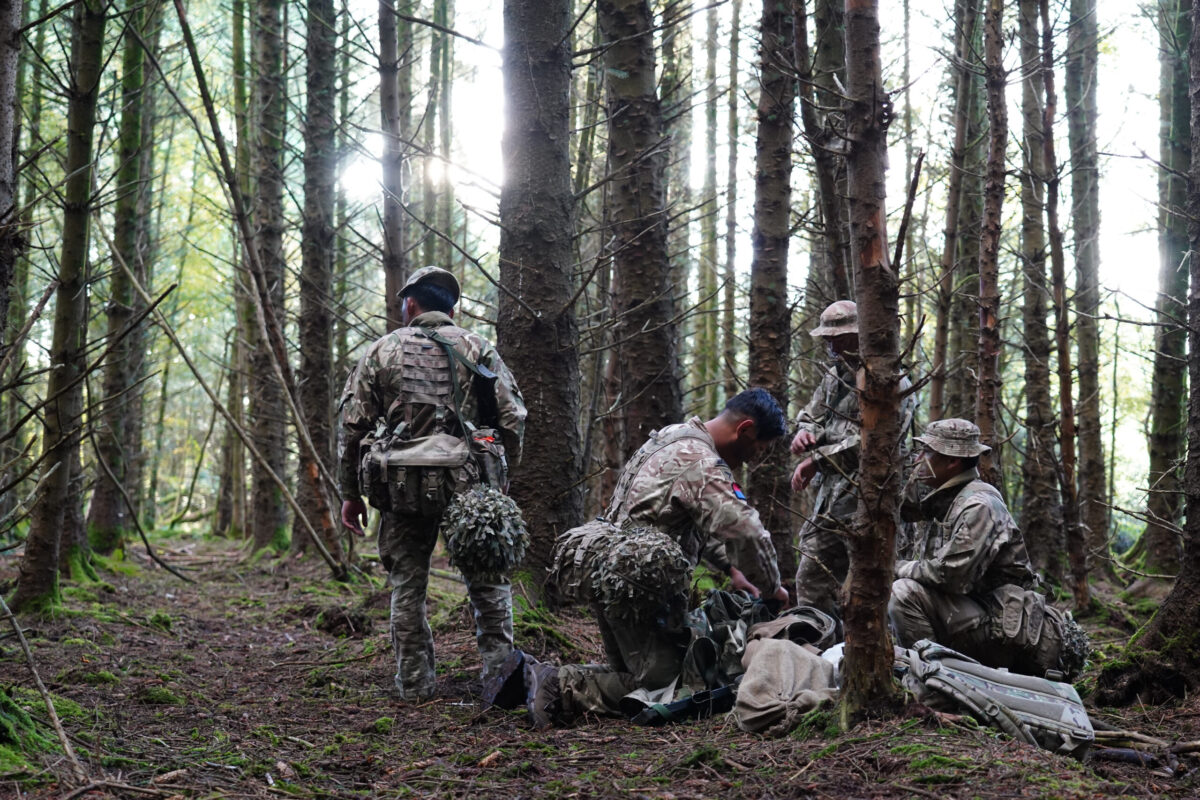
He did so when addressing 700 troops at Catterick Garrison in North Yorkshire, adding: “You didn’t know this, but our nation is going to need you. There was a time that our nation didn’t want to think of a time when it would need its soldiers to fight in a war.
“Indeed, very soon, the political leaders of this country will start to have a frank conversation with the citizens of this country about just what is going on and where the risk lies. They are going to try and explain to our citizens that our citizens have got to consent to sacrifices to prioritise defence and security.
“And then they are going to ask those citizens, for whom we are not necessarily at the front of their mind, that they too need to play a part in the defence and security of this country. They need to understand what we do for them. They need to consent to allow us to do that. Which means sacrifices by them.”
On one level, such comments can be taken as a pitch for ordinary people to back calls for significant increases in “defence” spending. But there is also the suggestion that war is on its way and that everyone will have to participate to one degree or another.
What proportion of the population would willingly participate in a war? The results of an Ipsos poll published earlier this month are not encouraging for those who believe such an eventuality may be inevitable.
It revealed that nearly half of Britons (48%) say they would not fight for their country under any circumstances, with only 36% willing to take up arms and the remainder saying they do not know.
Defence Secretary Wes Streeting has said that British military spending must account for the threat of a Russian attack on Nato allies. But while 51% of the public support increasing UK defence spending, 44% oppose higher personal taxes or cuts to public services to fund it – a contradictory result that provides food for thought for Chancellor John Healey.
Stock up
Meanwhile, ministers from Andy Burnham down have been advising households to stock up on bottled water, tinned food and other staples in case of an emergency. The Prime Minister spoke of extreme weather events, but perhaps he didn’t want to depart from his reassuring image by mooting the prospect of war.
It does seem to me that what was previously thought of as unthinkable is now being normalised and presented matter-of-factly as a serious possibility. Why is this happening?
I asked Alun Davies, the former Labour MS for Blaenau Gwent, who used to chair a resilience committee at the Senedd.
He said: “I think it’s likely that Ministers have had a briefing from the security services that Russia might sabotage elements of Britain’s infrastructure. This could lead to power cuts, so it makes sense to have an emergency stock of supplies. It’s not really anything new. People used to keep a supply of candles for that very reason.
“I don’t actually think the government has conscription in mind. We don’t have the barracks to accommodate the conscripts, let alone the uniforms, beds, blankets, socks and everything else they would need.
“This isn’t 1939 and our population is very different from the one we had at that time.”
War
It’s notable that the explicit reference to war has come from the head of the British Army rather than from a government minister. What General Walker can say to the soldiers under his command is very different from what the Prime Minister could say to voters, the majority of whom have no interest in going along with the insidious idea that we should all prepare ourselves for what could easily become World War Three.
The fact that this is the situation we are in is an indictment of the world leaders who have failed to maintain peace and security, instead creating precarity and sowing the seeds of dystopia.
While a bare majority of people in the UK have bought the argument that we need to increase “defence” spending because of external threats, only a minority are prepared to pay for it in terms of tax increases or public service cuts.
The world arms industry, as has been exposed many times by investigative journalists, is riddled with corruption and has been for decades. The most notorious example involving a British company concerned allegations that huge bribes were paid to secure a contract known as the Al-Yamamah arms deal, under which weapons were sold to Saudi Arabia.
Warmongering
In June 2007, the BBC’s investigative programme Panorama alleged that BAE Systems “paid hundreds of millions of pounds to the ex-Saudi ambassador to the US, Prince Bandar bin Sultan”.
Later, a Serious Fraud Office investigation was discontinued on the orders of then Prime Minister Tony Blair because continuing it would have damaged Britain’s relations with Saudi Arabia.
We can expect to see a ramping up of warmongering as bad actors inflame division via social media, pumping out propaganda based on conspiracy theories and outright lies.
It’s time to end the unthinking plunge towards death and destruction.
Now, more than ever, the art of cool, calm diplomacy is desperately needed.
Support our Nation today
For the price of a cup of coffee a month you can help us create an independent, not-for-profit, national news service for the people of Wales, by the people of Wales.
Get more trusted Welsh news
Choose Nation.Cymru as a preferred source in Google News to see more of our journalism.



Excellent article highlighting the rampant corruption in the arms trade, supported in the UK by an army of lobbyists and a platoon of retired politicians and civil servants with their snouts in the trough.
Perhaps the focus should be delivering current projects on time and on budget, rather than demanding more billions are spent.