


Justice for Wales – The Unfinished Business of 1535
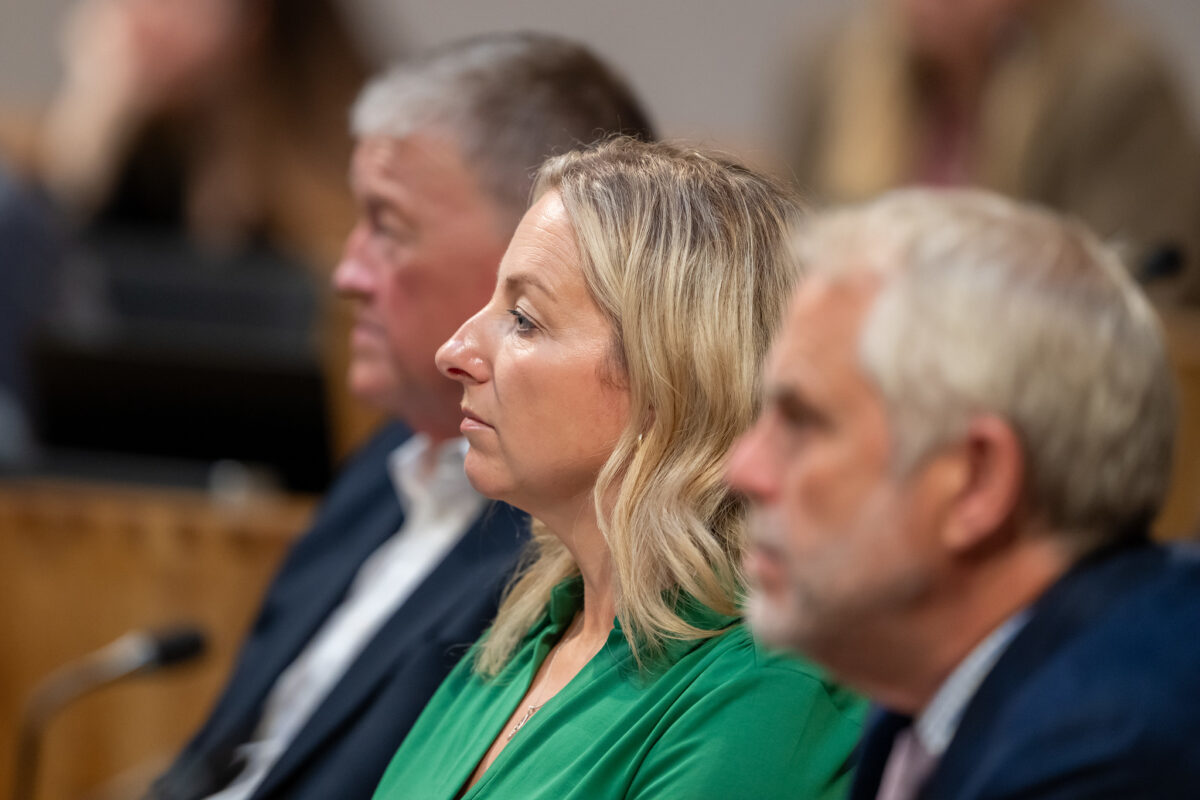
Carrie Harper, AS/MS Fflint Wrecsam, Chair Constitution, Justice and External Affairs Committee
Nearly five hundred years ago, Henry VIII set about completing the incorporation of Wales into England’s legal system.
The Laws in Wales Acts of 1535 and 1542 displaced our remaining distinct legal traditions and established a constitutional inheritance whose consequences are still with us today.
Five centuries later, we have our own Parliament, our own Government and our own growing body of Welsh law. We make decisions about our schools, hospitals, housing and social services. But we still don’t control our own criminal justice system.
You might think that after nearly half a millennium, the case for revisiting this Tudor inheritance would be relatively uncontroversial. Not, it seems, in the Kinnock household.
Both Neil and Stephen Kinnock have recently questioned the case for devolving justice to Wales. Neil Kinnock has suggested there are “more downsides than upsides”, while his son, Secretary of State for Wales Stephen Kinnock, has said he is “not entirely convinced” of the case.
The costs and practical challenges of reform deserve serious consideration. But there is something distinctly dated about treating the arrangements we inherited as the natural order of things, particularly when the evidence for change has already been examined by some of the most authoritative figures in British justice.
The Tudor Acts may explain how we arrived here, but they cannot justify keeping us here.
1535 – When our laws were replaced
Our legal history did not begin with Henry VIII. Centuries before the Tudors, we had already developed our own sophisticated legal tradition associated with Hywel Dda, considered in many respects remarkably progressive for its time. Cymru had distinctive principles governing property, inheritance, the marital rights of women and the resolution of disputes. Our country had its own laws long before England imposed its own.
The conquest of Wales by Edward I in the thirteenth century brought Wales under English domination, although elements of Welsh law survived for generations. The legislation introduced under Henry VIII in 1535 and 1542 completed much of that process. Our remaining separate legal traditions were displaced, English law was extended across Wales, and English became the language of the courts.
The language provisions reveal the unequal relationship particularly clearly. In a country where most people spoke Welsh, the law required English in the courts and restricted public office to those who could speak it. Imagine standing before a court in your own country, only to find that the language you spoke was not recognised in the administration of justice.
There was no Welsh Parliament deliberating over these changes, and no democratic mandate from the communities whose legal traditions were being displaced. These decisions were made within the political structures of Tudor England.
Nearly five hundred years later, our circumstances are fundamentally different. We have restored our Parliament, we make our own laws, and with the election of a Plaid Cymru Government on a clear manifesto commitment to devolving justice, we now have a clear democratic mandate for change.
Our Parliament returns, but justice stays behind
The establishment of the National Assembly in 1999 marked a turning point in our democratic history. Yet while our institutions developed into a law-making Parliament, criminal justice remained largely reserved to Westminster.
Scotland retained its separate legal system and assumed responsibility for most justice matters in 1999. Northern Ireland gained devolved responsibility for policing and justice in 2010.
Wales remains the only nation of the United Kingdom without devolved responsibility for its own criminal justice system.
Our Senedd can legislate on housing, health, education and social services, but prisons, probation, sentencing, courts and most criminal justice policy remain outside our democratic control.
Consider someone leaving prison. Their chances of rebuilding their life may depend on housing, mental health treatment, addiction support or employment. Many of those services are devolved, but the prison and probation services managing their release answer to Westminster.
Researchers describe this as the “jagged edge” of Welsh justice, where devolved and reserved responsibilities meet. Its consequences are anything but theoretical.
The evidence we can no longer ignore
Dr Robert Jones of Cardiff University’s Wales Governance Centre has published the latest Prisons, Punishment and Sentencing in Wales Factfile. Its findings make troubling reading.
In 2025, our imprisonment rate stood at 155 people per 100,000 of our population, compared with 138 in England. This is compelling evidence that the current system is not adequately responding to Welsh needs.
More than a quarter of Welsh prisoners, 28%, were held in English prisons.
For women, the position is particularly stark. We do not have a single women’s prison in Wales. Every woman from our country who is imprisoned must serve her sentence across the border, often separated from children, families and the community networks essential to rehabilitation.
The number of women receiving immediate custodial sentences in Wales increased by 27% in 2025. A quarter of those sentences were for one month or less. Long enough to lose a job, accommodation or family stability, but often too short to provide meaningful rehabilitation.
As Chair of the Senedd’s Constitution, Justice and External Affairs Committee, I have seen how divided responsibilities complicate justice policy. Our committee has pursued correspondence concerning the proposed Women’s Residential Centre in Swansea, originally expected to open in 2024 but affected by prolonged delays and funding uncertainty.
Our Welsh Government can develop services to support vulnerable women, yet crucial justice provision remains dependent on Westminster.
The Factfile also reveals that 695 people under Welsh probation supervision were recorded as rough sleeping on the day of their release in 2025/26, an increase of 24% on the previous year.
Devolution alone would not solve every problem. But these outcomes demand serious examination, and the existing arrangements deserve at least as much scrutiny as any proposal to replace them.
The evidence has already been examined
This brings us back to Neil and Stephen Kinnock, who have questioned whether transferring justice powers would improve outcomes and whether the disruption would be justified.
Evidence is precisely what we should demand. But we have not been waiting for someone to investigate this question.
In 2019, the Commission on Justice in Wales, chaired by Lord Thomas of Cwmgiedd, the former Lord Chief Justice of England and Wales, published its landmark report. After an extensive examination, it made 78 recommendations, including the full legislative and executive devolution of justice.
The Independent Commission on the Constitutional Future of Wales subsequently identified a strong evidence-based case for devolution, including better outcomes, accountability, transparency and value for money. Its specialist justice group found relatively little evidence supporting the current division of responsibilities compared with the case for reform.
The House of Commons Welsh Affairs Committee has also examined fragmented responsibilities, while our own Senedd committee has considered Dr Jones’s work on implementing the Thomas Commission’s recommendations.
These inquiries do not remove the need for detailed planning, fair funding or proper consideration of costs. But they demonstrate that the case has been seriously and repeatedly examined.
There is a difference between asking for evidence and engaging with the evidence that already exists. The Kinnocks may prefer the present system, but they must defend that position against the substantial evidence for reform, not simply dismiss a case that has already been made.
What Wales could do differently
We do not have to imagine what a devolved government might do with responsibility for criminal justice. We can look to Scotland.
In 2019, the Scottish Parliament extended its presumption against short prison sentences to terms of 12 months or less, following evidence that short custodial sentences are less effective at rehabilitation than community interventions.
Courts retained the power to imprison, but the change encouraged greater use of community alternatives. This has been particularly important for women, helping to keep those at low risk of reoffending out of prison, preserve family relationships and enable access to trauma-informed support in the community.
Scotland’s justice system has challenges of its own. But crucially, its Parliament has the power to examine the evidence, make different policy choices and evaluate the results.
Now consider Wales, where a quarter of women receiving immediate custodial sentences in 2025 were sentenced to one month or less. With responsibility for sentencing, our Senedd could consider approaches that better protect communities, support victims and reduce reoffending.
With devolution, we could also connect probation with housing, mental health and addiction services, align youth justice with education and early intervention, and develop approaches to women’s justice that reflect the needs of women in Wales. We could also make access to justice in Welsh integral to the system.
None of this would be simple. It would require planning, resources and cooperation with England. But Scotland and Northern Ireland already demonstrate that distinct justice jurisdictions can operate within the United Kingdom.
The practical challenges are real, but they are not insurmountable. Nor do they justify leaving the weaknesses of the present system unaddressed.
The unfinished business of 1535
Nearly five hundred years after the Tudors imposed English law upon Wales, the constitutional inheritance of that distant century continues to limit our democracy.
After decades of commissions, inquiries and research exposing the weaknesses of the current system, surely the more pressing question is no longer whether we can justify change, but whether we can justify leaving things as they are.
The Tudor settlement was not an agreement between equals. It was an assertion of power over our country, not an expression of the will of our people.
Today, we have restored our own Parliament and reclaimed the power to make our own laws.
It is now time to finish the unfinished business of 1535 and re-establish Welsh justice.
Support our Nation today
For the price of a cup of coffee a month you can help us create an independent, not-for-profit, national news service for the people of Wales, by the people of Wales.
Get more trusted Welsh news
Choose Nation.Cymru as a preferred source in Google News to see more of our journalism.


