

Labour’s equivalence dilemma
Jonathan Edwards
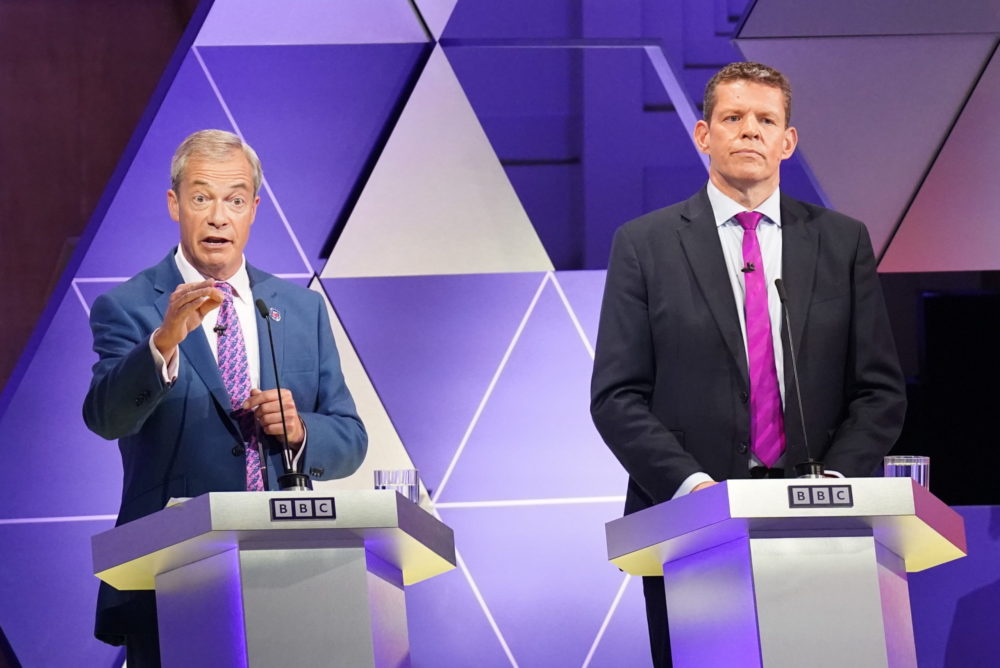
First Minister Eluned Morgan didn’t hold back in her address to the Labour UK conference when she described Reform and Plaid Cymru as “Divisive nationalism in different forms. Different poison, same bottle.”
It was certainly language meant to wind up the most tribal of Labour activists, but also a blunt message to those Labour voters who are indicating that they are considering supporting Plaid Cymru.
Whether that cohort of voters considers it a credible position is another matter altogether.
Labour knows a sizeable chunk of their supporters are flirting with Plaid Cymru and the attack line is aimed at scaring these individuals that making the switch isn’t a cash free transaction. The First Minister is using the toxicity of Reform in the eyes of Labour supporters to tarnish their other main rival Plaid Cymru.
Debate
The comment brought back to me a debate that has raged within Plaid Cymru for decades, long before the emergence of Reform.
On the one hand some thought that the best way for Plaid to approach the political position the party was in was to create a division line based on Welsh nationalism and Welsh unionism. In this scenario there was equivalence between Labour and the Conservatives. The other side of the debate, predominantly the Left of the party, viewed the crucial division line as one between the Tories and the rest.
The emphasis between the two has swayed over the years within the party. Leanne Wood and Adam Price very much viewed the Welsh political context via the latter approach. Whereas Rhun ap Iorwerth has adopted the former, to date.
I tended to view matters via the first approach. Firstly, after years in Westminster I couldn’t tell the difference in approach to Wales between Labour and the Tories.
Concessions
They were both fundamentally Westminster rule parties. And secondly, Plaid in the devolution era to date has been a party hoping to gain concessions for Wales as a junior partner and therefore the hand of negotiation was likely to be stronger if there were more than one option on the table.
Labour after collapsing in the polls now find themselves in a similar situation. The party had two main choices about how to confront the emerging political landscape. It could have determined that either Reform (or Plaid Cymru) were the main enemy and attempted to polarise against it.
Instead, the First Minister has decided to create a narrative of political equivalence between Plaid and Reform, and a very hostile one at that.
This leads to a legitimate question about future coalition options. Describing an opponent as “poison” makes it difficult to imagine sustaining that party in government, be it formally or informally. If this is the position of the First Minister, then the natural development would be for her to rule out propping up a Plaid Cymru First Minister.
Contradiction
Yet to date, from what I understand, an absolutist negative position in terms of coalition in any form only applies to Reform. There seems to be a degree of contradiction in the current position, therefore.
As I have mentioned in previous articles, in purely electoral terms I don’t think the First Minister has much to lose by ruling out serving under Rhun ap Iorwerth for a multitude of reasons.
However, some political commentators argue that Wales and the UK is now entering a new political age where our politics will very much be determined by a division between two voting blocs. Reform or the next incarnation of the radical right on the one hand and those vying to stop them on the other.
The first act of this new age looks like involving our country next May. In this context Labour and Plaid would surely be on the same side of the divide, and therefore the First Minister’s apparent strategy would seem incoherent.
As we head towards May 2026, Labour needs to come to a determination on whether Reform and Plaid Cymru are indeed politically equivalent while thinking through the consequences of that answer. The strategic options when you are third in the polls aren’t particularly easy, but they can nevertheless have far-reaching consequences.
Jonathan Edwards was the MP for Carmarthen East and Dinefwr from 2010-24
Support our Nation today
For the price of a cup of coffee a month you can help us create an independent, not-for-profit, national news service for the people of Wales, by the people of Wales.



Reforms policies for Wales will not create any highly paid jobs https://www.walesonline.co.uk/news/politics/reform-uks-nigel-farages-eight-31815725.amp
Plaid – some Green jobs https://www.partyof.wales/policies
Labour has a clearer strategy and should be judged on current progress https://www.welshlabour.wales/priorities/ which has brought no major international organisations to the country
Conservatives strategy is clear https://www.conservatives.wales/ourplan
Can we please have clear comparisons between the four or so parties to debate issues such as reopening coal mines and the effectiveness of NHS in Wales.
Currently this website is focused on whoever seems to have spoken the longest!
Nothing about our FM sounds like she is capable of coherent strategy development or decision making. She is weak, indecisive, useless and leading a political party on its way out.
If Labour lose their status as the largest party in the Senedd, one they’ve held ever since there’s been an assembly/Senedd, it won’t be Eluned doing deals, she’ll be gone by breakfast. An incoming Labour leader could well back Rhun for FM, having not burned bridges with “poison” comments.
Agreed; but it will be interesting to see whether Welsh Labour’s strong sense of entitlement will permit them to cooperate even after a big defeat, and particularly if Plaid sabotage their last budget.
Reform is an existential threat to Wales (and the UK). She should concentrate on Russia’s asset.
I agree with the basic analysis here; but caution against excitement about anything the FM says lest the Labour tail ends up wagging the Plaid dog next May. In truth she has little currency in the debate or in the polls. Plaid need to be brave if they get the numbers and not worry about how they are positioned relative to a Welsh Labour ship which is sinking fast – or anyone else for that matter.
Standing up for your country is not divisive. There is a clear difference between the civic nationalism that Plaid Cymru promotes and the blood and soil nationalism of the far right. Collapsing them into the same category is not only misleading but dangerous, because it trivialises the very real extremism of Reform UK by equating it with a democratic, inclusive movement for Welsh self-determination.
Eluned Morgan’s “same poison, different bottle” attack on Plaid Cymru and Reform might sound like a clever rallying cry, but it exposes a glaring incoherence in Labour’s strategy. Plaid represents civic, pro-democracy nationalism rooted in Wales’ right to self-determination. Reform represents English-populist reactionary nationalism rooted in grievance and exclusion. By lumping them together, Labour isn’t discrediting Plaid — it’s muddying its own position and, ironically, edging closer to Reform’s framing. UK Labour already borrows Reform’s language on immigration, welfare, and identity. Welsh Labour risks doing something similar: validating the idea that all forms of nationalism are toxic. That hands Reform… Read more »