


Moving the mountain of UK government on immigration – a practical journey
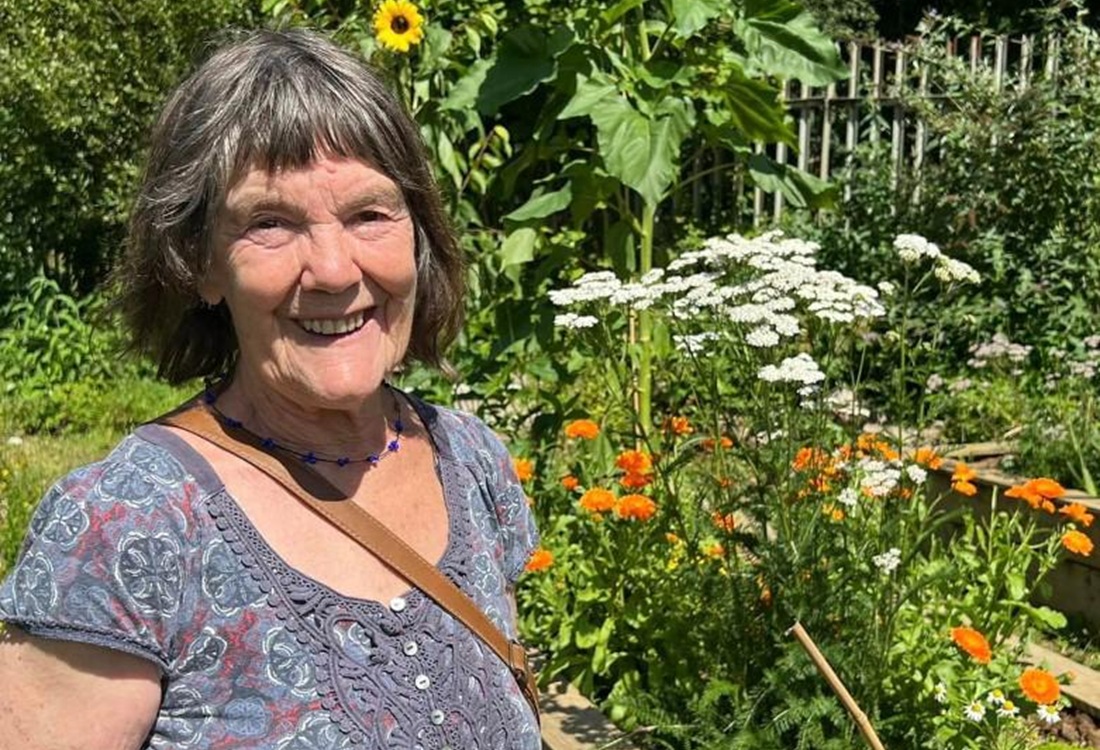
Vicky Moller
Last week, a moving article by Gazan mum and writer Zahraa, ‘I never expected Wales to be part of my story’, was published. Here is the backstory to the new relationship between Wales and Palestine that she referred to.
I was busy with environment and community organising in Pembrokeshire in 2015 when the world woke up to the issue of Syrians fleeing the war, triggered by an image of a drowned toddler. My neighbour asked me to help with his refugee initiative. As a neighbour, I said yes, then thought it best to check out this unknown category of people I had agreed to help – refugees.
I spent time in the ‘Calais Jungle’, a spontaneous camp of 4,000 to 7,000 (no officials to count), where people of all nationalities seeking refuge in the UK gathered and tried various means each night to enter illegally – hiding in lorries, traversing the tunnel.
Most were caught each night and treated in diverse ways, from ‘Cooee, found you’, to having their phones stamped on, but a few succeeded and became part of the illegal immigration crisis which helped fuel the rise of UKIP and later Reform, reshaping politics in the UK.
I arrived at the camp fresh from canvassing in Pembrokeshire. The act of calling on every house revealed a population of older and ill people I never saw on the streets. The proportion of younger people to earn and take care of them was frighteningly small. Meeting the reality is very different from reading statistics.
At the camp, after an initial shock at the enormity of this waste of humanity, I formed a plan of action and got to know people. Instead of the Third World beggar population I had envisaged, I met cultured, fun, delightful people.
I left after a week of fascinating conversation, heartbroken at the disparity: I could travel freely where I pleased and waltz off home when I chose. They had no such freedoms and no homes or future in sight.
A saying I learned from those helping at the camp was: ‘Nobody can help everyone; everyone can help someone.’ You find your someones.
So, realising that some of these talented, hard-working, clean-living young adults could be an asset and not a burden in my home area, I set about contacting the immigration department with my idea of allowing local communities to invite specific individuals to join us, benefiting us and giving them a future.
Contacting the immigration department with an idea turned out to be impossible. This was not Wales with its relatively accessible government. Through persistence, I got through to UNHCR, who told me my idea already existed. It was called Community Sponsorship and was the norm in Canada.
With excitement, I researched it and could tell it was a well-honed scheme, improved over 40 years and used as the main way refugees come to Canada, at business and community expense and invitation. Around a third of Canadians have been involved in community sponsorship, so immigration is way more popular there than in any other western nation. Nothing is perfect, but the difference was stark.
Jump forward ten years: we got an early version of the scheme introduced in the UK. I experienced its effectiveness in Wales in creating a whole community welcome and fast integration, and campaigned on and off for the scheme to include ‘naming’ – the ability of communities to identify, or ‘name’, those they wish to sponsor. We come to today and the nightmare in Gaza.
When it dawned on me in early 2024 that this was a genocide such as my Jewish father fled, I had a DNA shift. I could not bear it. I had to stand in the way, for my dead father’s sake and his gentle, open-hearted family. What an intense two and a half years have followed!
I had learned about the power of community and that you can change government policy. Wales had led the world many times towards a sustainable future. From the birth of renewables at CAT to the first modern nation set up for sustainability thanks to Cynog Dafis and a Green-Plaid alliance, to the Future Generations Act via a Plaid-Labour coalition.
There are many more examples. I had witnessed or been involved in achieving many of these, so I knew the recipe. Good (practical and worthy) cause, creative persistence, mass support. They were all driven by passionate individuals.
Pain
Back to Gaza. The horror is UK-wide. When I tell people at unrelated events, e.g. a market, what I am doing, many who never write to MPs and would never protest start to cry with the pain.
The pain of knowing governments are complicit, inexplicably paralysed or subservient – to the greatest horror of our time, possibly of all time. Every value we thought humanity upheld lies in ruins. We are all refugees in the insecure ruins of the civilisation we thought we had.
What we – people like me and Zahraa – are doing is building a bridge of hope. An apt name for a Welsh-born plan where being a leader means being a bridge.
In Wales we can feel and meet a humane civilisation that is yma o hyd and growing. Witness the Eisteddfod experience in July, the English incomers voting in a Welsh nationalist government in May, the last two years of fundraising and passionate support for Gaza from thousands in Wales.
This community goodness and power is with me all of the time as we build on our side and the Gazan team build from their side.
Westminster
But Wales has no control over immigration or foreign affairs. The past year has been a journey to get our community voices to penetrate the thick walls of Westminster. We have reached the anteroom.
As I write, a petition is gathering signatures, more than 350 in two days and three hours. ‘People from Gaza must not be left out of the UK’s first safe route’ is the call. It was co-written by people from both sides of the bridge.
The new Community Named Sponsorship safe route, as initially drafted by the UK Government, would have made it impossible for them to be included.
Yes, campaigning succeeded in getting named sponsorship adopted, not as a sideline or sop but as the main route for refugees to arrive in the UK. We created a sensible door to channel immigration towards local benefit and organised integration.
There is now a door to save families facing death in Gaza. It is not locked, but neither is it open yet.
Widespread support
Last week, the borders minister wrote to us twice to say that, recognising the widespread support for Gaza, they are reviewing whether Palestine can be included among the first countries from which refugees can come to the UK.
Community voices have penetrated the walls faintly. They need to crescendo. The petition signatures are rolling in, another every few minutes as I write, addressing this moment in history.
To make this upsurge in civilisation unstoppable, everyone has work to do.
Start with the end we seek: find the family you want to welcome and form a team to make it happen. We have profiles or, more naturally, join the Bridge yr Bont WhatsApp chat between the UK and Gaza to get to know people.
Involve your MP – grasp how named community sponsorship addresses valid concerns about the scale and mode of immigration, tell your MP and ask for their support.
Or sign the petition.
As I write, bombs are falling. The shrapnel has reached one of our adopted families. Failure is unthinkable. I pray to the Calon Cymraeg – no other God will do.
Support our Nation today
For the price of a cup of coffee a month you can help us create an independent, not-for-profit, national news service for the people of Wales, by the people of Wales.
Get more trusted Welsh news
Choose Nation.Cymru as a preferred source in Google News to see more of our journalism.


