

New Year, New You! But what will you do with the old you?
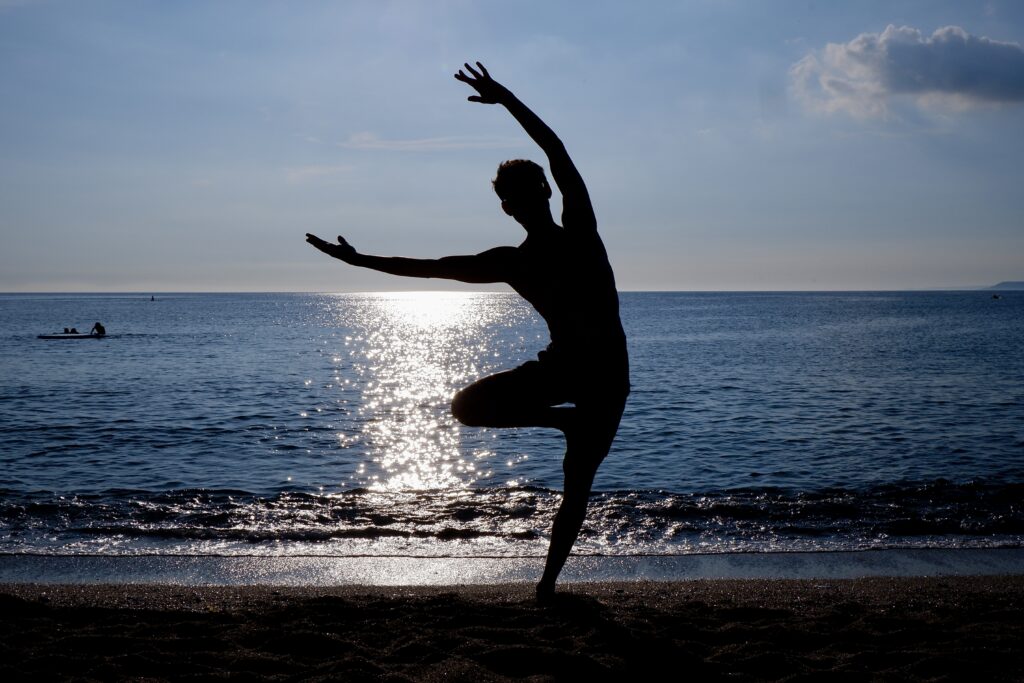
James Downs, Mental Health Campaigner
Another January, Another Self
It’s that time of year again when we’re encouraged to transform ourselves into better, shinier, more productive versions of who we already are.
Gyms fill up, stationary bikes creak under the weight of optimism, and marketing departments congratulate themselves on finding yet another way to weaponise a wall calendar.
“New year, new you!” we are told, as if a mere flip from December to January was enough to undo years of habit, personality, and trauma.
And this all arrives hot on the heels of another annual ritual: the self-congratulatory end-of-year reflection where we present a highlight reel of our lives, carefully edited to show how much we’ve grown, learned, and appreciated, and not how much time we’ve spent regretting our choices or lying in a darkened room.
We barely have time to recover from declaring how grateful and inspired we are before we must immediately become someone else entirely.
As someone who’s lived my entire adult life with mental and physical illness, the idea of a “new me” is appealing.
When your status quo is pain, exhaustion, or dis-ease of any kind, the idea of a clean break is completely understandable.
But the many ways we’re told to “improve our lives” are often really unhelpful when you don’t fit into neurotypical expectations or the quietly ableist norms baked into all those fitness plans, motivational slogans, productivity hacks, and morning routines prescribed as if everyone starts with the same body, brain, energy levels, and access to functioning joints.
Motivational slogans that don’t translate
The trouble is that so much self-improvement culture seems written for a mythical standard human who wakes refreshed each morning, emotionally stable, with joints that behave.
The slogans are all written in the same language, but some of us are reading with a very different dictionary. “Push through the pain,” “no excuses”. Catchy, yes, But for those of us whose baseline already involves pain or exhaustion, “no pain, no gain” raises the awkward question of where all our gains have been accumulating over the years.
Have they been stolen? Or were they quietly written off years ago as non-recoverable assets, like the EU funding Wales was supposed to get replaced after Brexit but never quite did?
And then there’s “what doesn’t kill you makes you stronger.”
Does it, really? In my experience, sometimes what doesn’t kill you simply leaves you with disability, psychological trauma, or an extremely detailed knowledge of Wales’s accident and emergency departments.
That’s hardly the life-affirming transformation Nietzsche had in mind. Surviving something is not the same as being strengthened by it.
Sometimes it just means you’re still here, and still tired, and people keep congratulating you for your “resilience” when you’d have preferred not to need so much resilience in the first place.
The administrative problem of the discarded self
Then there’s the perennial question: what exactly happens to the old you?
If we truly are replacing ourselves every January, surely the previous models are piling up somewhere. Perhaps there is a warehouse of discarded selves on a business park near Treforest, full of abandoned resolutions, half-filled planners, and gratitude journals bought in that short-lived December burst of seasonal self-belief.
Whilst Wales is rightly very proud of its recycling rates, I didn’t realise collections had been extended to include last year’s personality and former versions of the self.
But with the Well-being of Future Generations Act seemingly linked to everything except actual outcomes, perhaps this is the next logical step: we’ll make room for new generations by dealing with our accumulated pasts and outdated identities now, clearing the emotional landfill while we still have time.
Could someone remind me which bin existential dread goes in?
Holding onto what holds us up
The “new you” industry is built on the fantasy that lives can be swapped out like worn-out trainers, but some of us know better.
We’ve lived enough life in compromised bodies and scrambled minds to understand that survival itself is a form of achievement, especially when the world keeps asking for upgrades we can’t install.
What has held me up, and what holds many of us up, isn’t reinvention, but continuity.
Moments of softness rather than going hard. Time to notice the natural world, or to sit in a cinema or museum and let someone else do the thinking for a while.
The luxury of switching off from phones and constant contact, or switching back on long enough to feel connected to others. Mindfulness when it happens, and the equally valuable (and much underrated) mindlessness – where you do nothing in particular, without needing to justify it as self-improvement.
For me, it has taken a long time to accept the reality that a flawed prototype remains the only model available.
After many years of doubting it, I’ve come to see my life as one that is worth living. I’m not about to throw that out for the sake of a soundbite.
So instead of finding a new self in 2026, I’m going to settle for nurturing the one I have: patched up and held together whenever the NHS budget allows, and fortified by routine and care rather than resolutions and slogans.
Maybe the real work is learning to be more comfortable in our own skin – be that imperfectly, painfully, or occasionally triumphantly – in a world that keeps trying to convince us otherwise.
James Downs is a mental health campaigner, researcher and expert by experience in eating disorders. He lives in Cardiff and can be contacted at @jamesldowns on X and Instagram, or via his website: jamesdowns.co.uk
Support our Nation today
For the price of a cup of coffee a month you can help us create an independent, not-for-profit, national news service for the people of Wales, by the people of Wales.



Let’s challenge the need for activities in January.
Last November I watched Wales lose to South Africa in Cardiff. Pre-match I visited a bar for a few German beers (sold no Welsh beer despite being 5 minutes walk from the stadium) followed by lunch at Gauchos and an excellent bottle of Patagonian red wine.
So December I did not drink more than a normal month.
New Year’s Day I took my family on a three hour afternoon hike.
We should be looking to encourage sensible drinking in December and possibly ban the over-priced festive Christmas markets.