

Palestine Action: Where would Wales be without direct action?
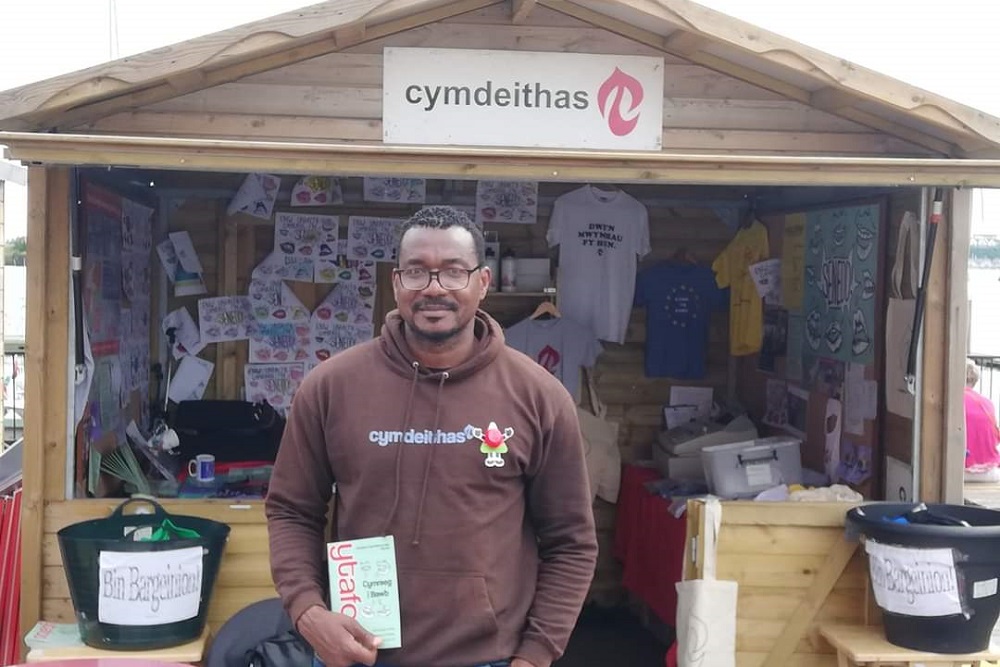
Joseff Gnagbo, Chair of Cymdeithas yr Iaith
According to official reports, 60,000 people have been killed in Gaza by the state of Israel since the atrocities of 7 October 2023, while some independent scholarly studies put this figure closer to 90,000.
By all accounts, the vast majority of these are innocent citizens who have recently been targeted as they try to receive aid at aid centres that Israel has insisted on setting up.
Over the past few weeks, the United Nations has warned that the entire population of Gaza – namely 2.1 million people who live in an area about half the size of Anglesey – is facing starvation because of the Israeli army’s blockade of international humanitarian aid.
This is genocide, despite the attempts of the Westminster Government – which unfortunately still represents Wales on international matters – to distance itself from the expression.
The UK Government’s contribution to this has been to continue to arm Israeli forces and to do nothing to prevent the genocide which is happening to the Palestinian people in Gaza.
Implications
This silence and lack of action on behalf of the people of Gaza speaks volumes. But the Government is now going one step further by silencing the voices which are drawing attention to the oppression, which is a clear statement of its position and equivalent to endorsing what is happening.
Palestine Action has acted non-violently, including by acting directly against Israeli army manufacturers’ factories in England and more recently by spraying paint on two aircraft in the Royal Air Force base at Brize Norton.
These actions are of course illegal and have serious implications – something of which the campaigners would have been completely aware.
Rather than dealing with this protest movement in the traditional manner, the Westminster Government – possibly in response to its increasing unpopularity and electoral threats from the extreme right wing – has gone one step further and designated Palestine Action a terrorist organisation, putting it on the same list as banned organisations such as Al Qaida and the Wagner group from Russia.
Unfortunately, this is part of a pattern of being more and more heavy-handed.
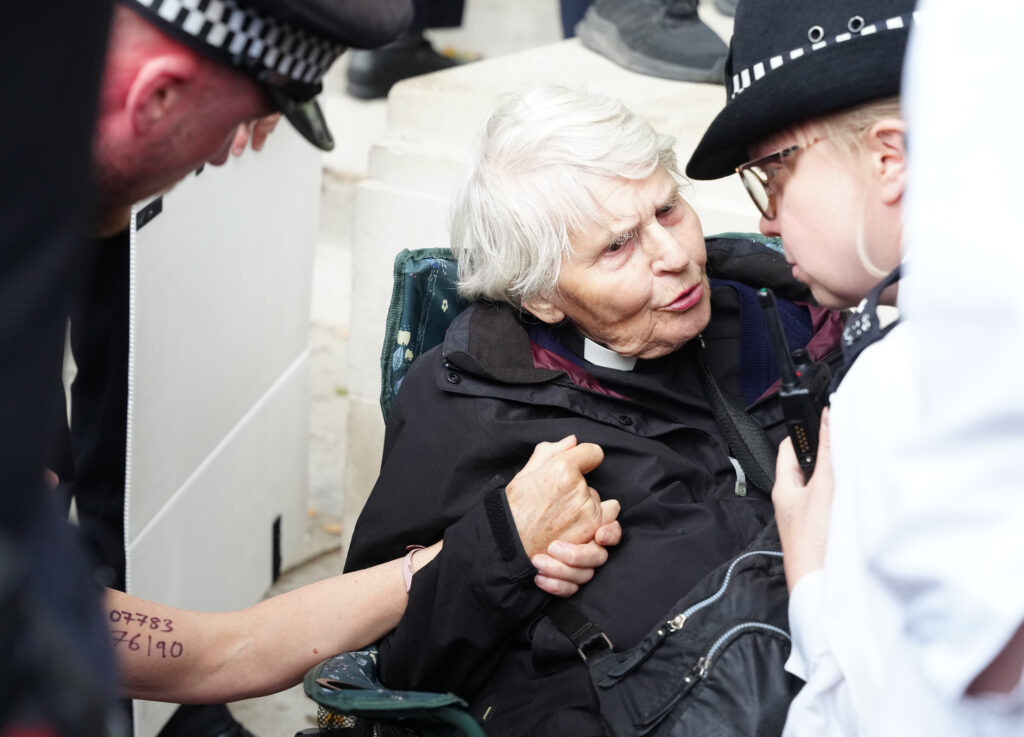
Roger Hallam, one of the founders of Just Stop Oil, was recently given a sentence of five years later – reduced to four – for organising peaceful protests on the M25.
It is likely that the ‘independent’ 2024 report about protest organisations by John Woodcock, a member of the House of Lords, is partly responsible for this tendency. In it, he called specifically for the abolition of Just Stop Oil and Palestine Action (no surprise, considering he has worked on behalf of the arms manufacturer Leonardo and the oil company BP).
Implications for language campaigners
Jailing non-violent campaigners and their supporters is a clever and cynical tactic to silence critical voices and draw attention away from the Government’s failure to act in accordance with their principles, especially after numerous attempts to silence criticism have failed.
Trying to silence critical voices does not change the fact that the Government has ignored and contributed to the genocide in Gaza.
Not only that, but by insisting on silencing those who are willing to raise their voices peacefully and democratically, the Government is attacking our right to act directly for justice and freedom, which is one of our basic principles as an organisation, not least because of the essential role that protest and direct non-violent action have played in the social history of Wales and the world.
As already noted, under such a system, is there any certainty that we ourselves would not have been banned as an organisation decades ago because of very similar activities?
During the campaign for a Welsh-language television channel, for example, dozens were jailed for damaging broadcasting property, for breaking into politicians’ offices and causing damage, and for damaging the Welsh Office stalls at the Eisteddfod.
Had the current legislation existed at that time, how difficult would it have been for the Government of the day to argue that an organisation like the Cymdeithas yr Iaith should be designated as a terrorist organisation because of such actions?
Not only would that have prevented further campaigning but it would also have silenced the hundreds of supporters who turned out to support court cases and mass rallies.
This would have been a great loss to public debate in Wales, let alone the attempts to secure political victories such as the Welsh-language channel, road signs, official status for the language and the growth of Welsh-medium education.
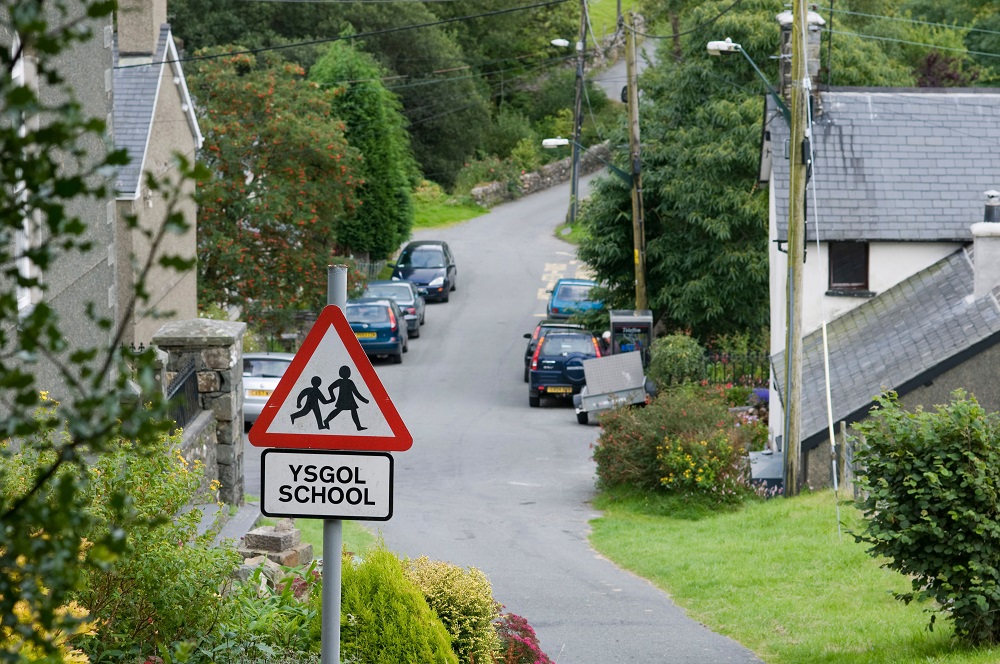
Wales must continue to be a country where people can stand for justice freely and without fearing disproportionate persecution, and Cymdeithas yr Iaith will always stand with those who choose to act bravely and peacefully – and stand with those who face oppression.
That is why we as an organisation acted for Palestine by joining in the Red Line protest in Aberystwyth on Saturday 26 July.
We are aware that our members throughout Wales have been campaigning regularly in local events but this was a national event which was an opportunity for us to come together to call for peace, justice and freedom for Palestine, and to show that we will not be silent until we get that.
Support our Nation today
For the price of a cup of coffee a month you can help us create an independent, not-for-profit, national news service for the people of Wales, by the people of Wales.



Well said Joseff.
We need to be free to speak out, to speak the truth..
Totally agreed.
As well as cymdeithas its likely that under this draconian legislation that the anti-apatheid movement would have been proscribed as well…..nuff said!
The UK is behaving just like Russia, where dissidents are sent to jail etc.
Nothing is freely given that’s not fought for. Those to the right of the political spectrum who prefer to defend the indefensible conveniently forget this fact.
Where would Wales be without direct action? Probably not even on the map. Absorbed as Western England.
How was John Woodcock even considered to be independent? Blimey, poor oversight or pandering to the oil companies.