

Plaid Cymru are failing to put forward a positive vision for the future of our national Parks. Why should we care?
Gareth Ludkin, Campaign for National Parks
Despite four years of detailed preparatory work, consultation and public engagement, Plaid Cymru have all but rejected the possibility of the Glyndŵr National Park becoming a reality, after assigning themselves ‘judge, jury and executioner’ in a four-week public ‘engagement period’ that ended on the 11th November.
This last-minute narrow window clearly sought to bury the chances for designation, ticking legal boxes rather than offering a genuine opportunity for an independent, fair hearing of all the existing evidence for and against the proposed Park.
By overturning the last Labour Government’s commitment to a public inquiry, Plaid Cymru are not only abandoning an opportunity to lead from the front, delivering an exemplar new National Park fit for the 21st century, but they are also failing to back the principle of landscape designation as a vitally important tool for driving rural sustainability, protecting Cymru’s cultural heritage, and building the nation’s resilience to wildfire, flooding, drought and biodiversity collapse.
Denying any opportunity to independently assess the evidence in favour of designation, alongside the concerns raised by local councils, also undermines the viability of the designation process, allowing misinformation, misunderstanding and the tactics of intimidation to win out.
Without the sniff of an alternative vision or package of reform and investment from Welsh government, this decision is also likely to have a significant stalling effect on the reputation and value of our existing National Parks and Landscapes.
75 years on from the creation of the Eryri National Park, we should all be celebrating what our National Parks have achieved for us so far, as well as encouraging the Welsh public to think about what more they could deliver for us in the next 75 years. Instead, Plaid Cymru’s expected decision demonstrates a glaring lack of faith in their potential and is repeating of past mistakes.
The failure to designate the Cambrian Mountains as a National Park, as was recommended by the National Park Commission in 1965 but rejected by the Secretary of State for Wales in 1972, – followed similar opposition from local authorities and farming bodies. The failed designation of the Cambrian Mountains is often described as unfinished business, but it is more than an administrative footnote, it is a lesson in what happens when commitment fades at the final hurdle.
The Cambrian Mountains proposal did not fail on evidence, it failed because of resistance from local authorities and landowning interests, combined with a lack of political will. No public inquiry was held, no transparent weighing of national benefit against local concern took place, and instead, the outcome was a quiet veto and a structural gap in Cymru’s protected landscapes that still exists today.
Without National Park status, the Cambrian Mountains were left without a single body responsible for caring for the landscape as a whole. Protection became fragmented, with responsibility scattered across local authorities, agencies and private landowners. Strategic, long-term stewardship never materialised.
Biodiversity has paid the price. Despite their scale and apparent wildness, large parts of the Cambrian uplands are now characterised by degraded habitats, impoverished ecosystems and damaged peatlands. Wildlife remains, but resilience is low and recovery is patchy, constrained by the absence of coordinated large-scale restoration.
At the same time, the lack of designation made the Cambrian Mountains more vulnerable to industrialisation. Commercial conifer forestry, major water infrastructure and energy developments have all been disproportionately concentrated there. While many developments have been lawful in isolation, their cumulative impact has altered landscape character,
fragmented habitats and disturbed carbon-rich soils.
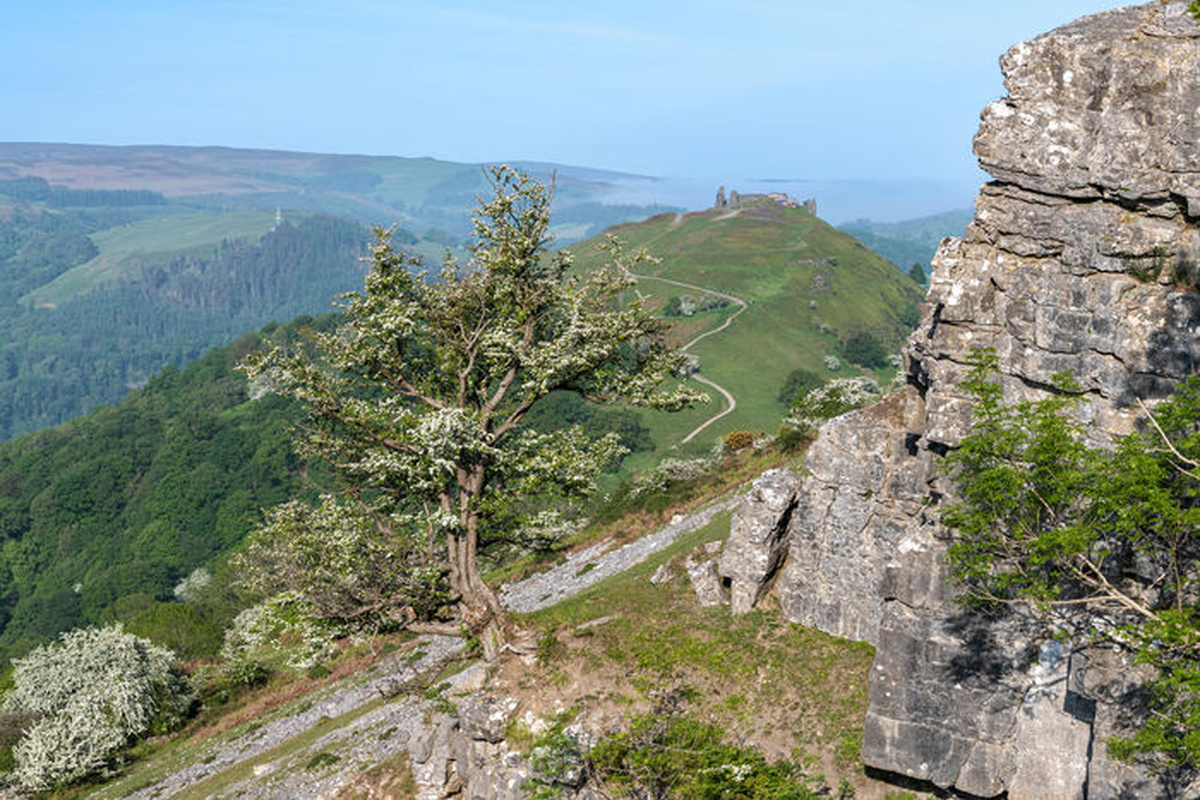
Much like the Cambrian Mountains, the history of the proposed Glyndŵr National Park area has long pointed towards its intrinsic value to the nation. The Hobhouse Report of 1947 identified ‘special landscapes’ with potential for protected landscape designation, and as noted by Natural Resources Wales (NRW) in their early scoping work, this included the Clwydian Range, as well as the Denbigh Moors and Berwyn range.
Roll the clock forward and it was a notable success that after detailed independent assessment of the area for its suitability, NRW recommended that the area, which was based on the Clwydian Range and Dee Valley National Landscape, but also extended south to the Berwyn Mountain range and north to the Gronant Dunes, met the criteria for a National Park; and that crucially a National Park Authority was the most appropriate management option for the proposed area.
This laid the foundation for designation, with the existing Clwydian Range and Dee Valley National Landscape set to benefit from a 5-fold increase in annual budget to help manage existing pressures in the area, and dedicate additional resource to tourism management, nature restoration and improvements to access and recreation.
Missing in Action
However, despite the detailed assessment of the suitability of the region, alongside consideration of planning options, nature benefits, forces for change, and other impact assessments, NRW remained constrained by their legislated role and strict designation criteria.
Welsh Government were missing in action before and during the consultation period, opting to take a step back rather than an active role in explaining the desirability for designation in the face of misinformation and scepticism around the role of National Parks locally and nationally.
The previous Labour Government’s top-down approach to designating the Glyndŵr National Park is a core reason for the National Park stumbling toward the finish line. Over recent years there was an obvious failure from Welsh Government to inspire the public, challenge misinformation circulating online, or any genuine attempt to communicate to local authorities the value of introducing a new National Park for the area from the very start. NRW were left to conclude their statutory duties in assessing the area whilst disinformation or conjecture was allowed to fill the gaps in local understanding of the full potential of the Park.
Local support for the proposal was assumed at an early stage rather than earnt through a transformative vision for the future of the area’s landscape that could inspire and give hope to communities living within and on the borders of the proposed park. Instead, the step-by-step process failed to deliver the detailed level of engagement local communities required, reflecting the Government’s timidity in standing up for their commitments in the dying embers of over 100 years of Labour’s political dominance in Wales.
Despite the momentous nature of bringing a formal designation order forward for government approval, the shortfalls in making a clear and obvious case for designation to the local authorities affected by the decision was a fatal flaw. And this is why the public local inquiry matters so much. It is a genuine opportunity to balance legitimate local concerns against the positive evidence of existing designation across Wales and the rest of the UK. The planning regime is not fixed, governance could be given a new lease of life through the park, and the purposes of National Parks could be made fit for 21st century.
This shouldn’t be presented as a cookie cutter Park imposed on the local community, but an opportunity for Government to embrace the opportunities and counter false narratives of stagnation, bureaucracy and harm.
Short-termism
It is important to recognise that Glyndŵr made it much further than the Galloway National Park proposal in Scotland last year that was torn apart by monied landowners, disinformation and a toxic public campaign that drove people apart rather than brought them together in recognition of their mutual love and care for their local area.
This public toxicity was largely missing in Cymru, but once again social media managed to play a part in the spread of disinformation and unacceptable levels of intimidation and personal attacks aimed toward local people brave enough to stand up and show their support for the proposals. With no local inquiry or a change in legislation to mandate one if local opposition is received, it is very hard to see how the current process allows a fair and complete assessment of the case for designation.
Will we ever designate a National Park again? Due to the short-termism in politics and the likelihood of Government control switching more regularly between fragmented parties in future elections, it is hard to see how a 5 to 10 year process of planning, assessing and designating a National Park can pass in the future.
Our existing network of National Parks and National Landscapes cover some 25% of Cymru’s land. They contain vast areas of wild moorland, mountain pasture, critical headland water bodies, mixed woodlands and vast expanses of peat. All should be considered critical natural infrastructure vital for tackling the unravelling biodiversity collapse, as well as the devastating wildfires and flooding wreaking downstream in our towns and cities. Crucially they also contain rural farming communities, rooted for centuries in the landscape and holding many of the keys to their future resilience.
Our National Parks have the potential to be the shining stars in the Government’s stated commitment to bolster rural resilience, health and climate and nature, but this will only be possible with a clear commitment from Plaid Cymru that demonstrates that they respect the role that National Parks play in our national future and give them their full backing.
Support our Nation today
For the price of a cup of coffee a month you can help us create an independent, not-for-profit, national news service for the people of Wales, by the people of Wales.
Get more trusted Welsh news
Choose Nation.Cymru as a preferred source in Google News to see more of our journalism.


