

Problems arise when dogma – religious or otherwise – excludes critical thinking.
Martin Shipton
The other day I attended an interfaith event aimed at helping people of different belief systems coexist with each other.
Held appropriately at the Temple of Peace in Cardiff, it formed part of a Britain-wide consultation organised by the Woolf Institute about the impact of global conflict on faith communities.
Among the topics up for discussion was one called “Media, Misinformation and Disinformation”. I suspect that’s why I was invited, despite not identifying as a member of a particular faith community.
The event was well attended, and we split into groups so everyone would have a chance to contribute. This was facilitated by the moderator, who asked people individually for their responses to the questions that were put to them.
Most of those present were people of faith, including Christians, Muslims, Hindus and Jews, as well as an adherent of the Baha’i religion.
A common message was that while they had their own beliefs, they respected the right of others to have theirs.
To hear this was a welcome relief from the negative stereotypical depiction of one religion in particular that saturates social media.
It confirmed to me how important it is to distinguish between the toxic morass that one is unwillingly confronted with online and the normal interactions one has with people in daily life.
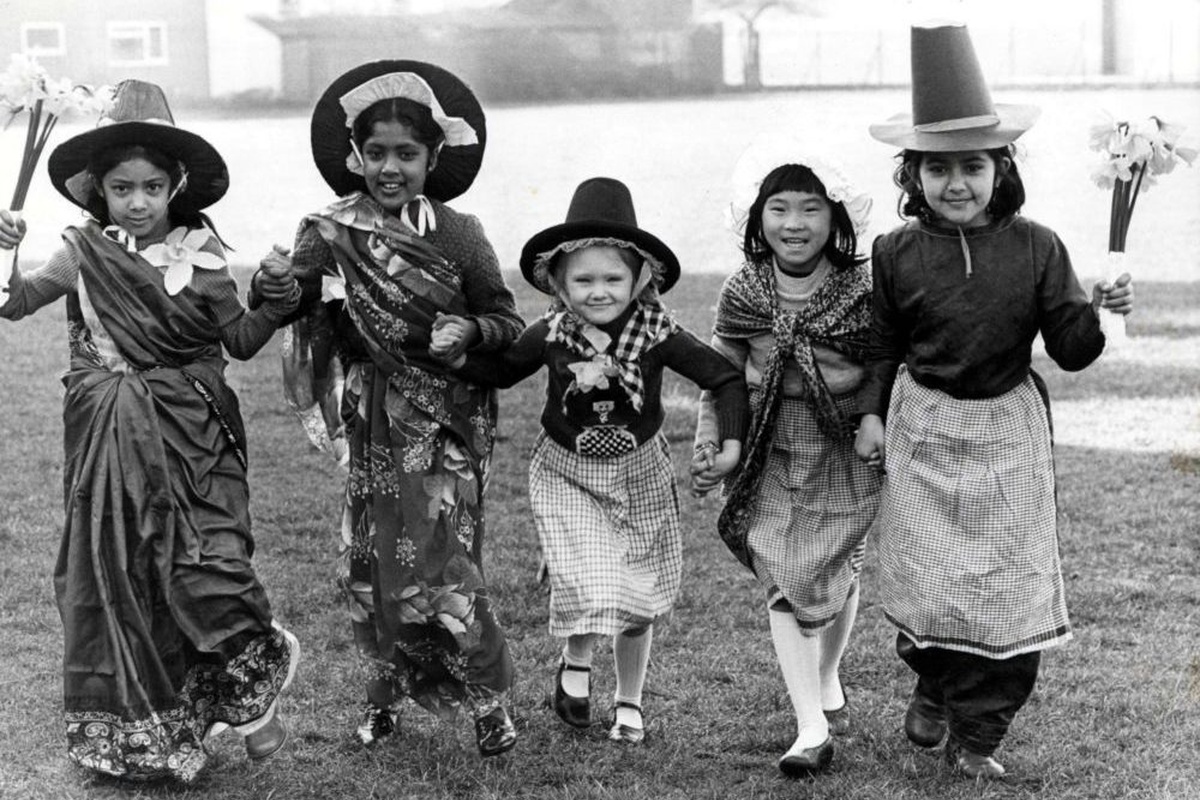
I speak as a resident of one of the most diverse districts of Cardiff, who has long admired the lack of tension between people of different ethnic backgrounds.
Shortly after moving to Cardiff (for the second time) more than 30 years ago, I met and made friends with the son of a man from a Caribbean country who had settled in Butetown, the famous dockland area of the capital.
My friend is a charismatic extrovert – the kind of person who will be stopped for a chat by many people if you walk round Cardiff city centre with him. This has happened many times when I have been in his company.
What quickly struck me was the great variety of ethnic backgrounds that those he stopped to talk to had.
But the connection went deeper: the nature of these interactions was far more profound than the polite greetings that tend to be exchanged between people who have only a superficial connection with each other. My friend and those he unexpectedly met had a rapport that stemmed from common experience in a special neighbourhood that has changed since.
In most cases, individuals and their families had moved to other parts of Cardiff, but whatever ethnic or religious background they came from, they retained nostalgia for their younger days and were always delighted to meet friends from that period of their lives. From observing even quite short conversations between them, it was clear to me that they shared a precious bond.
This truth makes it all the more reprehensible when the worst kind of politicians, often abetted by journalists who wield power negatively, seek to create division between people of different backgrounds.
Division
One point I made during the interfaith event was that there are bad players whose motive is to cause such division. This was evident during the October 2025 Senedd by-election in Caerphilly, when Reform UK chose to have as its core campaign theme a commitment to end the Welsh Government’s Nation of Sanctuary programme.
Reform’s messaging sought to mislead voters into believing that the beneficiaries of the programme were asylum seekers who had arrived in the UK on small boats. In fact, as was pointed out to Reform many times to no avail, as much as 91% of the money allocated to the scheme was spent on resettling refugees who were fleeing the war in Ukraine.
The truth didn’t suit Reform’s agenda, which was to stir up division and hatred through spreading misinformation and disinformation – the latter meaning lies that are deliberately disseminated.
People from minority backgrounds in Caerphilly spoke about how Reform’s campaigning had made them feel unwelcome in their own town – a terrible consequence of the far-right party’s toxic agenda, and the direct opposite of the racially harmonious community of those who had made lifelong friendships in Butetown.
One observation I would make about some of the contributors to the interfaith discussion is that they wanted to play down the impact of politics and world events on their lives. Their instinct was to say that they respect people from other faiths, while making it clear that their own faith is unshakeable. A Christian participant went so far as to say that it was a British characteristic to hold back and not discuss controversial topics.
My view is that there’s a need for open discussion, with no restrictions. Problems arise when dogma – religious or otherwise – excludes critical thinking. It can lead people in very dangerous directions, as we know. Religious extremism has to be guarded against, but the far right makes the mistake of using its existence as a justification for condemning every member of the faith.
The vast majority of Muslims do not want to live in a theocratic state where apostates are executed, any more than the vast majority of Christians would follow God’s order to sacrifice their sons until he tells them he was bluffing.
Those who try to persuade believers to take such instructions literally in the 21st century are guilty of spreading the most pernicious form of fake news and deserve to be locked up.
Bad actors
Meanwhile, there are plenty of bad actors around in both the media and social media intent on driving people apart rather than bringing them together. Such activity is sponsored by those who have an interest in diverting attention from the pernicious inequalities that exist in our society and that ought to be addressed.
Media outlets – and political parties – that incite racial hatred should be called out for what they are, while those that expose injustice and bad behaviour by those in positions of power deserve to be listened to.
Living through these times is not always easy, and it’s best to ensure that your political antennae are tuned accordingly, whatever your faith may be.
Support our Nation today
For the price of a cup of coffee a month you can help us create an independent, not-for-profit, national news service for the people of Wales, by the people of Wales.
Get more trusted Welsh news
Choose Nation.Cymru as a preferred source in Google News to see more of our journalism.


