


Reflections on the Senedd Election and what comes next
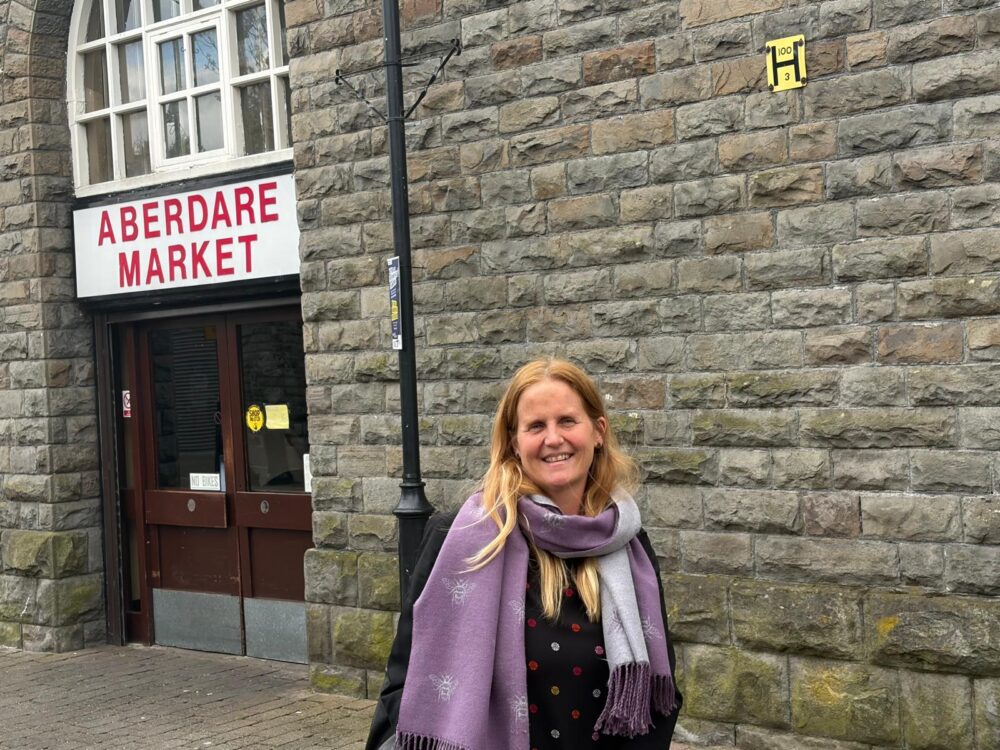
Beth Winter
The Senedd election marked a historic turning point in Welsh politics, signalling the collapse of the Labour party’s century-long dominance in Wales with Plaid Cymru emerging as the largest party in the Senedd, and the Green party winning two seats.
It was an immense relief that Reform failed to become the largest party. Yet its rapid rise cannot be ignored. A party once marginal in Wales is now a significant force.
If current trends continue, the possibility of a Reform-led UK government by 2029 can no longer be dismissed.
Wales now stands at a critical juncture. Old loyalties are eroding, trust in institutions is weakening, and people are searching for alternatives.
The question is no longer simply who wins elections, but whether progressive politics can offer a genuine vision equal to the scale of Wales’ challenges.
The underlying structural crisis
After 27 years of devolution, deep-rooted problems remain – increasing inequality, economic insecurity, democratic decay and climate breakdown. Younger generations leaving in search of opportunity. And the exploitation and extraction of our wealth persist. People feel completely disconnected from politics.
This has created a dangerous vacuum and fertile ground for anger, division and hate to grow.
Reform has successfully channelled some of that, but the underlying causes remain unresolved.
Unless progressives address them honestly and boldly, the political instability we are witnessing will only intensify.
Lessons from Voice for our Valleys campaign
A different approach is needed—a politics that is outward facing, rooted in communities rather than institutions, not beholden to party machines or corporate interests, underpinned by socialist values, putting people, planet and peace before profit.
The Voice for Our Valleys campaign in Pontypridd, Cynon, and Merthyr Tydfil embodied this. It began from a simple belief: to turn politics on its head.
Real political power shouldn’t come from the ‘bubbles’ of Westminster or Cardiff Bay but from communities themselves.
Real change begins in streets, schools, workplaces, community centres, and local networks, where collective power is built. It involves citizens becoming activists and political leaders – with the support, knowledge, information and confidence to own the process of change.
The campaign sought to create a politics of belonging, solidarity, and participation that rejected distant, top-down politics in favour of visibility and integrity.
The campaign rivalled that of established parties and helped shift the wider political conversation locally.
The most important lessons came from voters themselves. The disillusionment with politics was palpable with many choosing not to vote at all.
Others were voting Reform not necessarily out of ideology, but out of a desire to disrupt a system they felt had failed them. At the same time many others were voting tactically for parties they felt could stop Reform, rather than because they supported them.
Generally, there was a deep sense of abandonment within these communities that had once been the industrial powerhouse of Wales.
The election process reinforced many of these challenges: a voting system, which voters didn’t understand and which favoured larger establishment parties; oversized constituencies distancing politicians from communities; and a media landscape shaping political messaging and amplifying well-resourced parties.
Debate was reduced to soundbites and simplified narratives, narrowing discussion and entrenching a two-horse contest between Plaid Cymru and Reform.
In this situation, our Voice for our Valleys campaign did exceptionally well thanks to hard work, honest discussions and grassroots politics. A huge thank you to everyone involved!
Looking to the future
A two-pronged strategy is required now. First, progressive forces must cooperate to prevent further gains by Reform in 2027 and 2029. Reform’s growing influence threatens to normalise hostility towards migrants, undermine trust in democratic institutions, and deepen social division through fear-based politics and cultural scapegoating.
The risks posed by rising far-right populism are real and must be stopped.
However, opposition alone is insufficient.
The second priority is building a credible alternative based on social justice, economic democracy, and community empowerment. Across Wales, people are crying out for a politics rooted in everyday concerns. This means ending austerity, redistributing wealth and power, strengthening workers’ rights, investing in public services, averting climate catastrophe, creating and retaining wealth in Wales. Democracy must be rebuilt so that communities have real power in shaping decisions that affect their lives.
The 2026 Senedd election marked the end of political certainties, but also the opening of new opportunities.
To achieve these requires more than short-term electoral thinking or tinkering around the edges. It demands courage, imagination and a shift of power back to communities. Honest debate on key issues such as independence, community wealth building, public and community ownership (including the role of any National Development Agency), implementing the Future Generations Act, and the role of Trade Unions must take centre stage.
Wales’ traditions of solidarity and collective action remain a source of hope. And my message to the Senedd and UK Government is – stop asking how can we sell Wales, and start asking how the people of Wales can own, control and benefit from the changes needed.
With political vision and the political will to act in tandem with grassroots organisations this is achievable.
Beth Winter was the Labour MP for Cynon Valley 2019-24 and stood as an Independent candidate in the Pontypridd Cynon Merthyr constituency in the recent Senedd election.
Support our Nation today
For the price of a cup of coffee a month you can help us create an independent, not-for-profit, national news service for the people of Wales, by the people of Wales.
Get more trusted Welsh news
Choose Nation.Cymru as a preferred source in Google News to see more of our journalism.



This current Age of the Extremism is a repeat of the 1930s, which ended with Communists and Fascists combining to invade an independent country to start the Second World War. From Stalin and Hitler we now have Putin and Trump, also invading other countries with only the power of drones to repel them. On this island we now have their equivalents in Farage and Polanski, surging to the extremes with their respective Politics of Hate and Politics of Envy. Cymru has our history of education and work ethic, so we can become independent if we re-focus on this and ignore… Read more »
Communism and fascism are polar opposites. If you truly believe Polanski is a communist then you probably don’t know what the word means.
The political world is a globe rather than a line, with two separate routes towards the dark side and totalitarianism, hence the Fascists and Communists deciding they had a common purpose to combine to invade Poland in 1939.
The extremists use each other to make us believe we have a choice between one or the other, when we should reject both to avoid another 1939!
Oh, so the communist partisans who tried to assassinate Hitler and Mussolini were just as bad as both tyrants? How interesting.
I suppose the Soviets who worked with Allied nations to liberate concentration camps must have been complicit in the Holocaust too if we’re rewriting history for puerile ideological purposes.
The Soviet Union may very well have been an ally in defeating Nazism, and liberating concentration camps but it was still an oppressive system, both things can be true at the same time. Millions died under Stalin’s regime, including during the Holodomor genocide in the 1930s particularly in Ukraine. Communism and Fascism may very well be polar opposites with very different very different ideologies but they can still produce authoritarian outcomes in practice. I agree on the earlier point, Zack Polanski is not a communist, and casually labelling political opponents as “extremists” (far-right or far-left) without clear basis just confuses… Read more »
The Soviet Union deal with Nazi Germany was shocking, but it came after years in which it had sought an alliance with France and Britain and been repeatedly rebuffed, while Churchill backed Franco’s fascists in Spain and hoped for war between Germany and the Soviet Union. When Germany attacked in 1941, the Soviet Union lost 25 million dead before the Red Army destroyed fascism, for a time at least.
Beyond stupid. Fascism was a reaction from the capitalist ruling class to protect their brutal grip on power. The threat of another workers state is what they feared most. Hitler knew this when he said democracy inevitably leads to communism.
Although how you got on to this from Beth’s article I’ll never know
Beth Winter is making a indirect correlation between a Green revolution and the Industrial revolution and the Labour movement which was community based to generate wealth, albeit for the wrong people and wrong country.
Beth – tipyn i gytuno gyda. A lot to agree with. However, continuing dogmatic support for the imperialist UK and its ridiculous and sordid monarchy is an adherence to the very institutions that have brought us to this point. Absolutely we must rebuild our Democracy. Certainly start from our communities, ground up. We should aim for the following: Democratic Welsh/Scottish/English States, Ireland reunified. Membership of the EU – Euro, Shengen, Common Market and all. A loose Confederation of the Isles with a Council of the Isles to facilitate cooperation on matters such as energy infrastructure etc. Proper written constitutions enshrining… Read more »
The right insist on profit before people, ignoring that there can be no profit without people. The left demand people before profit, forgetting that someone has to pay the tax needed to fund society. The unfashionable centre says both are important.
Idealistically, but the reality of this is destroyed by too many believing that the work which creates profit should be done by others. The ‘Conservative’ party is to ‘conserve the wealth of the wealthy by living off others, but too many from the other extreme have the same ideal of avoiding real work, so also demand to live off others.
Beth and others need to ditch the fixation about “progressive” because within that progressive axis we find people and ideas that are repressive and dogmatic. Focus on the innate unfairness of the AngloBrit supremacy and its wider racist themes, strive to remove the hidden loopholes within our tax system that short changes the public purse, restore work as the default condition for people rather than idleness. To make this happen our politicians need to earn their corn by enabling value adding economic activity, and investing in health and education. Not likely to happen because it’s so much easier to go… Read more »
I’ll keep saying this until I’m blue in the face. Beth would be a fantastic asset to Plaid Cymru if she ever decided to change lanes.
True enough. This past election was a 50/50 result success wise. In one aspect, Plaid gaining leadership has bought Cymru closer to real democracy than it has ever had (one country running another’s affairs, isn’t democracy of any kind) and on the other side we’ve had the sheer horror of Reform taking the place of the first loser (2nd). Think about it, that’s a lot of people putting a tick in a box to say the people of cymru shouldn’t be allowed their own government. That’s a lot of people saying that we shouldn’t be allowed our own language. That’s… Read more »
Does anyone in Wales mention the class struggle any more?
A great person trying to improve her communities through collective action. What political form this push back takes is a difficult one but it is vital that it’s backed by Unions and community organising.
The reactionary conmen trying to take advantage to the genuine anger can only be countered by an optimistic community driven politics of solidarity
Honestly, just more people investing in local organizations… Credit Unions, Trade Unions, Food Cooperatives (not “The Coop”), local energy generators would be a massive boost to the local economy in the Valleys. Anything that’s member owned, not huge massive organizations, but small ones where members have a real impact in how the decisions are made and what decisions are made.
People really need to look more into mutualism because it is there, where the money can do the most good for our local communities.
If Cymru is to go through a Green revolution similar to the Industrial revolution then I want Cymru to be independent before it happens so our wealth isn’t extracted… again.
Beth’s 2000 votes was disappointing in the context of her being former Labour MP and loyalties to the Labour Party collapsing. In comparison, Neil McEvoy’s 3400 looks positive, though also disappointing. Clear policies are needed for Wales distinct from Plaid’s self-ID and pro-nuclear Wylfa