


Reform, Bangor University and the populist politics of performance
Neil Schofield-Hughes
What was the strange affair of the Reform request for a platform at Bangor University’s Debating and Political Society – and the fall-out from that society’s refusal to provide one – all about?
In an age of populist politics, things are rarely as they seem from a recital of the bare facts. There is always a context and almost always an agenda.
So it’s worth standing back for a moment to ask what actually happened.
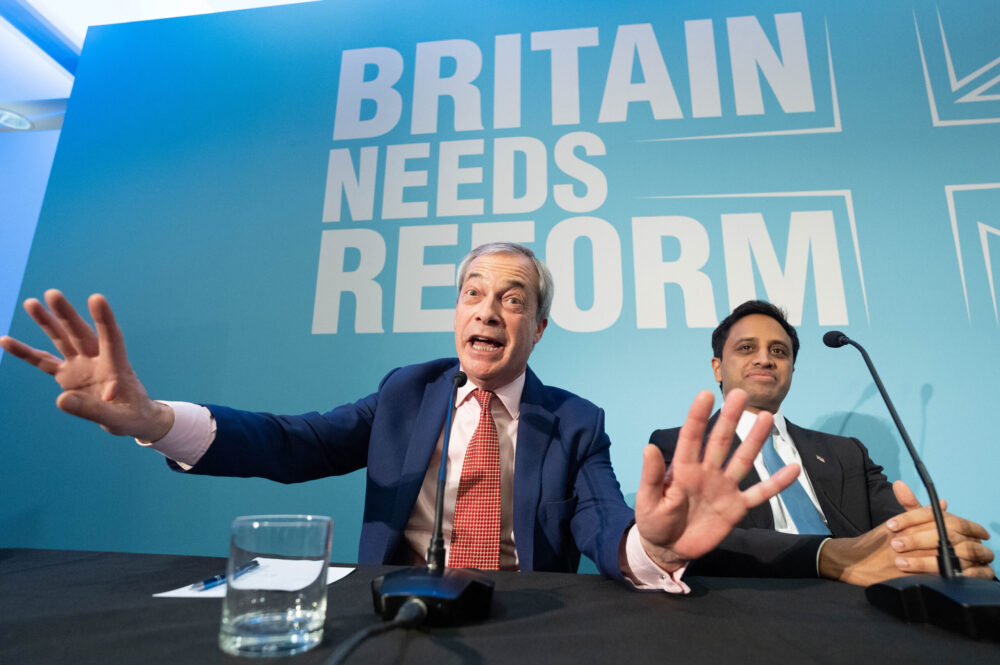
Reform UK appear to have asked the University Society whether they would host a visit from a Reform MP and a Q and A session.
The Society said no, arguing that such an event would be contrary to their ethos. #
In other words, Reform invited themselves to a meeting and threw a hissy fit when they didn’t get in. It’s the kind of entitlement that can’t cope with being told “no”. And it has nothing whatsoever to do with free speech – there are plenty of other places where Reform, a political party rarely absent from our news channels, could set out their stall, metaphorically and literally.
And then the reaction – the threat of collective punishment, aimed at the University itself and its students, most of whom have absolutely nothing to do with the decision.
Not that Zia Yusuf, Reform’s head of policy, has any power to defund or withhold student loans, and the subsequent disagreements with his own party members in Cymru suggests a certain confusion over how devolution works.
We end up with a general proposal to “legislate for free speech” with no concrete proposals; a slogan, a talking-point, and no more.
But that’s not the point. What matters is the way the story is presented to illustrate a wider political narrative.
Performative
In other words, it’s performative. The story, however little relation it bears to what actually happened, is out there. It creates the reality. And the rest of us, in the world of fact and accuracy, are left playing catch-up.
Fortunately there are plenty of guides to provide the programme notes to populist performance – including the Austrian-American academic Ruth Wodak, who has written extensively on the language and iconography of right-wing populism, and whose book The Politics of Fear is a detailed examination of its methodology, drawing extensively on examples from first-term Trump and Orban.
Crucially, Wodak asks us to interpret the performance, not in terms of the rights or wrongs of the issue, but about how populists use language to construe victimhood, legitimacy and popular will.
Facts matter far less than the narrative performance – it’s all about getting control of the story.
And that is exactly what Reform has done here.
Because, as we have seen, this was never an issue of “free speech” at all. Free speech on campus is, of course, central to those who want to promote culture wars.
They thrive on binaries: the people versus gatekeeping liberal elites, the idea that Universities are the home of privileged oppressors who seek to police and ban honest speech in the name of “woke”. There is no room for nuance in the politics of provocation and manufactured outrage.
Victimhood
And then there is victimhood. Playing the victim while simultaneously issuing threats is a classic tactic on the populist Right.
Umberto Eco, in his essay Ur-Fascism, argues that the authoritarian seeks to portray his opponent as both weak and strong – strong enough to be a threat, weak enough to be defeated if the people place their faith in the strong leader.
Reconciling the two allows conspiracy theories and narratives of betrayal to flourish; again, a classic from the populist Right playbook.
As we get closer to the Senedd elections, and indeed the General Election across the UK, we can expect plenty more of this.
Propaganda
Like all propaganda, it aims to unite the party faithful while sowing doubts among neutrals and opponents. Its dishonesty is strategic and purposive.
In a world of falling living standards, collapsing public services and increasing social discontent it offers simple solutions to complex problems, seeking to create scapegoats and accusing those who seek honesty and nuance as self-seeking elitists.
The affair of Reform and the Bangor University students is a reminder that, in an age of populism, normal democratic political practice no longer applies.
Countering it means understanding how political discourse has changed, and developing strategies to resist the performance of the populist Right.
Support our Nation today
For the price of a cup of coffee a month you can help us create an independent, not-for-profit, national news service for the people of Wales, by the people of Wales.



Why did they target Banger for their attack.
Not sure why Bangor, but educational establishments will always be a target.
They need to play to their “crowd” and if that crowd all proudly announce that the only school needed is the school of life, then they have an easy subject to get their supporters interested.
Universities will always be an anathema to the likes of reform. Quick look and they have environmental sciences departments, maybe thats it. Two pronged attack, its in Wales and covered subject matter that is hurting Reform’s backers so their backer sent them out to bark. Good doggy.
Yusef as well, boooo no free speech so we will shut down all free speech…..
They didn’t. Bangor was the first to turn them down though, hence the attention. The university I use to be at encourages that students be exposed to ideas they disagree with. Plus even the most sane of aguments should be tested through questioning and challenging. I know my old university invited Charlie Kirk, farage, right wing Israelis. We all have to live together and it’s important to see the world from others perspective. Debate is far better than silencing. Note- I think this is the first I’ve heard Sarah poochin going to a debate. Maybe they thought would be a… Read more »
It was an attack. They knew what they would get.
I see the world from their perspective, Its Old Empire whites in charge.
To clarify, reform wanted a Q&A session not a debate i.e. they wanted to control the narrative. As somebody else has posted, would they turn up to an actual debate with Plaid Cymru, The Greens, and Labour (I’m not sure there are any Tories left here in Bangor!)? And to further clarify, the Debating Society is completely independent of the University.
It would be really interesting to know (but we probably never will!) if Reform has issued similar offers to other university debating societies across the UK and how those societies have responded. Did Reform target Bangor in particular because they perceived the Plaid Cymru threat to be greatest there?
If the debating society organises a hustings with local representatives of all parties invited will Reform agree to take part?
If they turn up.
Worth a read.
https://www.thenewworld.co.uk/rats-in-a-sack-snowflake-matt-goodwin-ducks-out-of-hustings/
The fellow has been to a number of unis including my alma mater, Cambridge. Bangor the first to turn them down I believe.
It’s is a debate society, even if you completely disagree, it’s worthwhile to understand the other side. Obviously there are lines you don’t want to cross, but reform aren’t really that close to those
It’s reasonable to decline on the basis of being rude and entitled. It’s not just about the views expressed.
In their initial request, can you point our where they were rude or entitled?
Inviting yourself to anything is rude and entitled.
Is this the very same Reform UK whose leader Nigel Farage has undying support for US president Donald Trump. The very same sex offending felon who has denied free speech not only to press critical of his administration, but also American university students showing support for Palestine, or their criticism of Israeli genocide on their campuses. Yes. So their criticism of Bangor university’s decision to deny racist Reform their populist platform to spout hate a tad ironic. And they are racist by the way. Want some evidence? Read on. Ian Cooper (Staffordshire County Council membership was revoked (December 2025). Reason:… Read more »
Why is Nation Cymru always deleting Adrian’s messages? I don’t agree with his views but if you expect people like me to take the time to answer him then please respect our efforts and leave the conversations live. He also has a right to his views even though you might not agree with them.
We aren’t ‘always’ deleting them. If comments receive enough down-votes from other viewers they disappear, and if they’re inflammatory (One about Jews and Muslims yesterday for example) they simply cannot be published. Very few aren’t approved directly by us, and if they aren’t, it’s for very good reason.
I do not expect you to publish offensive messages and support your deletion policy where messages cross the line but in the thread that was deleted today the original message was not inflammatory at all. If it is the case that messages are deleted automatically then your system’s downvote limit is far too low and it needs to take into account that any comment seen as slightly right wing on this website will instantly get down voted even though it may not contain anything offensive.
Fair enough, sure – will definitely feed that back.
Great! Thanks for taking the time to answer my post. I appreciate it. Diolch yn fawr.
I see no harm in having downvoted comments visible. There’s a world of difference between downvoting a comment and reporting it.
It also stops people claiming that their opinions are being silenced, especially if they are doing it in bad faith like Reform did with the original story.
I agree with your sentiments. Perhaps the middle way would be to delete posts once they reach, say, 25 downvotes? Otherwise there is a danger that instead of debate we have an echo chamber.
I think the reason why heavily downvoted comments get removed is because they risk turning debates into shouting matches which doesn’t look good for Nation Cymru.
If I come on here to comment in favour of an independent Wales people are free to downvote me and if there are enough downvotes my comment gets removed. The issue is very few Reform or Tory voters come on this site, just like most people on the centre left won’t watch GB News.
You can watch his votes going down gradually, once they hit 10 the disappear.
I think the nation staff are far more chill than most social media moderators. They are allowed to be entertained by commenters here the same as everyone else, and at the end of the day, they want page interactions, and controversial or contrary views definitely provide that.
With due respect, a post can only be deleted if it infringes on Nation.Cymru’s policy. I presume they explicitly reject “the toxic politics of the far right” and do not provide a platform for extremist views — i.e. , hate speech or anything abusive or intolerant toward groups based on ethnicity, language, religion, gender, or sexuality. And lest we forget: with free speech comes responsibility. You cannot simply say or do anything — there are limits, even to free speech. Those with right‑wing views often forget this premise, unless you agree with them.
Undoubtedly Reform made their request hoping and expecting that it would be refused. Unfortunately the students gave them exactly what they wanted by invoking “our values” and the T-word in their refusal. They should’ve just said something like, “we at the Society welcome all requests for debate, but sadly we don’t have space in our schedule to accommodate a non-local MP and some nobody we’d never heard of who apparently is one of Farage’s social media guys.”
Meanwhile watch out for billionaires who may be in the Epstein files making out of character inflammatory statements to get an army of far right defenders onside should their name be released.