

Reform doesn’t understand Wales, and their Welsh language and culture policies prove it
Heledd Fychan MS, Plaid Cymru’s Spokesperson for Culture, Sport and the Welsh language
Reform has finally set out its vision for Wales – when it comes to culture and the Welsh language, their rhetoric and proposals tell a troubling story.
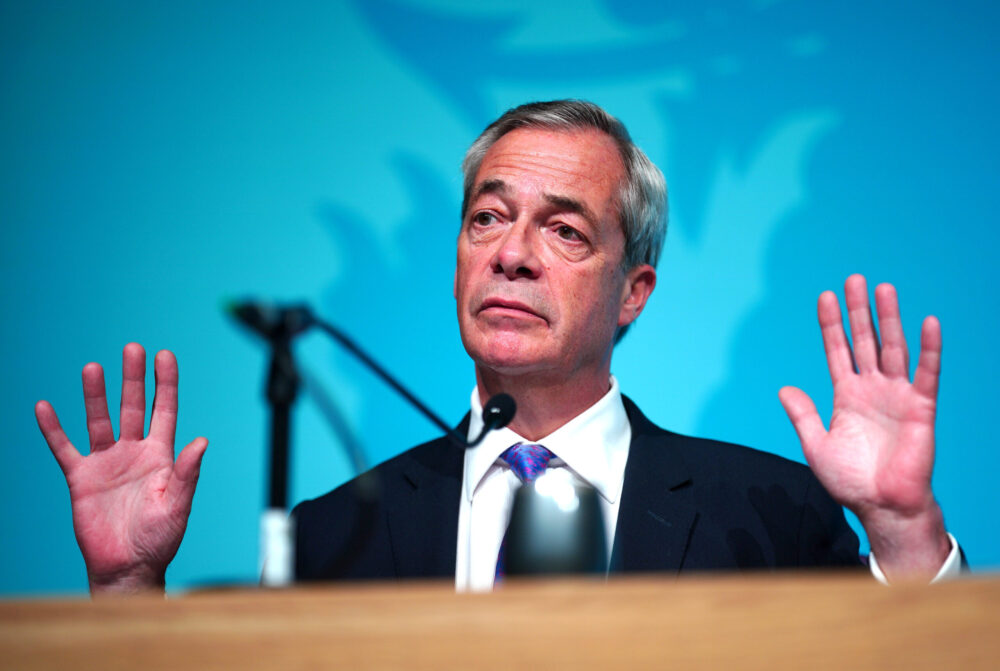
Just this week we saw a clip of Nigel Farage surface branding our language ‘foreign’ – mere weeks after he vowed his party would scrap Welsh language targets for a million Welsh speakers by 2050 if they came to power following the Senedd election, with further plans to abolish the Welsh Language Commissioner.
Scrapping growth targets for Cymraeg and abolishing the Commissioner, while offering little in their place, sends a clear message: the Welsh language is not a priority.
In a country where the language remains central to our identity and confidence, that should concern us all. Ambition for Welsh should be growing, not shrinking.
And yet, Reform has shown a complete contempt for our country and our history. With such policies, Farage has shown his true colours. He simply does not care nor respect Wales or our language – but is anyone really that surprised?
His party’s culture policies here in Wales, beyond the headlines and slogans, expose a deep misunderstanding for how our national institutions work and why they matter. This should set alarm bells ringing – because this isn’t just about politics, it’s about who we are as a nation and who gets to shape the story we tell about ourselves.
Their manifesto included further plans to force publicly funded museums to present history “chronologically”, review arts and heritage funding for “political neutrality”, and cut support for what they label “biased journalism”.
There’s a clear pattern: a desire for political control over spaces that must remain independent if they are to retain public trust.
Take their pledge to “restore evidenceled history” by instructing museums to present the past in strict chronological order.
Anyone familiar with the museum sector knows how ill-informed this is. Before being elected, I worked in the sector and chaired the Museums Association’s Code of Ethics Committee. Museums are bound by professional standards that require them to remain publicly accountable and resist political interference. It is precisely this independence that allows them to interpret history honestly, openly and with integrity.
Reform’s policy turns that principle on its head. Museums would be pushed either to bend to a political narrative or risk losing funding. Compliance would jeopardise accreditation; resistance would threaten survival.
And the practicalities? Absurd. Would St Fagans be expected to rearrange its entire historic village so that buildings appear in date order, visitors funnelled along a prescribed route, with empty spaces reserved for “future history”? Would awardwinning thematic galleries be closed simply because they don’t fit a party’s preferred version of chronology?
This isn’t evidenceled history. It’s political intervention dressed up as clarity.
The same is true of Reform’s promise to “end public funding for politically biased journalism”. In reality, journalists working for publicly funded outlets in Wales operate under the NUJ Code of Conduct, which is designed to uphold impartiality and ethical standards.
Of course, “biased” – in this context – really means “critical of us”. Conditioning funding on perceived fairness is a dangerous path. Around the world, we have seen the consequences when governments attempt to decide which journalism is legitimate.
A healthy democracy cannot function when those in power seek to referee the press.
Reform’s cultural and linguistic proposals do not merely fall short. They reveal a party unwilling to recognise the country it seeks to govern. Our museums, journalists, artists, heritage bodies and Welshspeaking communities deserve better than ideological directives from above. We are worth more than just being seen as a stepping stone to Farage getting his hands on the keys to 10 Downing Street.
That’s why this May’s election is absolutely crucial for us here in Wales.
It isn’t just an election which could finally lead to a change of government, but rather a choice between two very different futures: division with Reform, or a brighter, fairer future with Plaid Cymru where our language and culture isn’t just protected, but valued and promoted.
A Plaid Cymru government would expand Welsh language education – the most effective way of increase the number of Welsh speakers, putting our language at the heart of the education system to give everyone the chance to speak their mother tongue.
Within the first 100 days, we’ll expand Welsh-medium childcare for example; improve access to Welsh-medium education; begin work on greater protections for predominantly Welsh-speaking communities and extend Welsh language standards.
Similarly, if elected to government, we’ll invest in the sector, to support the arts, sport and creative industries to create vibrant, cohesive communities, and a Wales that shines culturally home and abroad.
We’ll consult on our priorities for a new strategy; review investment in culture, the arts and sport – specifically recognising its importance to preventative health and wellbeing in government policy; and publish plans to protect and strengthen broadcasting services in Wales.
In stark contrast to the current Labour government, we won’t treat culture as a stand alone matter – but rather put it at the heart of a Plaid Cymru governments’ vision for a healthier, wealthier Wales with a whole government approach that views culture central to national life.
Wales has always been strongest when it protects the independence of its cultural institutions and nurtures the Welsh language with pride. These values are not political luxuries, but part of what binds us together.
Wales needs a government that truly values culture and the creative industries – and that’s exactly what a Plaid Cymru government will do.
There is so much at stake at this election. The only way we can protect our language, the autonomy of our national institutions and culture as a nation is by electing a Plaid Cymru government – we’re the only party that can stop them in their tracks and enact our bold policies to enable thriving Welsh language and culture sectors once more.
Support our Nation today
For the price of a cup of coffee a month you can help us create an independent, not-for-profit, national news service for the people of Wales, by the people of Wales.



It would be wise also to remember Anglophone culture in Wales and mention explicitly how you will promote and improve support there if you don’t want to put off potential voters who don’t speak Cymraeg. “Also” not “instead”
It’s in the nature of all parties to
‘understand’ the version of the country that best suits them, something which is as true for Plaid in its own way as Reform. No party speaks for anything like the breadth of actual people that they’d like to imagine.
As you wrote Heledd Reform are not interested in Cymru, it’s just using us as a stepping stone to Downing Street. Our language and culture mean nothing to the party – no matter what it says. Farage is good at whipping up negative emotions and grievances in people but not good at resolving those grievances – look at the Reform led councils now putting up council tax. We don’t need that crap here – lies and more lies, just as with Farage’s other obsession – Brexit.
We don’t want politicians thinking they’re better historians than those who’ve actually studied history. Neither do we want them interfering in journalism and the arts.
Burning ‘unsuitable’ books isn’t a great look, Nigel.