


Rejecting the politics of anger: Why Wales deserves better than Reform UK
Jibreel Meddah
Walk through Port Talbot or the valley communities of the Rhondda and the frustration is not hard to find. It is rooted in decades of industrial decline, underfunded public services, and a recurring sense that decisions about Welsh communities are made far from them.
That frustration is real. Reform UK knows it, and they have built their entire Welsh campaign around it.
A More in Common survey from early March 2026 showed Reform is currently polling at 26% in Wales, level with Plaid Cymru as Labour closely trails on 20%.
So what is Reform actually offering Wales in return?
The Economic Platform
Reform’s pitch is built on disruption: cutting what it describes as bureaucratic waste, reducing public spending, deregulating large parts of the economy.
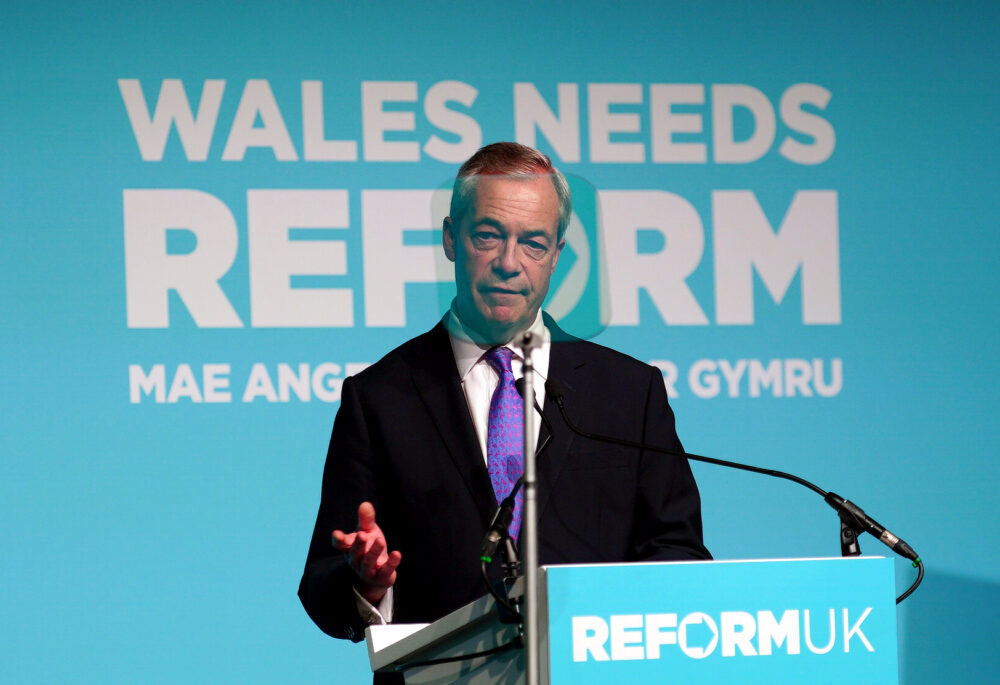
As Nigel Farage puts it: “We need to slash the cost of government, cut the quangos, cut the bureaucracy, and give people their money back.”
In Wales, where public sector employment accounts for a higher share of the workforce than almost anywhere else in Britain, the practical meaning of that language is worth examining. “Slashing” here means jobs and services in communities that have already lost both.
First Minister Eluned Morgan has said she understands why Reform voters are angry, but her assessment of the prospectus is unsparing: “Reform offers cuts and chaos disguised as efficiencies, division in our communities and they would risk the things we rely on: the NHS, free prescriptions, workers’ rights.”
Reform’s manifesto does not include a public spending plan for Wales. The party has not published detailed proposals on how devolved services, including health, education, and social care, would be funded under its economic model.
The Immigration Figures
Immigration has been central to Reform’s campaign messaging. The party has repeatedly used the language of “uncontrolled” borders and national “breaking point.” Farage has stated: “We must take back control of our borders.”
The Office for National Statistics’ most recent figures tell a more complicated story. Net migration across the UK has fallen by nearly 70% over the past two years, settling at approximately 204,000, driven largely by visa restrictions introduced in 2024 and 2025.
In health and social care specifically, the number of overseas nurses and carers entering the UK has fallen by approximately 93% since those restrictions took effect.
Wales has the oldest population of any of the four UK nations. NHS waiting lists here are already among the longest in Britain, and the health system depends heavily on international recruitment to function.
That 93% drop is already being felt in ward staffing and community care.
How Reform proposes to address the workforce gap that its further restrictions would create is a question the party has not yet answered publicly, and did not answer when approached for this piece.
The Question of Devolution
Reform has been consistently critical of the Senedd as an institution. Farage has said: “The Welsh Assembly has been a very expensive mistake.” The party has at various points called for its abolition or significant curtailment.
Voters are being asked, in seven weeks, to elect a Welsh Government. Reform is asking them to do so via a party whose leadership has questioned whether that government should even exist.

Plaid Cymru leader Rhun ap Iorwerth frames it in those terms: “What Reform offers is the antithesis of lifting Wales up because their reason for existence in Wales is to get Nigel Farage into Downing Street by ripping apart our communities and undermining our public services.”
The Signal from Caerphilly
The clearest recent signal of where Welsh politics may be heading came from Wales itself. In late 2025, Plaid Cymru’s Lindsay Whittle won the Caerphilly by-election with nearly half the vote, beating the favourites Reform in a seat Labour had held for over a century.
Caerphilly is post-industrial and economically pressured, precisely the kind of community Reform has positioned itself to speak to. Where voters have consolidated around an alternative, Reform has not won.
Whittle’s words that night have been widely repeated since: “The world is watching Wales, and watching an emerging nation start to control our lives again. Caerphilly has shown the way, now Wales must follow.”
The Choice in Front of Wales
The frustrations driving voters towards Reform in Wales are not invented. Post-industrial communities that have watched decades of deindustrialisation, endured some of the longest NHS waiting times in Britain, and seen public services stretched beyond capacity have every reason to want something different from their politics.
The questions are narrower than that. What does Reform’s platform actually propose? What does the evidence say about its central claims? And what does the party’s own position on devolution mean for people voting on 7 May?
On 7 May, the people of Wales will decide if Reform’s disruption is the solution they need, or simply another form of the instability they have long endured.
Support our Nation today
For the price of a cup of coffee a month you can help us create an independent, not-for-profit, national news service for the people of Wales, by the people of Wales.



Wales deserve solutions, not grievance politics!
Really interesting stuff this. Never thought of that before
Only want the greens in Wales!
Farage hasn’t got the solutions to our problems, anyone with a brain would vote green!