


Rejecting the politics of anger: Why Wales deserves better than Reform UK
Jibreel Meddah
Walk through Port Talbot or the valley communities of the Rhondda and the frustration is not hard to find. It is rooted in decades of industrial decline, underfunded public services, and a recurring sense that decisions about Welsh communities are made far from them.
That frustration is real. Reform UK knows it, and they have built their entire Welsh campaign around it.
A More in Common survey from early March 2026 showed Reform is currently polling at 26% in Wales, level with Plaid Cymru as Labour closely trails on 20%.
So what is Reform actually offering Wales in return?
The Economic Platform
Reform’s pitch is built on disruption: cutting what it describes as bureaucratic waste, reducing public spending, deregulating large parts of the economy.
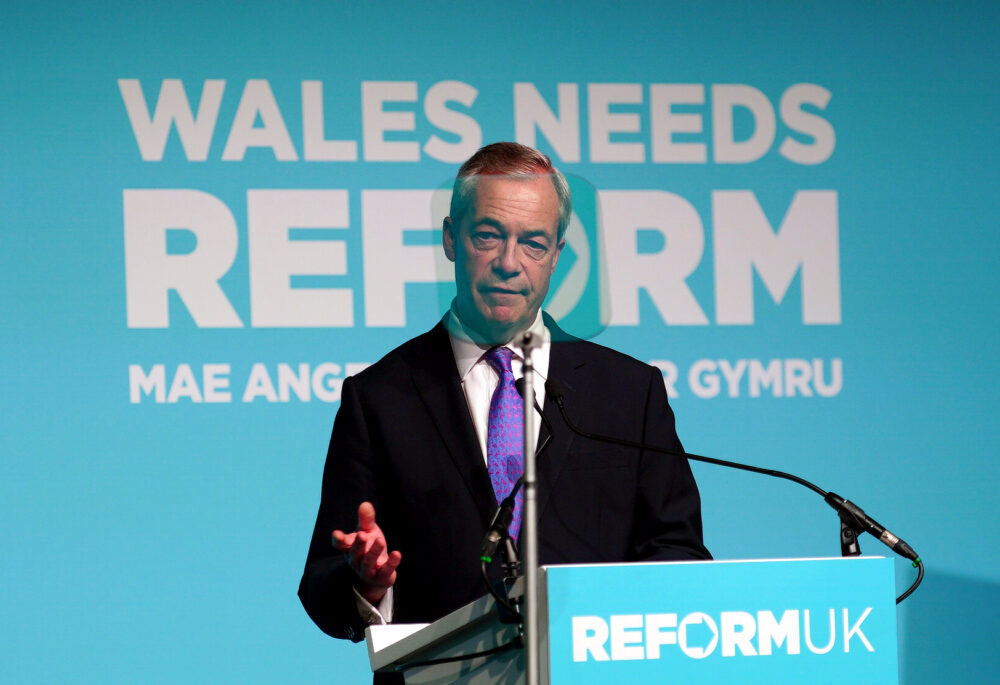
As Nigel Farage puts it: “We need to slash the cost of government, cut the quangos, cut the bureaucracy, and give people their money back.”
In Wales, where public sector employment accounts for a higher share of the workforce than almost anywhere else in Britain, the practical meaning of that language is worth examining. “Slashing” here means jobs and services in communities that have already lost both.
First Minister Eluned Morgan has said she understands why Reform voters are angry, but her assessment of the prospectus is unsparing: “Reform offers cuts and chaos disguised as efficiencies, division in our communities and they would risk the things we rely on: the NHS, free prescriptions, workers’ rights.”
Reform’s manifesto does not include a public spending plan for Wales. The party has not published detailed proposals on how devolved services, including health, education, and social care, would be funded under its economic model.
The Immigration Figures
Immigration has been central to Reform’s campaign messaging. The party has repeatedly used the language of “uncontrolled” borders and national “breaking point.” Farage has stated: “We must take back control of our borders.”
The Office for National Statistics’ most recent figures tell a more complicated story. Net migration across the UK has fallen by nearly 70% over the past two years, settling at approximately 204,000, driven largely by visa restrictions introduced in 2024 and 2025.
In health and social care specifically, the number of overseas nurses and carers entering the UK has fallen by approximately 93% since those restrictions took effect.
Wales has the oldest population of any of the four UK nations. NHS waiting lists here are already among the longest in Britain, and the health system depends heavily on international recruitment to function.
That 93% drop is already being felt in ward staffing and community care.
How Reform proposes to address the workforce gap that its further restrictions would create is a question the party has not yet answered publicly, and did not answer when approached for this piece.
The Question of Devolution
Reform has been consistently critical of the Senedd as an institution. Farage has said: “The Welsh Assembly has been a very expensive mistake.” The party has at various points called for its abolition or significant curtailment.
Voters are being asked, in seven weeks, to elect a Welsh Government. Reform is asking them to do so via a party whose leadership has questioned whether that government should even exist.
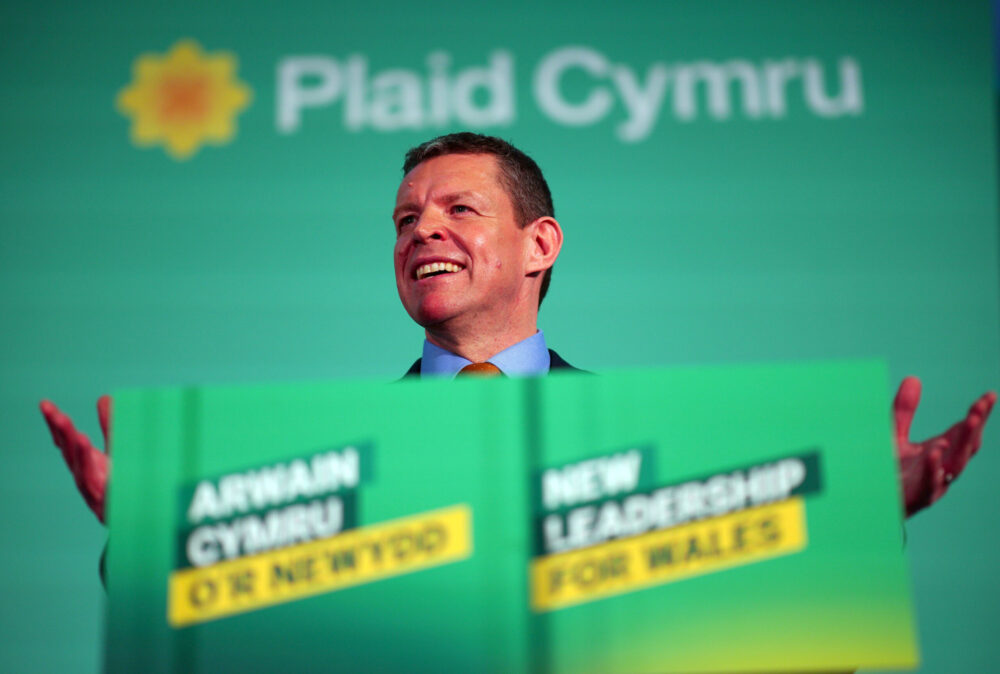
Plaid Cymru leader Rhun ap Iorwerth frames it in those terms: “What Reform offers is the antithesis of lifting Wales up because their reason for existence in Wales is to get Nigel Farage into Downing Street by ripping apart our communities and undermining our public services.”
The Signal from Caerphilly
The clearest recent signal of where Welsh politics may be heading came from Wales itself. In late 2025, Plaid Cymru’s Lindsay Whittle won the Caerphilly by-election with nearly half the vote, beating the favourites Reform in a seat Labour had held for over a century.
Caerphilly is post-industrial and economically pressured, precisely the kind of community Reform has positioned itself to speak to. Where voters have consolidated around an alternative, Reform has not won.
Whittle’s words that night have been widely repeated since: “The world is watching Wales, and watching an emerging nation start to control our lives again. Caerphilly has shown the way, now Wales must follow.”
The Choice in Front of Wales
The frustrations driving voters towards Reform in Wales are not invented. Post-industrial communities that have watched decades of deindustrialisation, endured some of the longest NHS waiting times in Britain, and seen public services stretched beyond capacity have every reason to want something different from their politics.
The questions are narrower than that. What does Reform’s platform actually propose? What does the evidence say about its central claims? And what does the party’s own position on devolution mean for people voting on 7 May?
On 7 May, the people of Wales will decide if Reform’s disruption is the solution they need, or simply another form of the instability they have long endured.
Support our Nation today
For the price of a cup of coffee a month you can help us create an independent, not-for-profit, national news service for the people of Wales, by the people of Wales.
Get more trusted Welsh news
Choose Nation.Cymru as a preferred source in Google News to see more of our journalism.



Wales deserve solutions, not grievance politics!
But that’s the problem. We’ve had 27 years of no solutions which inevitably produces grievance. We can all agree that Reform has no answers; but it’s not enough.
No, it’s not enough. I shall be voting for Plaid Cymru on May 7th, but that doesn’t mean that I think that party has a particulalrly good offer as thus far they haven’t put much substance into their campaign, just some vague promises with little detail on how they will deliver for the people in Wales, who, in some communties have had it bad since Thatcher’s assault on them in the 80s. No government of any colour has done anything to bring hope to these commuities, and Plaid, along with all the rest has remained virtually silent. I can understand… Read more »
I largely agree (although I’m sceptical as to whether Reform would actually scrap the NHS and social care). The problem for me is that Wales is trapped in a halfway house of a devolution settlement with the real levers for change elsewhere – admittedly not helped by poor quality Senedd members. I also agree that Plaid’s programme is uninspiring and looks like tinkering around the edges. I hope I’m wrong too.
It’s certainly the case that Wales does not have any of the real levers it needs. When the campaign for devolution started in the mid 90s which resulted in Blair’s (reluctant) offer in 1997 we knew that what was on offer was exactly the settlement that was offered in 1979, which some jester aptly described as Glamorgan County Council on steroids. A few bells and whistles have been added since that initial settlement, but if anything that increasingly obscures what the real situation is. The Welsh Government and the Senedd is hamstrung in that it has much of the responsibility… Read more »
Only want the greens in Wales!
Farage hasn’t got the solutions to our problems, anyone with a brain would vote green!
Farage offers Wales nothing . Just a place for him to harvest votes and to assist his passage to No 10 . He hasn’t even bothered to announce the candidates yet A motley crew they are likely to be. He has chosen Dan Thomas, a failed Tory Leader in Barnet to lead change 😒 His CV at Barnet speaks volumes about what that change means. Welsh jobs slashed Outsourcing. Public services farmed out to 3rd parties with the grant of lucrative contracts The grateful recipients of those likely to be friends and funders of Reform In the case of Barnet… Read more »
How can anyone trust Farage ! Vote green.
Anger is easy. Building something better is hard. Wales deserves politicians who offer real solutions, not just louder complaints and people to blame. If we want a stronger Wales, we need less outrage and more responsibility.
Those who don’t wish to be governed by the Tories or Reform UK, the alternative is Welsh Independence.
Nobody is assessing the impact of Reform having a significant amount of Senedd AMs to give Nigel Farage influence over Welsh economic policy; party sponsors want paybacks – that is why they fund events. Heathrow Airport sponsored Reforms conference. Will Transport for Wales get additional investment? Will Cardiff Airport get Reform AM focus or Heathrow get the focus? http://www.airbnb.com is another sponsor of Reform – they are a direct competitor to Celtic Collection. The loss of the accommodation in Pembrokeshire may devastate that economy; plus will Reform defund the ICC – so no more conferences / networking opportunities to encourage… Read more »
Nope. Simple answer is that Reform are not going to be in government unless the polls are very wrong – and no one else will work with them with the Tories heading for a possible wipeout. In any event, about half a dozen Reform’s new members will have fallen out with their group and left by Xmas.