

Repositioning Independence
Ben Wildsmith
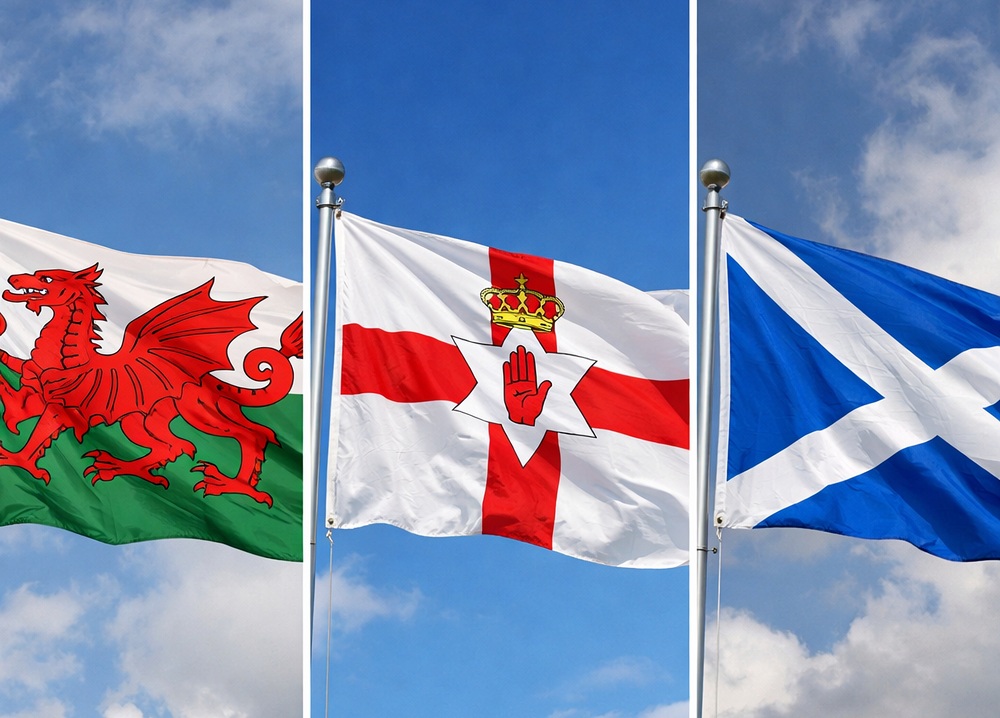
Yesterday, at the SNP’s conference, Scotland’s First Minister, John Swinney, described the forthcoming elections in May as a ‘seismic moment’ for the UK. Referencing the likelihood that Scotland, Wales, and Northern Ireland will, for the first time, all have First Ministers who favour secession from Westminster.
Swinney spoke of offering policies that would be the ‘building blocks for an independent country’. These include subsidised childcare and direct assistance, up to £10 000, for first-time buyers who are struggling to secure a deposit.
These policies, which have close relations in Plaid’s childcare offer and its proposed Fair Rents Bill, are directed at an open goal that Westminster parties are constrained from exploiting: the immediate needs of working people under 45.
First-past-the-post has, for decades now, skewed Westminster politics in favour of older voters. Pension entitlement has been ringfenced from the wider economic position at the expense of those who pay for it because of the mathematics of general elections.
The effect of this has been to disenfranchise a generation which has now aged beyond the point at which people would expect to have found stability in life.
Proportional representation in elections for the devolved governments, however, restores electoral weight to their concerns and, for those seeking independence, this offers the opportunity to cast Westminster as unresponsive to and out of touch with the working population.
Swinney also took the opportunity to unequivocally condemn the current war in Iran. After denouncing the current Iranian regime as having ‘terrorised their own population’, the First Minister went on to describe the action by Israel and the USA as unjustifiable and having no basis in international law.
YouGov has opposition to the war at 59% of the UK population, whilst Opinium reports support for British involvement in the action at only 18%. Support for the war is lowest amongst younger voters and highest amongst retirees.
Support for Scottish independence is currently polling at 51%, as opposed to 41% in Wales. In both nations, however, support is weighted towards younger voters, with the fulcrum at around 35 years.
So, what can we take away from the SNP’s positioning, and how does it relate to the picture here in Wales?
Firstly, the perceived inability of Westminster governments to address the concerns of the working population leaves a vacuum into which devolved governments can step. Theresa May’s ‘dementia tax’ debacle during the 2017 election demonstrated how constrained Westminster parties are by the electoral system.
Policies that benefit those of working age can easily be spun as punishing older voters, without whom electoral success is impossible.
Secondly, the appeal of the SNP, and I suggest Plaid and the Greens, is shifting from one of radicalism towards caution.
Denton & Gorton
Hannah Spencer’s victory speech at the recent Denton & Gorton by election focused on how work no longer provides an enjoyable lifestyle for people who are trying hard to succeed. This, in the past, would have been natural territory for Labour and the Conservatives. After decades of governance that has disadvantaged workers in favour of those who live by investment, however, those parties are no longer trusted on the matter.
As a ruling party, the SNP has been able to demonstrate that it governs within the parameters of acceptable ideology for a majority of Scottish voters. Plaid is likely to have an opportunity to do the same come May.
Disarray
With Labour in seeming disarray, the SNP can project pragmatism as an antidote to the U-turns and division in the Westminster government. So, instead of a risky, radical proposition, Swinney is seeking to posit independence as a route out of chaos.
The UK government is shackled, again by voter demographics, to the Brexit result of ten years ago. It is also yoked to an alliance with the USA at a time when most British people consider that country to have become divorced from the values that once cohered us.
If Westminster retains its voting system, UK governments will, in the immediate future, be unable to extricate themselves from economic positions that are disadvantaging ever more of the working population.
Neither will they be able to project values in the world that represent the views of most of the populace.
In those circumstances independence for Scotland and Wales, alongside the reunification of Ireland, will be asserted not from its traditional position on the fringes of acceptable debate, but from the heart of three governments that are mandated to govern for the common good where Westminster cannot.
Support our Nation today
For the price of a cup of coffee a month you can help us create an independent, not-for-profit, national news service for the people of Wales, by the people of Wales.



The SNP have made largely the same points at every conference for a decade now. Desperately hoping that ‘events’ will somehow tip them over the line on the independence issue whether it’s Brexit, Boris, Covid, now Reform etc. Yet the overall position hasn’t fundamentally changed since 2014. Their own party polling is at its worst for 20 years, yet they’ll slope to victory for want of an obvious alternative. Hardly an inspiring backdrop.
Plaid Cymru. We are going to appoint a committee to look into appointing a committee to look into Independence. This is kick the tin can up the road rubbish. Plaid Cymru are not committed to independence and have not been since 1999. Total load of rubbish like other reports over the years about independence. Lesson from SNP fight for independence destroy the Labour Party which they did twenty years ago and won. Plaid Cymru pathetic support the Labour Party for last twenty years.