
Rewilding: Moving the focus from landscape to people
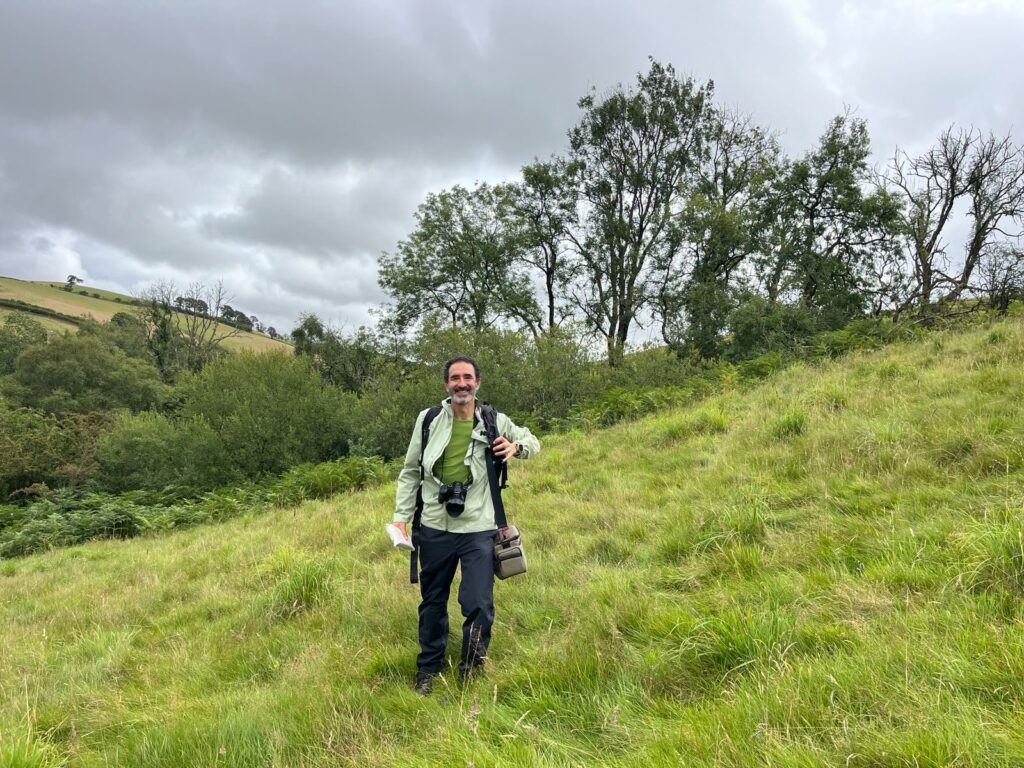
Jon Conradi, Wild Mosaic
Rewilding can be contentious. It has been seen as a threat to farming, and a rural way of life. But in my experience this framing is often false. Whilst it is an ideological challenge, it is one that can rebuild our connection to the living world. It is a movement that is starting to focus on people and their relationship with land, rather than aiming for a land without people.
In 2019 the Summit-to-Sea project – the biggest rewilding plan in Wales – collapsed. 10,000 hectares of mid Wales were to be rewilded and a further 30,000 hectares of sea. But it received strong local opposition. Many felt that their concerns around the impact on farming and local culture had not been listened to.
This scale of land change is easily seen as a threat. Not just to individual farms, but whole communities. Questions were asked about who would benefit. Suspicions arose that people were being sacrificed for the financial benefit of faceless corporations. History, if not repeating, then rhyming.
Rewilding projects like this are often framed as being a choice of nature over people. This fascinates me as my experience has been very different. For me, rewilding is not about choosing between nature and people. It is a way to reconcile this misleading division. A division that is leading us to choose artificial worlds in screens, over a wilder world right on our doorsteps.
I first came across rewilding when studying an MSc in the Centre for Alternative Technology (CAT) in Machynlleth. I started studying there as I felt deeply disillusioned by the state of environmental degradation. I couldn’t understand how we were casually eradicating species from the world, whilst few people seemed to care or even notice. I couldn’t look away and ignore it, but I didn’t know what to do, I felt helpless. This brought me to CAT. I was probably looking for a sanctuary as much as a solution.
Nestled in what was once a cut up landscape, the discarded remnants of a slate mine, it had been brought back to life. For people and wildlife. Discovering rewilding in theory and practice was like discovering a path back. One that showed that it was possible for people to create and be part of a wilder world. A path back to my childhood and the deep curiosity, wonder and delight in wildlife and the living world.
Even the possibility of this path brought me hope, and helped me re-engage more fully with the world around me. And belief in it inspired me to find ways to engage more people in rewilding. It’s what led me to create my rewilding business, Wild Mosaic, and to focus on making rewilding accessible, without owning land.
So, how do we move from the idea of rewilding being a destroyer of communities, to it being a way to bring people’s attention and enthusiasm back to the land?
Ecologically, there is a strong argument that rewilding should happen at scale. Many of our threatened species need large interconnected habitats to thrive.
It is becoming clearer that more of our species are threatened. And that we will suffer as a result. In the words of David Attenborough “We often talk of saving the planet, but the truth is we must do these things to save ourselves”
Islands of nature reserves and sanctuaries dotted across the landscape can help, but have limited potential. These little pockets are also more vulnerable. An unusually warm or dry year can decimate a population that has less ability to move to a more favourable environment. And when one species is lost, it can create a domino effect, taking out those that depend on it too.
Rewilding at Scale
So, if there is a case for rewilding at scale what does this look like? One idea is that of ‘self-willed land’. Land that is left alone, creating a wildness with little human intervention.
This is the land of nature documentaries, a romanticised world, imagined to be far away. Some people dream of this closer to home.
However, this is not realistic. It is an American ideal that came about through the luxury of large amounts of ‘wilderness’. Often ignoring the indigenous populations who had their own relationship with the land. Whilst there are special habitats around the world that need protection, there are few places that are fully separate from people. Especially as the consequences of a changing climate have material impact everywhere.
What does this mean as we look to restore nature?
Firstly, there is need. We have lost 50% of our biodiversity. A further 17% of species in Wales are currently at risk of extinction.
The driver of much loss has been land-use change. So, it makes sense that a way to restore it is to change it back again.
But I think this misses what lies behind this – our connection to land and its wildlife. In a recent survey, the UK is one of the least connected to nature. This disconnection from nature is also associated with having a negative effect on wellbeing.
This isn’t just a wildlife problem. It can also be seen in farming statistics. Fewer people are involved in working on the land. The average age of farmers is creeping up, and younger generations seem to be showing less interest.
‘Farming’ can be as unhelpful a term as ‘nature’. It covers such a range of activities and people that generalising can be difficult. But it seems fair to say that farming has changed radically in just a couple of generations. The increase in mechanisation has led to bigger farms that employ less people. The focus often now has to be on the economics. A crude simplification of lives that often have been intertwined with land for generations.
Rebuilding Connection
We need to bring a little complexity back.
Rebuilding connection to land is a problem for city workers trapped in concrete offices, rural communities, farmers and wildlife advocates. These are often overlapping groups. Not competing priorities.
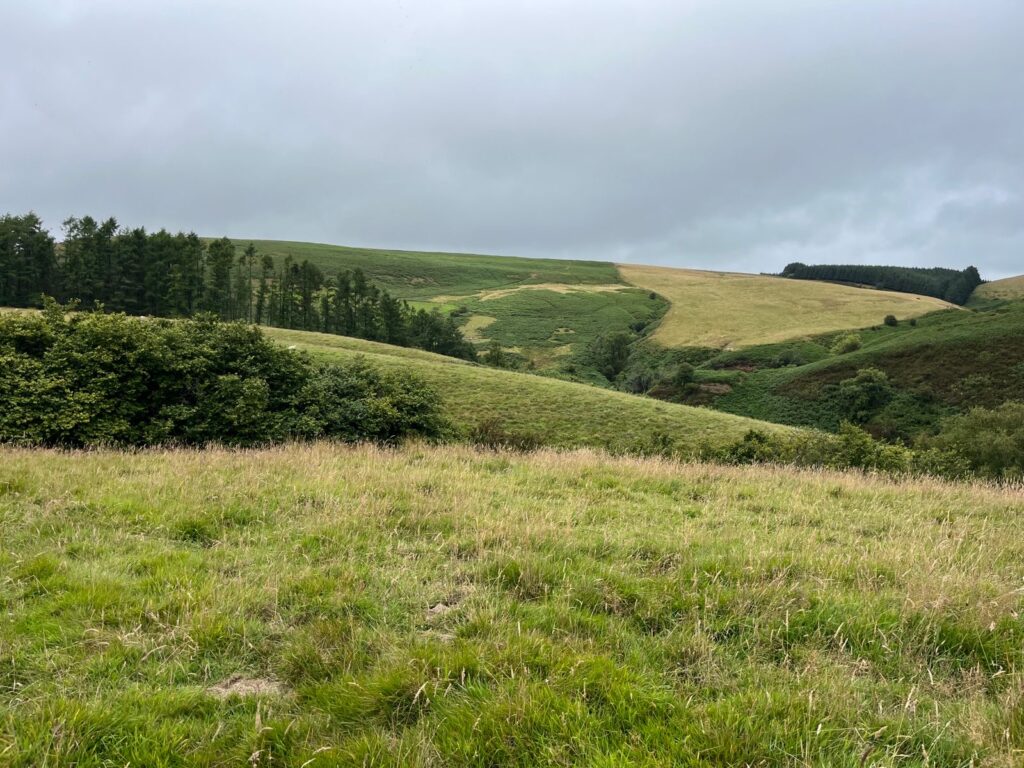
I work with a local wildlife trust that bought an old farm and are restoring it to wildness. There are now more people involved with the land than there was as a farm. A community of local volunteers, as well as paid staff. A public footpath is being restored to give easy right of way again.
It is also leading to farming experiments. Tamworth pigs, Belted Galloway and Welsh Blacks are all used to help with restoration work. All owned by local farmers. A market garden provides food locally. School children and nearby businesses come down to help with species counts.
None of this is perfect. But one of the aspects of rewilding I love is that it is experimental. It recognises that there is more that we don’t know, than we do.
We face many challenges. One of the biggest is that we are drifting further from the land, and the life it supports. The wildlife our grandparents would have recognised and related to is almost unimaginable today.
At some point many of us seem to have lost this chain of passed down practical wisdom. The meaning of wind and clouds, signs of weather, and seasons. The ability to name different mushrooms and plants, which you could eat, use for flavour, medicine and ritual. The ability to derive meaning from different birds, when they leave and go, how they sing.
We have gained a lot in its place. But too much of this doesn’t feel worth the cost. Cheap meat, addictive screens, news designed to provoke anxiety and keep you clicking.
A pathway back, is a path back to land. Rebuilding connection to it, and the life that it supports. Wildlife and the wilder world has had meaning for us for far longer than bright colours in adverts, and notification alerts on our phones.
The activities that bring us back to this, whether rewilding, gardening, farming or hiking have more in common than is often portrayed. This shared love of a wilder world we are all part of can be something to build on, rather than a way to divide.
Find out more about Wild Mosaic here
Support our Nation today
For the price of a cup of coffee a month you can help us create an independent, not-for-profit, national news service for the people of Wales, by the people of Wales.



On the contrary, I believe the word rewilding has led to neglect in many areas with little success. If we are to connect with the land then some management and understanding is required. Clearing bracken in many areas enables wild flowers to return. Farming must continue however better public education is required to enable us to encourage pollinating insects and biodiversity in the numerous areas we have which aren’t suitable for food production.
Clearing bracken is a complex, difficult and expensive task.
One of the reasons why Summit to Sea failed was because it was seen as a colonising force of foreign interests attempting to use Cymru for their own interests and pet projects. Local communities were viewed as obstacles, farming was seen as something to be disposed of for the ‘greater good’ irrespective of impact on culture and community. Rewilding is largely an obsession of the English upper middle classes, if its so wonderful why aren’t they rewilding their own communities? (I’m sure places like Birmingham could do with a bit of rewilding) – why does Cymru always have to be… Read more »
There are also many rewilding projects in England (and Scotland) in both rural and urban locations; had you bothered to do a bit of googling first, you would know this. So Cymru is not the “guinea pig”. I am concerned to see more rewilding, and my working-class credentials are impeccable; I regard farmers, sitting on their properties worth millions, as far more “middle-class” than I am. Lazy stereotyping does not help, and it is also patronising to assume that the working-classes in Cymru do not care about the environment (and their kid’s futures). I do agree about the language; as… Read more »
You write about Welsh farmers in the way Flashman writes about native americans – except that he is a bit more politically correct. We live in a topsy-turvy world when indigenous people who work 50-70 hours a week in all seasons, in the industry with the highest danger/mortality rate in the UK, and often come home soaking wet covered in dirt for an average income that’s two thirds the UK average, are judged to be middle class, while some on far better incomes and working hours call themselves working class because their grandfather worked in a coal mine. Yes, many… Read more »