

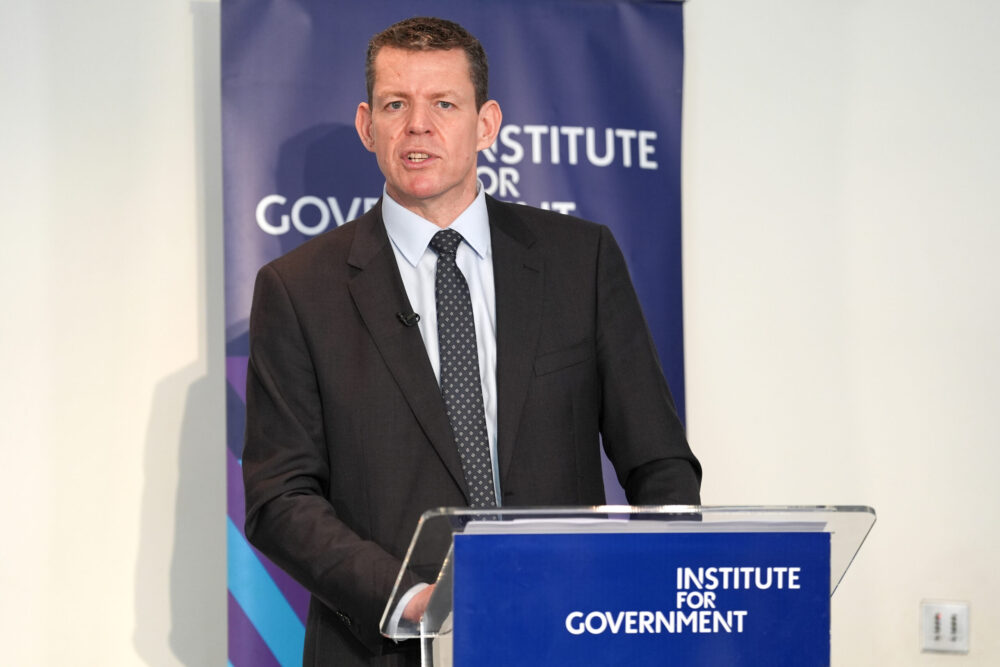
Rhun ap Iorwerth and the mountain ahead
Desmond Clifford
Things can change, of course, but right now, the likely election outcome is a Plaid Cymru administration, supported by one or more of the other left leaning parties. Rhun ap Iorwerth is the likely First Minister.
Plaid Cymru has been losing elections as long as Labour has been winning them, and the switch will be quite a shock for them both.
Until recently, Plaid’s periodic surges in support evaporated like the desert mirage. This time looks different. As the departing Boris Johnson said, “when the herd moves, it moves.”
Elections are the real measure by which party leaders are judged. If victorious, Rhun ap Iorwerth will have done what no one before him came even close to. This will confer immense authority on him within Plaid Cymru and, for a while, in Wales generally.
He will never be so powerful again and should use his moment wisely. If he has tough decisions to make, week one is the time to make them – they’ll only get harder as time slips by.
Rhun is a former television journalist – he has excellent communication skills – but before becoming Plaid Cymru’s leader hadn’t run anything larger than a camera crew.
Managing any political party is a challenge. He inherited bad blood within Plaid and no doubt there remain tensions inside not visible to us outside. If so, he’s kept a lid on things so far suggesting he has management nous and good diplomatic skills.
After the election, around 5,500 civil servants across Wales will await instructions. The wider public sector will expect leadership and fresh direction after years of stasis. Wales will expect change.
Only fools will expect overnight miracles, but the pressure for change and incremental progress begins immediately. Rhun was skilled at undermining First Ministers in the Senedd and now his opposites will try to do the same to him.
As he well knows, lots of questions don’t have good answers but the brass plate on the government’s door will have his name on. A new administration can blame the previous crowd for a while, but the honeymoon doesn’t last long.
Wales is in a fragile state. Young people feel they’ve been shafted, and they have. Diminishing job prospects on top of ballooning college loans is slim reward for investing in their own education. Even for those fortunate to find half decent jobs, housing options are grim without inherited wealth and double incomes.
Twenty-five years of Labour governments have achieved little in tackling social ills. Anti- social behaviour is rife. Inequality’s getting worse, not better, with persistent child poverty especially damaging. Education has flat-lined at best, defeatism surrounds the NHS and the economy, outside some brighter spots, is limp.
There’s a lot to repair. Rhun and his ministers need to get stuck in and start making a difference quickly. They should allow nothing and no one to stand in the way.
The Senedd is too often a theatre for sterile performative politics, its politicians introverted and too bothered about the next pointless tweet. Rhun should worry less about the Senedd than his predecessors and much more about Welsh communities and the impact of policy in Real Wales. The national dial needs to shift.
Plaid’s manifesto commits to an Economic Development Agency. Most European countries have them and the OECD is a vocal supporter. The 1980s/90s swaggering WDA – constructed in the image of the Tory governments it served – won’t wash today.
The future must be about home-grown businesses, exports, partnerships, AI, productivity, creative industries, energy, tech, and a focus on young people. Wales desperately needs a compelling economic narrative.
New axis
If Plaid leads the Welsh Government, Reform will be the opposition. This will stretch second-era Senedd politics along a new axis of contention. The split will reflect stark division along Left-Right lines as well as two competing nationalisms, Welsh and British.
If Reform’s Senedd members behave like tired Tories, they’ll excite few who voted for them. If they act as “wreckers” then Plaid emerges as the administration serious about Wales, exactly how it wants to be seen.
If Reform just play silly buggers, the public will tire of them, and so will Farage as he tries to polish himself as a viable candidate for Prime Minister.
Unlike his predecessor, Rhun won’t be plagued about his relationship with the UK Government. He will meet Starmer, or his successor, occasionally. I imagine the relationship will be icily well-mannered and may even stretch to some polite platitudes. Expectations will be low, however, and unlikely to result in disappointment.
A Plaid Cymru victory would hurt the UK Government. Losing Wales after a hundred years is a catastrophe for Labour. When three of the United Kingdom’s four national leaders advocate separatism, it isn’t only the Labour Party’s future at stake.
Successive UK Governments have ignored constitutional questions and just hoped the dam won’t burst on their watch. This dumb refusal simply feeds the beast. Wales remains as mysterious as Narnia to the UK Government.
Historic
Formalities done, Rhun and his ministers will arrive in government buildings and meet the civil service. Lesson No. 1: they work for him and not the other way round. The moment will be intoxicating: historic, exciting, and a little intimidating. Ministers will be perky in public but more doubtful in private. The responsibility is heavy, and the burden lonely.
It’ll be equally strange for the civil service. With Labour in power since 1999, they are unused to radical change. Some will be nervous, some excited, others anxious. There’s usually staff churn around elections and I reckon there will be more this time. To begin with Ministers and civil servants, and special advisers, will tread warily around each other. There will likely be some fallings out, with expectations challenged on both sides. Eventually, things will settle. The adaptable will adapt and prosper while others will wilt.
In Rhun’s new Plaid group, only Elin Jones, the departing Llywydd, will remain with ministerial experience dating from the Labour-Plaid coalition (2007-11). She has “Elder Stateswoman” status and is a good tip for a central role, perhaps as Finance Minister or a Cabinet Office-style co-ordination post. Plaid’s front bench is intelligent and, by definition, know about Wales and take it seriously. They’re inexperienced in government but that doesn’t have to be a bad thing (Labour ministers spent too long in government and lost political drive as a result).
What matters is clear purpose and determination. Rhun and his new ministers will be shocked at how quickly time flies in a four-year mandate.
Tested
You don’t know for certain who will be a good First Minister until they’re tested. Years back, I doubt even Mark Drakeford’s closest supporters thought he could occupy the commanding position he reached as First Minister during Covid.
Nearly 30 years ago Tony Blair decided Rhodri Morgan wasn’t good enough to serve as a junior minister in the New Labour government. After a decade as First Minister, Rhodri left office with ratings through the roof – and there’ll soon be a statue of him outside the Senedd.
Rhun should arrive with maybe half a dozen real ambitions for change, not more. He should learn from Keir Starmer who acted like he was surprised to win and, once there, in no hurry to do anything. Rhun should give instructions before his timetable starts filling with displacement activity. There are lots of possible distractions for a First Minister; he should keep control of his diary and focus on priorities. He’ll need a strong, energetic team around him.
On day one the civil service will tell him there’s no money. He must push back firmly. The Welsh Government budget is around £28 billion. How it’s spent is the government’s main power. The civil service will tell him it’s all “committed”, as if Moses himself had walked down Yr Wyddfa with a couple of double-entry stone tablets. The Welsh Government is in charge and does the committing, and those pounds are the currency of change.
Independence
Could there be an embarrassment of riches? An overall Plaid majority would be an earthquake, meteor and black swan all at once, but an alliance with the Greens is well within the range of possible outcomes. This would produce an unexpected Senedd majority for independence, even though it’s not on the agenda this term.
Plaid can’t stop opposition parties drawing attention to their ultimate independence ambition, nor will they want to. There’s a shifting global agenda and a raft of non-devolved issues could raise tricky questions: energy supply, oil, defence, weapons, military preparedness.
Some opponents will want to present Plaid as a students’ union rather than a serious government, and Rhun will need to balance the expectations of party activists with plausible government positions that will pass muster beyond core supporters.
It may not always be comfortable. We’ll see, soon enough.
Support our Nation today
For the price of a cup of coffee a month you can help us create an independent, not-for-profit, national news service for the people of Wales, by the people of Wales.


