
S4C: TV formats aren’t the problem
Desmond Clifford
A recent article by Gwyn Williams complained – gently – about S4C programmes based on formats imported from English language TV.
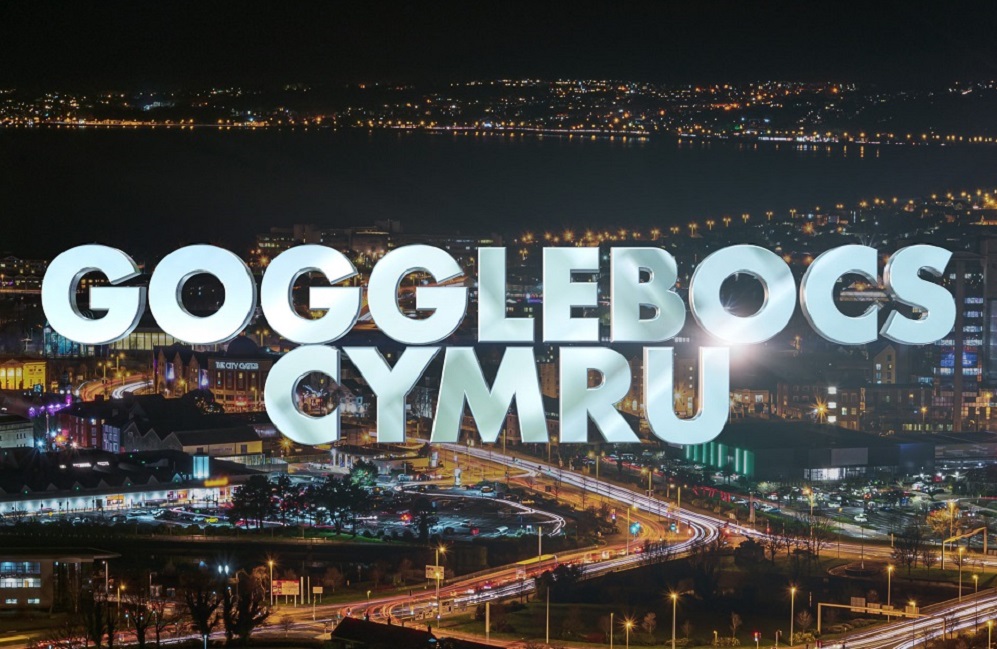
He cites three programmes currently on offer: Goggle Bocs Cymru (Goggle Box); Y Llais (The Voice) and Y Cyfweliad (The Assembly) and says, “Whilst the language is Welsh, we know what we’re looking at is a copy of something we’ve seen in English.”
Some questions are begged here. There’s a difference, isn’t there, between a copy and a franchise? The whole point of the franchise is transferability.
This arises from internationalisation of the broadcasting industry rather than slackness on the part of S4C. A good format is a good format – surely? – and not worse if it originates from England rather than, say, Ireland.
S4C’s first duty is to broadcast quality programmes capable of commanding an audience. A handful of “format” programmes as part of the mix doesn’t feel outlandish.
There’s a case for saying these programmes, in moderation, help position S4C as part of broadcasting’s mainstream. Too many would be wrong: S4C also needs to show what’s distinctive about Wales. All considered, it manages that tricky balance quite well.
Distinctiveness doesn’t only derive from format. S4C’s coverage of international rugby is outstanding. Visually, it’s the same as BBC/ITV – obviously – so what makes it different? The language, of course, but more than that; the presenters, commentators and pundits form a community with viewers and share common history, identity and emotion. It’s a kind of broadcasting alchemy.
The challenges facing S4C are major. The concept of “linear channel” broadcasting is dissolving before our eyes. The schedule is now simply a publishing timetable.
Lots of younger people don’t bother with tv channels or even tv sets. Sitting on the sofa in front of the box is increasingly a marker of age.
The spread of broadcasting or “content” platforms is relentless. It has democratised broadcasting, for sure.
People no longer depend on regulated broadcasters for a worldview which is, inevitably, trimmed at the edges and “safe”.
Inventive
Today, the enterprising get on and do it for themselves – opinion, comedy, music, culture, micro-dramas. There’s inventive, talented stuff out there which challenges trad broadcasters.
Some creators build a strong following while a small number become famous like tv stars of old.
The downside of this expansion is Babel-vision. There’s no shape or coherence to the self-curated menu. You need never hear an opinion that isn’t yours or be challenged with a new idea. You need never think you’re mistaken.
Umberto Eco noted that social media puts the ignoramus alongside the Nobel prize-winner and awards them equal weight, “an invasion of the idiots”.
A society which respects no one and values nothing is heading for problems – look at America. And, of course, the language of social media is overwhelmingly English. Much larger languages than Welsh are being flattened by the digital tide.
Increasingly, S4C must contemplate “post-schedule television”. There’s a fascinating moment on the 9-hour Beatles documentary “Get Back” when, during rehearsals, John Lennon says, “Did you see Fleetwood Mac on the BBC last night?” A shared tv moment: those days are largely gone.
If people are united now it’s by “event television”, programmes primarily linked to “live” coverage: sport, Strictly, The Traitors, the Eisteddfod, national events.
The joy at Wales’ 6 Nations victory over Italy was a shared moment and that, for most of us, was a television experience.
Quality drama
There will be a continuing audience for quality drama and here S4C has seriously raised its game. From the last decade or so a bunch of series remain in the memory: Y Gwyll, 35 Diwrnod, Yr Amgueddfa, Y Golau, Cleddau to name a few, all of them excellent.
Co-productions allow greater ambition than was once possible, coupled with excellent writing. These dramas demonstrate that S4C can keep up while actively exploiting what’s distinctively Welsh.
The main junctions of S4C – news, drama and sport – are, I reckon, in decent shape.
A few viewers watch S4C from loyalty – the “use it or lose it” ethos – but most of us are transactional: we watch what we enjoy and not what we don’t.
S4C must attract and retain viewers and familiar formats can help promote the channel in a marketplace getting busier every year.
The viewing habits of S4C’s audience are formed by one of the world’s premier television cultures. Viewers are conditioned by the BBC, ITV and Channel Four – not to mention Netflix and the rest.
High production values
S4C must commission programmes with high production values to compete. If programmes look cheap and badly drawn, viewers will quickly notice and switch over.
Not every programme is a winner, of course not, but S4C is way better than many European channels (I lived on the continent for a decade) and must be to survive.
Where programmes are good enough, they can be sold elsewhere. The revolution in modern tv detective drama began in Denmark, not so much bigger than Wales.
The Netherlands is especially innovative: Big Brother began there, as did The Voice, while The Assembly started as a French format. In principle, there’s no reason why Welsh production houses can’t innovate compelling and transferable formats too.
Responsibility for S4C should pass to the Welsh Government. I’ve never understood why the UK wants to keep it, other than bloody-mindedness.
They cut its budget massively in the Cameron years when they decided it should be funded mainly from the BBC licence fee.
Wales is the natural home for Welsh institutions, surely? The Welsh Government has responsibility for economic development and culture; S4C would fit coherently and creatively into this environment. In the world of the UK’s DCMS, S4C fits with nothing much.
S4C carries a heavy burden for the Welsh language. There’s only one of it so it tries to be all things to all people – a mission impossible.
Broadcasting will continue to change. AI is for another day but clearly has potential both to menace and to transform.
Radio and television
Just as the television set is merging with the computer, so radio and television are increasingly melding. Lots of radio programmes are streamed on-line now and podcasts are a form of radio-as-television.
I wonder whether S4C and Radio Cymru could intelligently be aligned in some way to the benefit of both – not to cut costs but to offer a fuller range of services to viewers and listeners?
Half a century ago the future challenges of the Welsh language were seen in terms of education, official status and regulation.
Wales has changed. Openly anti-Welsh attitudes have substantially dissipated. There prevails generally benign but passive good will.
Officialdom won’t kill off Welsh in the twenty-first century – but popular culture might. From the early morning log-in to the last check of socials before bed, it’s English, English, English.
Can S4C, and Radio Cymru, be the counterweight to the ever-expanding English universe?
It’s a heavy ask, but that’s the real question in 2026.
Support our Nation today
For the price of a cup of coffee a month you can help us create an independent, not-for-profit, national news service for the people of Wales, by the people of Wales.



S4C needs to review the broadcasting voids. Netflix is formulaic and lacks regional styles. Films from France / Italy feature USA individuals and lack local writers – excellent witty films such as Vicki Christina Barcelona are produced no more. Take a Welsh classic such as The Englishman Who Went Up A Hill And Came Down A Mountain – references to ‘Jones’ ‘Tup’ etc. S4C should partner with some Celtic TV channels and make more authentic programmes, non-AI written. The key opportunity is to link to Trinity St David’s University based next to S4C centre and jointly develop programmes – without… Read more »