

Seen and heard: Hate aimed at Athika will only make women’s voices stronger
Ella Groves
Athika Ahmed has been at the centre of an online storm this week after a series of social media posts misidentified her as the Welsh health minister.
Ms Ahmed is, of course, not the Welsh health minister – that position belongs to Jeremy Miles – she is a selfless 23-year-old medical student at Cardiff University and NHS volunteer.
Athika has been a volunteer health ambassador with the NHS since she was 16 and has worked on projects including the development resources to promote awareness of endometriosis, menopause and menstrual health amongst young people.
NHS Voices, an initiative to promote the work of NHS staff and volunteers, praised Athika recently on their social media as an “unsung hero” describing her work in supporting and educating young Muslim girls on the stigmatised topics of cycles and menstruation.
In a BBC interview in December 2025 discussing the lack of healthcare education for young women and girls Athika drew on her own experiences.
She said: “As a person from an ethnic minority background, in some communities it’s actually taboo and quite a sensitive topic to talk about, so if you’re not able to learn about these things in school, then where do you learn?”
Following the interview, where she was described as a ‘Love Your Period’ campaign ambassador, Athika’s image was circulated around social media sites such as X and Facebook where she was repeatedly misidentified as the Welsh health ambassador.
This misidentification led to her receiving copious amounts of online hate with commenters deriding her for her weight, appearance, and religion.
Many of the posts drew on dangerous misogynistic and racist narratives, with far-right commentators such as Katie Hopkins and Tommy Robinson contributing to the abuse.
The comments of these posts followed a similar tone.
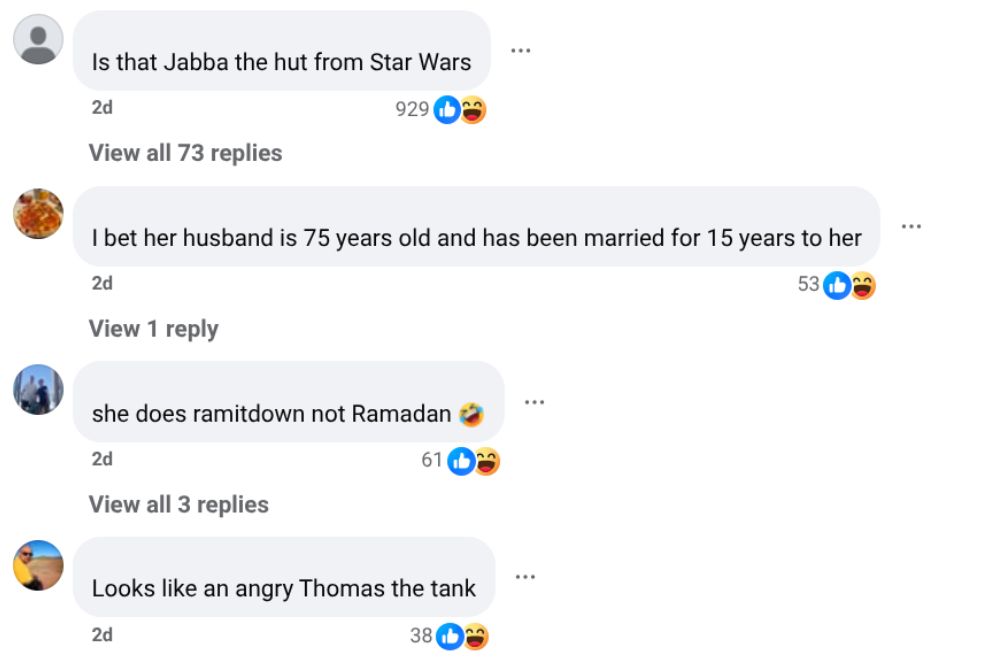
Many of the posts and comments expressed a belief that Athika was not qualified to be a health ambassador, volunteer or otherwise, and that she should refrain from discussing topics such as health simply because of how she looks.
As a ‘Love Your Period’ campaign ambassador much of the work Athika does centres around women’s health – a subject that is too often overlooked.
Yet her own lived experience as a woman, and her aim to improve education around healthcare for often-excluded members of society was dismissed.
The fact that she is a medical student and NHS volunteer were deemed irrelevant.
What mattered was that she was a woman and she did not look how those online wanted her to. Her voice, her thoughts, her knowledge were deemed to not matter at all.
The abuse targeted at Athika is indicative of a much greater societal problem than simply people choosing to be unkind online.
With the rise of far-right politics both in the UK and abroad, harmful narratives about the role of women have increasingly begun to circulate unchecked.
Although the idea that a woman’s looks are more valuable than her opinions is not new, it is one we should have hoped to leave behind.
But with the ever-growing popularity of ‘Alpha Male’ influencers these narratives are becoming increasingly common both on- and offline.
Men such as Andrew Tate have skyrocketed to social media fame in recent years by positioning themselves as ‘self-help’ gurus for men who need to ‘reclaim’ their masculinity.
Tate, along with the numerous other ‘Alpha Male’ influencers that so often dominate social media feeds, promotes harmful misogynistic narratives that centre a woman’s value on her looks and dismiss women as inherently emotional and illogical.
Tate once said “A woman’s value is directly proportional to her beauty and femininity” and has frequently criticised the feminist movement for destroying “women’s understanding of their natural roles and desires.”
There is often a desire to dismiss these comments and the men who made them as ridiculous – as men who hold distasteful opinions that are not acceptable in polite society.
But this is not the case.
Although Tate is now banned from almost all major social media platforms for promoting hate speech prior to this he had amassed millions of followers – primarily young men and boys.
Perhaps even more concerningly we are now seeing those in positions of political power echo these beliefs about the role and value of women.
Nigel Farage, Leader of Reform UK, previously expressed his support for Andrew Tate during his appearance on the Strike It Big podcast in February 2024, saying: “Tate was a very important voice for an emasculated … you three guys, you are all 25, you are all kind of being told you can’t be blokes, you can’t do laddish, fun, bloke things …
“That’s almost what you’re being told. That masculinity is something we should look down upon, something we should frown upon.
“It’s like the men are becoming feminine and the women are becoming masculine and it’s a bit difficult to tell these days who’s what.”
Although he caveated these comments by saying Tate had taken “that alter-ego of masculinity too far in his relationships with women” he has since continued to face criticism for displaying harmful beliefs towards women and girls.
This normalisation of misogyny infects all aspects of our daily lives from the way we treat women and girls at work and school to what we feel comfortable saying about others online behind the safety of a screen.
Women are facing a world where they are told their face holds more value than their voice.
A world where their achievements can be minimised and disregarded because they aren’t ‘pretty enough’ to be taken seriously.
That is why it is important, now more than ever, that we champion women’s voices.
Women like Athika who deserve to be seen and heard
Support our Nation today
For the price of a cup of coffee a month you can help us create an independent, not-for-profit, national news service for the people of Wales, by the people of Wales.



Some really vile and despicable comments about this young lady on Facebook. The one that I was castigating several nasty individuals with very poor literary skills was on Llanelli’s standard post.
These nasties were poster boys on here for ages…
Many of those on the Stradey Park Hotel protest in Llanelli weren’t exactly renowned for their intellect.
Plus they weren’t exactly fine upstanding members of the Community.
Very true.
She’s doing a great job. There are misogynists on the right and the left wing of politics, sadly, but I know full well that none of the hateful commenters are doing *anything* to help the lives of the people around them. I hope Athika Ahmed knows that too.
This is why the filth that is reforms racism should be kept well away from Wales. They are a threat to our children’s safety and our communities.
These comments coming from the Deform “women protectors” as usual
farage knows what he is doing and reform are his goons, see Pochin, see Braverman, see Jenrick, see McMurdoch… just see who has defected to that cess pit of talent, they are one message for putins little helper in the UK.
tommy 10 names knows what he is doing, see court conviction remarks from the judge for past issues.
Tory party know what they are doing and that includes the Welsh brigade of BadEnoch giggling away at the Senedd like naught school kids.
But this needs decent people to call it out when it happens.
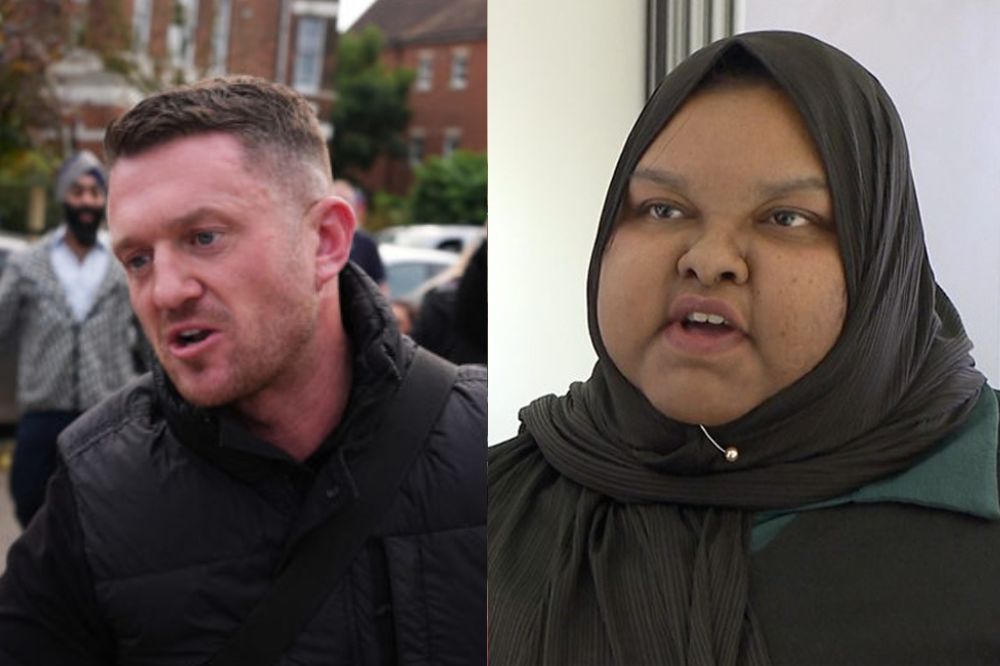
Judging from what I have seen of the racist thugs polluting our towns and cities, they are hardly in a position to criticise the appearance of anyone; don’t they ever look in a mirror? In the two images at the head of this article, the only ugliness comes from the yob on the left.