


Splitting the Vote?
Ben Wildsmith
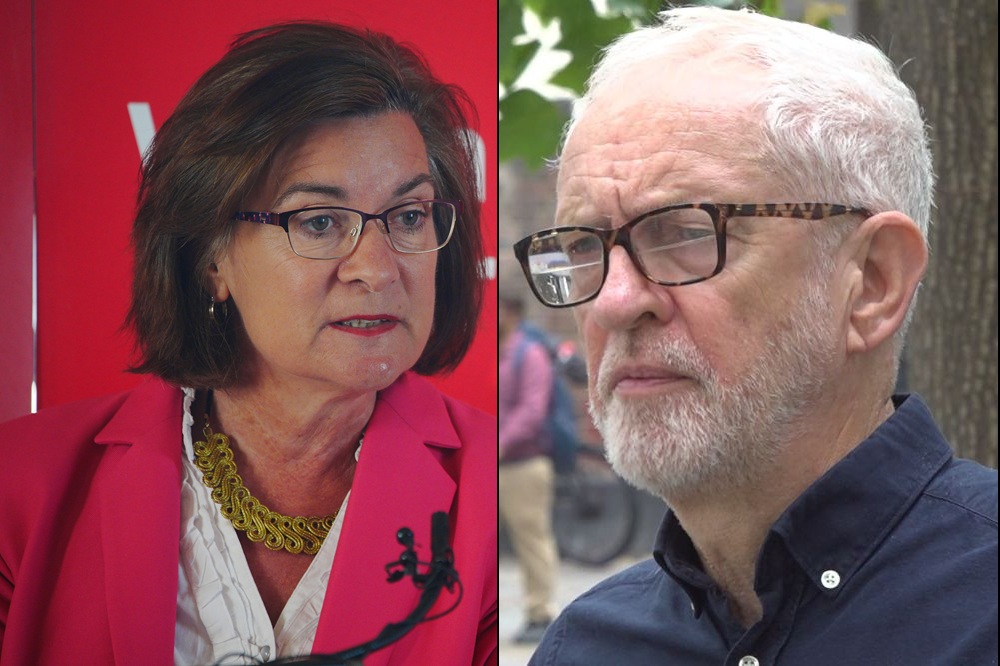
The emergence of a new party headed by Zarah Sultana and Jeremy Corbyn adds another layer of complexity to a UK political scene that is fragmented as never before.
Pollsters and commentators are scratching their heads trying to work out what this means for election prospects in the UK and Wales specifically.
The emergent narrative is that the new party’s emergence will benefit Reform UK. The rationale for this is that it will split the ‘left’ and leave an open field on the right where the Conservatives are assumed to be done for. My feeling is that, as regards Westminster, this thesis involves a deal of wishful thinking on behalf of the Labour Party.
Labour’s fond imagining is that it faces a contest with Reform UK in four years’ time and that anyone to the left of Nigel Farage can be spooked into voting for the government as the only way of preventing a Reform victory.
Dissatisfaction
However, only a year into government, dissatisfaction with Labour, and its leadership, is widespread and visceral. In the autumn, Rachel Reeves will likely need to raise taxes, whilst the economy continues to stutter, and inflation is outstripping pay increases. Neither the new party, the Greens, Plaid Cymru, nor the SNP bear any responsibility for this situation.
Labour, on the other hand, straitjacketed into austerity by rash fiscal promises, must carry the can for how the nation feels about its standard of living. With no economic miracle on the horizon, Labour may well not be holding second place as the next General Election approaches.
The managerial phase of UK politics has passed for now. As Tory voters have cleared their party off the pitch so that Reform UK can compete unambiguously from the right, it seems an equal and opposite reaction that the left should do likewise. Starmer’s Labour, which reflexively looks to the right when wooing voters may well find itself outnumbered to the left in short order.
Heightened passions
This is a time of heightened passions in our politics and attempting to straddle them isn’t going to work. Voters demand clear positions on the ownership of utilities, immigration, climate change, tax policy, and moral issues like Gaza and relations with Donald Trump.
How this new party decides to organise itself will have implications for us here. My understanding is that the party’s structure has been the subject of vigorous debate. Traditional socialists, particularly, I’m told, from Liverpool, prefer a traditional set-up with a nationally mandated policy offer. Others prefer a looser arrangement whereby the national party coordinates local organisations which subscribe to a looser set of values and objectives.
The latter model has found expression in the English Black Country, where former Labour councillors have formed the Black Country Party which is overtly socialist but focussed on local concerns. This approach, I think, could be useful in counteracting the ersatz English/British nationalism of Reform UK.
Localism is a powerful antidote to nationalism and offers familiar faces, accents, and culture in place of an inert flag. As Labour and Reform compete to display the most union flags, their opponents will be across the details of constituencies.
Zack Polanski, who is running for leadership of the Greens, has already signalled willingness to work constructively with the new party should he be elected. Such open-mindedness is politically wise whilst the party is yet to decide its modus operandi.
If the new entity can be persuaded that it will prosper as part of a progressive alliance, then an opportunity exists for other parties to negotiate red lines that have never been on the table with Labour.
For the Greens, cooperation would surely be dependent on environmental commitments. Plaid Cymru, meanwhile, would have a strong hand to play by insisting on enhanced Senedd powers, a fairer financial settlement, and the guarantee of self-determination for Cymru.
Disdain
Whilst much has been made of the English left’s disdain for independence, it has never been put on the spot and forced to assert English dominance. If it were to do so, that would be a powerful electoral tool for Plaid Cymru to use against it.
Respect for Celtic nationhood could be baked into this new alignment of the UK left at the outset. Contemporary concerns with decolonisation are a clear deviation from the post WWII iteration of socialism in Britain. The case for change is simple to make in that context.
Attempting to cooperate with this new party would have an ancillary benefit for Plaid. The party is believed by many to be too close to Labour, so close that it cannot represent change. A loose electoral arrangement with Labour apostates would go a long way to changing that perception.
If, on the other hand, no arrangement could be reached, then Plaid could credibly face the electorate touting independence as the only lever for change that we have left.
Reactionaries
However this plays out, the collective political gaze has shifted leftwards. The shameful state of affairs in which the stockbroker reactionaries of Reform UK have somehow posited themselves as the sole conduit for radicalism in England is being challenged. That must be a good thing.
With Labour seemingly hostile to its own government in Cardiff, let alone the rest of us, then the left here in Cymru needs people in England with which it can at least do business.
It seems that neither Labour nor the Conservatives are trusted by the ends of the spectrum they are supposed to represent. Plaid should be speaking loudly and immediately to everyone involved in replacing the old order.
At the outset of what’s to come, Welsh priorities must be clear to all.
Support our Nation today
For the price of a cup of coffee a month you can help us create an independent, not-for-profit, national news service for the people of Wales, by the people of Wales.



Anything that benefits deform is a rubbish result for Wales.
It’s own goal after own goal for the Labour Party in Wales. When they fall from power next year they will blame the voters, but as they have ignored any cry for change either about the NHS, homelessness, education , farming and the total dismissal of the 500,000 signatures on the 20mph blanket across Wales. Take some responsibility for your actions once,
Mrs.Morgan .
Those signatures came from 51 countries including the Vatican. Why should the Pope influence Welsh policy?
It is not splitting the vote. Labour are splitting the far right populist vote
The party with no name is a left wing populist party. They are splitting the Plaid Cymru / Green / Lib Dem vote, but at the same time giving actual unionist socialists a party to vote for