


Tea and tractors in Cardiff Bay
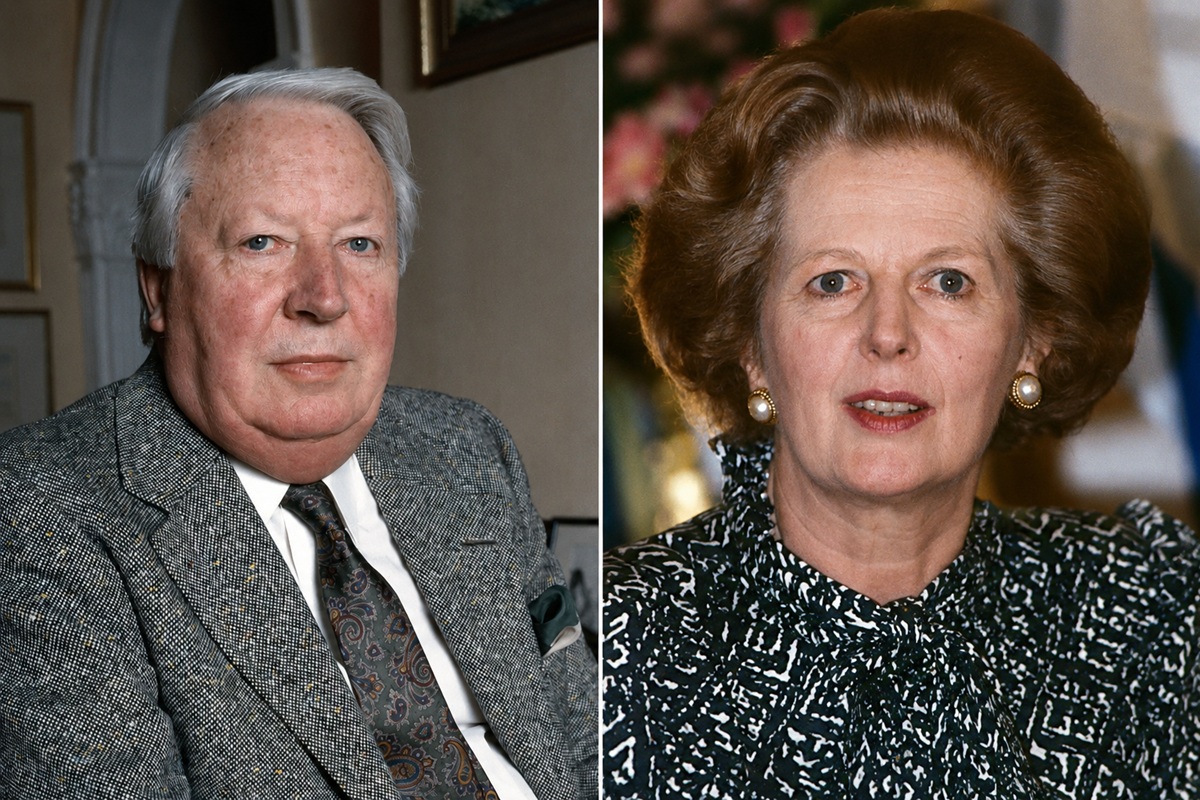
Reform’s Welsh agenda is a throwback to the early 1970s rather than the 1980s, Richard Kelly argues, and Welsh conservatives who admire Margaret Thatcher should stick with the Tories.
Parallels between Sir Edward Heath – Prime Minister between 1970 and 1974 – and Reform UK are not intuitive.
While the leader of Reform was vital to the 2016 referendum and the decision to ‘leave Europe’, Heath was a pivotal figure in terms of taking the UK ‘into Europe’ (via his government’s European Communities Act 1972) and the decision to stay put in the referendum of 1975.
And whereas Reform is rooted in Brexit, the former PM spent the last thirty years of his life being provocatively Europhile: revelling in the fact his government had involved us in the grand projet, brushing away concerns about sovereignty and democracy, while breezily endorsing the latest plan for greater European unity.
Here in Wales, however, it is useful to examine some of Heath’s reasons for being so communautaire, for they touch upon a curious overlap with Reform’s manifesto for the recent Senedd elections.
For those of us who keep an eye on conservative politics in Wales, this overlap is especially germane, as it provides beleaguered Welsh Tories with a fresh line of attack against their right-wing enemies (‘enemies’ being a fair word, Tories conclude, for a party hell-bent on destroying them).
In summary, Welsh Conservatives are poised to argue that Reform in Wales rejects the core principles of Thatcherism: principles that arose largely from Margaret Thatcher’s critique of the Heath government, following its defeat in 1974.
As Reform knows, many Welsh voters would applaud instantly any rejection of Thatcherism. Contempt for Thatcher’s governments (1979-1990) was especially deep-rooted in the industrial areas of South Wales and reached a peak during the miners’ strike of 1984-1985.
However, it is worth recalling that, at the 1983 general election, Thatcher’s Conservatives still won 37% of Welsh seats and were the most popular party in Clwyd, Dyfed, Gwynedd, Powys and South Glamorgan.
Furthermore, under Kemi Badenoch’s leadership, Thatcherite principles are gaining renewed traction in Conservative circles and could shape the party’s manifesto at the next general election.
But how, exactly, does Reform in Wales stand for the sort of conservatism that Thatcherites – ergo many of today’s Welsh Tories – reject? And how does this connect to the government of Edward Heath?
Edward Heath’s government was a prime example of the post-war consensus that Thatcherism denounced.
Central to this consensus was a faith in state welfare, higher public spending, ‘mixed’ economies and enlarged, ‘proactive’ governments. This, in turn, connected to Heath’s enthusiasm for European integration.
By the 1970s, both Heathites like Abertawe’s Michael Heseltine, and Labour Europhiles like Abersychan’s Roy Jenkins, argued that an increasingly transnational economy required a more supranational form of government: one that would allow greater and more effective intervention by politicians, and avoid any default return to the tarnished, laissez-faire practices of the pre-war era.
In response to mounting unemployment and industrial unrest, Heath’s government swiftly reverted to heavy state intervention and inflated public spending, prompting the first recorded use (in British politics) of the phrase ‘U-Turn’.
For example, having scrapped the previous Labour government’s ‘National Board for Prices and Incomes’ in 1970, the Heath government introduced its own ‘Price Commission’ and ‘Pay Board’ in 1972. Having abolished its predecessor’s ‘Industrial Reorganisation Corporation’ in 1970, Heath’s government set up an ‘Industrial Development Executive’ in 1971. And, having once commended privatisation and no support for ‘lame duck’ industries, Heath’s government nationalised the aero-engine division of Rolls Royce and channelled huge state subsidies into Upper Clyde Shipbuilders.
Given that these dirigiste policies had a less than successful outcome for both country and party – Heath’s Conservatives lost two general elections in 1974 – it was unsurprising that post-Heath Conservatism, as embodied by Margaret Thatcher, had a more neo-liberal character, stressing free markets and a smaller role for the state.
Economic impact
Thatcherism’s economic impact, of course, was contentious, not least in Wales. Yet its overall, electoral utility was beyond dispute: having lost all but one of the five previous general elections, the party’s new direction, as inspired by Thatcher, helped it win the next four.
As such, the current generation of young Welsh Tories – like Sam Rowlands, MS for Fflint-Wrecsam – are emboldened to argue that their party’s collapse after 2019 stemmed from ideological muddle and a misguided return to the ‘bigger government means better government’ philosophy of Heath and Heseltine.
Most of the Welsh Conservatives I meet still hold Margaret Thatcher in exceptionally high regard. By contrast, older Conservatives are usually hostile to the memory of Ted Heath – partly on account of his enthusiasm for the EU, but mainly because he spent three decades viciously denouncing Margaret Thatcher. (On hearing she had been ousted from Downing Street, Heath claimed he had “retired to the organ, exultant” and “loudly reprised Te Deum Laudamus”.)
Though disdainful of Heath, Welsh Tories are heartened to see that the party is now edging back to such Thatcherite ideals as ‘rolling back the frontiers of the state’ and ‘setting the people free’ (via tax cuts and deregulation), with a view to creating a ‘leaner and fitter’ bureaucracy.
Neo-Thatcherism
Equally significant is that the emergence of this new agenda – let’s call it neo-Thatcherism – may help Welsh Conservatives address the issue of how to put ‘clear blue water’ between themselves and Reform: an urgent, even existential, issue given that the Tories polled 19% fewer votes than Reform in the Senedd elections.
In this respect, the Tories believe they are much assisted by Reform’s Welsh manifesto and its eerie echoes of Heath’s doomed government.
For example, far from advocating the ‘rolling back’ of Senedd government, Reform seemed happy to extend it with a plethora of new government agencies; an exercise that recalled Heath’s 1970 White Paper, The Reorganisation of Central Government (said to be a template for Reform’s Danny Kruger), and the various mega-departments it created, notably ‘Environment’ and ‘Trade and Industry’.
Indeed, at the heart of Reform’s state-fattening project was a new ‘Minister for Industry’, who would orchestrate ‘a full Welsh industrial strategy’: a political version, it seemed, of Life on Mars, where the fashions of 1973 shockingly resurface.
Welsh farming would also be subject to the grand, neo-corporatist designs favoured by Heath’s government. Reform’s ‘ten-year food strategy’ would be ‘underpinned by legislation’, ensure ‘farm to fork supply chains’, and treat ministers and farmers as ‘partners in delivery’. In short, whereas Heath offered (what journalists called) “beer and sandwiches at Number Ten” to the TUC, Reform seemed to offer “tea and tractors in Cardiff Bay” to the NFU. It was therefore predictable that, instead of echoing the Tories’ (neo-Thatcherite) promise to scrap Wales’s ‘tourism tax’, Reform should prefer a new ‘Minister for Tourism…with cabinet status.’
In view of its statist plans for Wales, it seems that Reform’s support for nationalising steel, along with its Red Wall-leaning commitments to higher public spending, are not just glitches within an otherwise Conservative (let alone Thatcherite) project.
A pre-Thatcherite mindset
Instead, Reform seems to exhibit a pre-Thatcherite mindset – one that rejects those currently in charge of ‘big government’, but not ‘big government’ per se. This has not gone unnoticed by either Kemi Badenoch or the Welsh Conservatives.
At the 1970 general election, Ted Heath’s manifesto offered voters A Better Tomorrow. Last May, however, Reform seemed to be offering Wales a better yesterday, with scant regard for the dismal record of Heath’s administration.
Welsh Conservatives are now concluding that, if they too are to draw upon a previous Tory government, they may as well choose one that was more successful – not least among Welsh voters.
Richard Kelly is a lecturer in adult education, author of Conservative Party Conferences: The Hidden System (Manchester University Press) and a co-author of Conservative Century: The Conservative Party Since 1900 (Oxford University Press).
Support our Nation today
For the price of a cup of coffee a month you can help us create an independent, not-for-profit, national news service for the people of Wales, by the people of Wales.
Get more trusted Welsh news
Choose Nation.Cymru as a preferred source in Google News to see more of our journalism.



Can’t be a Brexiteer and a Thatcherite. No-one did more to sabotage us leaving than the one who made sure we had nothing to sell to the world as a Global Trading Nation.
This author must be trying to finish the the Tories off. He knows that a critical mass of them still salivate over the Thatcher narrative, confusing the neo-liberal sugar rush at the end of the 20th century with sustainable growth. In many ways that’s what the Conservative Party has become, a Thatcherite cargo cult. They try to find priestesses who can dress, sound and act like Thatcher to summon back her spirit. It is not possible to be right wing in any real sense in the liberal Boomer truth regime, which occupies the minds of older Tories. The best they… Read more »
An interesting analogy between the economic policies being formulated by the Conservative Party with Thatcherism and the indeed curious similarity of some of Reform UK’s pronouncements with pre-Thatcherism. But an analogy is all it is, and probably not a useful one for either party. Other than claiming she shares the Iron Lady’s determination; Mrs. Badenoch seems uncomfortable with comparisons. Thatcherism in Wales is associated with a brutal de-industrialization. Ted Heath is the man who took the UK into the EEC on 1st January 1973. That alone would damn any analogizing in the eyes of Faragists and Brexiteers.