


The campaign is over. Now comes the hard part: A former minister on what governing Wales really takes
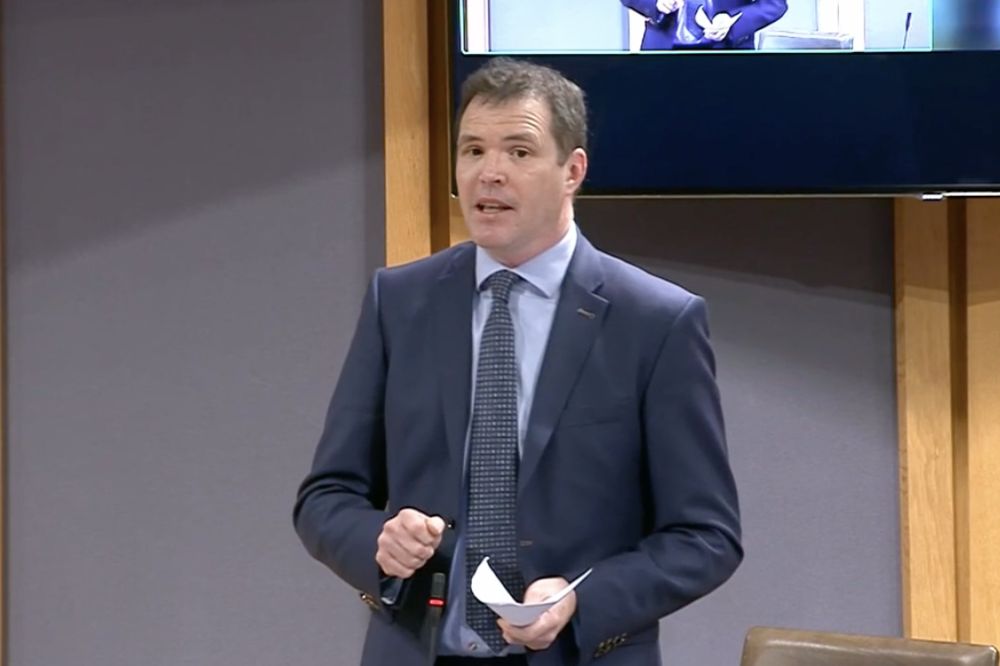
Lee Waters
So, the campaign is over – and now comes the hard part; If you think forming a Government is tricky, try running one in the age of the Polycrisis!
There are multiple crises all happening at the same time, and the Welsh Government has neither the levers, capacity, nor financial firepower to make more than a dent in any of them. But don’t worry, this is not a counsel of despair. It’s a case for focus.
So, what can be changed, and what is out of the control of an incoming Welsh Government Minister? I am neither religious, nor an addict, but during my decade in politics I turned more than once to Reinhold Niebuhr’s ‘Serenity Prayer’: ‘God grant me the serenity to accept the things I cannot change; courage to change the things I can; and wisdom to know the difference’.
First off, we need to acknowledge the stark reality – times are hard and aren’t going to get better anytime soon. The extra funding the Welsh Government can expect over the next five years amounts to just 0.7% extra every year in real terms. And grimmer still, the budget for building things is set to fall by almost 9% in real terms over the course of the Senedd term.
If you think that’s bad, remember that while the money is tight the demand for public services keeps growing. NHS spending has been growing at 3.6% a year and Ministers will find it hard not to match increases in health care made in other parts of the UK. That means other parts of the Welsh Government budget will be squeezed to allow health to meet growing demand. The analysts at Cardiff University’s Wales Fiscal Analysis team have calculated that spending other than health will have to be cut by 2.7% every year of the coming Senedd term.
And on top of that there’s the yet unknown (but expected) impact on inflation and economic growth of the energy shock caused by the closure of the Strait of Hormuz.
So, against that backdrop how can any incoming set of Ministers meet the mood for change? How can voters feel an improvement in the services they receive by the time of the next elections in four years’ time?
I’ve been working with a team at digital specialists Perago in Swansea to dig into their experiences of working with Welsh public services over the last decade to come up with some constructive and practical suggestions to help the new team of Ministers with their challenges.
There are no magic bullets, but even with tight budgets there are things that can be done to make services better. Admittedly these are marginal gains, but they aid efficacy of what Government is trying to do as well as its efficiency.
Sweat your assets
When you haven’t got more to work with the first question to ask is ‘how can we make better use of what we’ve already got?’
Let’s take one example of where there is duplicated effort. Each of Wales’ Local Authorities administers its own Council Tax Reduction Scheme. The Council Tax Benefit offers a discount on bills for around 261,000 low-income households. Each of the 22 Councils implements its own version of the same scheme, even though the eligibility criteria are set centrally by the Welsh Government.
And these are Councils that are struggling. The Auditor General for Wales has warned that “one or two” councils are very close to bankruptcy, and the Wales Centre for Public Policy says the current model of local government is “no longer sustainable”. While there is no consensus on a whole system change Perago’s Strategy and Transformation Director Tim Daley offers up an uncontroversial candidate to make better use of what you’ve got.
From its HQ in Merthyr the Welsh Revenue Authority has proven itself as an efficient tax collecting body. The arm’s length unit set up by the Welsh Government to handle its new tax raising powers already collects Stamp Duty (Land Transaction Tax) and Landfill Disposals Tax for the whole of Wales. So why not get it to do more?
Doing this ‘once for Wales’ would not just be a cost-cutting exercise but would help better co-ordinate a Welsh tax and benefits system by looking at policy and operations together, rather than in sequence. Based on deep experience of working in changing the way public services work Tim Daley, Strategy and Transformation Director at Perago, explains in his piece “It means users, policymakers and operators looking at the same system, with the same data in front of them, asking the same question early: will this actually work when it reaches the person it is meant to serve? That is not glamorous work. It does not generate press releases. It is the work that makes the press releases true.”
Reduce friction
Most of the spending on public services is spent on hiring staff. Incoming Ministers are going to struggle to hire many more in current conditions, so how do we make the most of the public servants that we have?
The potential to free up frontline staff from routine tasks to be able to focus on more complex cases is untapped. The success five years ago of Caerphilly Council in redirecting the efforts of its catering service from administering forms to helping on the frontline by automating the process for applying for free school meals still hasn’t been scaled. It needs to be done, and the approach has wider potential too.
An obvious candidate is easing teacher workload and giving them their Sunday’s back. Teachers in Wales work an average of 56 hours a week so it’s not surprising nearly three‑quarters say they have seriously thought about quitting in the last year. AI has been shown to free up teacher time by helping with routine admin tasks, and many schools now use digital tools for tasks such as lesson planning. But as Estyn has recognised there needs to be a coherent national approach to AI in schools.
But let’s not get carried away by the hype – the devil is in the details. The software being used by teachers across Wales is not designed for the Curriculum for Wales. As digital specialist Chris Elias has highlighted, a Welsh teacher using tools built for the National Curriculum for England, for US Common Core, is doing the bridging work themselves, in their head, on top of everything else. And at around £7 per teacher per month Welsh schools could already be spending £1 million a year on AI software that is simply displacing one task with another.
Every party in the Senedd campaign pledged to cut classroom paperwork but to make the pledge effective there needs to be attention on the infrastructure needed to get the potential out of the technology – this applies to other public services too.
Wales led the way in creating Hwb, the national online platform for schools which offers free tools such as Microsoft 365, Google Classroom, and bilingual learning resources. It not only saves money by covering the software use with one centrally bargained licence, but it reshapes the way services are delivered too. As Chris Elias puts it, “Being asked first what learners should take away from a lesson shift planning from coverage to purpose, connecting intent to curriculum in a way that feels supportive rather than bureaucratic. Planning sharpens. Sunday evenings quieten”
This shows what’s possible when digital tools are built for the system they serve. The question is whether Wales builds the infrastructure to scale this approach—or leaves teachers or other public servants to keep bridging the gap alone. AI designed for Wales could free up time, improve retention and sharpen practice. A new government may agree with that in principle, but delivery depends on having the right digital capability and system wiring in place. Ambition alone will not be enough.
Turn a potential crisis into an opportunity
We should 100% harness productivity tools. But let’s not be native, AI is not just an opportunity, left unharnessed it is also a threat.
Approximately 30,000 people in Wales work in call centres, with towns such as Swansea heavily reliant on service‑sector employment. Advances in AI are now rapidly automating routine service roles, placing those jobs under threat. The roles created to absorb the losses of deindustrialisation are now facing disruption themselves.
This tension, between past economic strategy and present technological momentum, sits at the heart of the challenge confronting the next Welsh Government.
A short-term dash to automation risks undermining long‑term economic value to organisations. Workers in contact centres aren’t just call-handlers, they know the business and the customers better than any algorithm. They understand what callers really mean beneath the words they use, and where public service systems break down in practice. They hold ‘domain expertise’ that takes years to accumulate and underpins trust, service quality, and organisational resilience. They also know how to calm a situation before it becomes a complaint, and which cases need a human and which don’t.
This ‘tacit knowledge’ can’t be taught in a training module or captured in computer code. It’s built through thousands of conversations, over years, and it lives in the people who’ve had them. As AI takes on simpler routine calls, the remaining work becomes harder and more emotionally complex – exactly where human judgement is most valuable. Handled well, this concentrates value. Handled badly, the very knowledge needed to make advanced systems work is lost, lowering service quality and increasing costs downstream. When organisations shed that workforce too quickly, they are not just reducing headcount; they are liquidating productive assets.
Not every worker will transition smoothly. Some roles will disappear, and not everyone wants or can pivot into more complex positions. Because public policy helped create these jobs, government has a responsibility to support those affected. Options like retraining, transition funds, shorter working weeks, or income guarantees are difficult – but so is absorbing the social and economic costs of unmanaged displacement.
Call centres are just the first test case. Retail, logistics and professional services will follow, with the same choice each time: cut costs fast or preserve hard-won knowhow. As Emma Northcote, Head of Research and Engagement at Perago, puts it, “The coming decade will shape Welsh communities for a generation. Treating AI as a knowhow challenge, not just a cost‑cutting exercise, offers a path to a fairer and more resilient future.”
Incoming Ministers will need to make proactive moves to chart a course to put us on that path. The problem may not yet have maximum viability but it’s coming, and the window for intervention is already closing.
A proactive and ethical approach to automation which values the know-how of staff could help sharpen Welsh public services and show how age-old Welsh values we’ve spent a long-time sentimentalising can be applied in the AI age.
Governing in prose
The saying of the former New York Mayor Mario Cuomo has now reached the status of cliche, but there’s a reason for that: it’s true that ‘You campaign in poetry. You govern in prose.’
In the constrained choices of the age of the Polycrisis the poetry has become more than a little strained, but the need to focus on the drier task of policy design and implementation is more important than ever. I took a close interest in digital when I was in Government not because I am interested in tech (I am not), but because of the discipline that digital culture applies to service design to put the needs of the end user at the centre. Think about how you as a consumer experience service from Amazon versus your experience with your local council or school.
“There’s plenty not to like about the digital giants, but whatever you think you cannot deny that they have reset expectations of how responsive services should be. And if we want public services to keep on serving the public we must ensure they don’t fall behind. As Perago’s Head of Service Design Omar Idris, says in a must-read piece, “Wales deserves more than announcements about doing things differently. It needs the conditions that make different things possible, then the will to back them properly”.
It is hard being in Government, and the challenges facing the incoming Welsh Government are undoubtedly tough. And Ministers need the wisdom to know where they can make the difference.
Lee Waters is a former Welsh Government Minister who created the podcast series ‘Y Pumed Llawr – The Fifth Floor’. He is an Associate at Perago.
Support our Nation today
For the price of a cup of coffee a month you can help us create an independent, not-for-profit, national news service for the people of Wales, by the people of Wales.
Get more trusted Welsh news
Choose Nation.Cymru as a preferred source in Google News to see more of our journalism.




great Article. To me, the election has shown wales is getting poorer, sicker, older, more reliant than ever on cash transfers from south east of England – and, really, no party has an answer to those challenges – and don’t want to admit they don’t! I hope your former colleagues work with positively with plaid – they should also want this plaid government to suceed. The future funding of the senedd- I’m amazed this wasn’t discussed more. To pay for the extra childcare and surgical hubs and WDA mk 2 at a time when budgets are effectively being cut seems… Read more »
Perhaps what we should all be asking is, is there a different economic model that would benefit Wales? All the parties currently are following an out of date formula more suited to the last century.
Rhun will need to be upfront about the financial constraints without depressing the population. (see Keir Starmer and Rachel Reeves on how not to do this).
You didn’t fight hard enough for the £5b owed from HS2 but settled for far less spread over 10 years. Neither did you fight hard enough to keep part of the profits from the Crown Estate in Wales. Scotland and Northern Ireland have all these things. Why does Wales always have to be a second class citizen. That’s why you lost. All this money would more than pay for the extra childcare and surgical hubs. You seen to have purposely kept Wales poor and reliant on England.
I couldn’t agree more, so called Welsh Labour have kept Cymru in a box because of their allegiance to the British Labour party and British state. Only independence will secure the long term prosperity of Cymru.
I think their biggest mistake under Starmer was Port Talbot. Central government needed to be looking 30 years ahead and realised green primary steel was essential to the UK’s national security. London Labour had the opportunity to turn PT into a world leading green primary steel producer, securing both PT, Welsh industry and the UK’s national security. Instead they fell over themselves to keep pursuing the Tory pro carbon faux green self harm agenda, blinded by a weird desire to keep Wales in a box.
Is Perago a Welsh version of the infamous outsourcer Capita? Is the WG outsourcing public services because it doesn’t know what it is doing? I think the Welsh people should be told.
It seems to be a local Swansea company, look it up on Companies House, Perago-Wales Ltd.
But the basic thesis seems correct, we have been screwed but bigger forces.
This is from their About Us section on their website. We have expertise in user centred design, delivery and communications and the experience to deliver projects across a variety of sectors. By combining our team with yours we deliver outcomes rooted in business and user need. There have been many studies on “Commercialese” over the past few years, and it is essentially its own language that is originally derived from the USA’s propaganda during World War II. It removes the emotion from what is being said and is intentionally non-committal. I believe that it contributes somewhat to what has become… Read more »
There’s a big difference between consultants who advise and outsourcers who do the actual work.
Really hope Rhun and Plaid can a make a difference.
Cutting costs will be a target for this Plaid government but what we need is complete control of our tax revenue. The full amount of what comes into the Welsh coffers should be ours to tax appropriately. At the moment I believe we are not getting the full tax revenue amount, generated by Cymru, from HMRC – just the scraps. It’s the primary reason why the British government will not devolve taxation fully – it would lose money. As hard as it may be, a full budget breakdown needs to be made fully public (after whatever saving can be made… Read more »
This report tells us he’s now an “associate at Perago” which is a Cardiff based political lobby and management consultancy organisation. Well Well. It’s didn’t take long for ex-Labour MSs to get onto the band-wagon did it? The ballot boxes have only just been put back into the store cupboard, Mr Waters.
You might want to do your research
You mean you were moonlighting long before the election, while in still in office, when pretending to be a working MS for my constituency or that your new appointment has an office in Swansea? Still, no more trips back to Llanelli after you moved to Penarth.
Second jobs aren’t banned?
Never had a second job when I was elected, and all my interests (I.e none) were declared:
https://senedd.wales/media/0w3nlmfm/register-of-interest-sixth-senedd-as-on-17-september-2025.pdf
Wasn’t suggesting you did. Only pointing out that if folks are going to go around accusing people of wrongdoing it needs to be genuine wrongdoing they’re accusing them of.
Get a life.
I note that he still hasn’t answered your question. Interesting.
So you’re not? Cmon, tell the truth.
Is this an article or a business proposal?
We need to spend on frontline staff to fill potholes and be hands on not more backroom geeks.
I have read comments on here over the years and we live in a Democracy so people are entitled to their own opinions but there are some people who actually support Tory Liebour or Reform they do not come out and say it directly but its the contents of theie comments Wales must leave the U K and find its own Destiny
Some decent ideas, but many are hardly new? The missing bit is the following: do we really need 22 councils and half a dozen regulators to monitor them? Do we need seven health boards and numerous other health related organisations? Do we need 255 Welsh government sponsored bodies? Do we need commissioners for this, that and the other when it should be Welsh government’s job. It’s all costing a huge amount of money and taking that cash away from the front line.
Why do they need to be new? Good ideas are still good ideas until they’re implemented or looked into and found to actually be bad ideas.
They don’t need to be new, I agree. My point is that if they were that good, why haven’t they been implemented already?
The world doesn’t work like that. The status quo is very comforting for many, especially those that benefit from it.
That’s precisely why Plaid needs to be bold. Labour, despite all the “progressive and radical” rhetoric, were anything but. The difference is that Plaid will have a lot less than 27 years to demonstrate results.
None of this adresses the elephant in the room: taxing the very rich and global corporations properly. Also, introducing a financial transaction tax of a very small amount on every financial transaction would generate substantial amounts, and abolishing the corprate welfare that see around £150 billion each year bunged to for profit companies.
The idea that there is no money is a bare faced lie, and we should stop buying into neoliberal arguments we are constantly being gaslit with.
Who/where are the very rich and global corporations in Wales?
Precisely. Wales doesn’t have the companies or high earners to tax. The hard left just can’t grasp the fact that we need to do all we can to attract businesses to Wales (slash business rates, Corp tax etc) which brings high earners and therefore tax receipts.
Not the way to go. Wales needs to build resilience for its agriculture and energy sectors. Outside investment has always proved fickle, Tata Steel etc. When the profits slow, they leave. Depending on high earners to pay their due hasn’t worked up to now, especially as it is the corporations making the huge profits.
So where does the money come from?
Merge the higher and additional income tax rates into a single Welsh superrate of 42%. This initially raises more revenue mainly from senior public servants but also means Wales has the lowest top rate of tax in the UK which attracts Premier League footballers to Wales, leading to a much bigger jump in revenues.
For one off the top of my head are Tata, a massive worldwide company.
Another RWE who own Pembroke Power station. Airbus.
Indeed – and if you tax them hard enough, they will go worldwide – ie. somewhere else. Wales has only one FTSE company headquartered here.
Tata have threatened to close Port Talbot regularly over the past decade. Yet they still haven’t.
RWE are unlikely to close the cash cow that is Pembroke Power Station and I doubt Airbus would close their plant either. There has been too much investment in it to make that an option.
Stuff like this is only possible in a large global alliance. Unfortunately The billionaire’s best friend Jeremy Corbyn made sure the EU couldn’t do it by getting us out.
A group of the Celtic economies having a trade agreement with the EU might be the answer. Corbyn did us no favours.
Only the EU has the collective “might” to do it without sending business to a competing jurisdictions. Without London it became more difficult because this creates competing jurisdictions in the same region.
I do believe that David Cameron led the Remain Campaign. Why aren’t you blaming him?
Or Starmer who was Shadow Brexit secretary who pushed for the second referendum to be added to the Labour manifesto on 2019. Or how about the deputy leader of the Labour Party, Watson, who was then given a peerage by Johnson help it be introduced as well.
There’s plenty of blame to go around but here I’m blaming the Leader of the Opposition for using that position to support billionaires at the expense of ordinary working people. He had the opportunity to block Brexit by properly opposing it and he chose not to because sharing a platform with Cameron would make him look uncool on the socials.
When did Corbyn support billionaires?
That statement is both false and laughable.
You obviously have an issue with Corbyn as you seem to blame him regularly for issues that are completely untrue.
Corbyn enabled Brexit. Brexit benefits billionaires. Ergo, Corbyn supports billionaires.
A tax on all financial transactions is utter nonsense. We all make scores of financial transactions every day. It would just hit the poorest.
It depends on the rate. 1p in every £100 wouldn’t be noticeable to ordinary folk and would likely be absorbed.
I think that might just be on share trading?
It needs to be all transactions. It’s called a Tobin tax. At 0.01% it’d be just 1p in £100 but would raise £100,000 on a billion pound transaction.
But cost how much to implement?
Minimal for taxpayers. Just pass a law requiring it and all financial institutions will start writing cheques to HMT, and set up a compliance team like any tax.
I take it you don’t understand how much it cost to implement any tax changes.
Plus taking just £100000 from every billion is meaningless. That wouldn’t even cover the cost of the wages of the people processing the tax collections.
Now who’s supporting billionaires.
Here’s hoping that Welsh Independence has got a tiny bit closer. Lee Waters is right in that we need to “sweat our assets” like never before to prepare for the day when a fundamentally different type of economy from England can survive alone. It is high risk and will take years to achieve, but the alternative is not sustainable.
I do hope Perago are investigated as I would like know more about their role with WG, why they are needed etc. We pay a lot of taxes so it’s not too much to expect the WG to be able to do it’s job without consultants. Be good to know more about Lee Waters’ role too. Is it lobbying to influence WG policy, contracts etc? Is it private sector consultants trying to get their teeth into the NHS etc?
Have a look at their website. They are are Swansea based SME of digital experts who instead of going to London to work (where there is high demand) they want to help make a difference in Wales. I have a track record on working on digital reform and am doing some consultancy with them to help.
Sorry Mr Waters, but if you are using your influence to win Perago contracts with local authorities, WG etc then we (the taxpayers) deserve to know. I am sure that, considering the massive amount of tax we pay, we should also question why the WG, councils etc are so bereft of basic skills that they need to outsource to the private sector. The floor is yours…I won’t hold my breath.
The basic skills have been cut to the bone due to inadequate funding by central government to Wales and subsequently from the Sennedd to local authorities. 14 years of tory austerity then the continuity of the same policy by Nu New Labour 0.2 have ensured that.
You should absolutely question why the public sector have failed to develop digital skills. I tried very hard to get them too. Perago have a track record of working alongside them to help inculcate a digital culture within, not to create a dependency on consultancy