


The country that gave me safety deserves the truth
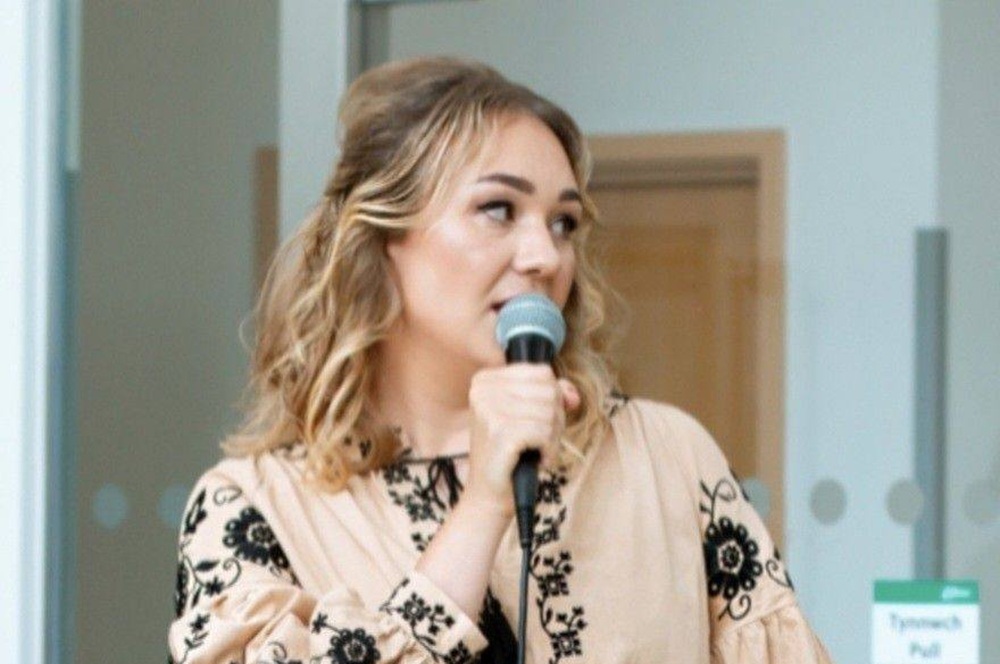
Yuliia Bond
Tomorrow, the Senedd will debate the future of the Nation of Sanctuary. I did not expect this debate to come so early in the new Senedd term.
Like many people, I assumed the first months would focus on the NHS, education and the economy. Instead, one of the first major debates has become about a policy that I have spent months explaining to people. Not because I work for the Welsh Government, and not because I belong to a political party, but because I am a Ukrainian refugee who has somehow found herself explaining Welsh Government policy to Welsh people.
If someone had told me four years ago that this would become part of my life, I would have laughed.
When I arrived in Wales after Russia’s full-scale invasion of Ukraine, politics was not my priority. Survival was. My children had lost their home. My family remained in a war zone. Like thousands of Ukrainians, I wanted something very simple: safety, stability and the chance to rebuild our lives. I wanted to learn how Welsh society worked, contribute where I could and eventually give something back to the country that had welcomed us.
That, to me, is what integration means.
Over the past several months, however, I have watched something that has deeply concerned me. Again and again, I have seen the Nation of Sanctuary discussed as though it were an immigration policy. Again and again, conversations about asylum, borders and illegal immigration have appeared underneath discussions about a Welsh integration strategy. Those are different policy areas. Immigration is largely decided by Westminster. The Nation of Sanctuary is about how Wales supports people who are already here through services that fall within devolved responsibilities.
Disagree with the policy if you wish. That is democracy. But disagree with the policy that actually exists.
That is what I have found most surprising throughout this debate. It has never been the disagreement itself. Healthy democracies depend on disagreement. What has surprised me is how often I have had to explain what the policy actually is before people could even begin debating it.
I have spent evenings answering hundreds of comments, writing articles, speaking to journalists and trying to explain complicated policy in ordinary language. Sometimes people genuinely wanted to understand. Sometimes they thanked me for explaining. Sometimes they disagreed respectfully. But there were also many occasions where people confidently criticised a policy they had never read.
I remember laughing one evening while replying to comments online. The thought crossed my mind: How on earth did I end up explaining Welsh Government policy to Welsh people at midnight?
Trust
It was funny. But underneath the humour was sadness. Because democracy depends on trust.
Most people will never read government strategies or legislation. They rely on politicians, journalists, campaigners and public figures to explain policies honestly. That is completely understandable. People are busy. They have families, jobs and responsibilities. They cannot spend every evening reading official documents.
That creates a huge responsibility for anyone who speaks publicly about policy. Words matter because people trust them.
If a policy is repeatedly described as something it is not, many people will naturally believe that description. Not because they are unintelligent, but because that is how public debate works. We all rely on shortcuts. We all trust people we believe are informed. That is why misinformation matters.
The longer I have lived in Wales, the more I have realised that this debate is no longer simply about the Nation of Sanctuary. It is about something much bigger. It is about whether facts still matter in public life. This experience has also taught me something unexpected about myself.
For the first time since arriving in Wales, I realised I no longer care about politics here simply because I am a refugee. I care because Wales has become my home too.
When I see misinformation spreading, I no longer think only about how it affects displaced people. I think about what it means for Welsh democracy. I think about the standard of public debate. I think about the society my children are growing up in. That surprised me.
Caring
Perhaps integration is not simply learning English, finding employment or understanding public services. Perhaps integration is the moment you begin worrying about the future of the country that welcomed you. Perhaps integration is caring enough to defend democratic standards because you now see those standards as yours too.
That has been one of the biggest personal lessons from this experience.
Another lesson has been understanding fear. At first, many of the comments I received made me frustrated. Some people wrote about refugees as though we were statistics rather than human beings. Others repeated claims that simply were not true. My first reaction was often to argue. With time, I realised something more complicated.
Many people are not motivated by hatred. They are motivated by uncertainty. They worry about housing. They worry about public services. They worry about the future. Those concerns deserve honest discussion. But they also deserve honest information. Fear should never become a substitute for facts.
If public debate begins with misinformation, everyone loses. Refugees lose because they become the target of problems they did not create. Voters lose because they cannot make informed democratic decisions. Politicians lose because meaningful policy debate becomes almost impossible. Ultimately, democracy loses.
Perhaps this is why this debate has affected me so deeply. I have already seen where propaganda and misinformation can lead.
False narratives
In Ukraine, I watched years of false narratives being used to justify hatred and eventually violence. I am not suggesting Wales is Ukraine. They are completely different countries with different histories.
But one lesson I will never forget is that—Truth matters long before a crisis begins. Democracy is not weakened overnight. It is weakened gradually, whenever facts become less important than slogans.
Whenever narratives become more important than evidence. Whenever people stop asking simple questions. There is another reason why online criticism does not frighten me.
During the first weeks of Russia’s full-scale invasion, I travelled through checkpoints to keep a manicure appointment.
A soldier stopped me.
“Where are you going?”
“For a manicure.”
He looked at me in disbelief.
“The war hasn’t been cancelled,” I replied.
Neither had my appointment.
Looking back, I understand it was never really about my nails. It was about refusing to let fear dictate every decision.
Compared with air raid sirens, shelling and uncertainty, hostile comments on social media simply do not carry the same weight. If anything, they strengthen my determination to continue explaining difficult subjects in language ordinary people can understand.
Tomorrow, the Senedd will debate the Nation of Sanctuary. Some people will support it. Some people will oppose it. That is entirely legitimate.
Honest
My hope is simply that the debate begins with an honest description of what the policy actually is. Because this has never been only about the Nation of Sanctuary. It has become a reflection on the kind of democracy we want Wales to be.
I care deeply about Ukraine. I want my country to become the country its people deserve after the war ends. But I have also come to care deeply about Wales.
I want Wales to remain a country where disagreement is welcomed, where facts matter, where people challenge one another respectfully and where political arguments begin with honesty rather than confusion.
Before the war, I believed home was a place. Today I believe home is also a responsibility. It is caring enough to protect the values that make a society worth belonging to.
Because when you have already lost one home, you understand better than most how precious the next one truly is.
Support our Nation today
For the price of a cup of coffee a month you can help us create an independent, not-for-profit, national news service for the people of Wales, by the people of Wales.
Get more trusted Welsh news
Choose Nation.Cymru as a preferred source in Google News to see more of our journalism.



Diolch Yulia! Cymru is blessed by your presence!
Ironically enough, you won’t find many of Cymru’s people against this. The majority of those speaking against the nation of sanctuary aren’t even from this country. Unfortunately the misinformation, propaganda and hate speech dominates their news sources. As you mentioned, they do not have the correct information. Unfortunately there are certain mind sets that will not even consider changing their thinking based on new and accurate information. For Cymru to make progress we need to get rid of the anglocentric mindset out of politics, it’s incredibly damaging. Cymru has a place for Ukrainians and you can always call this home.… Read more »
well done, Yuliia. The vast majority of the people in Wales support your country and our nation of sanctuary policy. Keep up the good fight- with your pen!
Cymru needs more decent people like Yuliia Bond, who has contributed more to our country and society than Reform UK’s Dan Thomas ever has or ever will. Da iawn, diolch, Yuliia. 🏴🤝🇺🇦