


The future of farming in Wales is vegan
Dr Carys Bennett
Wales’ biggest boasts include our gentle spirit, stunning natural scenery, and farming roots. But like many others, I feel shame at living in a country now dominated by cruel and destructive animal agriculture.
If we want to preserve our reputation for kindness and restore nature across our mountains, the government must support farmers to quit unethical farming for good.
Thanks to relentless humane- and greenwashing by the National Farmers Union (NFU) Cymru, animal farming is granted a false halo.
Disingenuous welfare labels like RSPCA Assured, Red Tractor Certified, and “free-range” are designed to soothe consumers’ consciousness.
Decades of misleading marketing spin have normalised the abnormal, but countless damning cruelty investigations and volumes of climate research prove this is just desperate gaslighting.
“Back British Farming Day” (September 11), run by the NFU, is the perfect time to object to cruel animal agriculture and champion the hardworking growers who feed us without harm.
Land use
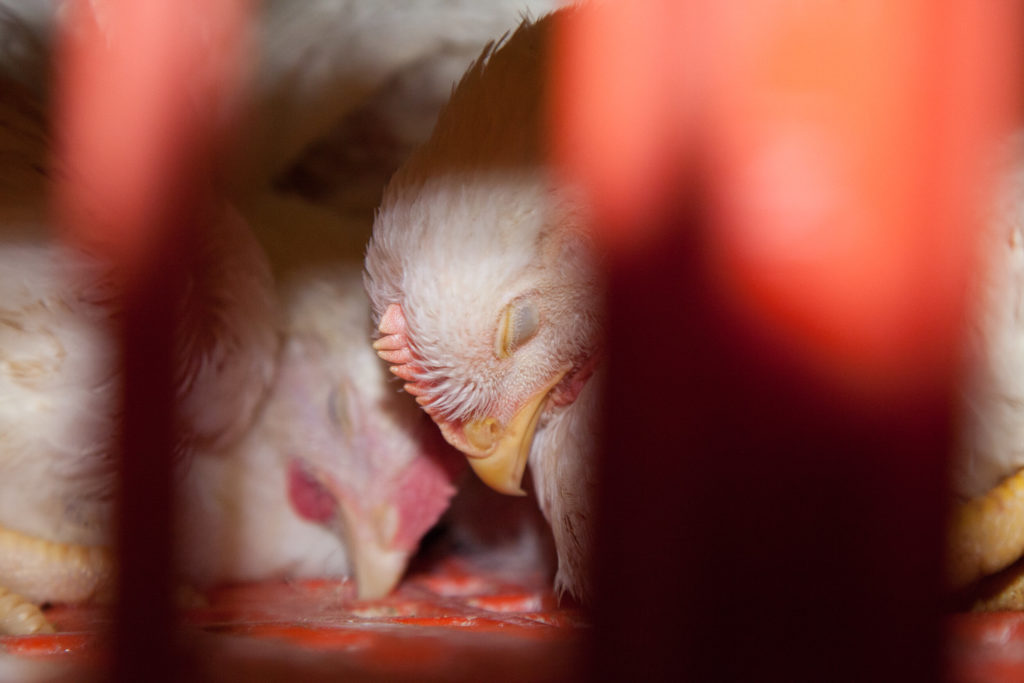
Agriculture occupies 90% of Wales’ land, primarily to raise sheep and cows for their flesh or secretions (meat and milk). Wales also confines 25,000 pigs in farms, and is a hotbed of intensive chicken units that cram 13 million birds in dark, filthy sheds amongst their own waste.
Unnaturally bred to grow super-sized, these clever, social birds are denied even simple pleasures, usually glimpsing their first rays of sunshine en route to slaughter.
PETA’s new website, BritishFarming.org, reveals the grim reality animals face in the farming system, including the abuses considered “business as usual”.
Last year, an inspection of Cildywyll Farm, Carmarthen, revealed severely ill pigs, animals living among carcasses, and emaciated dogs.
Just this month, Somerby Top Farm in Lincolnshire was exposed for smacking pigs with paddles and beating a sow with a metal bar while she screamed. Both farms were Red Tractor Certified, proving—just as the cruelty uncovered by Animal Rising at 45 RSPCA-Approved farms last June did— that welfare assurances mean nothing.
It’s not a case of “a few bad apples”. Many abuses of farmed animals are routine. Mother pigs naturally “sing” to their nursing piglets, but forcing a pregnant sow into a cage so small that she can’t even turn to meet her babies is legal.
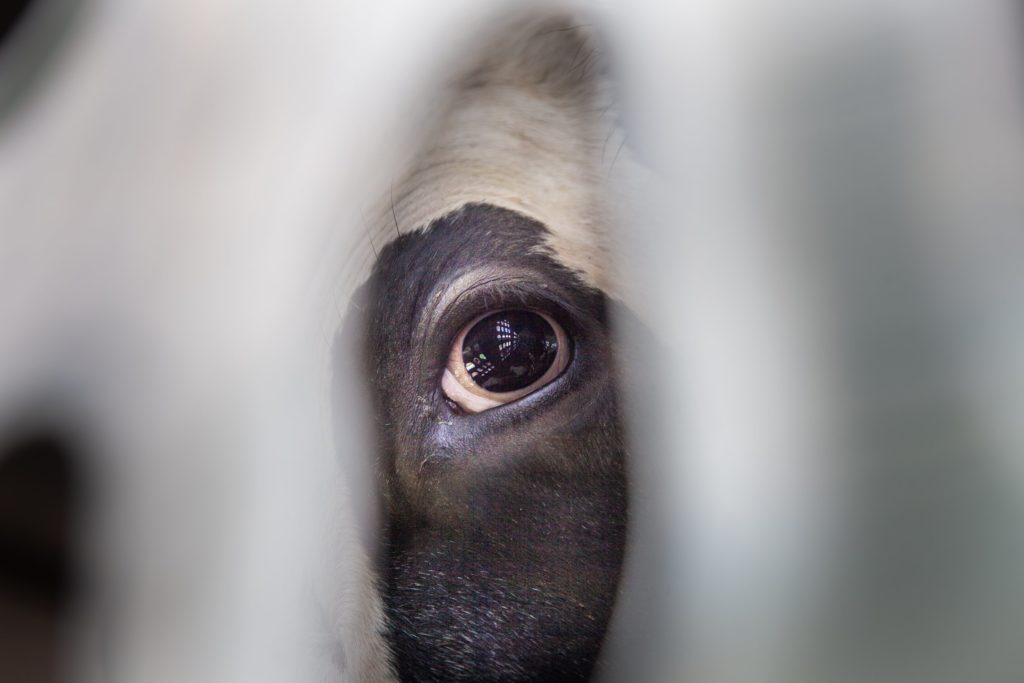
On dairy farms, it’s standard practice to separate a calf from their loving mother within a day of birth. And all animals, whether raised in a field or a cage, are eventually killed.
Exploitation
Unsurprisingly, this also takes a toll on the humans involved, and 92% of UK farmers under 40 told the Farm Safety Foundation that poor mental health is the biggest problem they face, and all this killing doesn’t help.
Our farmers deserve better, but the recently launched Sustainable Farming Scheme does nothing to help them escape the stress, violence, and toil of animal-exploiting industries.
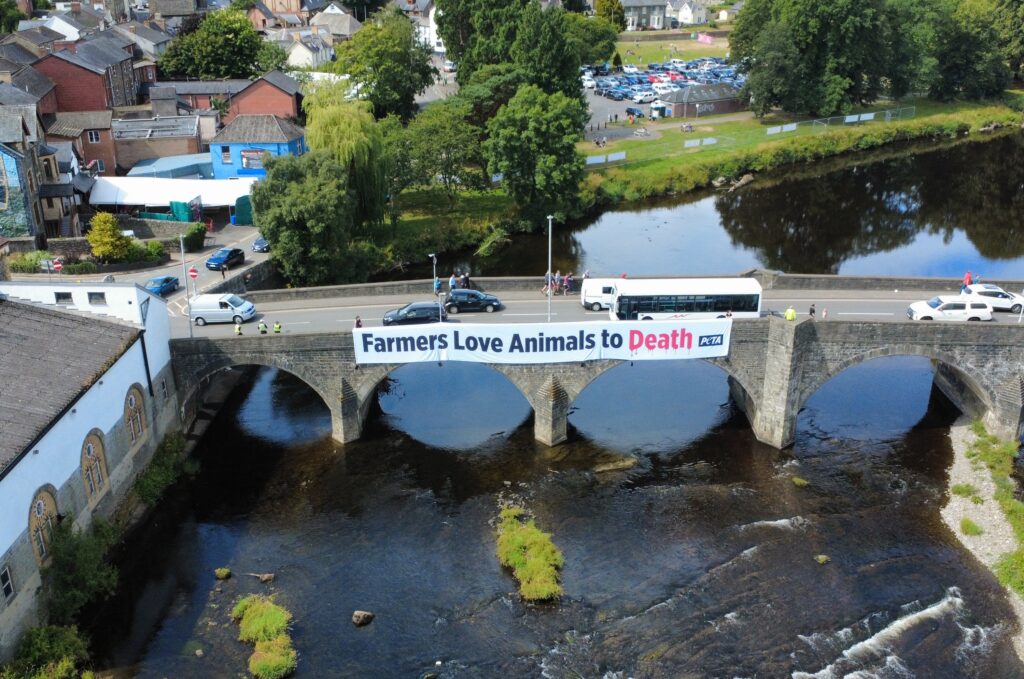
PETA’s push for plants, which recently saw them mark the opening day of the Royal Welsh Show with a Wye Bridge banner reading “Farmers Love Animals to Death”, is also about the environment and human health. Animal agriculture emits enormous amounts of greenhouse gases and drives mass deforestation.
Conversely, research shows that vegan eating produces 75% less climate-heating emissions than a meat-eating diet. Where I live, near Bannau Brycheiniog national park, it’s common to see once-lush mountains transformed into barren grassland that environmentalist Ben Goldsmith describes as “sheepwrecked”.
Chicken farms in Powys are polluting the River Wye so severely that approvals for new farms are being rejected. Meat consumption is linked to a higher risk of obesity, heart disease and cancer.
It is a start that Welsh-grown organic fruit and veg are served in schools, but we need significant government backing to transform farming.
This “Back British Farming Day,” let’s celebrate ethical, eco-friendly horticulture and arable farming and use mountainous land for renewables, forestry, and rewilding.
Please support hardworking farmers and help animals by eating vegan, and join PETA to urge the government to facilitate the urgent transition to animal-free agriculture.
For the animals, for ourselves, and for the planet, the future of Welsh farming is vegan.
Dr Carys Bennett is Senior Corporate Projects Manager at People for the Ethical Treatment of Animals, PETA.
Support our Nation today
For the price of a cup of coffee a month you can help us create an independent, not-for-profit, national news service for the people of Wales, by the people of Wales.



I gave up eating meat and fish nearly 20 years ago because the cruelty to animals and their method of slaughter upset me so much. I believe matters are a lot worse now with the intensive farming methods being used so widely, not to mention the effect this has on our environment. There is a book called Farmageddon which is an interested read
Farmageddon is incredible isn’t it – had it on Audible and couldn’t believe what I was hearing. Life changing writing.
Thanks for this, although vegan I’ve never heard of this book. Just bought a copy.
Carys Bennett is wrong to state “not a case of a few bad apples”. The case of Cildywyll Farm near Llanddowror she highlights. It was actually a raid from the Animal Health Department of Carmarthenshire County Council and was most certainly an isolated incident. Her attack on Wales and the agriculture of our country is misinformed claptrap.
How do you know it was an isolated incident? You don’t of course. If abattoirs had glass walls everyone would be vegan (apart from sadists and psychopaths), but as it is a case of “out of site, out of mind”, you can carry on assuaging your guilt by pretending that it is “a few bad apples”. I don’t want my food tasting of blood, pain and fear thanks, plus it is now generally accepted (what the more thoughtful of us have known for years) that vegan diets are much, much healthier both for people and the environment, and that doesn’t… Read more »
Whilst abattoirs in Wales do not have glass walls, they do have comprehensive CCTV as defined in the legislation. As for farmers, it is they who are the main monitors of livestock conditions and their relationship with the county council, at least in Carmarthenshire is a key in ensuring any isolated incidents are detected. One such example was a recent ‘horse sanctuary’ raid where neighbouring farmers were critical in the rescue and prosecution.
Oh that’s alright then, we can continue slaughtering sentient creatures, as long as it is on CCTV, just so you can stuff your face.
According to some studies, plants too may meet the definition of having sentience.
That is no excuse for killing animals. We have to eat something, so it is a matter of doing the least harm.
There have always been people who behave badly. Not every farmer hits their animals (just as not every care worker hits residents in care homes) and it is right to call people to account when they have crossed a line. We have been eating meat for a very long time and I don’t think any good comes from telling people whether they should eat meat or not. We should be open and realistic and let people decide for themselves. Huw Fearnley-Whittingstall wrote a book titled ‘Meat’ in which he said that ‘for us to eat meat an animal has to… Read more »
Consuming dead animals “thoughtfully” is a ridiculous oxymoron. You can only eat meat if you don’t think about the cruelty involved, ie thoughtlessly. Why do you think your life is worth sustaining at the expense of other sentient creatures?
Because I live in the real world where the animals that I eat are here because they have been reared to be eaten and if they are not going to be eaten they no longer have a financial value therefore the farmer who keeps them will have to have them slaughtered to prevent him and his family going out of business. I am not telling you that you have to eat meat and I respect your decision not to. I do find that you deciding that I can only eat meat if I think of the cruelty involved is a)… Read more »
Typical reductio ad absurdam argument. Obviously if people decide to go vegan en mass, it would not mean that everyone went vegan at the same time; there would be a gradual reduction in meat consumption down to zero, and at the same time a gradual reduction in the number of animals bred for slaughter. So your notion that they would all be “waste product” is ludicrous. Dairy farms are going out of business at an increasing rate anyway, so veganism would merely accelerate the process. Farmers can either adapt to producing other food crops or turn to more radical solutions… Read more »
Lol….a proponent of the “a slug is as intelligent as a human being” school of thought i see. PS. no surprise to see the misanthropes are out in force on this post.
I agree with you. Mind you If I’m not going to be able to eat meat any more though I am going to have to go to war against the slugs in my veg patch 😉
I don’t eat slugs so your point is nonsense, and any decent gardener knows that there are ways to get rid of them that doesn’t involve killing them.
So if I hate the torture and killing of animals I am a misanthrope? Right.. actually if I hated humans I would be encouraging them to eat more meat, thereby increasing their chances of an early death from heart disease and obesity. When they said “a slug is as intelligent as a human being” were you the human being they were thinking of?
If I were a misanthrope I would encourage people to eat more meat, thereby increasing their chances of an early death through heart disease and obesity. Because I do not hate people, I encourage them to eat healthily.
Industrial chicken farms should not be lumped in with grass fed livestock. The chicken farms pollute the rivers and watercourses, as well as providing appalling living conditions for poultry.
“Grass fed livestock”, along with “no farmers no food” is a propaganda slogan aimed at the hard of thinking, to persuade them that they don’t have to worry their pretty little heads about the barbarism practised in their name.
Oh hark at the oxymoron’s ironic use of the word ‘propaganda!’ Veganism is a mental illness.
So all the vegans in say, India, are mentally ill? Right..that tells me all I need to know about your psychopathology Oh and by the way, if you use the handle “common sense” you might as well save time by changing your monika to “idiot”, because common sense is nothing more than the set of prejudices and preconceptions conditioned into you when you were too young and too ill-educated to view them critically. And you clearly don’t understand the meaning of oxymoron or irony.
Hahaha, what on earth has India got to do with this.
This is Nation Cymru not WION,ABP News or Times of India.
With the number of down votes you are getting are you one of Narendra Modi’s BJP Bots !
I gave India as an example, the clue is where I wrote “…say, India..” I hate to patronise,but really? Is that the best you can do? I could have given the example of Mexico (1,250,000 vegans) or Brazil (15,000,000 vegans) or China (28,000,000), or if you want something closer to home, Germany (1,660,000) or Italy (1,300,000), or many other countries where veganism is becoming more popular. Do you think I am some kind of international global bot? As Gandhi said, “first they ignore you, then they laugh at you, then they fight you, then you win”. You are clearly stuck… Read more »
India has a high proportion of vegetarians, but not many vegans.
India: 276,000,000 vegetarians, around 25% of the population. 121,500,000 vegans, around 9% of the population. Do you think 121,500,000 is “not many”?
You make it sound like Veganism is wildly popular in India, despite the best evidence we have on file puts it at 10%. Approximately half of us are likely to have some form of mental illness at some point in our lives.
I’d say 9% falls well within that bracket.
Disclaimer: and I’m not even arguing it is a mental illness, it’s certainly not normal behavior though.
I do not “make it sound wildly popular”, I have given you the figures, that is all. What would the percentage have to be to make it “normal” in your view? And why the correlation of mental illness with veganism? Is that a reflection of your own mental state?
Is this an early april fools? Either that or the author is a closet reform supporter doing her utmost to scare farmers in Wales into believing claims that a middle class elite in ‘the bay bubble’ are hellbent on destroying their living (and destroying Welsh speaking communities – of which farmers are the backbone – in the process).
See the documentary “Eating You Alive” (ignore the over emotive bits) and-or read the book “How Not To Die” by Dr Michael Greger (playfully exaggerated title). Neither are faultless but both are very revealing – and verifiable.
It would help if you would give us an idea of the general thrust of these two publications; I am no more going to waste my time on anything which tries to justify killing animals for food than I am on a flat earth treatise, for the same reasons; that they are unscientific nonsense.
I’m genuinely interested to know your views concerning other omni/carnivores in the animal kingdom at large. After all, if the objection is one of suffering, then the animal kingdom is not going to be to your liking. If your argument is a moral one, then that’s a subjective assessment. Or are you saying that humans are subject to different standards than other animals, and not part of the animal kingdom?
On a side note: reading through your other comments, you come off as extremely condescending and arrogant. I’m not sure that’s the best way to win adherents to the cause.
I am not trying to “win adherents to the cause”, I am merely stating the obvious. I have never heard an argument in favour of meat eating that does not boil down to “well I like steaks so there” or similar. I am not in a position to answer for the actions of other animals, I am concerned with the action of human animals. It disturbs me that the majority of people go about their daily lives in the full knowledge of the cruelty perpetuated in their name, and seem not to care. This attitude disgraces those that hold it.… Read more »
There are many farmers who treat their animals with care and genuine affection and take their responsibilities as stewards of the land seriously. The fact that some farmers are abusive is no more an argument against farming than abusive parents are an argument against families. Anyone with even a casual acquaintance to the countryside knows this to be the case. If upland pastures were given to intensive arable farming it would create an environmental catastrophe by destroying wildlife habitats and arable farming on poor soils would require large quantities of fertiliser. Sheep have been farmed in the UK for six… Read more »
‘ If upland pastures were given to intensive arable farming it would create an environmental catastrophe ‘ In a vegan future the intensive arable farming and horticulture would take place in the lowlands and to a degree on suitable intermediate land. I think it’s unlikely that the future is wholly vegan but it’s most likely that livestock farming in the uplands and less favourable areas will contract. This will inevitably negatively impact farmers, communities, businesses and culture here in Cymru. I think the only long term way of countering this is for farmers to position themselves as the primary managers of the… Read more »
Given that nowhere in Cymru is above the tree line, forestry could replace livestock farming in upland areas. These areas are non-productive anyway, and are being trashed by sheep. Farmers could become foresters with the right support, and this new work could easily cure some of the problems they now face, such as cronic loneliness leading to the high suicide rate, and the risk of going bankrupt. Trees can also provide food crops, giving a source of income. There is no practical problem in making this change, it is just a matter of political will, and people waking up the… Read more »
I choose to try and imagine multiple solutions to the complex and multifaceted issue of land management rather than try and promote any solution as long as it addresses a single issue that energises me.
Land management is indeed complicated, although perhaps not so complicated as you imply, but the issue of sheep damaging the upland environment is well researched and relatively simple.
Yes it’s possible to look at any one facet and say that facet is simply solved. Which would be fine if there were only one facet involved.
Which is why I said “relatively” simple.
It doesn’t matter how affectionate farmers are to their animals, even if you give them all names and a cuddle every day, they still end up with a bolt in the head and hanging on a hook. And as for going back 6000 years, that is absolute nonsense, where on earth did you get that notion from? You accept that chicken farming is damaging, do you also accept that slurry dumping is equally damaging? If not , I suggest that you live next to a dairy farm as I do. You will soon change your mind when you have to… Read more »
It is generally quite widely accepted by archaeologists that sheep farming began in the UK in the neolithic period. Personally I think animal welfare does matter. Since the UK isn’t likely to turn vegan at any point in the near future isn’t improving the way we farm a worthwhile enterprise? Many of our problems come not from farming per se but intensive farming. Artificial fertilizers are environmentally damaging to produce and also create run off. Low intensity farming creates a far more nature friendly environment than forestry plantations which support almost no wildlife. One wonderful spinoff from upland hill farming… Read more »
I have spent years living amongst farmers in different parts of Cymru, and I found it impossible to get them to consider alternatives to the present unsustainable system. This will continue while the taxpayers’ money keeps rolling it. What you are suggesting is a sticking plaster solution, to give a less unacceptable face to an unsustainable farming system. Intensive farming? Upland sheep farms are not intensive; a few miserable sheep per acre on land that could be rich forest. Artificial fertilizer runoff? Not from greenhouses or vertical farms. Low intensity farming? Only if you could magically disappear 50% or more… Read more »
‘ That notion’ of 6000 years, or circa 4000BC , is approximately when Neolithic farming is agreed ( by experts) to have first come to Britain. See archaeological evidence in places such as Foel Drigarn in the Preselis for dated soil erosion at an early date.I respectfully suggest ( rather than using your abusive tone):that you don’t know what you’re talking about.
If you had read the comments more carefully, you would know that I was merely responding to Matthew’s notion that we “turn the clock back” to the neolithic, because absolutely nobody is suggesting that. Of course I don’t deny that neolithic people farmed animals, only a complete ignoramus would think so. Rather than see you make a fool of yourself again , I will make my point clear: what happened 6000 years ago is of no relevance to food production now. If you think it is relevant, please let us know why.
Well said. I fully agree. The meat industry is unsustainable in terms of its impact on the planet’s resources and its contribution to the climate crisis. Anyone who has been inside a factory pig or chicken farm will know that the cruelty involved is indescribable. These poor creatures live on concrete floors in their own excrement for their very short lives in dark, windowless sheds, unable to turn around, and are then taken on sometimes terrifyingly long journeys to slaughterhouses, where, in some cases, their deaths are anything but instantaneous and lead to pain and suffering in unimaginable ways. I… Read more »
Here in Wales we have one of the best carbon sinks preventing climate change. It’s the red meat industry which converts atmospheric CO2 into pasture, which in turn is grazed producing food. Importing vegetation from overseas is the exact opposite.
Who is talking about importing “vegetation” from overseas? And is it possible that there are still those who think that animal agriculture is reducing greenhouse gases? Unbelievable.
Also unbelieveable is that there are some here who can downtick a simple statement of fact; the fact here is that animal agriculture is a major contributor to global warming. You are entitled to your own opinion, but not to your own facts. If you base your opinion on a falsehood, what is that opinion worth?
You won’t change those who are stuck in the past; the job is to persuade the young to be aware of the issues.
Loving the lack of citations to so many “facts”.
Always fun to spit out “information” in a vacuum.
Quite why there’s a growing need to attack producers and not the actual issue, retailers and consumers. Easy pickings I guess, kicking those on their knees.
Good job “Dr”
Because it’s a comment section, not an academic publication. That needn’t stop you from citing any sources you like. I mostly just go to Google and read several reputable sources (such as the UN) there, before quoting statistics. If you read my posts you will see that I am not only questioning the system of agriculture, but also the consumers of their products.
If any of you are open-minded enough to properly consider the psychology of meat-eating, you could do worse than start with this article:
https://en.wikipedia.org/wiki/Psychology_of_eating_meat
And before any of the hard-of-reading chime in with “you can’t believe Wikipedia”, I will just say that Wiki is generally considered to be highly accurate, and you should note that I say “start with.” It is up to you to determine how accurate the article is, but not by spouting your prejudices in the guise of “common sense”, which is all too common unfortunately, but not very sensible.
The idea that the future of farming in Wales is a nonsense perpetuated by people with little knowledge of the facts and reality of farming. Sheep farming and other animal rearing in Wales hasn’t been a historical norm for thousands of years without reason. Many farmers have tried their luck over various landscapes with various crops and found that over time, they just don’t work, the yield is not enough to make a sustainable income. Most farms in Wales are comparatively small and to make a profit out of arable products such as wheat… you need acre upon acre of… Read more »
Oh dear, where to start…? Well, sheep farming in Cymru really took off after the establishment of the monasteries, who realized they could make a lot of money from them. Prior to that farming was more of a subsistence type, with mixed arable and livestock. So sheep farming is really a product of feudalism which then developed into capitalism; nothing to do with the climate, but more to do with land ownership. Just because it has been practised for thousands of years doesn’t mean it has to continue; you surely would not apply that logic to any other aspect of… Read more »
I recently went 6 months as a pescatarian. I told people I did it for health reasons (which wasn’t a lie)but the truth is, I couldn’t kill something in order to eat and I felt like a hypocrite.
While the experience was mostly positive, it’s not all milk and honey.
Vegan recipes contain a lot of sauces (which are high in sugars and fat),processesd foods and as for vegan sausages? The ones I ate were tasty. They also had so much salt in them, you could grit the roads with them.
My vegan diet contains no sauces, and vegan sausages I keep for a rare treat. Nothing more boring than the “meat and 2 veg” of carnivores. You don’t need sauces if you cook the vegetables correctly. If you are still boiling them (then throwing the water away) you are not doing it right.
‘Nothing more boring than the “meat and 2 veg”’
However meat and six veg, and herbs, spices. Mmmm.
One of the challenges of veganism is to get around the fact that vegan meals taste better if meat or cheese is added.