


The great Farage disappearing act: Is Reform UK losing its momentum?

Martha Garcia
Reform’s leader once seemed impossible to escape. Now his parliamentary record is remarkably thin, his party’s polling advantage has narrowed, and senior colleagues are increasingly carrying out the public-facing operation – just as scrutiny of Farage’s finances returns.
There was a time when Nigel Farage seemed to be everywhere…
Television studios wanted him. Newspapers wanted him. Political programmes revolved around him. Reform UK appeared to be surging inexorably towards power, while Farage presented himself as the man who would finally break Westminster’s political establishment.
Now something rather different is happening.
The man who says Westminster is broken is barely participating in Westminster.
The party that says it is preparing to govern Britain is seeing its once-formidable polling momentum weaken.
The politician who has spent years demanding that other politicians answer to the public is once again under parliamentary scrutiny over his own financial affairs.
Meanwhile, senior Reform figures are increasingly being required to carry the political operations in public. So where, exactly, is Nigel Farage?
A disappearing act in Parliament
The most revealing evidence may not be found on television at all. It is found in Parliament.
Farage’s record of participation in Commons divisions is striking. According to Commons-Sense, which tracks Commons voting records, Farage participated in 18 of 83 recorded divisions in the period examined – 21.7% – while not voting in 65, or 78.3%.
That figure requires an important qualification. The official parliamentary record makes clear that failing to vote does not automatically mean an MP was physically absent. MPs may abstain, have procedural reasons for not voting, be carrying out constituency or ministerial business, or be unable to attend for other reasons.
But the figure remains striking, and voting is not the only measure.
The Times reported this week that Farage has spoken in the Commons just nine times during 2026, compared with an average of around 83 contributions among MPs. Reform colleague Richard Tice, by comparison, has spoken 125 times.
The contrast is extraordinary. Farage has spent much of his political career arguing that Westminster politicians are detached from ordinary people and that Parliament itself is failing Britain. But when given a seat at the table, his parliamentary contribution appears remarkably limited.
Being a political celebrity is not the same thing as being an effective parliamentarian. Being frequently visible on television is not the same thing as scrutinising legislation, and winning votes is not the same thing as doing the work of government.
The question is therefore deceptively simple:
If Nigel Farage wants to lead Great Britain, why is he participating so little in its Parliament?
Where has the political energy gone?
The timing is difficult for Reform. Only months ago, the party appeared to be enjoying extraordinary momentum.
In May, Ipsos had Reform on 27%, seven points ahead of Labour, although the pollster noted that Reform’s share had already fallen substantially from its September 2025 peak of 34%.
Reform hold 7-point lead over Labour – Ipsos poll | Ipsos
By early August, the picture had changed dramatically. Ipsos put Labour on 28% and Reform on 25%, giving Labour its first lead over Reform in that polling series for more than a year. Ipsos described it as Labour’s best position in its polling for over a year.
Labour leads Reform UK by three points | Ipsos
The Financial Times similarly reported that Labour had overtaken Reform in opinion polling for the first time since April 2025, with Labour on 25% and Reform on 24%, while linking Reform’s decline to recent controversies and its disappointing result in the Makerfield by-election.
This does not mean Reform is collapsing. It means something more subtle – and potentially more important.
The assumption that Reform will simply continue rising can no longer be taken for granted.
And that matters enormously for a party whose central argument is that Great Britain is moving towards it.
If voters stop believing that Reform is inevitably heading towards government, the political calculation changes. Candidates become less attractive, defections become less inevitable, donors become more cautious and voters begin asking a much more demanding question:
What would Reform actually do with power?
The problem with becoming a government-in-waiting
This is where Reform is encountering a problem common to populist movements.
Opposition is comparatively easy. You can identify everything that is wrong with the existing government. You can blame Westminster and attack bureaucracy. You can promise to cut taxes, immigration, regulation and public spending.
But governing requires something different: it requires numbers. It requires implementation. It requires institutions and legislation. It requires compromise.
And, above all, it requires accountability. Reform is now being forced into that second phase. Its welfare proposals alone would represent a profound transformation of the British welfare state.
The party has proposed changes it says would save around £50bn a year, including major changes to disability and sickness benefits. The Guardian reported that Reform’s proposals include around £20bn in cuts to disability benefits and a further £21bn reduction by restricting access to benefits for many foreign-born residents. Critics have warned that the proposals could disproportionately affect vulnerable people.
That is not just a campaign slogan. It is a governing proposition affecting millions of people. Therefore, it must withstand serious scrutiny.
The policy machine is running – but where is its leader?
The contrast between Reform’s ambitions and Farage’s visibility has become increasingly noticeable.
On 26 August, Robert Jenrick was put forward to unveil new Reform economic policies aimed at small businesses, while the Guardian reported that Farage had retreated from the public eye amid continuing controversy over the £5m donation from cryptocurrency businessman Christopher Harborne.
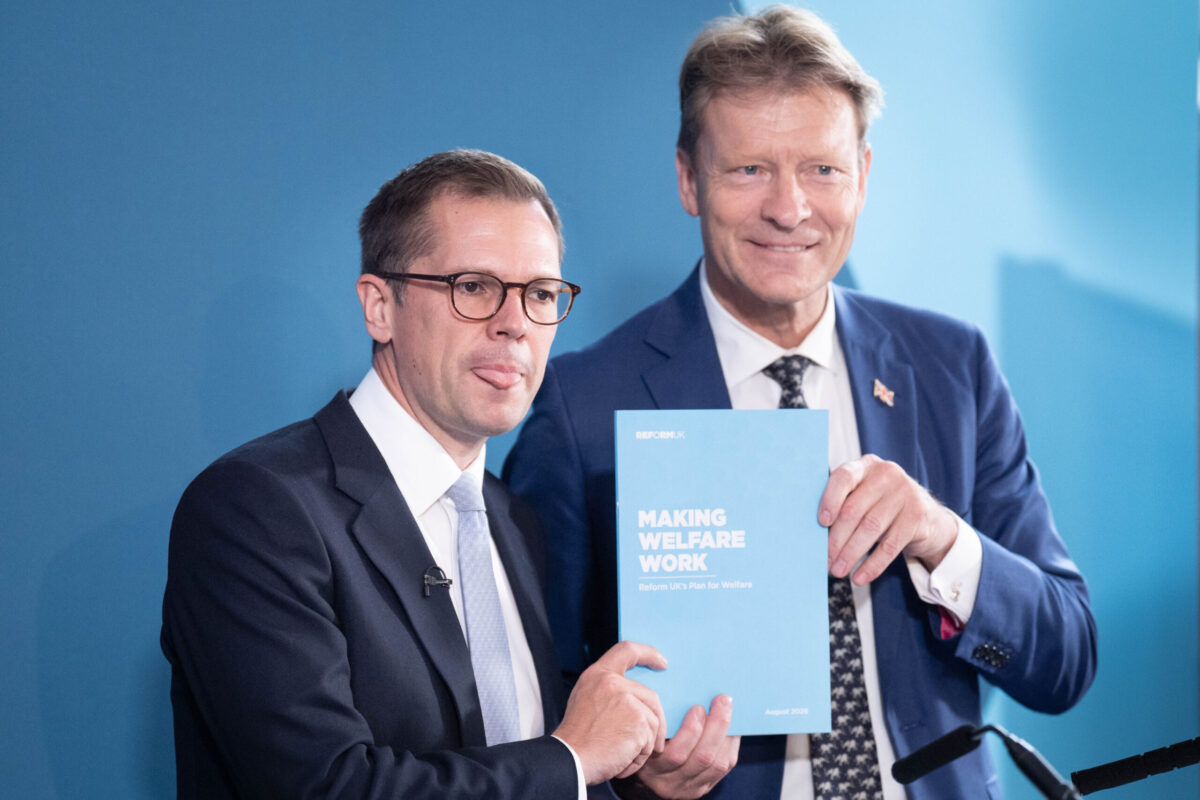
The policy announcement included proposals to raise the VAT registration threshold, introduce tax credits relating to calls to HMRC, scrap GDPR in favour of a lighter data regime and reverse green vehicle mandates. The Financial Times reported that Reform was using the proposals to position itself as a pro-business alternative to Labour, while acknowledging that the party was facing declining poll numbers and increased scrutiny over Farage’s £5m gift.
That would be unremarkable for a conventional political party, but it is more significant for Reform. The party’s political identity remains intensely associated with one individual. Farage is not simply Reform’s leader; he is its principal brand. He is the figure who has attracted much of its media attention, political support and public recognition. If Farage retreats, even temporarily, the question becomes whether Reform has developed sufficient institutional depth to operate convincingly without him.
That may be one of the most important tests the party has yet faced.
Clacton was the interruption – not the ending
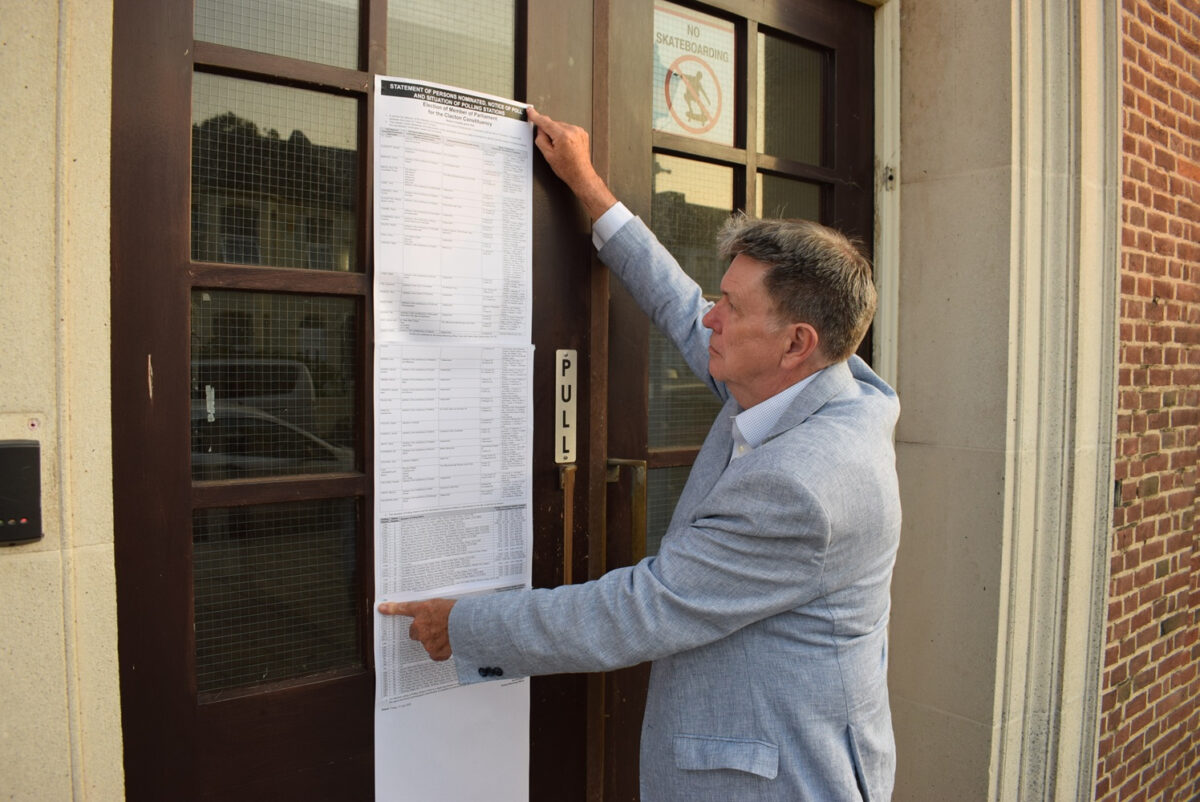
This is where the extraordinary Clacton episode belongs in the story. Farage resigned his parliamentary seat while a standards investigation into his financial affairs was under way.
Because he ceased to be an MP, the investigation was suspended. He then fought and won the resulting by-election. The investigation subsequently became active again.
The sequence is important, but it should not be mistaken for the entire story.
The Financial Times reported that Farage’s victory in Clacton triggered the resumption of the parliamentary standards investigation into an undeclared £5m gift from Christopher Harborne.
Farage’s resignation therefore created a temporary interruption in parliamentary scrutiny and transformed a financial controversy into an intensely personalised electoral contest.
That does not prove he resigned in order to conceal evidence. There is no evidence establishing that motive, but it does demonstrate something else.
The financial controversy was temporarily displaced by the spectacle of Farage versus the establishment. Then, the spectacle ended. The investigation remained, and Farage returned to Parliament with the questions waiting for him.
A victory that cannot answer a standards investigation
Farage won Clacton convincingly, receiving 22,239 votes and 62.8% of the vote, but the circumstances matter. Thirty-four candidates stood. The principal established parties did not contest the election. Count Binface, a satirical candidate, secured 26.7% of the vote.
Reuters described the result as potentially exposing waning momentum for Reform, particularly because Farage’s share was below expectations and the major parties had stayed out of the contest.
The victory demonstrated that Farage retains a substantial personal following in Clacton, but it did not confirm that Reform is ready to defeat Labour, the Conservatives and the Liberal Democrats across hundreds of constituencies at a general election.
Nor did it answer financial questions. Popularity cannot determine whether a parliamentary rule was broken. An electoral mandate cannot substitute for an investigation, and a by-election cannot provide immunity from parliamentary standards.
That distinction is becoming very important now.
The £5m question is still there
The controversy surrounding the £5m gift from cryptocurrency businessman Christopher Harborne has not disappeared. The Parliamentary Commissioner for Standards is investigating whether Farage should have declared the gift.
Farage has disputed the case against him and has portrayed the scrutiny surrounding his finances as a coordinated attack. In July, he described the questions as part of a “coordinated pile-on” and said he had been demonised since the £5m gift became public.
The investigation was suspended during the Clacton episode and subsequently became active again. That chronology is now part of the political record and it presents Farage with a problem that cannot be solved by rhetoric. He can criticise the investigation and dispute its interpretation. He can argue that the gift did not require declaration.
But ultimately the question must be answered through the appropriate parliamentary process.
The issue is not whether Farage is popular but whether the rules were followed.
Reform’s bigger contradiction
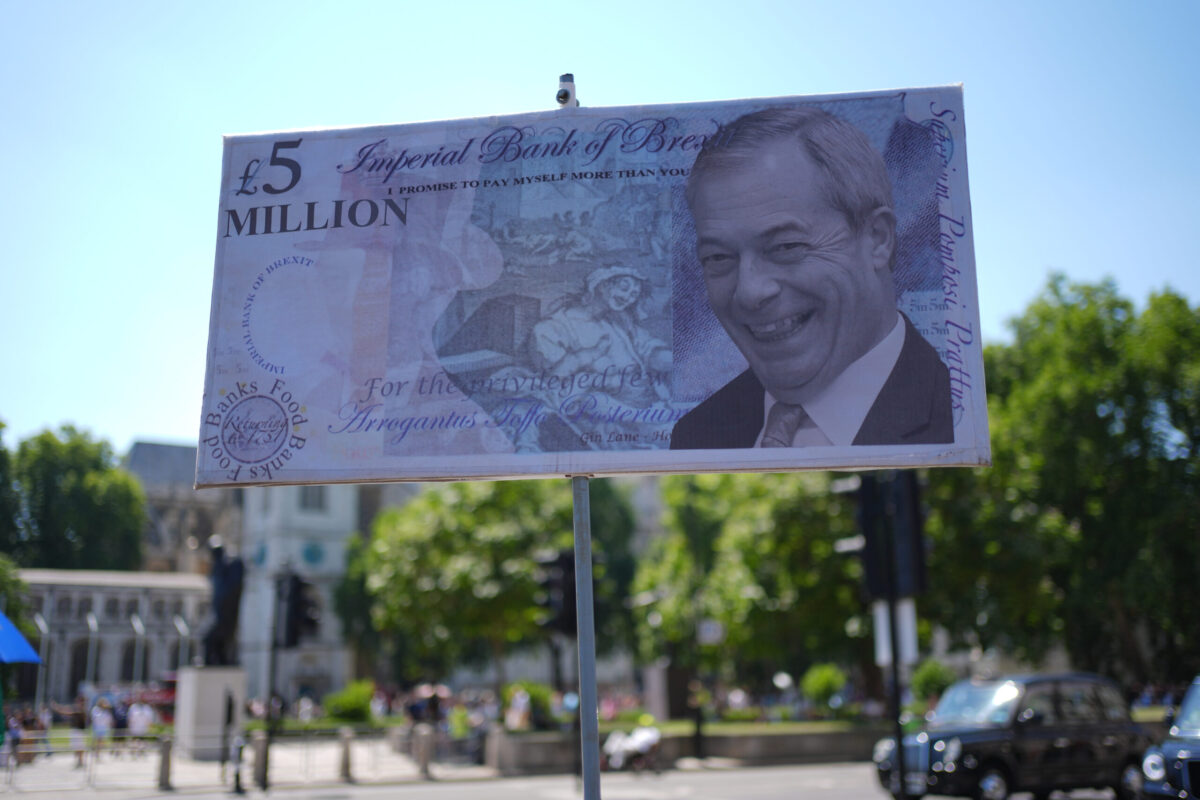
There is a wider contradiction. Reform’s political appeal rests heavily upon the argument that established politicians have failed the British public. Its supporters are told that Westminster is detached, unaccountable and insufficiently responsive to ordinary voters.
That is a perfectly legitimate political argument, but it creates a standard that Reform itself must meet. If established politicians should be scrutinised, Reform politicians should be scrutinised as well. If established politicians should declare their interests, Reform politicians should declare theirs. If established politicians should turn up and do their jobs, Reform politicians should do the same. If established politicians should explain their policies, Reform should explain its policies to the tiniest detail.
Finally, if established politicians should accept independent scrutiny, Reform cannot reasonably claim that scrutiny becomes illegitimate when it becomes uncomfortable.
There cannot be double standards. The standard must be universal.
The climate argument reveals the same problem
The same issue appears in Reform’s approach to climate policy.
In his recent Guardian analysis, Larry Elliott challenged Reform’s argument that Britain must choose between the climate and the economy. His central argument was that this is a false choice: climate damage itself creates profound economic costs, while investment in energy, housing and infrastructure can form part of an economic strategy rather than being its enemy.
Reform says we need to choose between climate and economy. It’s wrong | Larry Elliott | The Guardian
The significance goes beyond the climate debate. It illustrates a recurring problem with binary political messaging: climate or prosperity; the people or Westminster; immigration control or political correctness; tax cuts or public services.
But the United Kingdom is not governed through slogans. It is governed through complicated trade-offs. Energy policy affects industrial policy. Climate policy affects investment. Immigration affects labour markets. Welfare policy affects public finances. Taxation affects business investment and household consumption.
There are rarely two neat buttons marked YES and NO. A government has to understand the connections, and this requires evidence, competence and long-term planning.
And now comes the conference test
Reform’s Birmingham conference takes place at the NEC from 3 to 5 September.
Importantly, there is currently no evidence that Farage will be absent. In fact, Reform’s own conference operation is advertising several events involving him, including a champagne breakfast for Platinum-ticket holders and an official after-party appearance.
That makes the conference potentially more interesting. After a summer in which Farage has become noticeably less visible, Reform now has an opportunity to demonstrate whether the party can project a coherent governing operation around something more substantial than its leader’s personal brand. The conference will be watched for precisely that reason. Will Farage re-emerge at the centre of the political stage?
Will he confront the financial questions? Will Reform present a coherent programme for government?
Will its senior figures demonstrate that the party possesses the depth and discipline required to govern?
Or will the conference reveal a movement still heavily dependent upon one man and his ability to dominate the political news cycle?
Those are very different prospects.
The real test begins now
Perhaps the most important thing happening to Reform UK is not a dramatic collapse, but something quieter. The party is discovering that being popular is not the same as being ready to govern.
The polls and headlines can change. The political mood can change, but the responsibilities of government remain. This is why Farage’s parliamentary record matters. It is why his financial investigation matters. It is why Reform’s policy arithmetic and its electoral performances matter. It is why his current disappearance from the political foreground is worth watching.
Because the man who says Westminster is broken cannot permanently remain above the work of Westminster.
The party that claims it is ready to govern cannot forever be judged solely on its ability to campaign, and the politician who demands accountability from everyone else cannot reasonably expect to be exempt from it himself.
Nigel Farage once seemed impossible to escape. Now, just as the scrutiny intensifies and Reform’s political momentum begins to look less certain, he has become conspicuously quieter. Perhaps it is temporary. Perhaps the Birmingham conference will mark his return. But if Reform genuinely believes it is Britain’s next government, the country is entitled to ask a very simple question:
Where is the man who wants to lead Great Britain – and what is he actually doing to prepare for the job?
Martha Garcia is a former Reform UK Wales member
Support our Nation today
For the price of a cup of coffee a month you can help us create an independent, not-for-profit, national news service for the people of Wales, by the people of Wales.
Get more trusted Welsh news
Choose Nation.Cymru as a preferred source in Google News to see more of our journalism.



Unfortunately farage has stirred up the hatred amongst his supporters against people of colour and Muslims and all that built up hate and enmity is not going to dissipate even if he does.
They will simply move on to the next bunch of racists waiting just like most of his politicians.
Let’s face it, most of his politicians have form have jumped ship from the tories. They will simply jump again.
Excellent piece. If any other worker had a 21.7% attendance rate they would be sacked without hesitation. Farage clearly believes the rules of democratic participation don’t apply to him.
There was never any real tangible bounce to begin with. Some meaningless opinion polls showing them in the lead but only because the other major parties are in an absolute mess. But then come actual elections it’s a different story. Lost in Gorton and Denton blamed sectarianism lost in Makerfield lost in Caerphilly last year lost in the Senedd Elections and lost in the Scottish Elections. Not a great record is it Nige?
I see the bubble has burst for ReformUK. In their heartland of Kent where they control the county council there was a recent bye-election after the sitting Conservative councillor resigned. The result was.
Green 767
ReformUK 733
Cons 456
Labour 389
Restore 284
Indy 35
This was in Dover and it appears the ‘Stop the Boats’ slogan doesn’t even get traction there. Reform are a busted flush.
I was about to post on this but you beat me to it.This is heartening news as Kent is a County where I have strong family connections.
He’s running a scam. He’s going to cut and run to “step back” aka spend his dodgy cash, then reappear in a few years to do the same scam again. Rinse, repeat. The same unwashed and unthinking easily manipulate masses will forget and fall for it again and again.
Sadly, despite the thick stench of corruption and hypocrisy surrounding Nigel Farage and Reform, voters will still fall for their lies. With that said. Reform are indeed in freefall, whether they like it or not. They scraped home in Clacton, with fairweather Farage only beating a bin with a turnout of 44%. And in Wales, they failed miserably to gain power in the Senedd in May gone, or win the Caerphilly by-election, even with the right-wing press, billionaire bigot Elon Musk, GB News spouting bile on their Britnats behalf. I predict Reform UK will like the BNP, Ukip, and Brexit… Read more »
Deeply troubling. What aren’t we being told?