

The missing piece in the Welsh news media landscape?
Caitlin Thomas
Wales’ political landscape has changed significantly since 1997.
It has its own parliament, its own politicians, and its own policies.
But control over Welsh media, and the way Welsh issues are covered in UK-wide outlets, has not kept pace with these changes. Online journalism has helped to greatly strengthen the coverage of Welsh news.
But television, which remains the main news source for many, continues to struggle to reflect the realities of a devolved nation.
In recent years, Wales’ online journalism outlets have begun to fill the long-standing gaps in coverage of Welsh politics and news. For readers who are looking for it, there exists far more information about what is going on in Wales than in recent years. Journalistic commitment to this is reflected in genuine progress and readership amongst the Welsh public.
But this progress is yet to be felt across all forms of media. Television remains one of the most used sources by people accessing the news, particularly amongst older audiences and those without access to online news platforms. For many viewers, UK television news forms their most used, sometimes only used, media source.
Because of this, Welsh issues and news are frequently framed in relation to UK wide news, rather than in their own right.
When Wales does feature in television news programmes, coverage is more frequently focused on sport, crime, and other localised incidents, with little focus on political decisions and policy updates. These stories are, of course, necessary but they offer only a partial picture of life in Wales, where key political decisions and policy changes often go under-reported.
All of this is particularly important since devolution has changed where political power lies in the UK. Decisions made in the Senedd are now responsible for health and education policy, as well as other important areas of Welsh life.
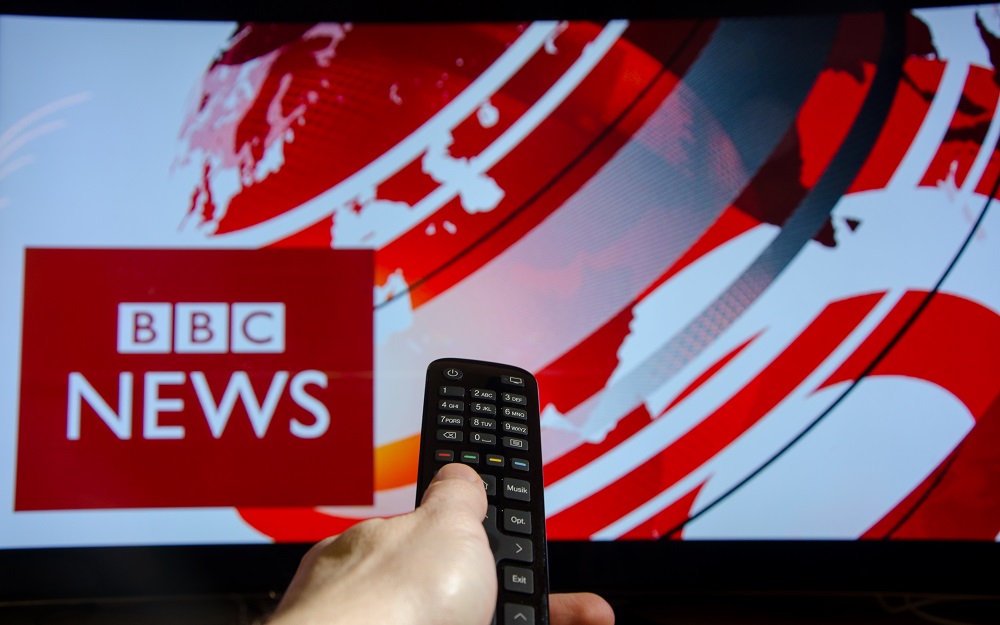
Despite these changes, English-language TV news in Wales can still only be found in short bulletins on BBC Wales news and ITV Cymru news. This is not simply a picture of decline, with BBC Wales Today continuing to play an important role in making sure that both national and local news is able to reach large audiences. It provides another demonstration of the appetite for Welsh-focused journalism in Wales.
But, it operates within a number of constraints, having to balance a large number of stories covering both national and local issues, usually within a short broadcast show. It cannot, on its own, provide sustained and in-depth coverage of Welsh issues.
This means that there remains a limited amount of space for the delivery of Welsh news and inadequate scrutiny of political institutions.
One step forward, two steps back
This pattern changed briefly during the COVID 19 pandemic, which provided a period of greater visibility for Welsh political leadership in the media and on the television most prominently. Daily briefings, interviews and explanations of Welsh policy rather than just UK-wide measures meant Welsh viewers could feel more confident that they were up to date with the latest developments that directly affected them.
The First Minister was no longer an abstract figure, instead becoming someone the Welsh people could look to. They no longer had to rely on just the Prime Minister’s updates, which were often specific only to England.
This period is key because it shows that an increase in Welsh news coverage is both possible and valuable; audiences could be seen to engage with the increased coverage during this time. But since then, this level of visibility has largely not been maintained. The coverage of Welsh news on television has returned to its pre-pandemic norms, even when devolved issues continue to hold the same significance.
Welsh-language broadcasting does have an important place within this media landscape. S4C’s Newyddion provides access to coverage of Welsh affairs and remains essential.
However, it cannot meet the needs of the entire population, particularly those who do not speak Welsh.
The majority therefore continue to rely primarily on English-language television for their news, limiting their options.
What is missing is provision — not talent, expertise or journalistic commitment.
Wales does not have its own dedicated, national, English-language TV news programme which is able to treat Welsh politics and news with its own importance, and not just as an add on to the end of a UK news programme.
Instead, competition for time and resources alongside UK wide news is clear.
Strengthening democracy
The democratic consequences of this gap in the media landscape are also of concern. Television remains key in reaching audiences who do not seek out online news outlets, or follow Welsh politics in other ways online. With less attention given to the Welsh Government on a television news programme, public understanding and engagement suffer, and scrutiny is not carried out as effectively.
This is not indifference, but a lack of clear, regular access to Wales-focused information.
It is important to emphasise that the strengthening of English-language television news coverage in Wales would not serve to undermine existing digital outlets or TV broadcasters. Rather, it would serve to complement them.
Welsh online journalism has so far demonstrated the existence of an appetite for Wales-focused reporting. Television news would simply aim to extend that access to wider audiences.
Much has can be seen to have improved in Wales’ media landscape in recent years, in particular on online platforms. But with the Senedd election fast-approaching, the limits of English language television news coverage with a focus on Welsh issues will become increasingly difficult to ignore.
During this time, the people of Wales will turn to TV news for explanations of party policies and promises, and they are likely going to be engaging with politics more than during any other time.
To ensure that this democratic participation is meaningful, voters need access to regular coverage that provides information relevant to them.
Until television news begins to reflect the realities of the political situation in Wales, a crucial part of Wales’ news media landscape will remain absent.
Support our Nation today
For the price of a cup of coffee a month you can help us create an independent, not-for-profit, national news service for the people of Wales, by the people of Wales.



This is how you see that the BBC actually treats Wales as a region not a nation, since the Wales national news is put in the same box as the regional news programs in the various regions of England.
Let’s just hope that in the run up to the Welsh Assembly elections we get plenty of TV programmes quizzing the parties on their policies in detail , because currently people know very little detail.
In particular, people are totally unaware of the D’Hont method of election and the fact that this cumbersome method prevents you voting for an individual candidate and forces you to vote only for a party in massive and unwieldy constituency.
There is still a colonial mindset in the British establishment regarding Cymru. Media will not be devolved here because it would allow Cymru to fully see itself from its own perspective. The fear would be that we’d fully see how badly we are treated and the call for independence would increase. English cities depends on Cymru for water and electricity and that dependence is only likely to increase due to global warming. There’s still talk of flooding more valleys and increasing wind turbines. Neither of which would be run by people in Cymru or benefit them. The plundering continue, it… Read more »
A story unfolding, what is going wrong at Coop, fear and loathing stalks the aisles, product lines disappearing overnight, customers concerns brushed off…
Have the senior members become anti-woke as recently adopted vegan lines are discontinued and a recent push by Coop and all the other supermarkets to grab for the ‘veggie’ market, this has seen small longstanding retailers forced out of business on Welsh high streets…
North Wales depends too much on Coop and Coop are taking liberties with the loyalty of their Welsh customers…
See the BBC for more…