


The new duopoly in Welsh politics
Jonathan Edwards
A huge congratulations to my former party. In the first major electoral test since the party celebrated its centenary it achieved one of its main objectives, becoming the governing party of our country.
It was a thumping result for the party, securing 45% of the available seats in the enlarged Senedd on 35.4% of the vote. Its nearest challenger, Reform UK, trailed by 9 seats.
The election clearly polarised between the new big two in Welsh politics despite the use of a more proportional electoral system.
Labour and the Conservatives, the two parties that have dominated UK and Welsh politics for eternity returned a combined vote share of only 21.8% and between them returned only 16 Senedd Members.
Both those parties have traditionally benefited from their own duopoly, building electoral coalitions by defining themselves against each other.
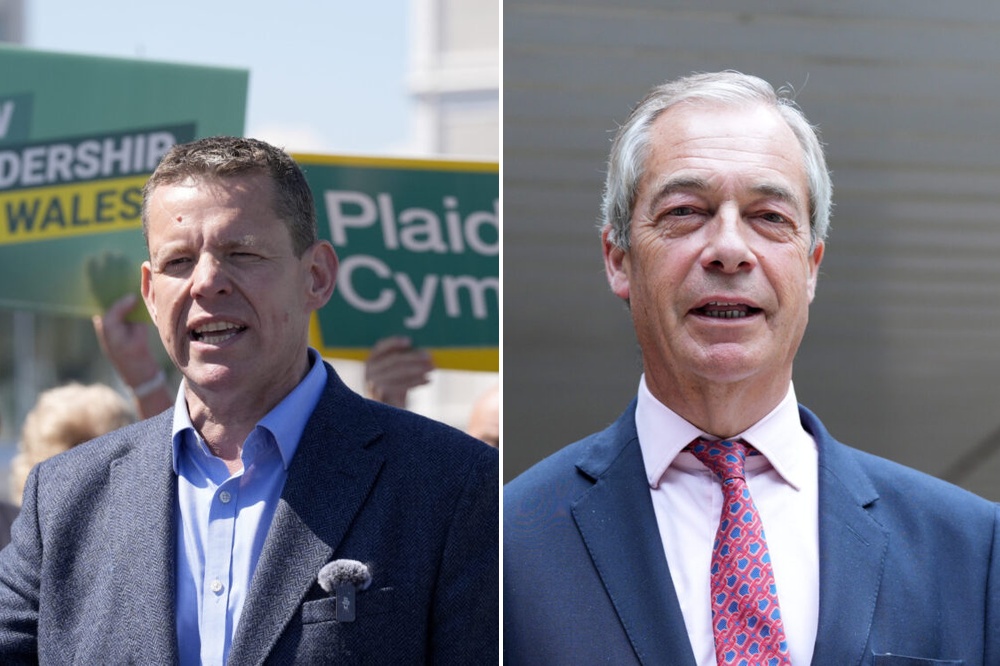
When the tables were turned on them for the first time in over a century in electoral combat, neither party had an answer. Both need to think quickly about how they gain relevance in the new Plaid v Reform age, or there won’t be a recovery – at Senedd level at least.
Huge credit for the result goes to the new First Minister Rhun ap Iorwerth. He inherited a complete basket case of a party on becoming leader and has turned it around completely.
I do not profess to know Rhun on a personal level, but he is a decent man involved in politics for the right reasons. He is also a conviction Welsh nationalist.
He had no need to enter politics in the first place; he had a safe successful broadcast career but accepted the risk and challenge to contest the Ynys Mon Senedd by-election in 2013.
When the leadership of Adam Price was collapsing, Mr ap Iorwerth was primed for an attempt at Westminster where he would have been able to practise the art of politics at his own pace free from the toxicity that had consumed the party.
It would have been the easy choice to make, but he decided to assume the leadership of a party that was gouging its own eyes out in a stagnant quagmire. I admire his actions, as if I had been in his shoes I would have packed my bags for London.
Deftness
He has also shown strategic deftness as leader. In this column in August last year, I criticised an interview he had given to the Guardian where he framed the 2026 election as a Plaid v Labour battleground and dismissed Reform’s elevated position in the polls.
Writing at the time I viewed the strategic position as complacent, not only as it seemed to me that the Reform vote was solidifying, but also because the emergence of Mr Farage’s new party offered a world of possibilities for Plaid Cymru to provide an antidote offer.
In the same way that Brexit boosted support for Welsh independence into the political mainstream, Reform is in effect a malfunctioning cash machine dispensing endless votes for Plaid Cymru.
The Labour Party’s default response to the growth of Reform has been to try and triangulate their position; however this has left their left flank exposed. With the UK Government being led by the nose by Mr Farage, parties such as Plaid have been able to offer an alternative to a Faragist future.
Based on September opinion polls Plaid pursued a new anti-Reform strategy ruthlessly in the Autumn Caerphilly by-election. The victory by Lindsay Whittle became the blueprint for last week’s remarkable result.
Plaid on a purely party-political basis will surely be hoping that Reform remains a coherent force. If Reform do not implode then Plaid has an opportunity to entrench their new position as Wales’s leading political party.
Farage-proofing
John Swinney, the newly re-elected Scottish First Minister, has been quick to equate the demand for a new independence referendum to Farage-proofing his country before the next general election. Welsh, Scottish and Northern Irish nationalists will be rejoicing at the claims over the weekend by Mr Farage that Reform are now the party of the union.
In Wales, as we look towards the next general election, if the polls continue to point to Mr Farage as the next UK Prime Minister the colour of our political map will be determined by which candidates progressive minded voters coalesce around: sitting Labour Welsh MPs or those representing what is now the Welsh governing party.
There is a danger that if Plaid and Labour cancel each other out when the next UK election comes, Reform will take swathes of Welsh constituencies – an outcome which would then be used as a mandate to undermine the Senedd.
Considering the stakes at play and the arithmetic of the new Senedd, there is a case for Plaid and Labour sitting down and working out an understanding, not only on a political programme for the Welsh Government but a wider deal for both parties in terms of fighting the next general election. Mr ap Iorwerth’s warning to the UK Government not to “punish” Wales was politically astute, as Plaid can define “punishment” on its own terms. Keir Starmer, or whoever succeeds him, would be wise to take that seriously.
My advice to 10 Downing Street would be to use intermediaries to explore what each side would need to work together. Funding and powers for Plaid, and a free run for Labour in some Welsh constituencies at the next general election seems like the basis of a good deal to me.
At the end of the day, stopping Mr Farage getting to 10 Downing Street is mission critical for both Plaid Cymru and Labour.
Save the Senedd
The reality however is that it is highly unlikely both parties will be able to agree on a ‘Grand Bargain’, which means that Plaid must replicate what it has achieved at Senedd at both local government and Westminster levels.
Even then it may not be enough to save the Senedd if Mr Farage becomes PM. Last week was therefore only the first act in a defining period in our political history as a nation over the next couple of years . From a Welsh nationalist perspective, the 43 Plaid Cymru members elected to the Senedd last week have a huge weight of responsibility on their shoulders. There is little margin for error.
Jonathan Edwards was the MP for Carmarthen East & Dinefwr 2010-24
Support our Nation today
For the price of a cup of coffee a month you can help us create an independent, not-for-profit, national news service for the people of Wales, by the people of Wales.
Get more trusted Welsh news
Choose Nation.Cymru as a preferred source in Google News to see more of our journalism.



Ys dywed yr hen Rachie :
Lluoedd Duw a Satan sydd yn cwrdd yn nawr.
Rhaid i ni gyd baratoi ein harfau glan.
Plaid should be sensible, consider policies slowly and benefit from looking professional while the UK media frenzy focuses on Westminster’s muppets show of Brexit / small boats / questions on why economic performance is bad / could HS2 open without any passengers / could AI replace all teachers / doctors / nurses / firefighters etc!
Isn’t it telling that most media outlets don’t use a photo of Dan Whatshisname in articles about Reform in Wales.
I can’t see there being any pact between PC and Labour for the next Westminster election. After all, how many sitting Labour MPs in Cymru would be willing to stand aside to allow a Plaid candidate to have a clear run against Deform UK?
The other way for Plaid to secure its position is to go for the centre ground. Try offering something obvious like fix Welsh Health on an EU/Taiwan/Japan type model, fix Welsh Education, back to the standards of a generation or 2 ago. Then try: Wales to double GPD over 20 years, protect free speech in Wales, self-sufficiency in taxes, take over policing. Get Welsh steel going based on a nuclear reactor at Port Talbot, steer away from Net Zero, Sanctuary stuff on immigration, DEI. I am sure a part of the Plaid base would come out in spots but the… Read more »
Worrying times indeed. Mr Putin is pushing Farage more and more into destabilising the UK, and their end game is ultimately civil war. I do worry that English voters don’t see this and Farage dupes them again.
I would beg Plaid Cymru to not think of or mention independence for a very long time. Instead, take a centrist pro-Wales approach, work with business and social entrepreneurs and create wealth and energy security. Undermine the arguments against independence first with practical, wealth generating groundwork. Prove that a small country can be independent before campaigning for it. As Gwyn Alf Williams said, Wales only exists because the people who live here decide to let it exist. Each generation has to reinvent it. Very few people who live here can make any claim to some ancestral identity based in the… Read more »
Congratulations indeed. YouGov’s last poll proved remarkably accurate and well above other polls in the run up which were predicting Plaid with seat numbers in the 30s. Zack Polanski leader of the Green Party of England and Wales declares “Two-party politics is not just dying, it’s dead”, but that is not true of Wales. We think of politics in the Northern Ireland Assembly as being polarized between Sinn Féin (seats 27) and DUP (26), who replaced the old UUP-SDLP duopoly. But together they hold 53 (59%) of the 90 seats. In Wales, Plaid Cymru (43) and Reform (34) hold 77… Read more »