


The Ordinary Pavement
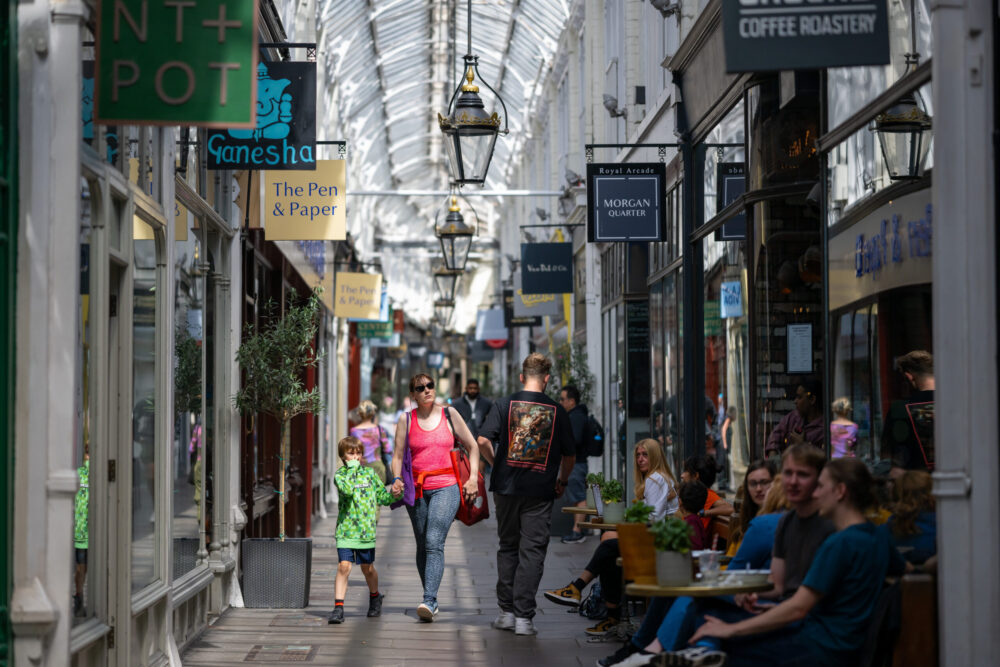
Brenig Davies
We step onto a pavement almost every day yet rarely notice it. Even so, we all depend upon it.
There are few better places from which to understand the idea of public space than an ordinary pavement. Shared by everyone and owned by no one, it asks for little attention but reveals a great deal about the quiet understandings that allow civil society to flourish.
Children race along it with barely a glance beneath their feet. As we grow older, we become more aware of the ground we walk on. Age teaches us to tread more carefully.
Architecture is often judged by its finest buildings. Daily life, however, is experienced in the spaces between them.
The pavement is one of those spaces. Safe, accessible, and well maintained at its best, it quietly supports the ordinary business of society.
Unlike our homes and gardens, the pavement belongs to everyone. Nobody owns the ground beneath their feet, yet everyone has an equal right to use it. Shared public space survives because people accept both rights and responsibilities.
The front door marks the boundary between private and public life. The pavement is where that transition begins. Without thinking, we adjust our behaviour. We make room, wait our turn, and acknowledge another person’s equal right to be there. These habits are seldom taught directly. They are learned through everyday participation in shared life.
Every pavement depends upon trust. We trust others not to obstruct our way without reason, to recognise our presence and to show the same consideration we hope to receive. Most of the time, that trust is rewarded. Like many of the forces that hold society together, it works best when it passes unnoticed.
Stand on almost any pavement for a few minutes, and these quiet understandings become visible. Nobody directs them. There is no instruction manual. They have become part of the way people live together.
The pavement also reminds us how little we know about the people passing by. One person may be carrying the weight of illness or bereavement. Another may have just received welcome news, celebrated an achievement or fallen in love. Most of these stories pass unnoticed. We meet only briefly, sharing the same stretch of public space before continuing our separate journeys. That is another reason why courtesy matters. A moment’s patience or consideration may be offered to someone whose circumstances we cannot begin to know.
Neglect
A well-maintained pavement encourages confidence. Neglect leaves a different impression. The way a shared place is cared for influences the way people respond to it. We shape our surroundings and, in turn, they shape us.
Across south Wales, this is clear every day. In valley towns, villages, and city streets alike, people of every age and circumstance share the same public space. For a few moments, occupation, income, and status matter less than respecting another person’s equal right to pass.
Respect for public space begins with ordinary actions. A clear path. Space left for the next person. Such small courtesies rarely attract attention, yet they reveal the quiet understandings that allow shared places to work.
Day after day, the pavement supports countless encounters and small adjustments that allow people to live alongside one another with remarkably little conflict. It is one of the quiet foundations of civil society.
Perhaps that is why the ordinary pavement deserves a second glance. It is a liminal space, where private life meets the shared world beyond the front door. Unconsciously, we recognise it as a place where the habits of public life are formed almost without notice.
By this time tomorrow, the familiar pavement will once again be carrying the business of daily life. Most of us will cross it without a second thought.
Shared spaces
Every enduring society depends upon shared spaces where people learn, often unconsciously, that freedom is accompanied by responsibility and that individual lives are lived alongside those of others. The pavement neither judges nor distinguishes between those who walk upon it. It simply invites each of us to accept another person’s equal claim to the same ground.
Public debate often focuses on the decisions made in chambers, councils, and governments. Those decisions matter. But the health of civil society is sustained long before public questions reach those places.
It begins in the everyday habits learned in the shared spaces between us, where respect is practised rather than proclaimed. Civil society is built less by grand declarations than by countless small acts, repeated every day. For that reason alone, the pavement deserves our gratitude.
Support our Nation today
For the price of a cup of coffee a month you can help us create an independent, not-for-profit, national news service for the people of Wales, by the people of Wales.
Get more trusted Welsh news
Choose Nation.Cymru as a preferred source in Google News to see more of our journalism.



What’s lovely article, exactly the thoughts as I use pavements, I always acknowledge other users in the ways that you have described.
You do take pavements for granted and when you travel to countries which don’t have them like many parts of America, you realize you are missing a very special space.
Thank you, Alastair – Brenig