


The Politics of Duress
Ben Wildsmith
A feature of duress is how it limits one’s scope for considering anything other than escaping its clutches. The immediacy of an adverse situation means that long term planning is all but impossible.
All our conversations at the moment are conducted under conditions like that. The cost-of-living crisis rumbles on, meaning that payday brings fresh dilemmas rather about necessities rather than enjoyable choices.
Climate change discussions, once hypothetical arguments about a distant future, are now conducted against a backdrop of burning mountainsides and an early harvest.
The war in Ukraine is edging westwards, as projectiles land in Poland and armed drones turn up at a German airport. Ukrainian grain is blockaded, as is Middle Eastern oil, gas, and fertiliser.
We are emptying the prisons for heaven’s sake.
Our scope for thinking through where we want our lives to go, individually and collectively, is narrowing under a barrage of interconnected crises and each solution carries a related downside.
Outside of China, where long term planning is guaranteed by one-party rule, nations and citizens are faced with irreconcilable choices between economic growth and environmental wellbeing; re-armament and societal need; democratic freedom and the discipline required by war.
Every escape route seems to be blocked, leaving decent politicians to mouth platitudes and despots to prosper.
Those despots are the face of this troubled age. Trump, Xi Jinping, Putin, Netanyahu, Kim Jong Un, and Mohammed Bin Salman all possess terrifying individual powers over the wider world.
Most of us, I expect, think that our fortunes would improve dramatically if these strange, overmighty characters were somehow removed from the picture. In our discomfort, the temptation is to dream that anything would better than what we are enduring now.
Is that right, though? Taking Russia as an example, what would happen if the European dream were to transpire and pressure on Russia’s economy led to Putin’s overthrow? As the 48th package of sanctions is imposed this week, that seems unlikely, but if it did happen, what would Russia become?
There seems to be a collective fantasy in western Europe that if it weren’t for Putin, the nation would happily fall into line as an eccentric but benign member of the European family, a Belgium of the east, embarrassed by its past and happy to take direction.
History suggests an altogether darker proposition, with ethnic tensions and access to nuclear arsenals threatening a supercharged version of the Yugoslavian break-up or the sort of rudderless bloodbath that unfolded in Iraq after Sadaam Hussein’s fall.
Would Ukraine be any safer in such a scenario? Would we?
It’s scarcely more comforting to imagine the USA once Trump is either removed or dead. However that comes about will inevitably be the subject of conspiracy and irreconcilable beliefs amongst the electorate.
It’s far from certain that Trump will leave office voluntarily but even if he does, we can expect him to exercise all possible influence, legal or otherwise, over who succeeds him. We have precedent for this, not only in the insurrectionary events of January 6th, 2021, but also in the failure of Joe Biden’s administration to steer the USA back towards traditional politics.
When Trump is gone, MAGA, and all the grievances that birthed it, will remain. Somebody will emerge to lead that still sizeable and volatile section of the electorate, and they won’t do it by appearing to moderate its demands.
In Israel, too, many hope that the end of Netanyahu’s tenure, perhaps this Autumn, will see a change of course. Polls do not back that hope up, with 72% expressing support for the expulsion of Palestinians from Gaza and 61% rejecting the terms of the ceasefire with Iran.
Magical thinking
There is magical thinking at play in our attitudes to all these situations. By ascribing them to individual leaders, we fool ourselves that they are divorced from the societies they represent.
The people want the same things that we do, we tell ourselves, it’s just their corrupt/mad/evil leaders who are the problem.
To assume that millions of people have no agency is arrogant and idiotic. It is to get the cart before the horse. Leaders of the sort we are enduring now emerge when people are aggrieved by systemic disadvantage, whether real or imagined.
The only possible route out of the dangerous situation we find ourselves in is to engage in multilateral negotiations that recognise the needs and ambitions of nations as they actually exist, not as we wish they did.
Statecraft
If Europe has a role in the world, resourceless and militarily depleted as we are, it is to demand statecraft as the only solution to aggression.
Instead of writing military cheques the whole world knows we cannot cash, and issuing threats we cannot fulfil, Europe should be offering plans, drawing maps, and appealing for sanity in a world on the brink.
Changes of leadership abroad will flow from changes in sentiment amongst people and that will not be achieved by bellicose fantasies and empty posturing.
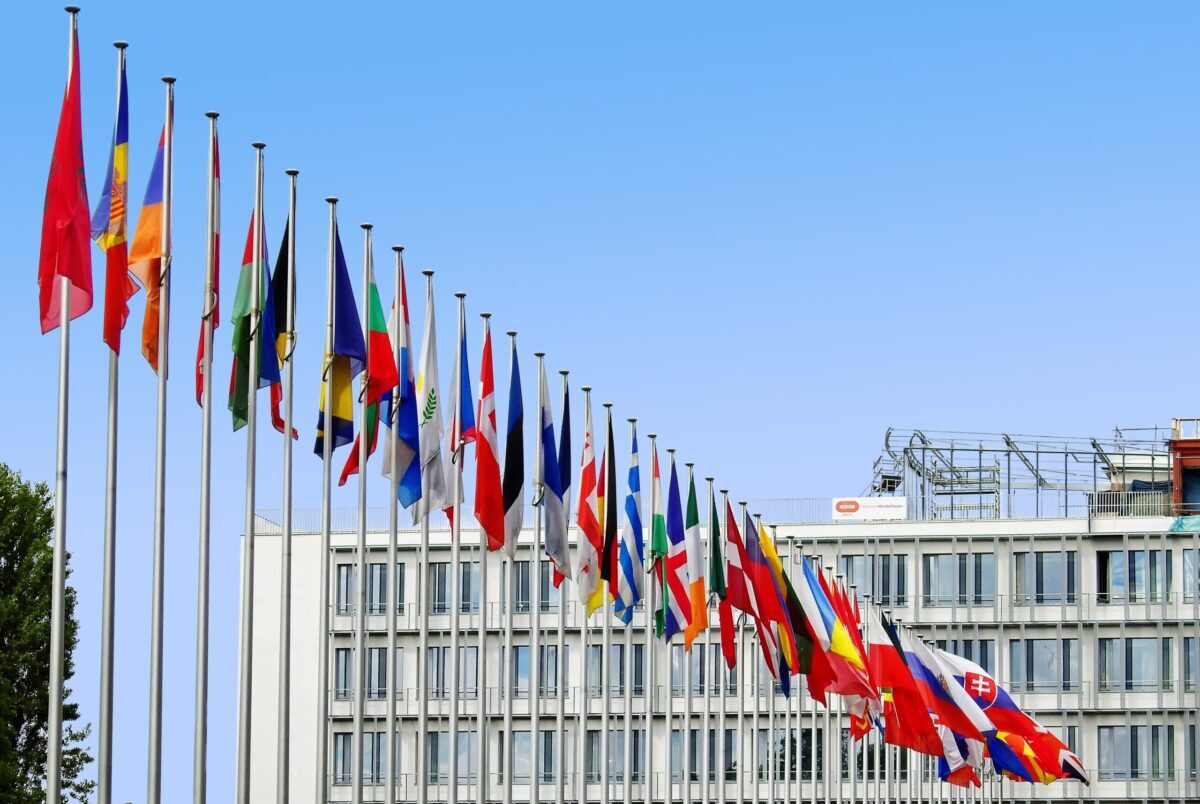
A Europe that insists on peace might tease out that desire from nations it is currently aggravating. If opposition to despots exists, as we must believe it does, then let us raise a flag for it.
Support our Nation today
For the price of a cup of coffee a month you can help us create an independent, not-for-profit, national news service for the people of Wales, by the people of Wales.
Get more trusted Welsh news
Choose Nation.Cymru as a preferred source in Google News to see more of our journalism.



Absolutely Ben. As Corbyn once said ” wars always end with talks, why don’t we start with them”? Or something similar.
Four words:
“Peace in our time”
The infamous words of Chamberlain as he came home, thinking that he had just talked his way out of a second world war. Talking only works if both sides are sincere in their desire to find a peaceful solution, and sometimes, tyrannical regimes won’t reach that point until they’re sure they can no longer get their way through violence. People like Corbyn, while well intentioned at heart, are very naive to belive everyone can be simply chatted to and made to see reason.
You’re right that removing these leaders won’t lead to liberal democracy, but you’re completely wrong about politics being bottom up. Could not be more wrong in fact. Never has been. Ever. Anywhere. Look up Michels, Mosca and Pareto. There is also a Welsh chap of Iranian descent who has written a globally popular book on this called “The Populist Delusion.” Well worth a read.
What a read first thing! Waw! Masterfully poignant view of the immense nature of the cach we are in. How did we not learn years ago that allowing despots to take control can only lead to misery? Allowing propaganda to militarise & monetise our view of each other & the earth we live on, could and probably will, lead to the extermination of our species? It’s weird that the joy of reading such a beautifully written polemic can be so depressing.
“negotiations that recognise the needs and ambitions of nations as they actually exist.” Fine. But that consists of what as an outcome exactly? Russia wants and to absorb Ukraine, the Baltic and the Caucuses. That’s straightforward enough to recognise, harder to justify when broadly the people there don’t want that. Europe should be ‘drawing maps’. Of what exactly? With what legitimacy? Who exactly is going to find themselves on which side of which line on said map? Broadly the individuals you listed tend not to negotiate basically because they don’t think they have to. And it’s not obvious you offer… Read more »
After reading Mr Wildsmith’s piece, I was moved to re- read the Greek poem “Waiting for the Barbarians”, by Constantine P. Cavafy written at the turn of the 20th century. The last lines are particularly poignant: “What’s going to happen to us without barbarians? They were, those people, a kind of solution”.