


The real truth about immigration in Wales: The wrong debate at the wrong time
Franck Banza
Immigration has become the political lightning rod of the moment. Wales is no exception. But the noise, outrage and divisive rhetoric hides a simple reality: we are having the wrong debate.
Instead of talking about how to grow the Welsh economy, attract investment, or fix stagnant wages, political parties are locked in a circular argument over immigration—an argument that bears little resemblance to the evidence.
It’s time to reset the conversation.
A Seductive but False Economic Story
The most common anti-immigration argument rests on a simple syllogism:
- Many people abroad are poorer than we are.
- If they come here, they earn more.
- Therefore, they must make those of us already here worse off.
It sounds intuitive. It is also economically false.
Decades of economic research show no credible evidence that even relatively large inflows of low-skilled migrants reduce wages or employment for local workers. Labour markets do not operate like a fixed pie.
When more people come in, the pie grows.
What the Evidence Actually Shows
Historical evidence from the United States
Between 1910 and 1930, large waves of European immigration into the US did not depress wages. They boosted industrial production and increased opportunities for native workers. More people meant more production, more consumption, and more growth.
Evidence from Denmark
Denmark maintains detailed data on every resident—data the UK simply does not collect. Studies of cities with high migrant inflows have found no negative effects on native wages or employment.
Ironically, the UK Government is now citing Denmark as a model for “tougher” immigration policies: temporary asylum, stricter conditions, limits on family reunification. But this misunderstands the real reason Denmark performs better on integration.
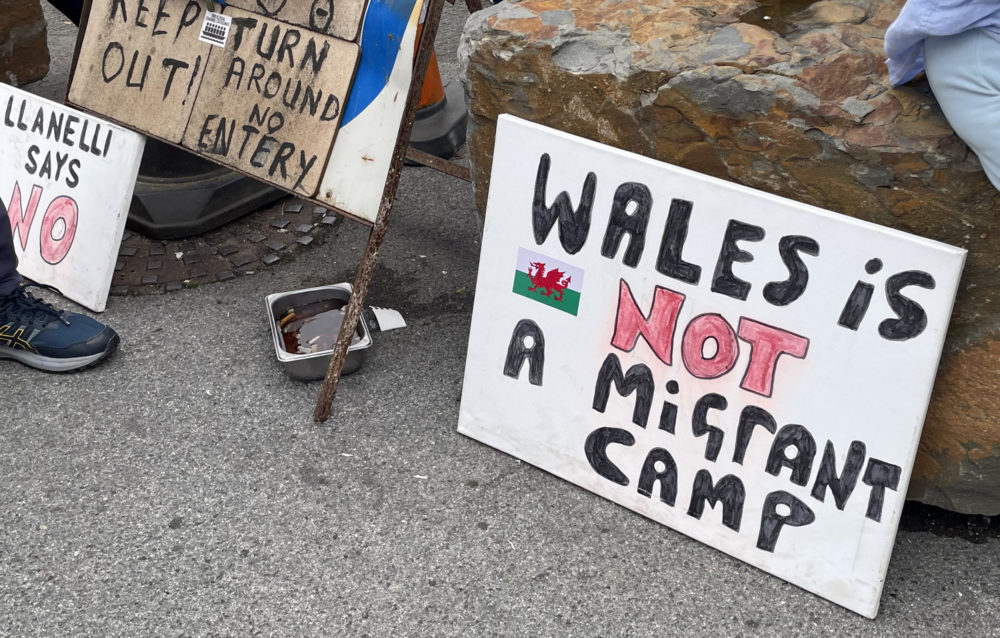
Wales, by contrast, has placed asylum seekers in towns like Llanelli or Flintshire—areas with limited job opportunities and few community links. It is policy design, not toughness, that explains Denmark’s outcomes.
Policies That Make No Economic Sense
One example is the proposal to grant work visas while banning family reunification. This forces migrants to send money abroad instead of spending their wages inside the local economy.
In economic terms, it is a direct transfer of disposable income out of the UK.
If the goal is growth, this is the opposite of sound policy.
Migrants Fill Jobs We Rely On—Including the Ones We Don’t Want to Do
New arrivals create jobs, especially in roles that locals often avoid:
- care work
- food processing
- social care
- construction
- warehouse logistics
- hospitality
And critically for Wales, skilled migration keeps essential services running:
- Indian and Nigerian doctors
- Filipino and Malaysian nurses
- EU healthcare professionals
- International care workers
These workers are not replacing locals—they are providing services that locals depend on. Without them, social care collapses, NHS waiting lists grow, and construction slows.
What About Pressure on Public Services?
The claim that migrants overload public services is politically convenient, but the facts tell a different story.
Migrants in Wales are:
- working in the NHS
- staffing care homes
- building homes and infrastructure
- filling transport and logistics shortages
Wales does not suffer from “too many migrants”.
Wales suffers from:
- too little private investment
- too few high-wage private-sector jobs
- years of stagnant wages
- rising costs with no growth plan
- weak industrial policy
- lack of support for farming, hospitality, and entrepreneurs
Blaming migration for structural economic issues is simply inaccurate.
Immigration in Wales: The Actual Numbers
Around 215,000 people in Wales—6.9% of the population—were born outside the UK.
Most:
- are in work
- contribute taxes
- support public services
- start businesses
- enrich communities
- strengthen the economy
The question “Is immigration really a problem?” only has one evidence-based answer: no.
The Real Problem: Inequality and Lack of Investment
People in Wales are understandably frustrated—but not because their communities are being overwhelmed.
They are frustrated because:
- Wages are stagnant.
- Costs are rising.
- Public services struggle.
- Private investment is scarce.
- New jobs are overwhelmingly public-sector jobs that pay less and grow more slowly.
- There is no clear plan for building wealth in Wales.
These are political failures—not the fault of migrants.
And none of this will be fixed by deporting people or restricting visas.
That will not raise wages, cure inflation, fix the NHS, or revitalise rural Wales.
As the Senedd Election Approaches, Wales Deserves a Better Debate
In six months, Wales will choose its future in the next Senedd Election. We should be debating:
- How to bring private investment into Welsh communities
- How to support the farming sector
- How to revive the hospitality industry
- How to help entrepreneurs start and scale businesses
- How to grow wages and create high-value jobs
- How to reform public services sustainably
- How to retain young talent in Wales
Instead, we’re stuck in an unproductive argument about immigration—a debate driven more by fear than facts.
Meanwhile, the people who have chosen Wales as their home—who work, pay taxes, care for our families, build our homes, and serve our NHS—are being vilified for problems they did not cause.
Don’t Be Fooled by Divisive Politics
Immigration is not breaking Wales. The data, the history, and the economics all show the opposite.
What is breaking Wales is:
- the absence of a real growth strategy,
- the lack of investment,
- stagnant wages,
- and political parties offering easy scapegoats instead of serious solutions.
If we want to make life better for the people of Wales, we must focus on the real issues—not the distractions.
It’s time for a mature debate about the future of the Welsh economy. And it starts by telling the truth: immigration is not the problem.
Our failure to build a fair, prosperous economy is.
Support our Nation today
For the price of a cup of coffee a month you can help us create an independent, not-for-profit, national news service for the people of Wales, by the people of Wales.



Exactly .Let’s hear some concrete proposals that don’t involve demonising immigrants at every opportunity.
It’s become the norm, I’m afraid. Screeching “immigrants!” as a response to every issue has become very tedious altogether. Especially when the “fixes” are actually pretty simple.
Well Said.
True.