


The Senedd’s back with a bump
Desmond Clifford
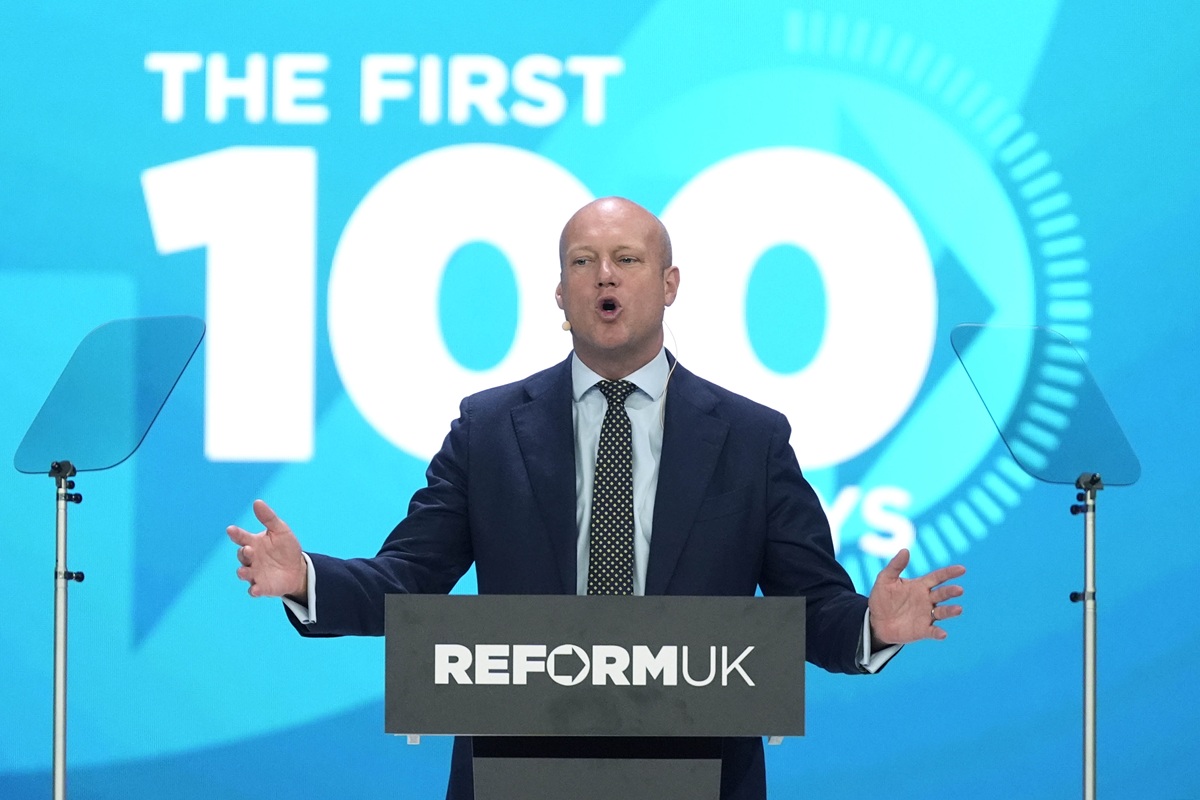
The Senedd returns with a bump – just not the bump we were expecting. Dan Thomas is gone as Reform’s leader barely six months after he started. Sarah Cooper-Lesadd leaves Reform and joins Plaid’s group, with the stunning revelation that Reform doesn’t care about Wales. Who knew!
No one could have predicted these precise developments but chaos unfolding in Reform is unsurprising.
Nearly three dozen people, most of them new to politics, were elected for a party without an agenda, no uniting principles, no sense of Wales and – now – no leadership. It was always going to get messy, and I’d be surprised if this is the last of it.
Meantime, Helen Jenner, who fronted for Reform at First Minister’s Questions yesterday, is miles better than Dan Thomas. If she can stay disciplined, I reckon she has the makings of a formidable presence in the Senedd.
She raised last week’s PISA education results which, unsurprisingly, Labour’s Ken Skates was keen to avoid. The results were grim reading. Standards in maths, reading and science didn’t just flatline under Labour governments – they got worse.
Wales is bottom of the UK nations and the gap has grown. England is top and a long way ahead of Wales.
Social deprivation can’t be used as an excuse. The most disadvantaged 25% of pupils in England perform significantly better at reading than the Welsh average; 473 points against 459. For maths the level is about the same, and England does slightly better for science – but remember, this is only England’s most disadvantaged 25% cohort.
There are caveats to enter and context to set. PISA results are not the whole story of education. Can we at least agree, though, that the position isn’t acceptable? Reversing the trend and closing the gaps with our neighbours is surely top priority. If that’s agreed, there’s a starting point for the conversation.
Can we also agree Welsh children aren’t less able than elsewhere in the UK? Obvious really, but worth being clear.
We can’t claim funding is worse than elsewhere. It may not be enough, but the Welsh Government has as much money available for schools as England, for example.
The narrowing range of possible explanations leads towards the classroom. Is something happening there, or not happening, which puts pupils at a disadvantage? Is there defective method in some way? Is the classroom environment at fault?
Since devolution began successive Welsh Governments have eschewed league tables and a culture of what they saw as over-testing in England. They placed their chips on a new national curriculum for Wales which has now been up and running for a few years. Is that delivering anything which mitigates the PISA results? Is it, perhaps, time to revisit some past decisions?
Improving school standards is among Plaid Cymru’s main manifesto pledges. It’s a brave and purposeful ambition. Unlike some commitments, it’s also transparent.
These figures belong to Labour and addressing this relative failure should be part of their reassessment of policy. In three years from now we’ll have the next set of PISA scores, just ahead of 2030’s election, and those will belong to Plaid Cymru.
PISA scores are not the be-all-and-end-all. Schools should be considered against criteria including skills, well-being, culture, discipline, inclusion, values. Those that do well on the non-testing measures will probably do well on attainment too.
Local authorities deliver the education service, and they should be held accountable too. Blair’s academy reforms allowed state schools to become independent and many schools, especially in London, have done well from this policy. Inner-city London schools once considered disaster zones are now among the best in England.
Oddly, successive Labour Welsh Governments showed no interest in the success of Labour’s policy in England. At one stage, some years back, six Welsh Local Education Authorities were on special measures, with others wobbling.
Why there isn’t greater challenge to the local authority monopoly on education delivery is a mystery. Plus, Wales has too many local authorities and too many directors of education – another can of worms.
S4C is currently showing a documentary following eight rookie teachers during their first year of teaching, “Athrawon”. Anyone can see it’s a tough job – a wall of grumpy faces saying, “come on – impress me!”.
The teachers seem admirable: committed, passionate and proud. They need confidence and lots of patience. Really good teachers adjust to the varying needs of their diverse classes and the endless challenges of school. If I was put in charge of twelve-year-olds with Bunsen burners, I’d have kittens. It’s a lot to deal with, and teachers deserve respect, status and support.
Distribution of powers
There’s been chatter recently about the distribution of powers between the Welsh Government and local authorities. The head of the local government body in Wales, Anthony Hunt, tapping into the Burnham zeitgeist, made a pitch for more powers for local authorities. Fine, but we need properly shared and transparent accountability with the Welsh Government for school performance and standards.
Education Minister Anna Brychan is launching her Foundational Literacy and Numeracy Plan, and the Welsh Government has a lot riding on it. A plan is a plan and what matters is impact. Is the Welsh Government ready for tough conversations on delivery? Inadequate performance can’t improve without teachers doing something different.
If teaching is like any other profession, some teachers will be excellent, some mediocre and some poor. “Rigour” is a word which has been used to describe England’s approach to performance. Do we have such a culture in Wales? The evidence suggests maybe not enough. Without honest appraisal of the issues, it’s hard to move forward.
Teaching methodology
Some believe there’s an issue about teaching methodology and the use of Systematic Synthetic Phonics. This system has been mandated for use for literacy in England since 2007. The minister, Anna Brychan, says phonics will be encouraged in classrooms, but the signs are it won’t be mandatory. The Welsh Government seems slow to learn from best practice in more successful countries and it’s hard not to question whether ideology has played a part. Wales should do what works, even if it originates from Michael Gove.
If Wales has a problem following England’s example, it should look to Ireland which performs at the highest level and tops the PISA table in Europe for literacy. What have they done right? Education Minister Anna Brychan should get herself across the Irish Sea to take a look as soon as possible.
And let’s consider some joined-up government. Ireland has cultivated a literary culture for many decades and its schools’ literacy performance is surely linked to this wider national culture.
This, I hope, is what Heledd Fychan means when she talks about the links between culture and education policy. Yet in Ireland, the response to their excellent results wasn’t jubilation or complacency but concern about the risk of slipping. That mindset, that determined sense of expectation, is perhaps a difference between our two countries.
Maybe we accept mediocrity a little too lightly? The Welsh Government should fight it every day on every front. As the First Minister said in response to Matthew Rhys’s stunning double Emmy: “Be more like Matthew!”.
Aspirations
The First Minister discussed shared independence aspirations with his Scottish and Northern Irish colleagues this week. He is clear about Plaid’s long-term ambition and hopes, at some future point, to put the proposition to a referendum. If they ever get that chance, they will make the best case if they can demonstrate they have used existing powers to improve education.
An independent Wales will have no more powers over education than the Welsh Government has today. The challenge is to use those powers and move the dial now. If they can do that, it’ll be a triumph.
As for teachers, it’s no exaggeration to say they are among the most important workers in the country. They deserve respect for doing a vital and difficult job. This doesn’t exempt the profession from critical thinking. They need to be open to criticism and up for professional learning and improvement – exactly as they teach their pupils.
Artificial Intelligence, far from killing the need for education, makes it more important than ever. Jobs are disappearing quickly. Who will get tomorrow’s jobs? People who can read, write, organise, communicate, show emotional intelligence, learn new skills – these people will be in demand. The Welsh Government is forming an economic Development Agency. Good, but Wales won’t have a dynamic economy if it has an under-powered workforce.
Attack line
One attack line developing traction is that the Plaid government is “Labour-by-other-means”. Ouch!
Plaid will not enjoy that. Plaid ministers are so far sunnier and more optimistic than their dour, divided predecessors, but they must prove difference. Education and health are the front lines of Welsh politics and the arenas where the Government needs to apply its energies.
They need to be ruthless and unyielding in their determination to bring improvement. All blockages should be cleared, and they must allow nothing and no one to stand in their way.
If Wales has a different future, this is where it will be felt.
Support our Nation today
For the price of a cup of coffee a month you can help us create an independent, not-for-profit, national news service for the people of Wales, by the people of Wales.
Get more trusted Welsh news
Choose Nation.Cymru as a preferred source in Google News to see more of our journalism.



“Artificial Intelligence, far from killing the need for education, makes it more important than ever. Jobs are disappearing quickly. Who will get tomorrow’s jobs? People who can read, write, organise, communicate, show emotional intelligence, learn new skills – these people will be in demand. The Welsh Government is forming an economic Development Agency. Good, but Wales won’t have a dynamic economy if it has an under-powered workforce.” … I take it you don’t use AI (LLMs) routinely? AI will 100% be doing anything involving reading in the future. It’ll also 100% be doing the writing or at the very least… Read more »